Africa

There’s nowhere like it on the planet for wildlife, wild lands and rich traditions that endure. Prepare to fall in love.

SALT MARSHES

The Toliara (Tuléar) region of southwestern Madagascar has long been shaped by salt. Thanks to its arid climate and endless sunshine — nearly 3,600 hours each year — the area has become one of the country’s most important centres of traditional salt production. It is no coincidence that...

TOLIARA

Stretching for more than 450km along Madagascar’s southwest coast, the Great Reef is the fifth-largest coral reef system in the world and one of the country’s premier destinations for snorkelling, diving and whale watching. Its turquoise lagoons, vibrant coral gardens and rich...

ANAKAO

We escaped the crowds and headed to Anakao, a tranquil and remote Vezo fishing village on Madagascar’s southwest coast. Known for its white sand beaches, turquoise lagoons, and exceptional diving and snorkelling—especially around the nearby Nosy Ve islet—it’s also a low-key spot for...

GOLD MINES

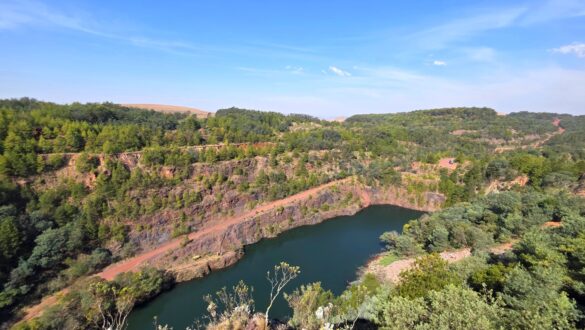
We heard about a wild gold-mining site around 29 kilometres outside Ilakaka, so we decided to check it out. The journey took us along a rough dirt road, crossing rivers and stretches of deep sand, with several checkpoints along the way (Municipal fee: 2,000 MGA). On the way, we picked up...

ILAKAKA SAPPHIRES

Our journey also took us through Ilakaka, a town whose name has become synonymous with sapphires. Once a quiet rural hamlet, Ilakaka was transformed almost overnight after major sapphire discoveries in 1998, rapidly evolving into what is now widely known as the “sapphire capital of the...

ISALO NP

Isalo began early for us at the national park office in Ranohira (🎟️ 65,000 MGA, tax 5,000 MGA), where we were assigned a mandatory guide for our 3-hour hike. This expense felt steep (160,000 MGA), especially since even a short visit requires paying for a full day. Established in 1962...