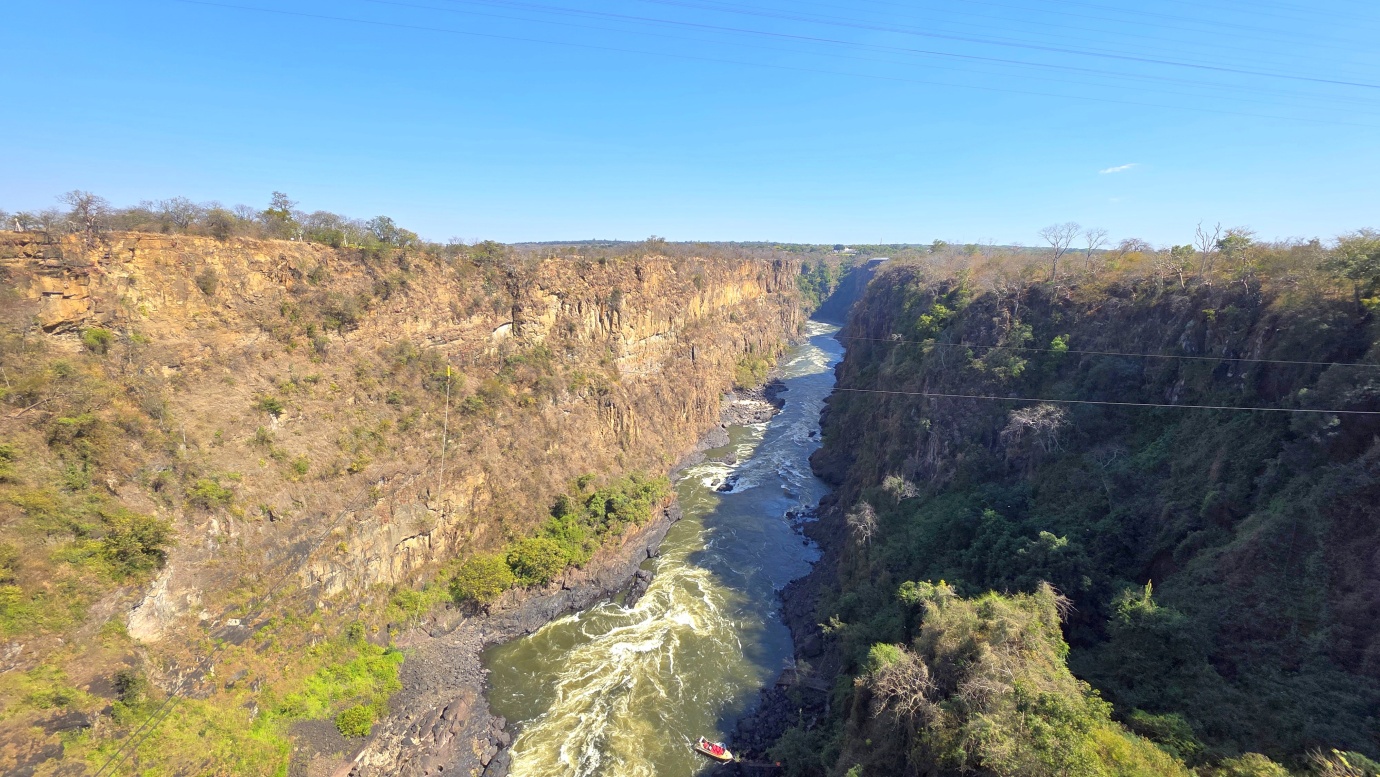
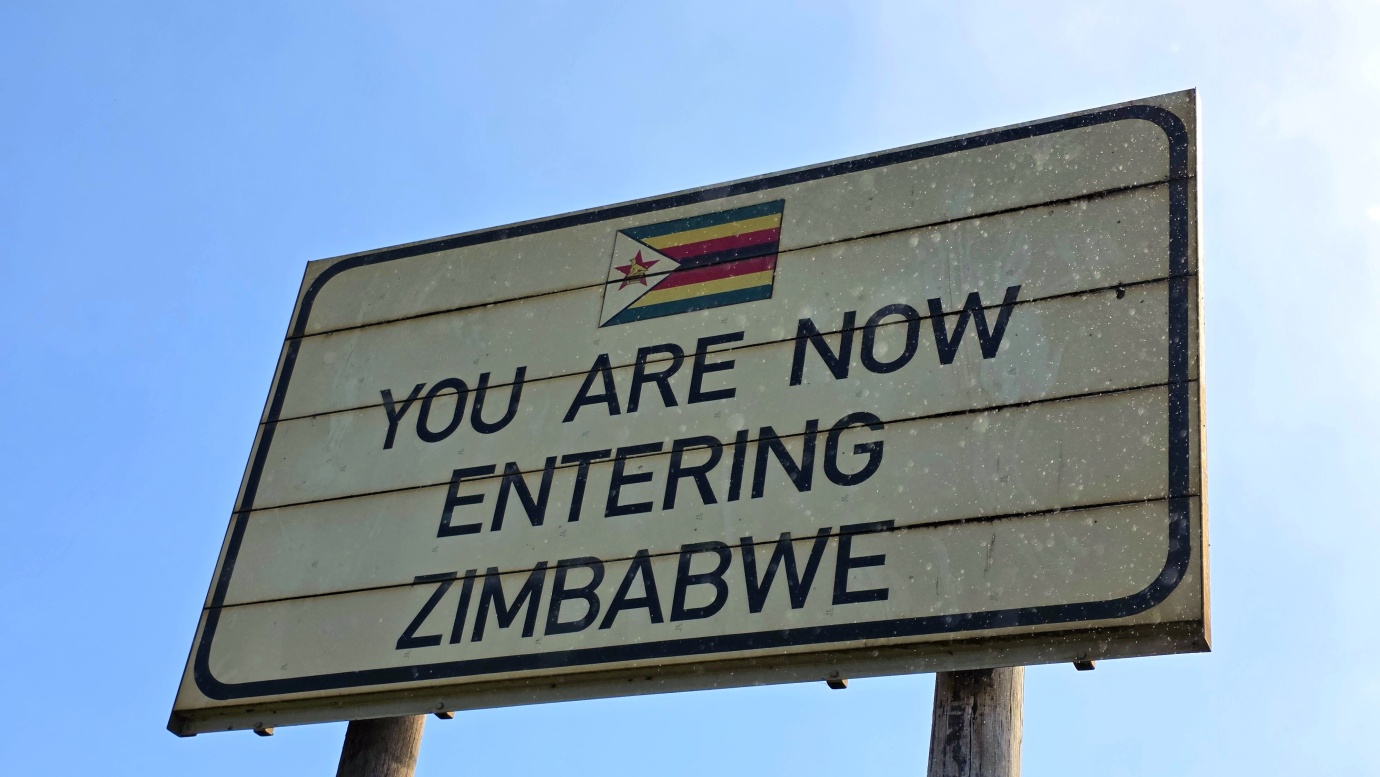
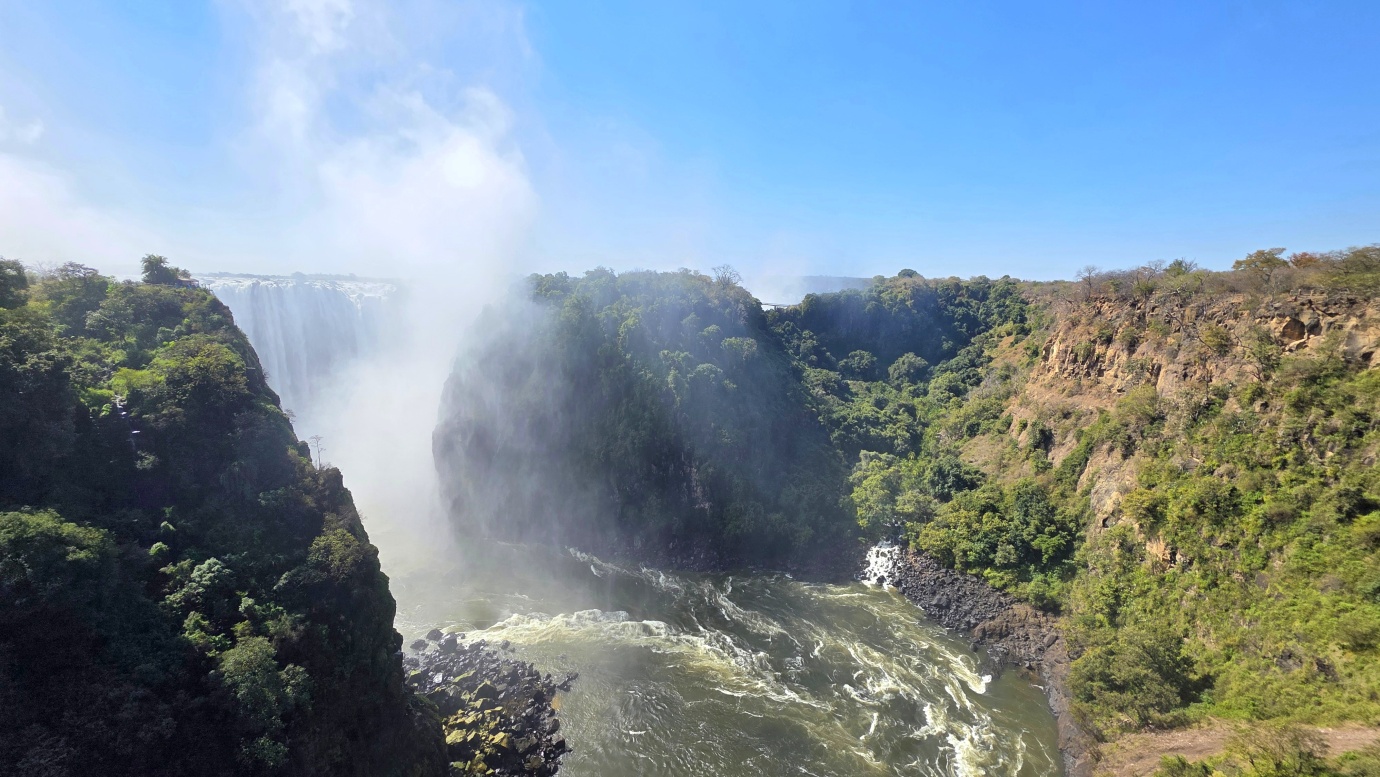
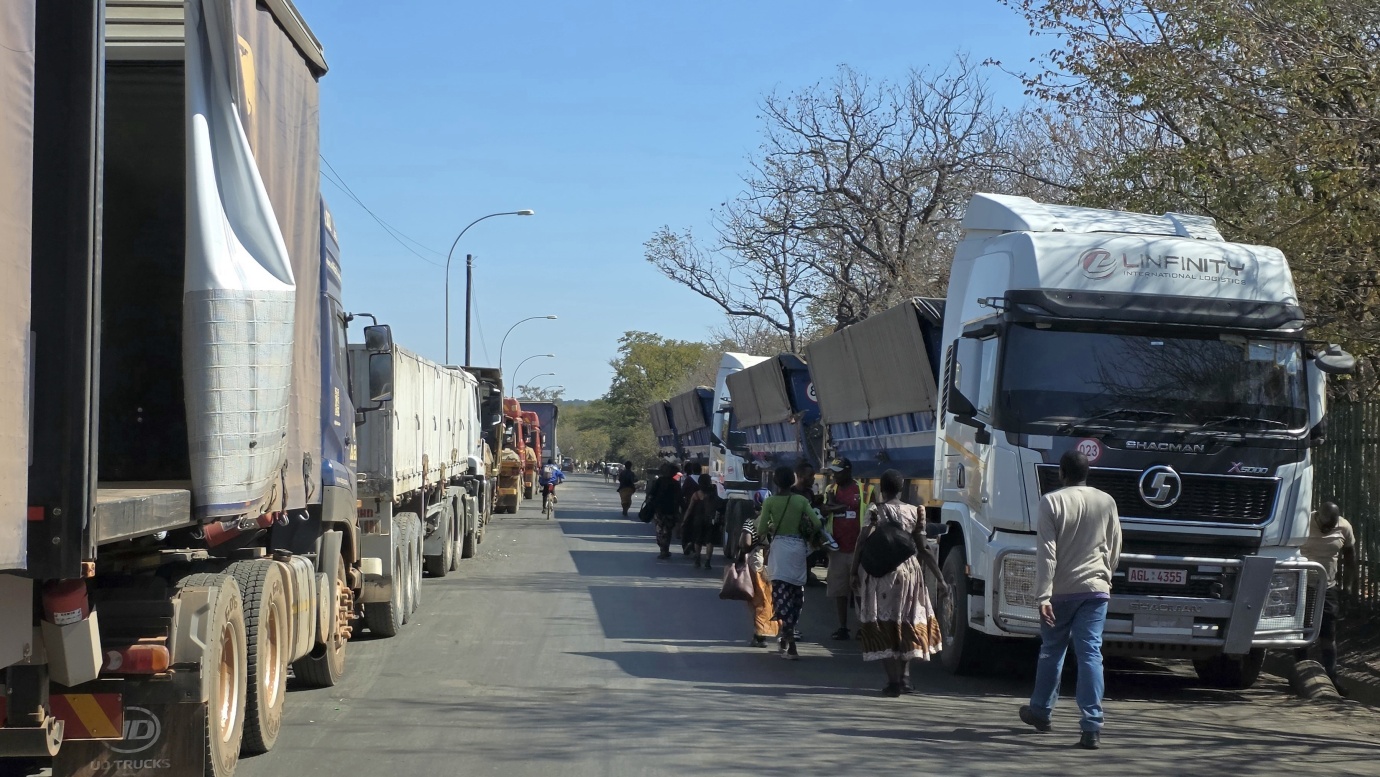
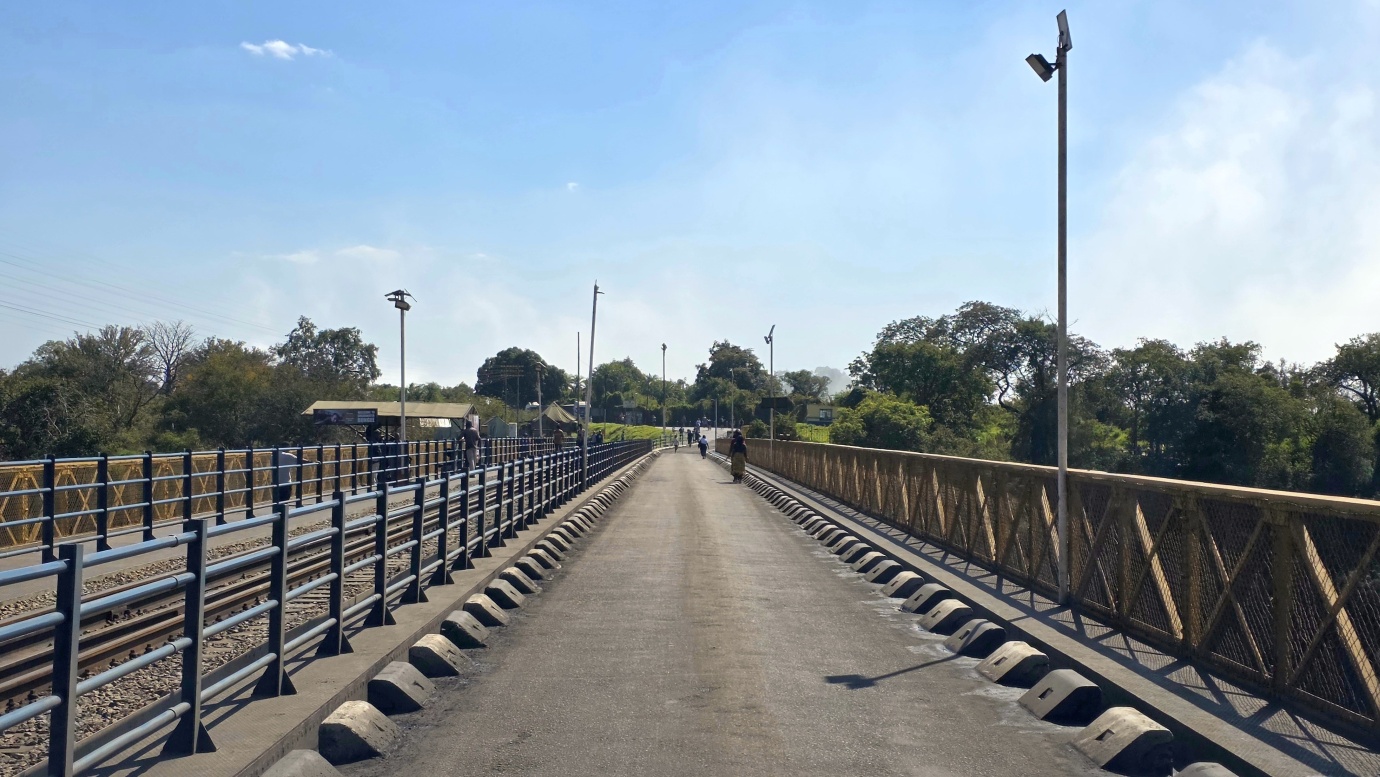
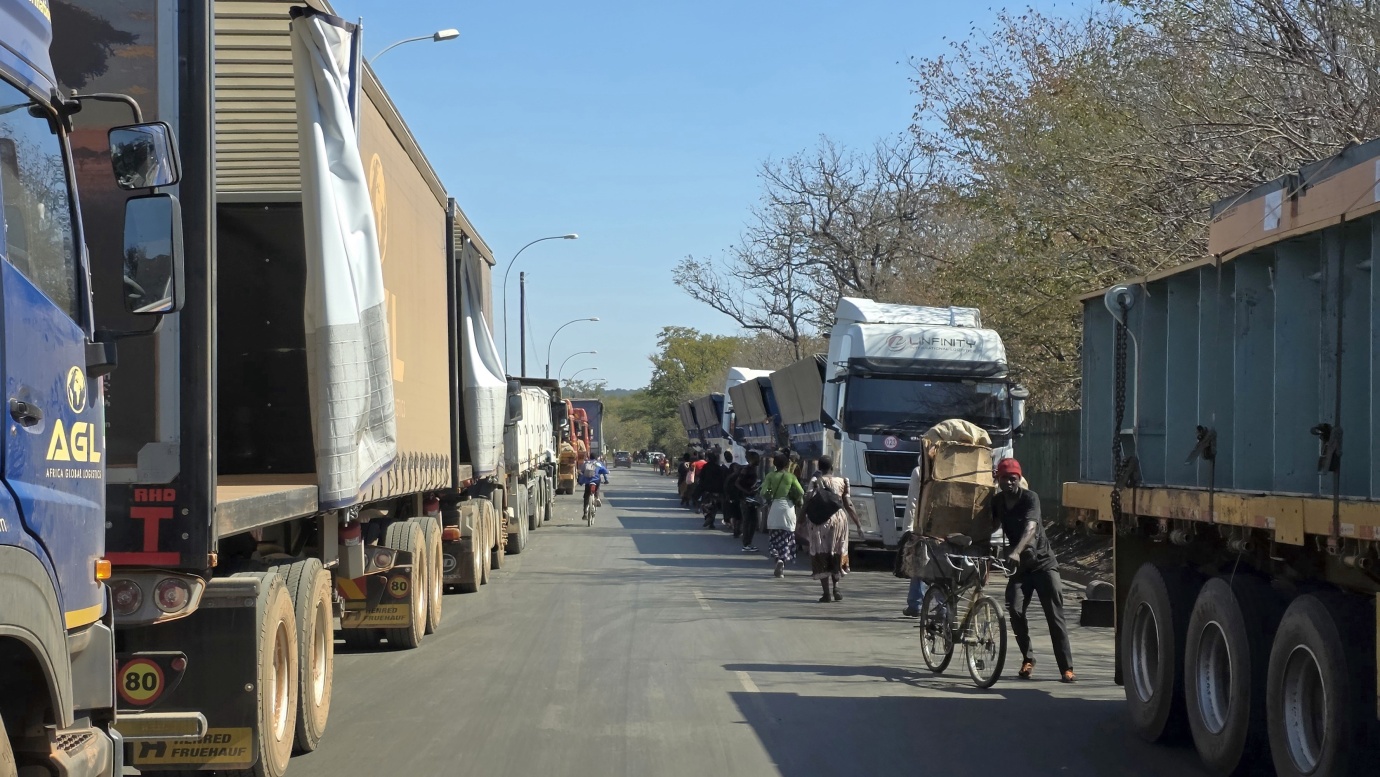
The Victoria Falls Bridge spans the dramatic Zambezi River Gorge and serves as the official border crossing between Victoria Falls Town in Zimbabwe and Livingstone in Zambia. The border post is open daily from 06:00 to 22:00. We arrived around noon, only to discover what turned out to be one of the most chaotic border crossings of our journey. It took us almost four hours to complete all the formalities and finally pass through the exit gate.
Before reaching the iconic bridge, we first stopped at a small immigration office on the Zambian side, where our passports were stamped, and we received a gate pass. Our Carnet de Passages (CPD) was stamped at a small customs booth next to the gate (fixer: 20 ZMW; parking: 10 ZMW).
Completed in 1905, the Victoria Falls Bridge was built as part of Cecil John Rhodes’ ambitious vision of a railway linking Cape Town to Cairo. The bridge is 198 meters long, with a spectacular 156.5-meter steel arch rising 128 meters above the Zambezi Gorge.
After crossing the bridge, our progress halted because several poorly parked trucks blocked the narrow access road. It took nearly an hour to reach the Zimbabwean immigration building. There, we completed an online arrival form, received our passport stamps, and paid 30 USD each for our visas. At the customs office, we filled in an online Temporary Import Permit (TIP) application, had our CPD stamped, and then paid a 10 USD road access fee and a 20 USD carbon tax. With all the paperwork complete, we expected a quick exit—but instead waited another hour because cars and trucks were once again blocking the gate. Surprisingly, nobody inspected our truck, and no one checked our documents at the final exit barrier. We signed in the exit register book and were free to enter Zimbabwe.
We purchased a local SIM card at an Econet store in Victoria Falls Town. Although the process took about 90 minutes, the package was reasonably priced at 13 USD for 10 GB valid for 30 days, plus 1 USD for the SIM card itself. We did not exchange any money, as US dollars are widely accepted throughout Zimbabwe and most shops also accept card payments without any surcharge. Diesel at the first Engen service station cost 2,11 USD per litre—significantly more expensive than in Zambia, where we had paid 28,11 ZMW (about 1,55 USD) per litre at a Puma station just before crossing the border.