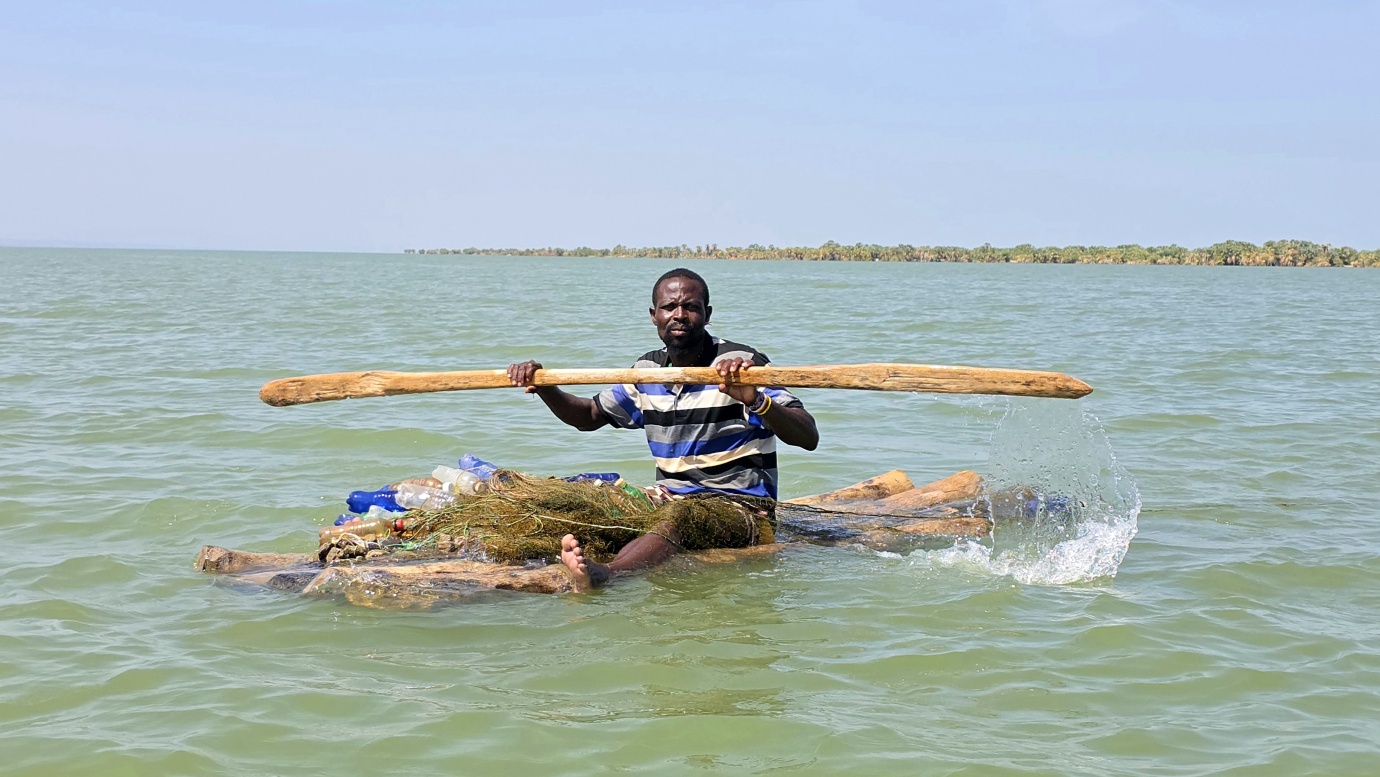
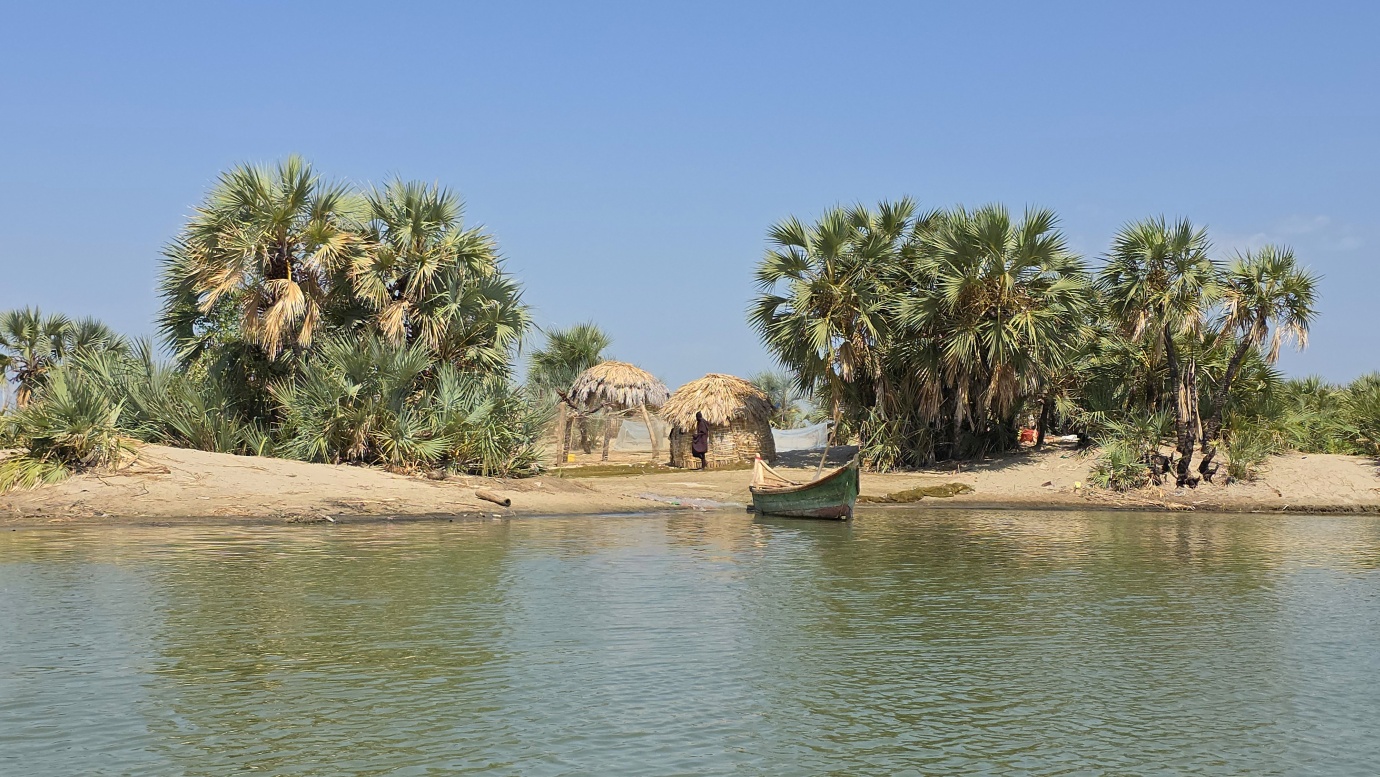
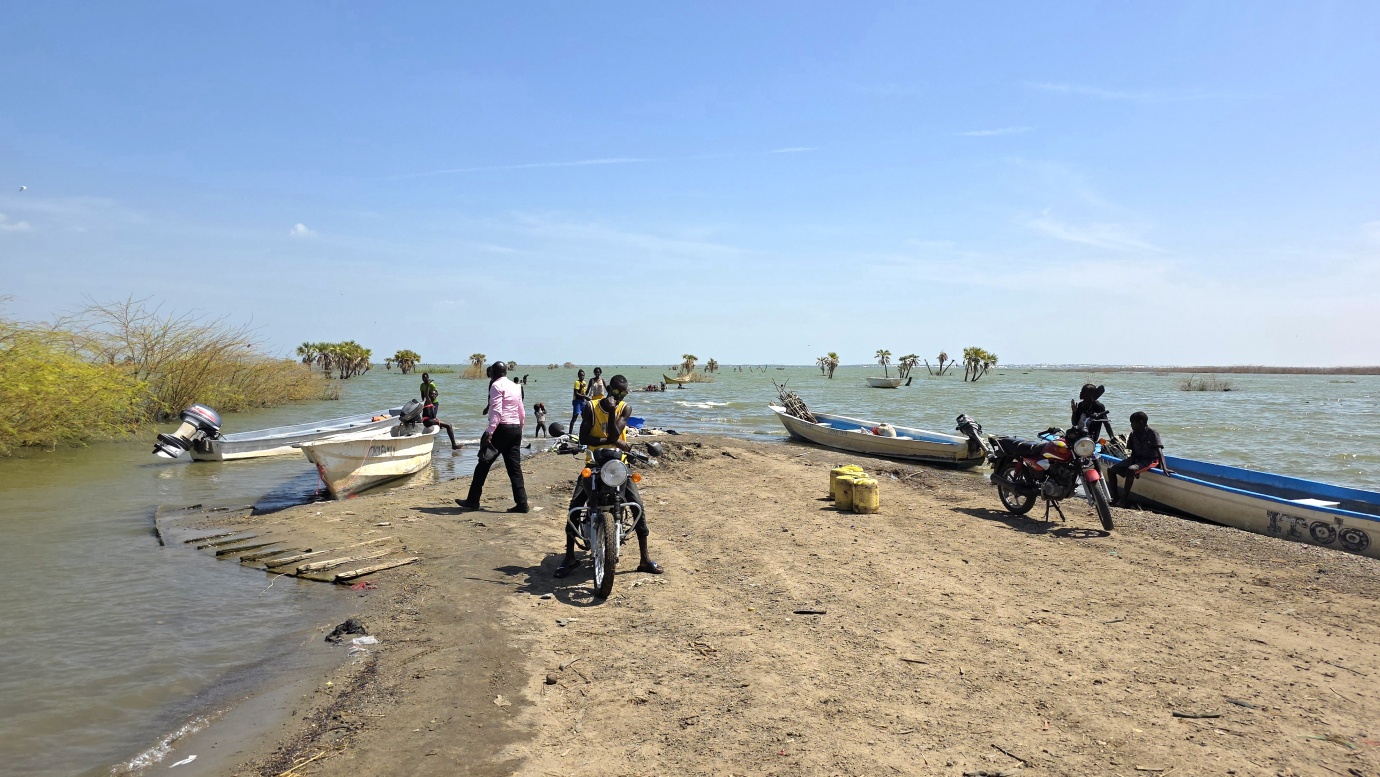
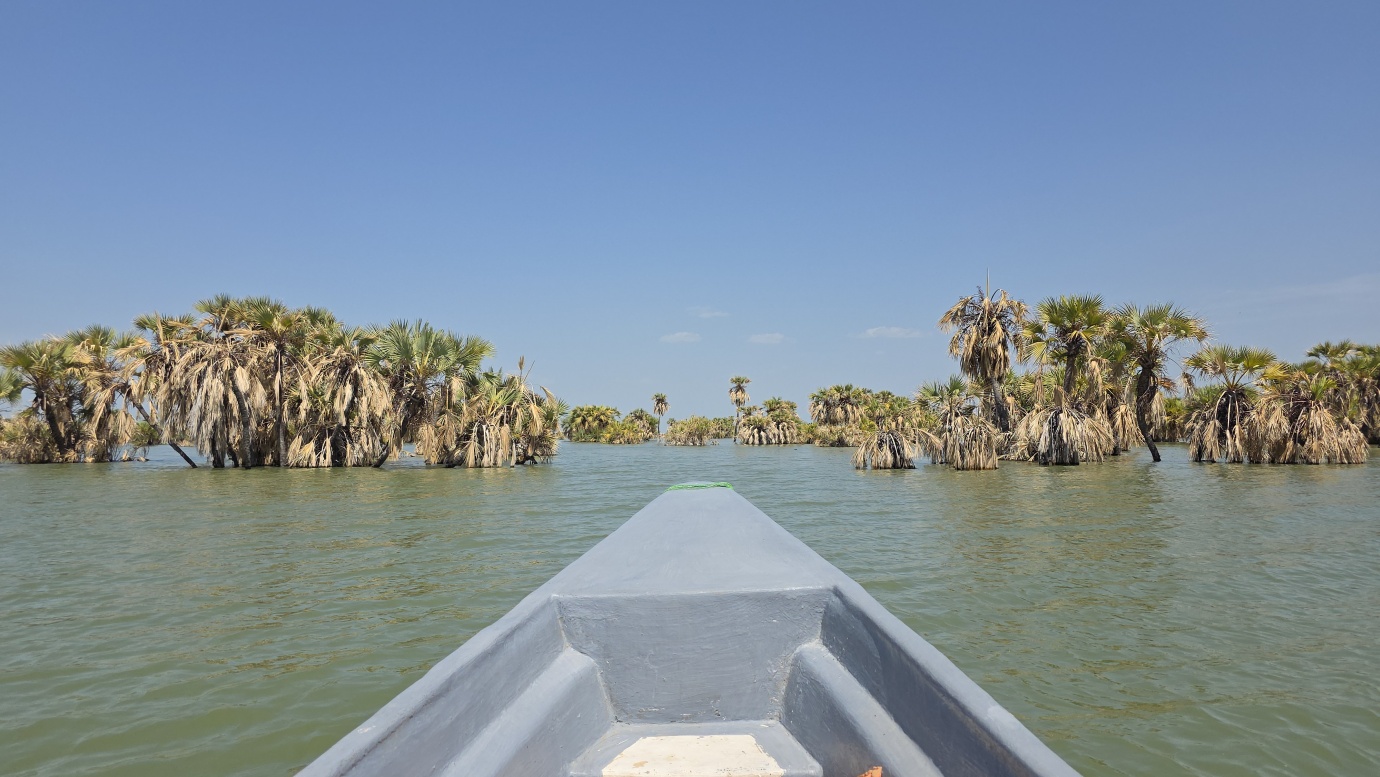
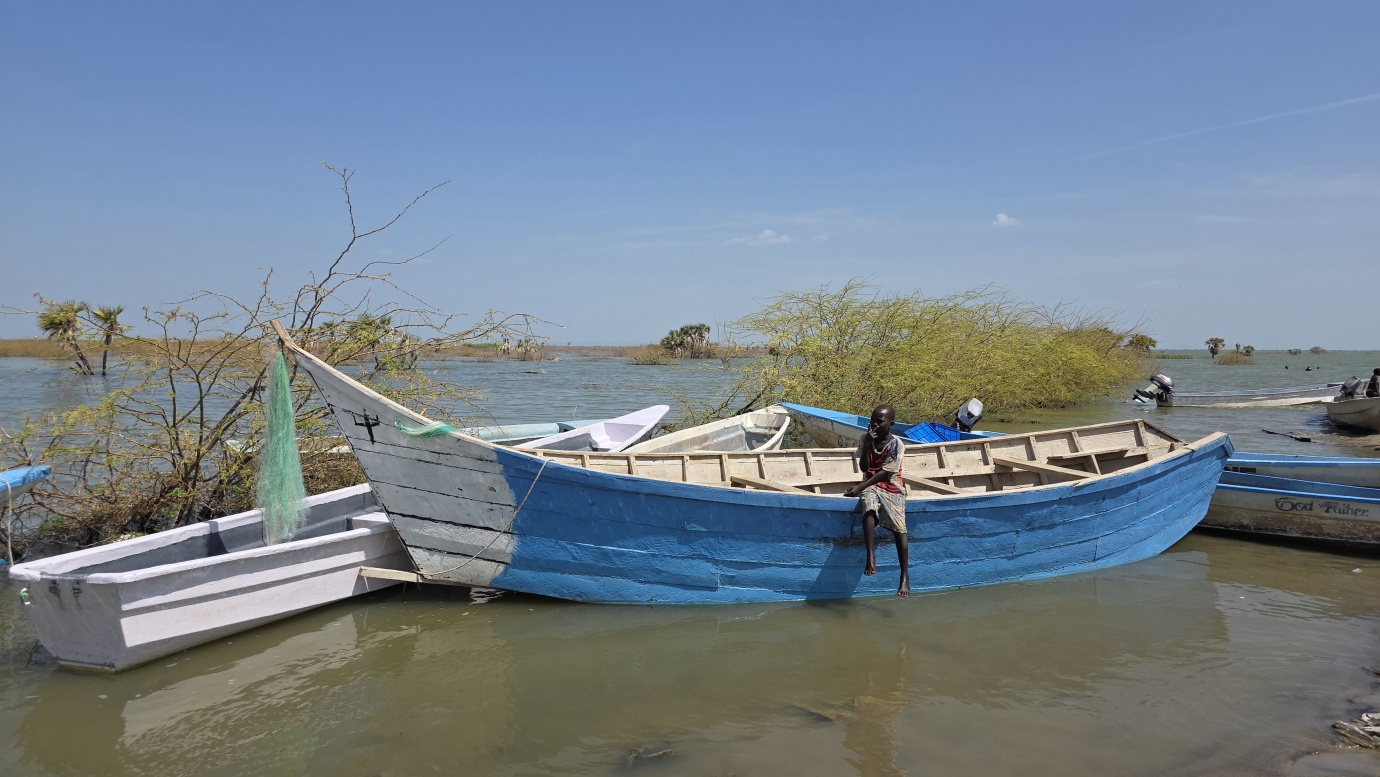
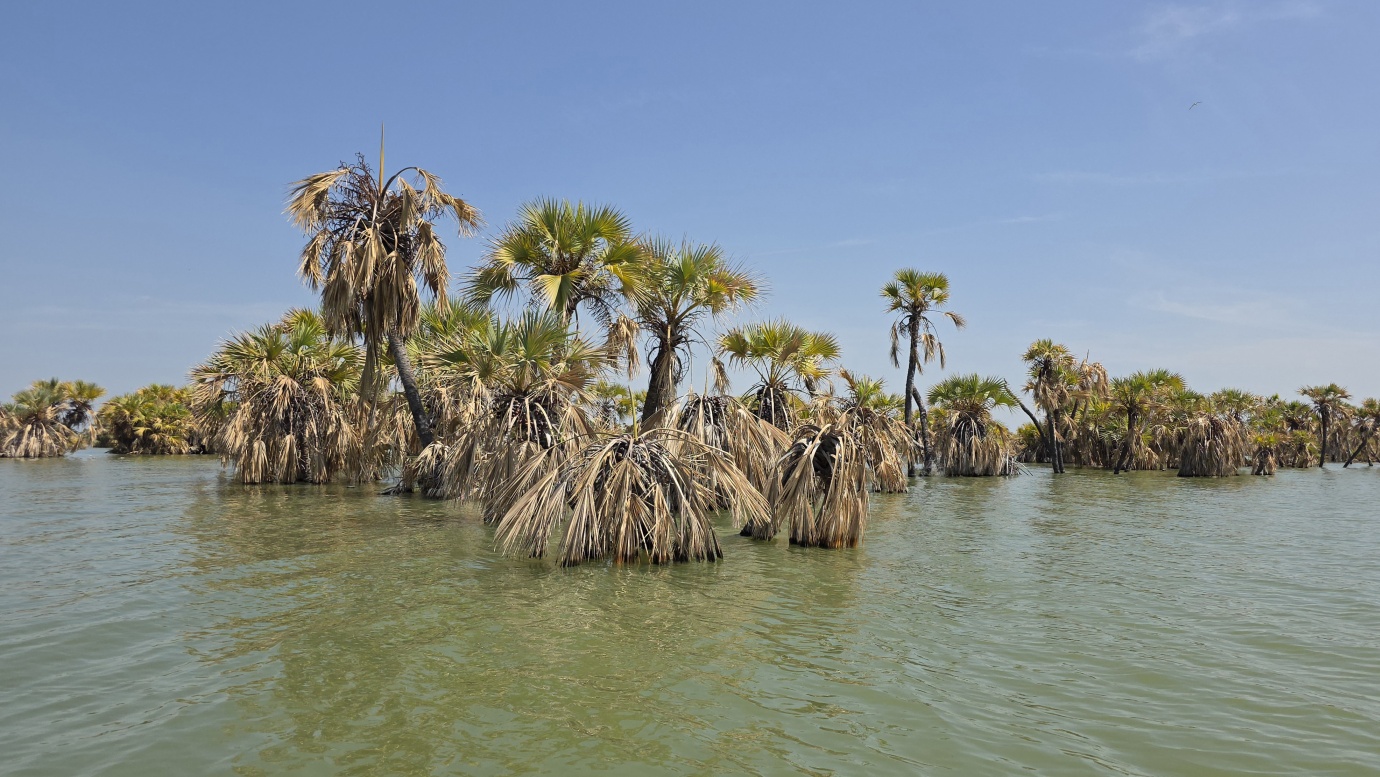
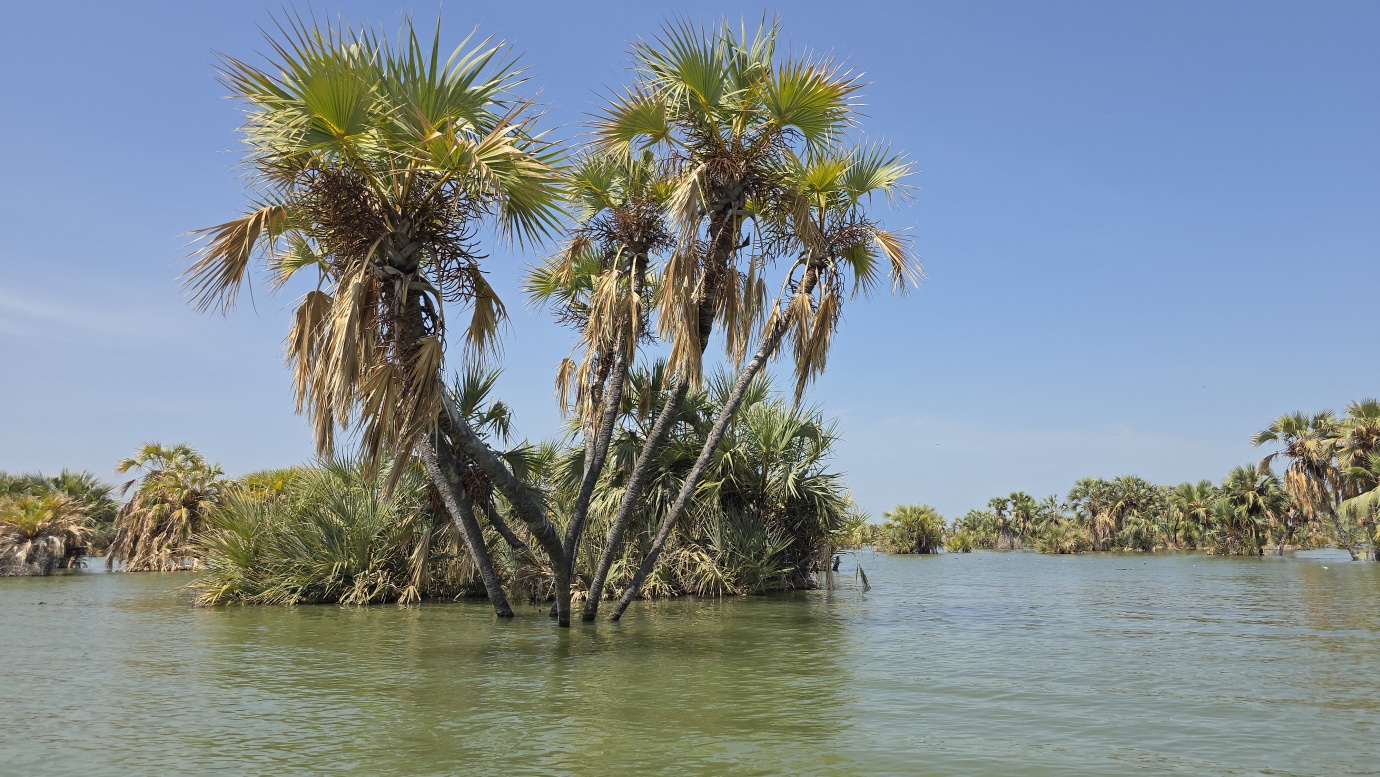
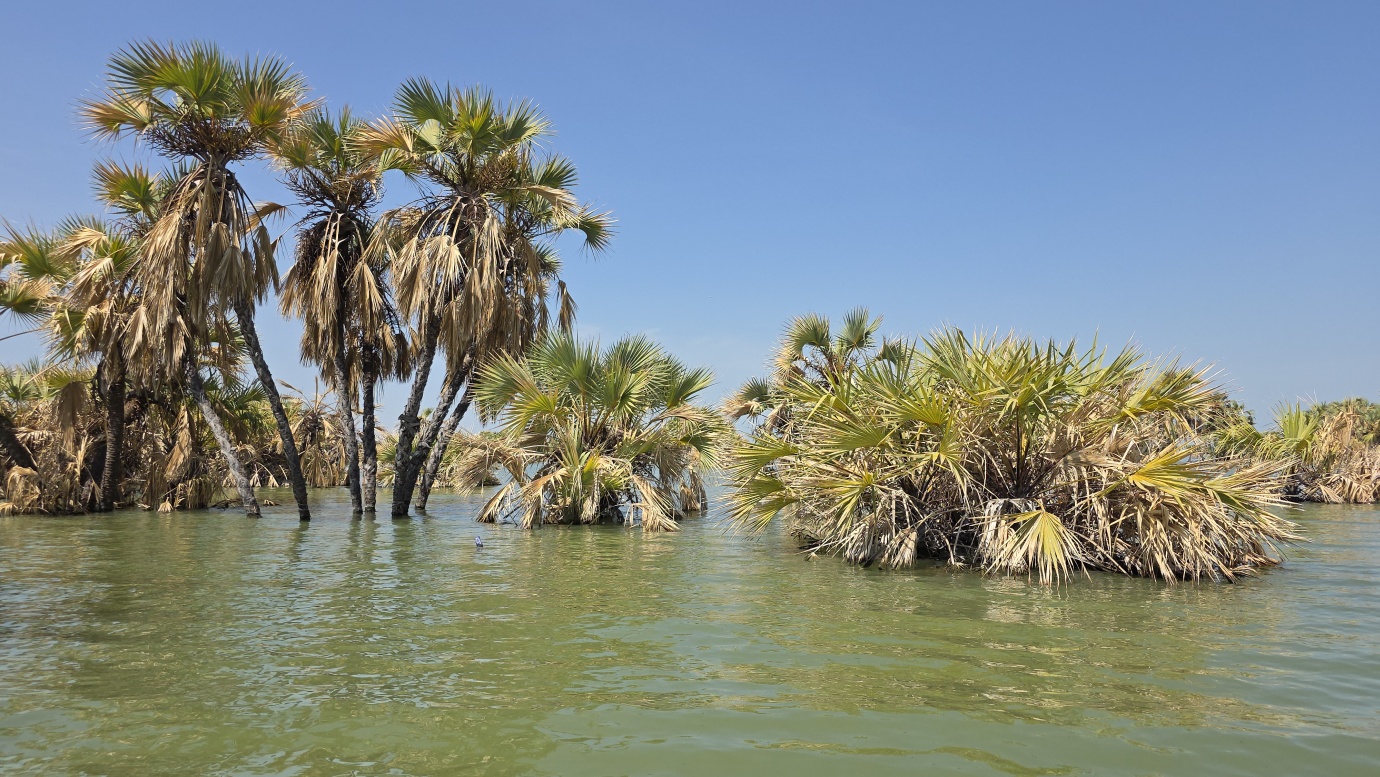
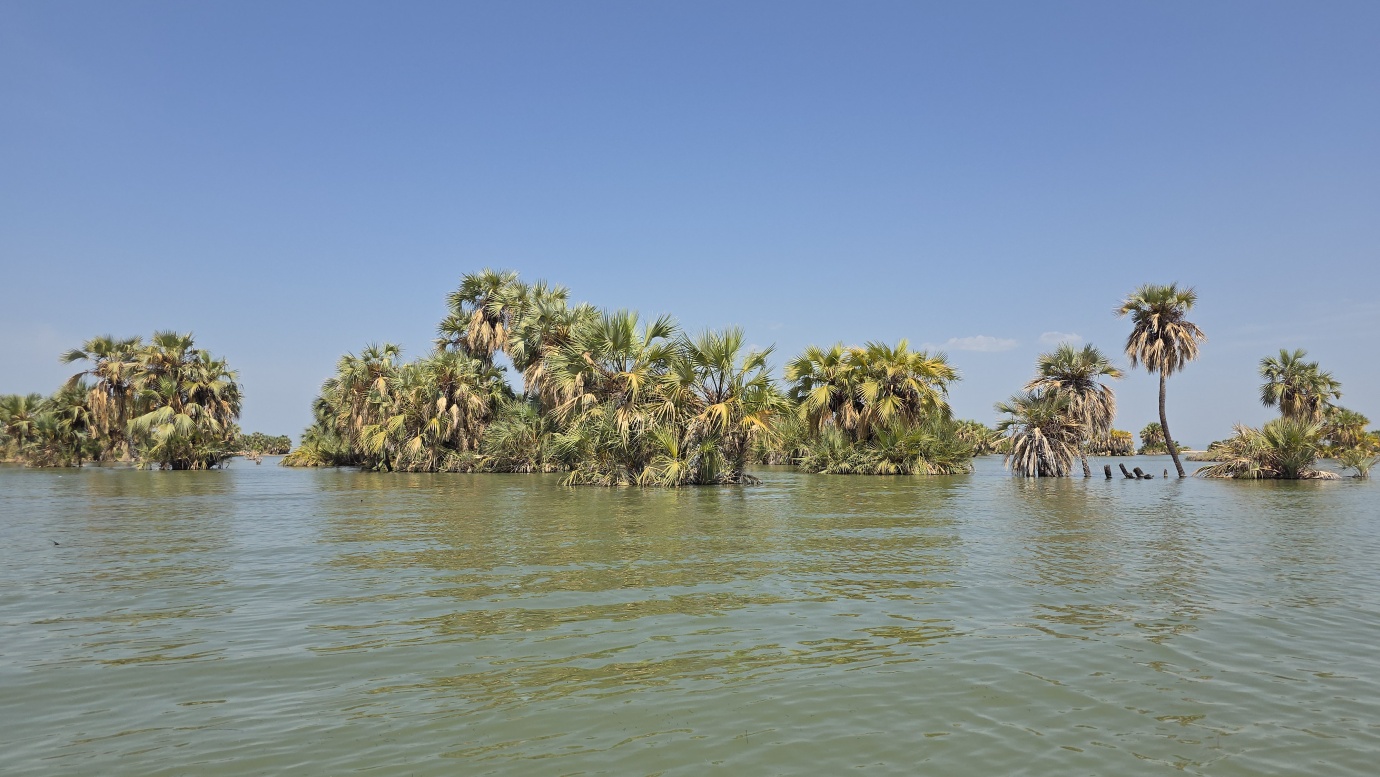
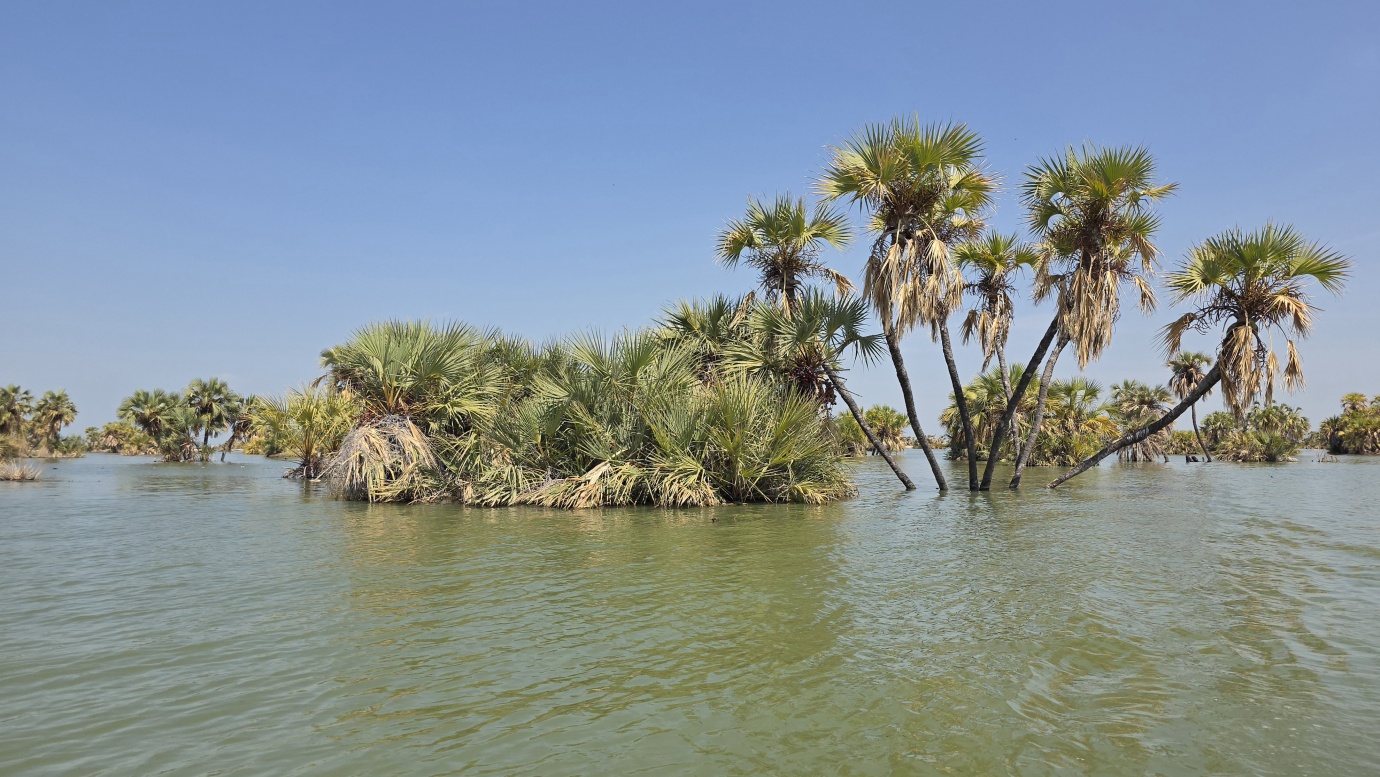
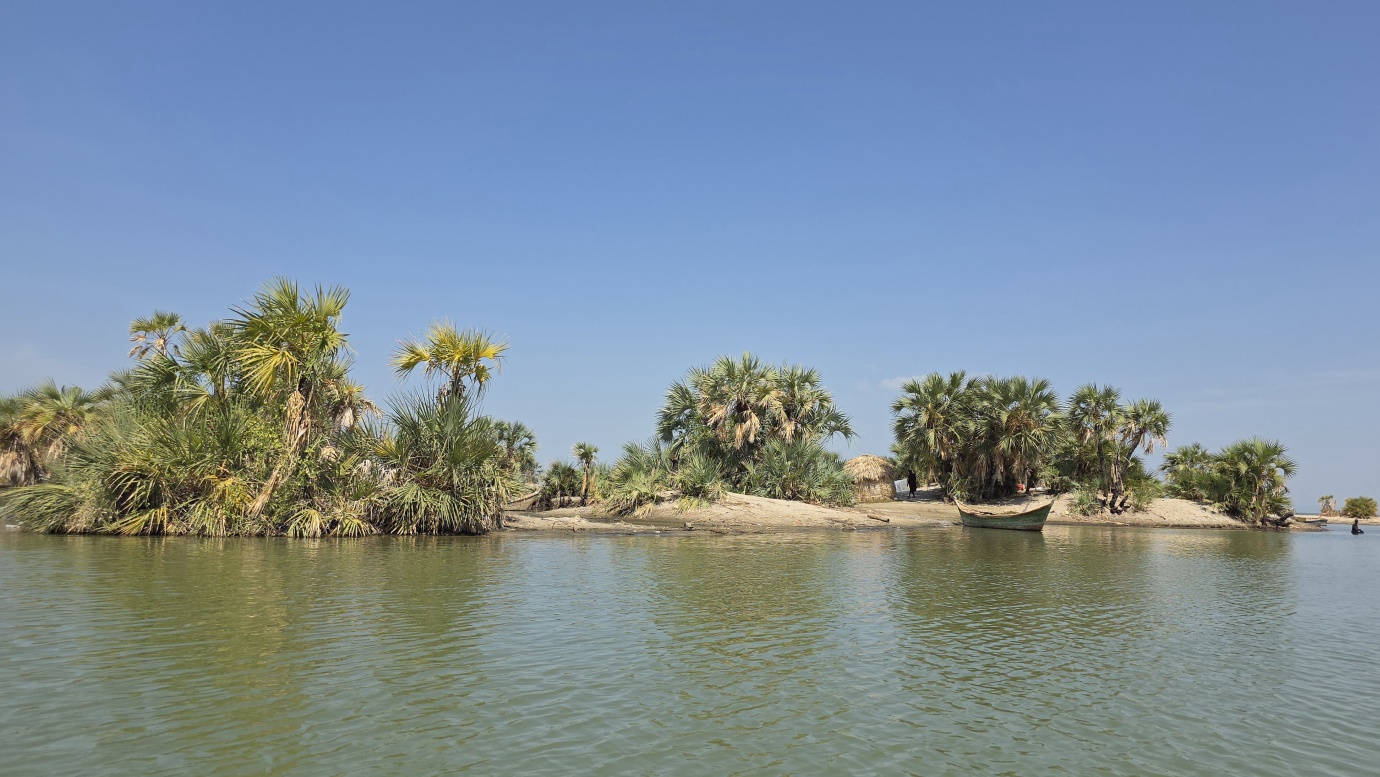
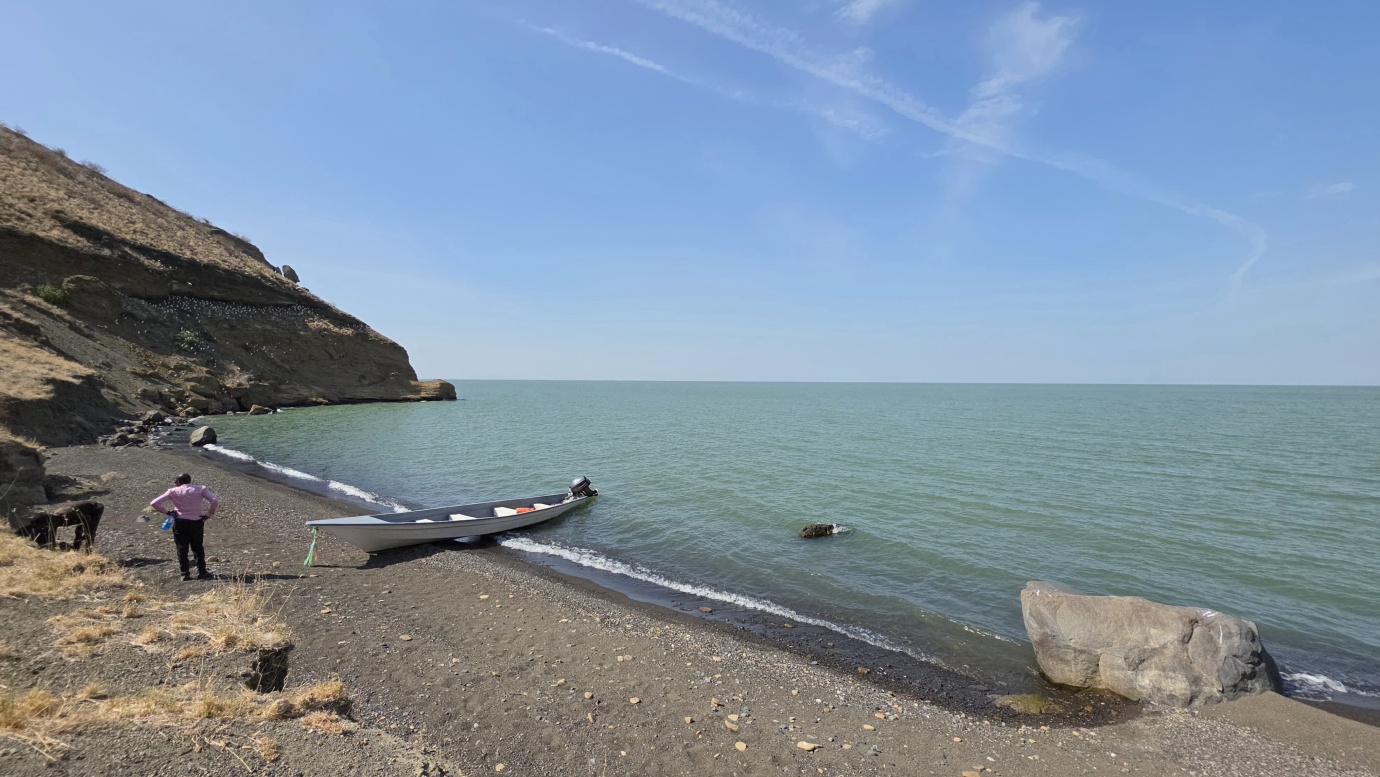
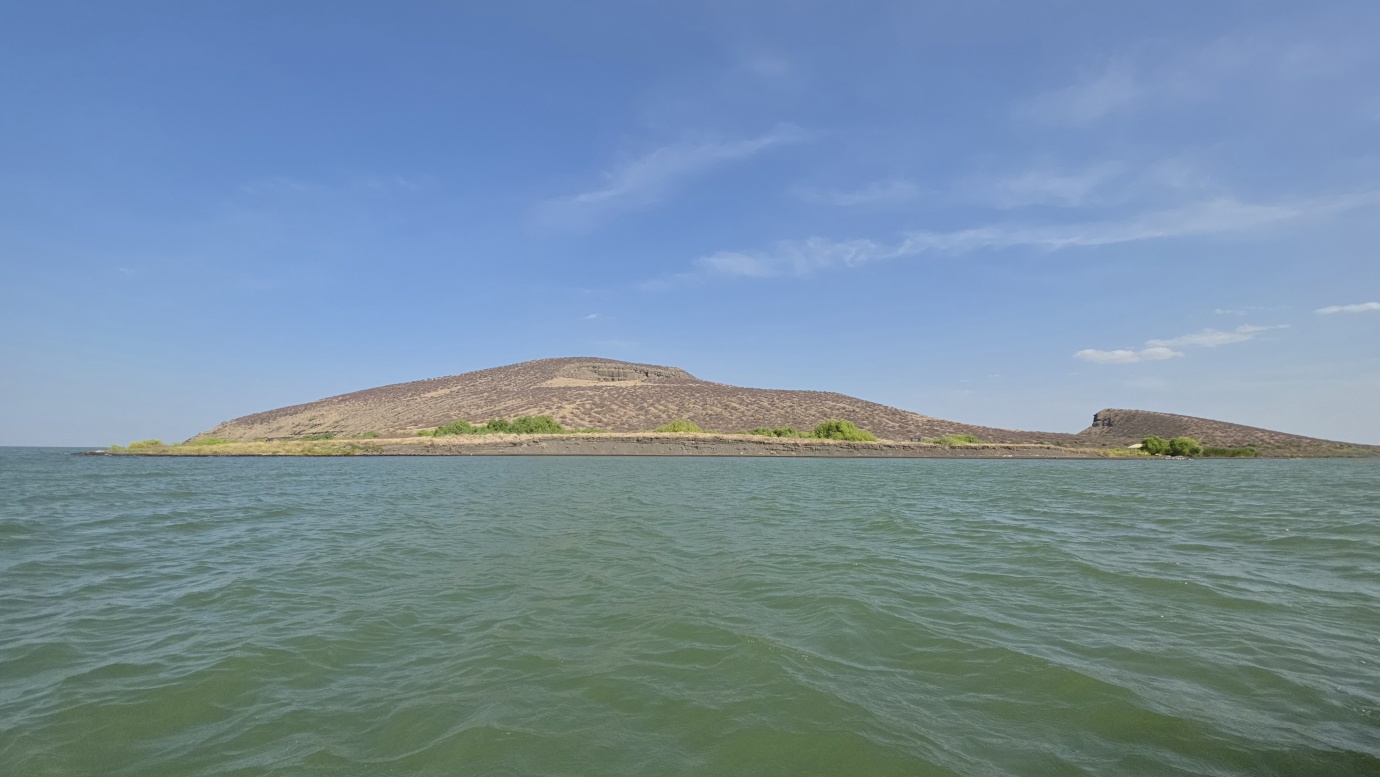
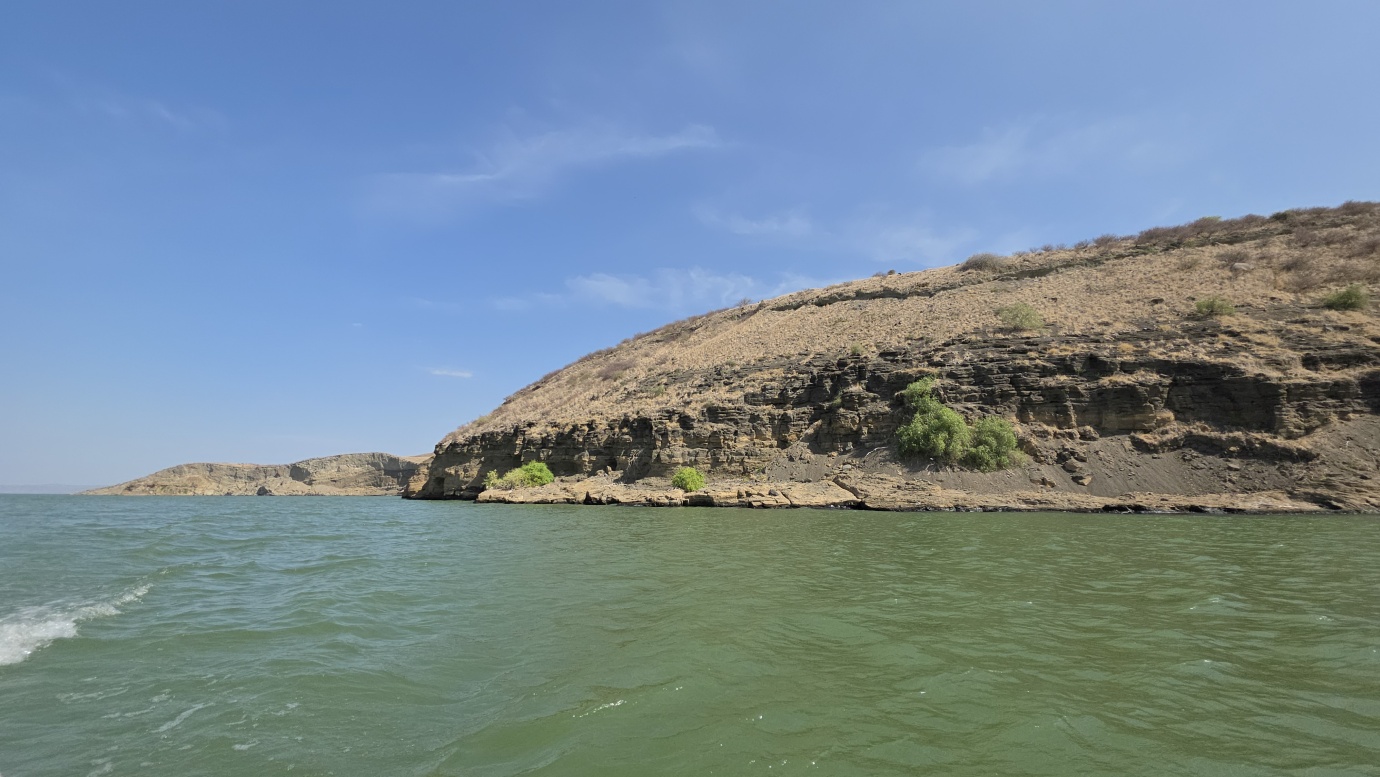
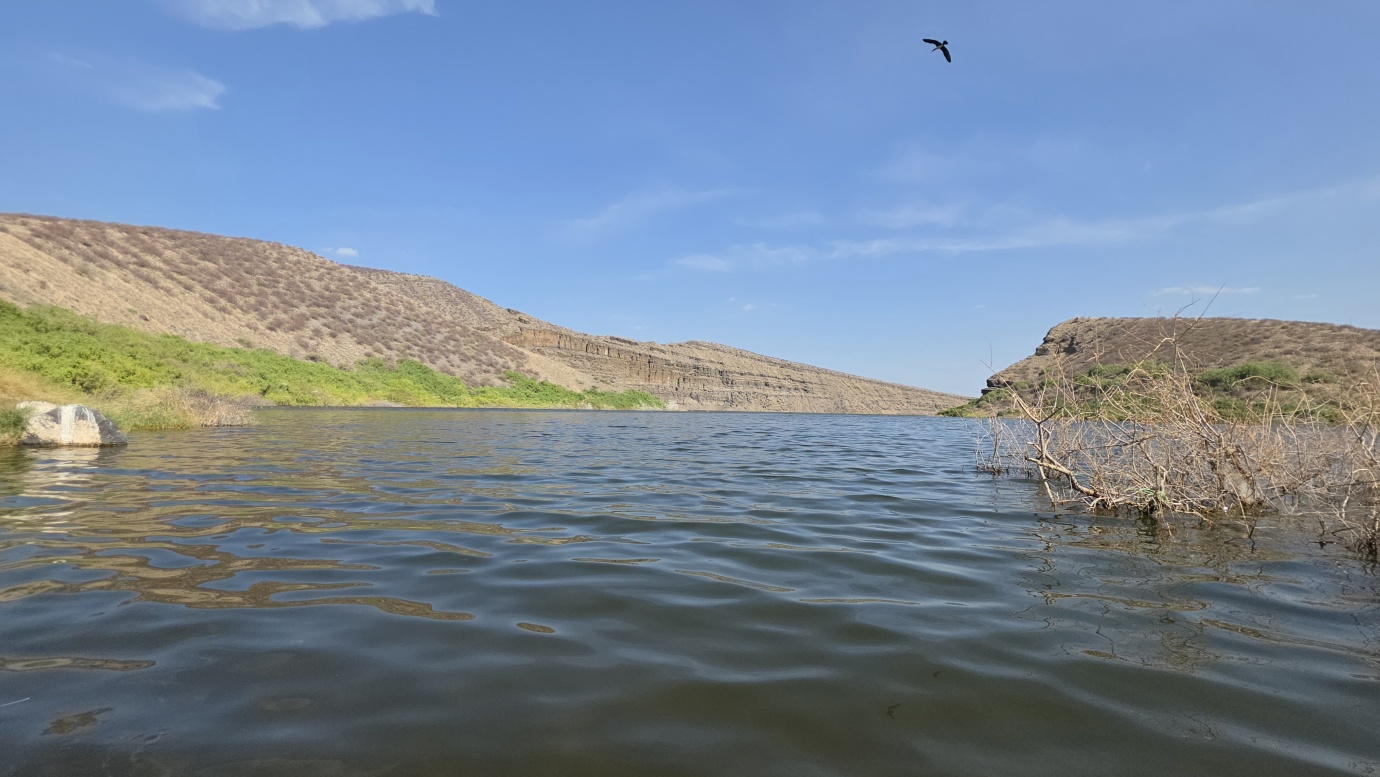
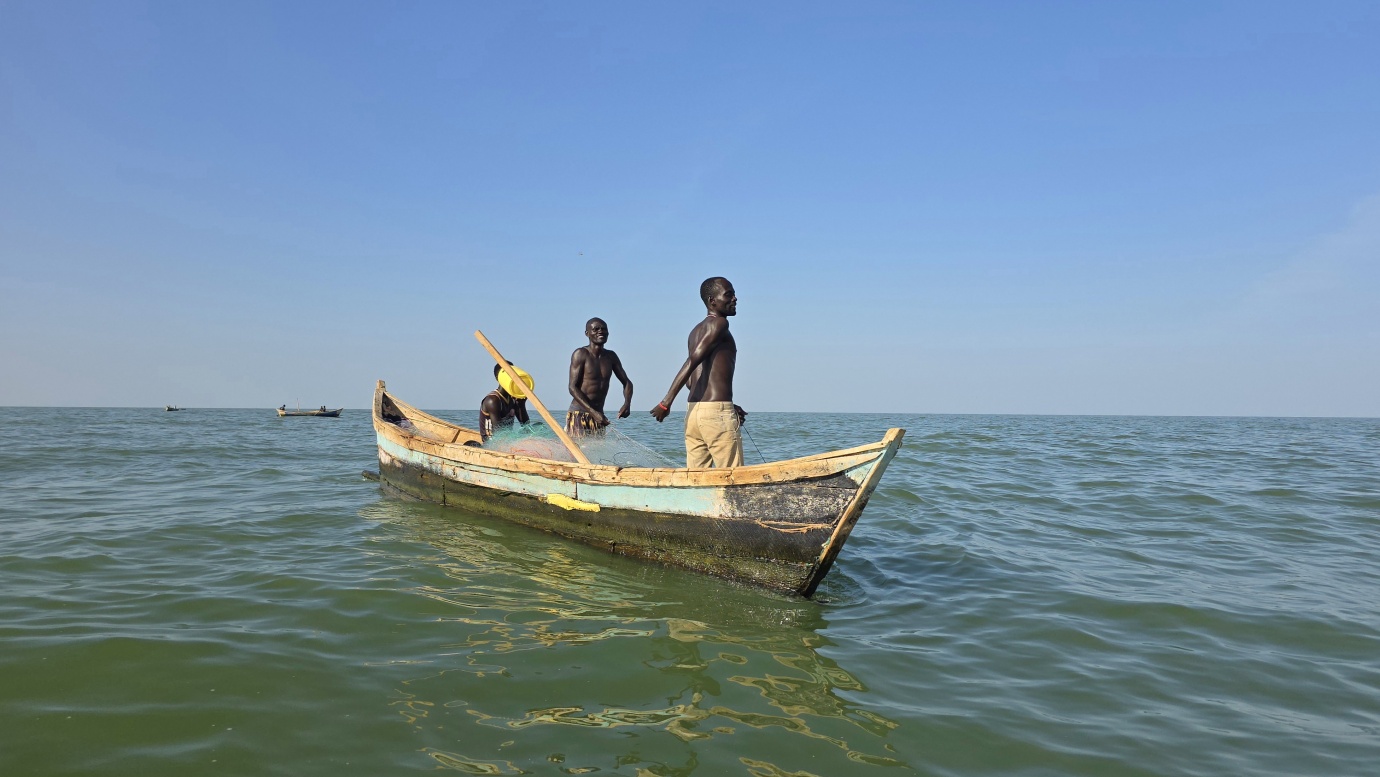
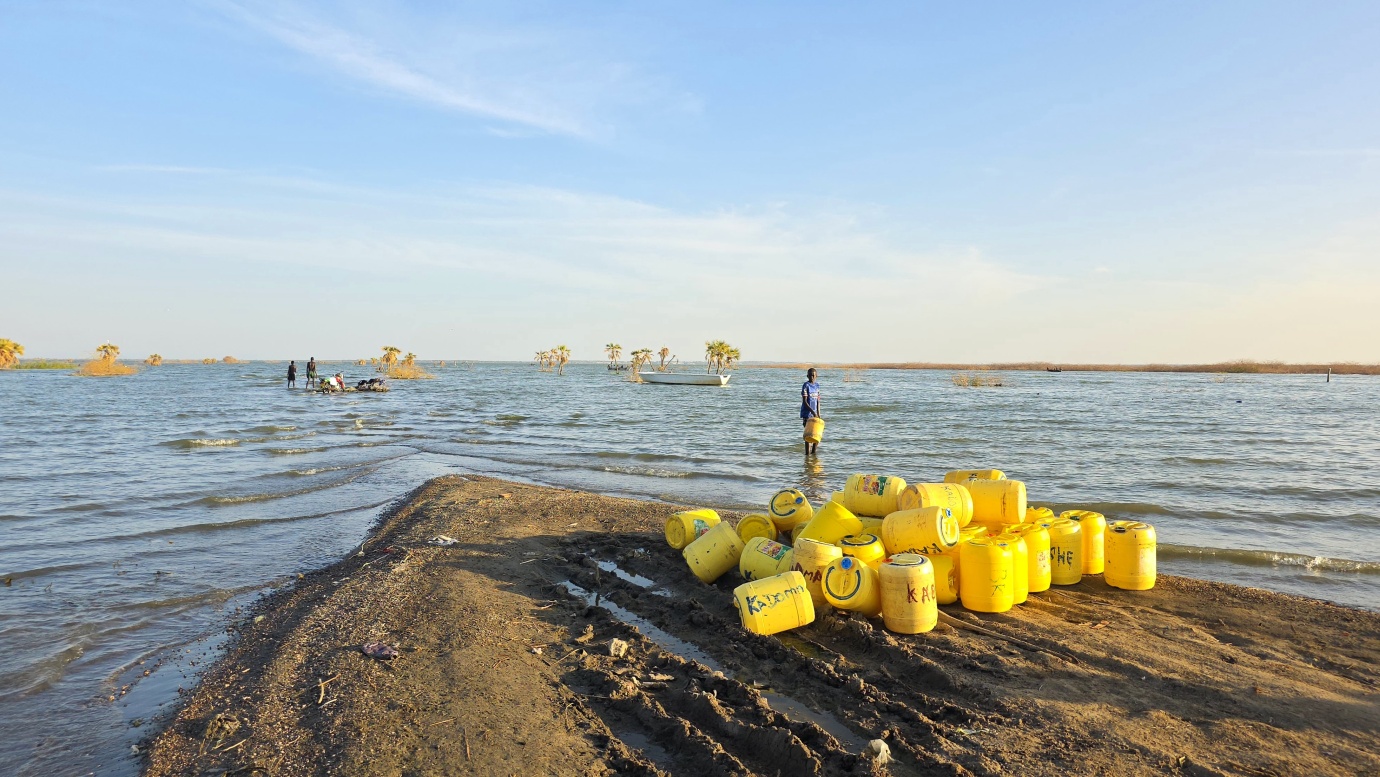
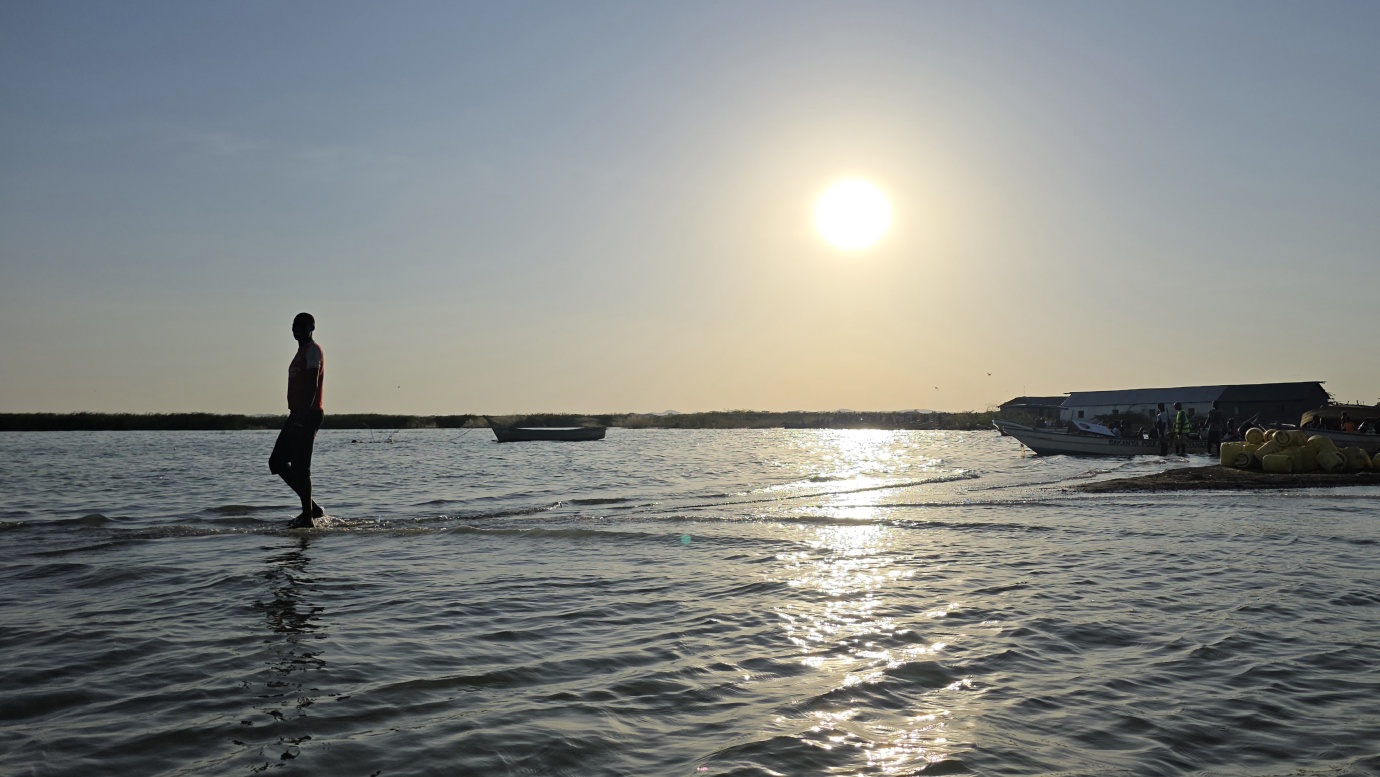
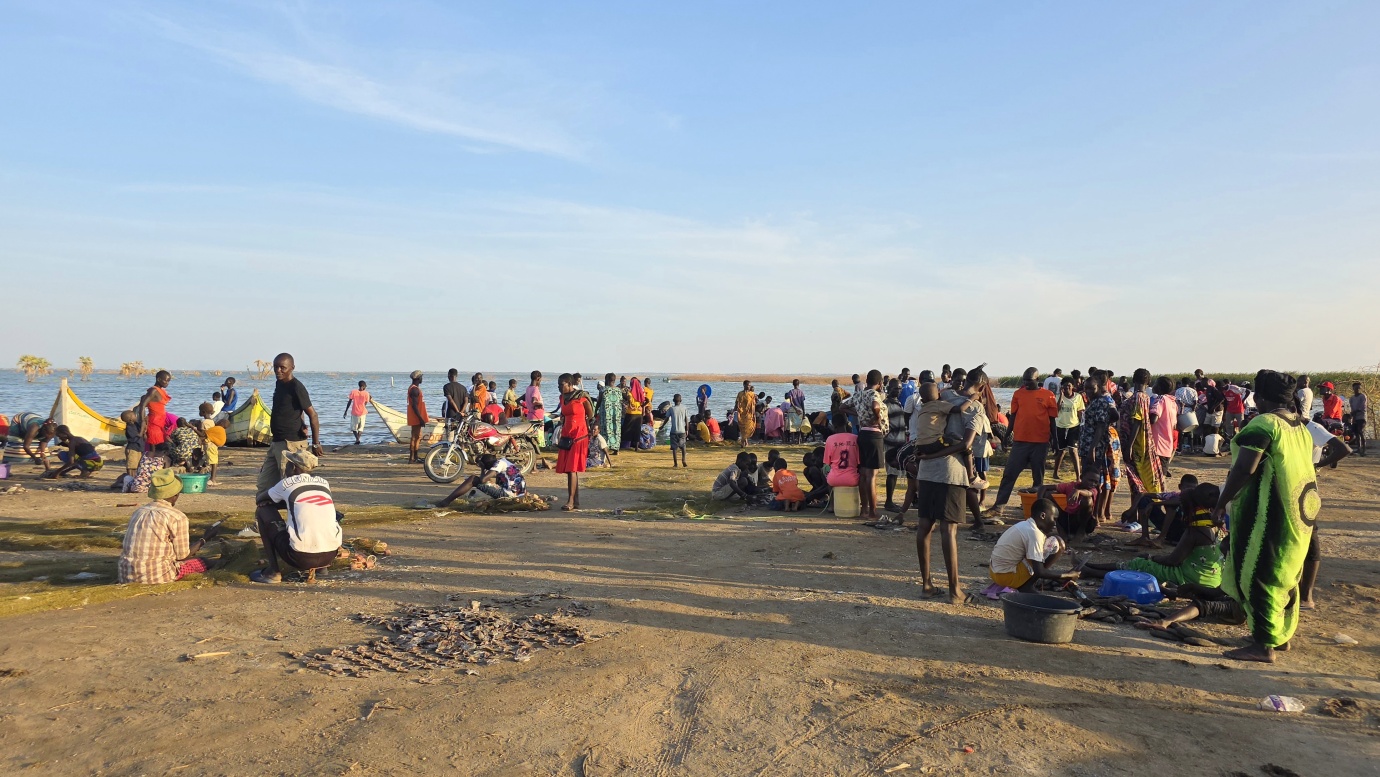
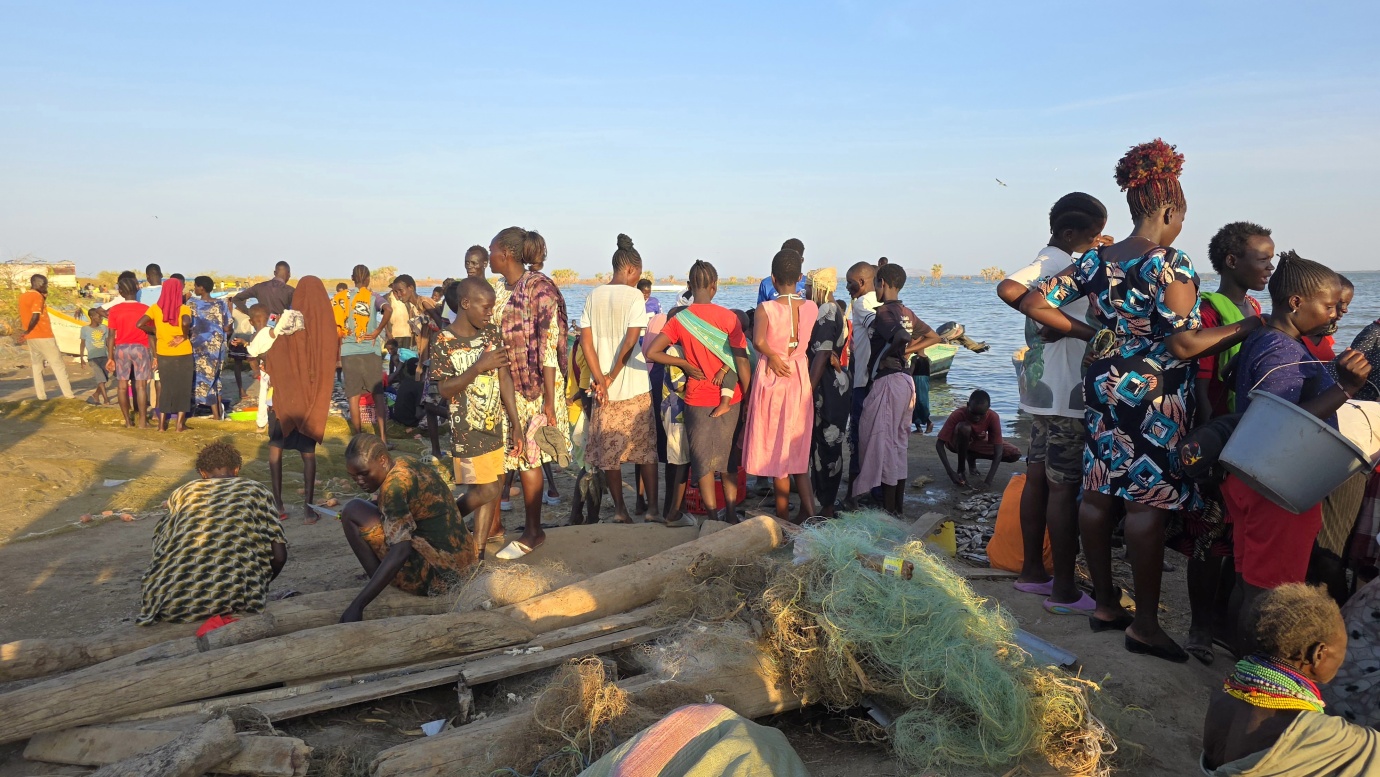
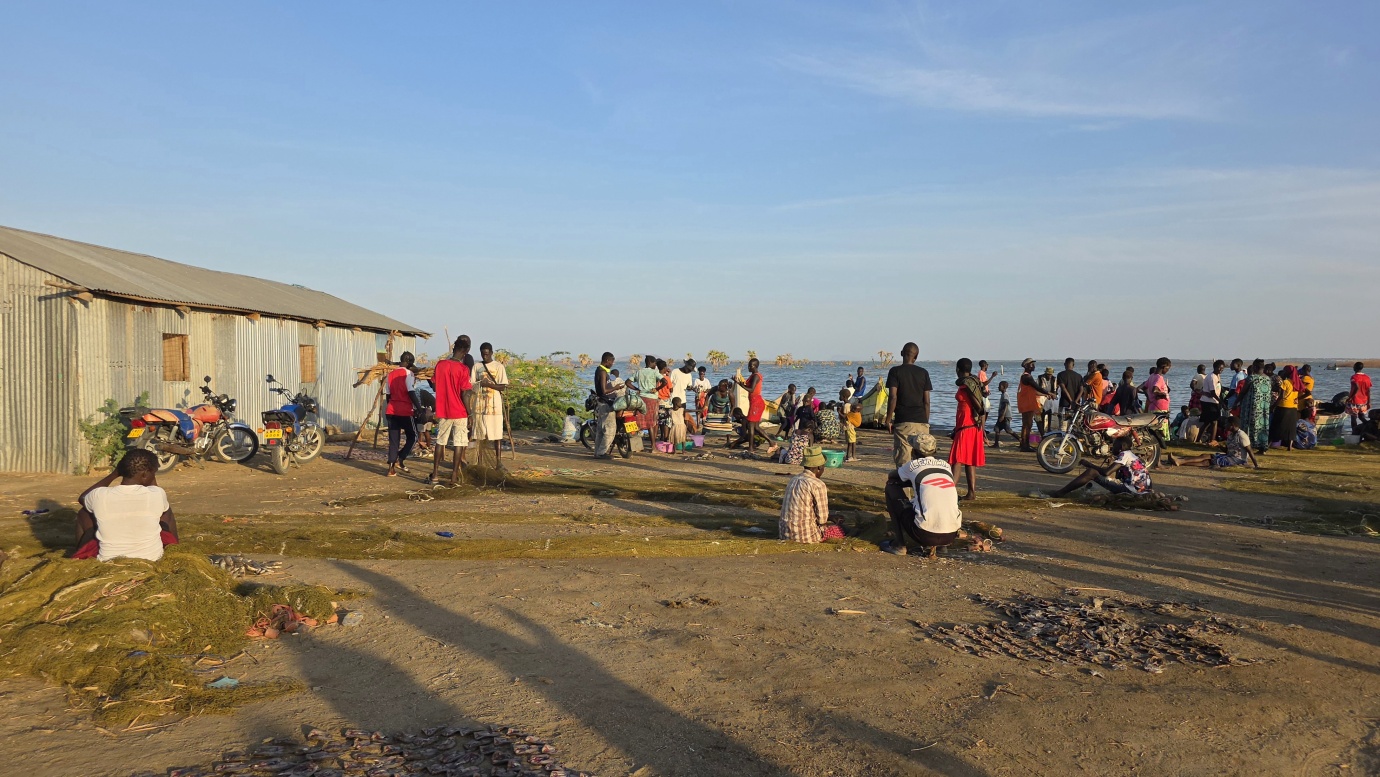
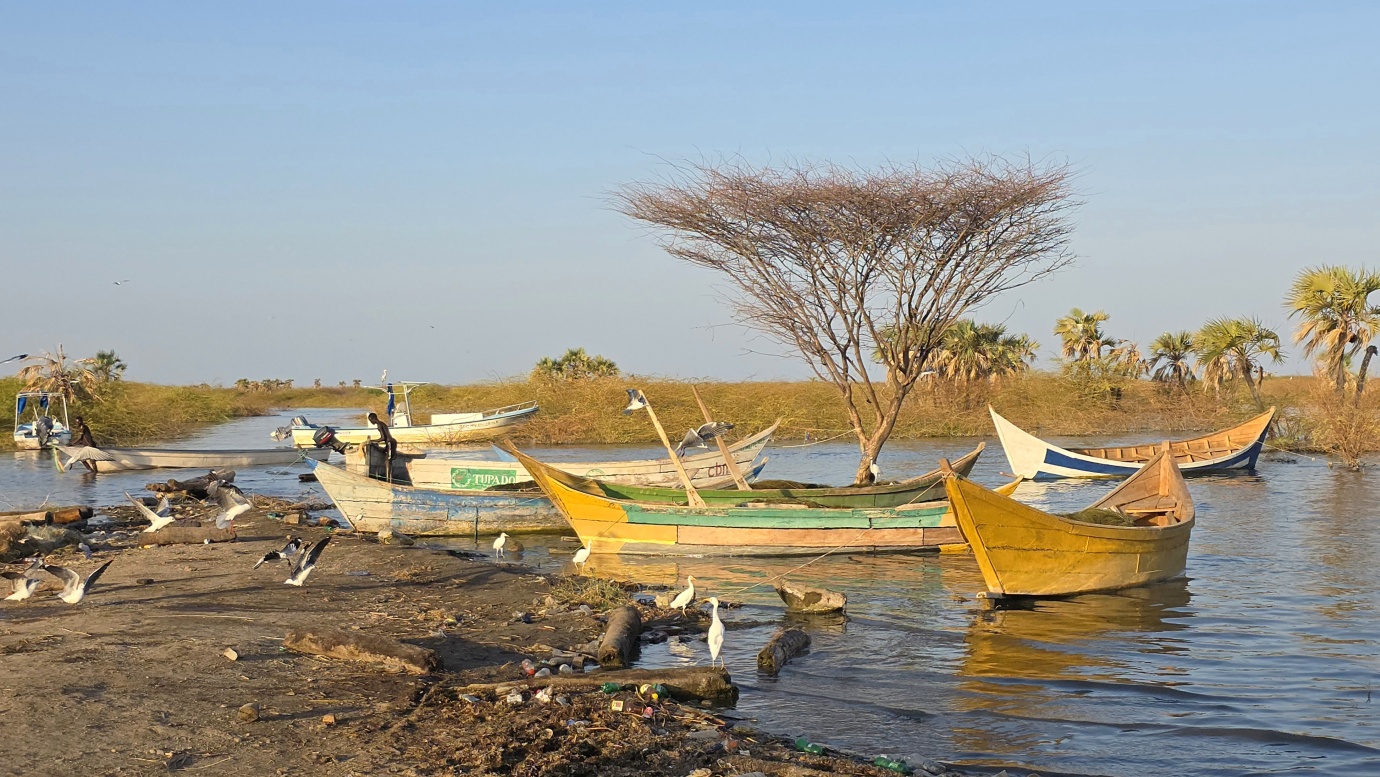
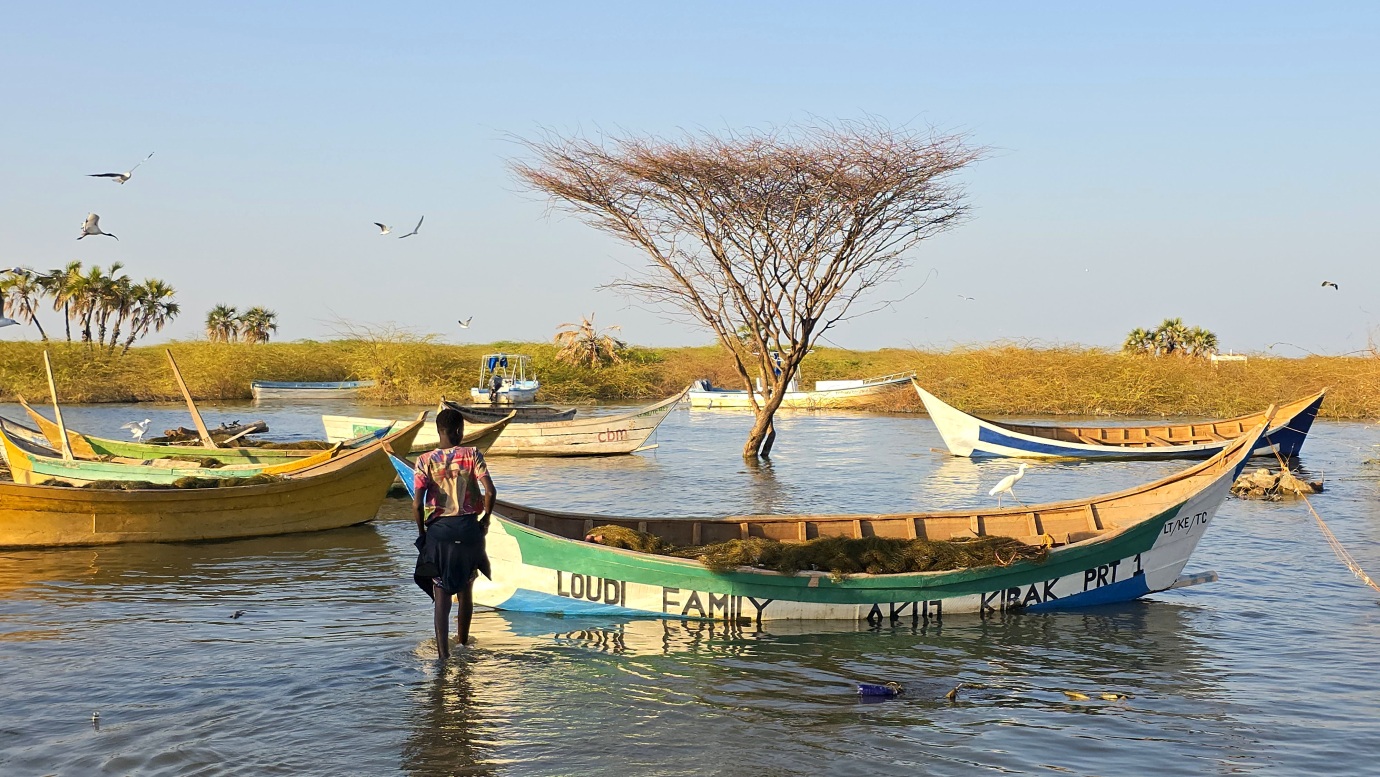
After a two-day drive, we finally arrived in Lodwar around 11 in the morning, but immediately continued for another hour to Kalokol to catch our boat to visit the lake. After complicated negotiations, we agreed to hire the fishing boat with a 40hp engine for 15,000 KES and jumped in. Nobody told us in advance that the lake was rough with one-meter waves, so the small fishing-boat ride was perilous, and we can’t really recommend it. Probably, we were supposed to look for a bigger boat.
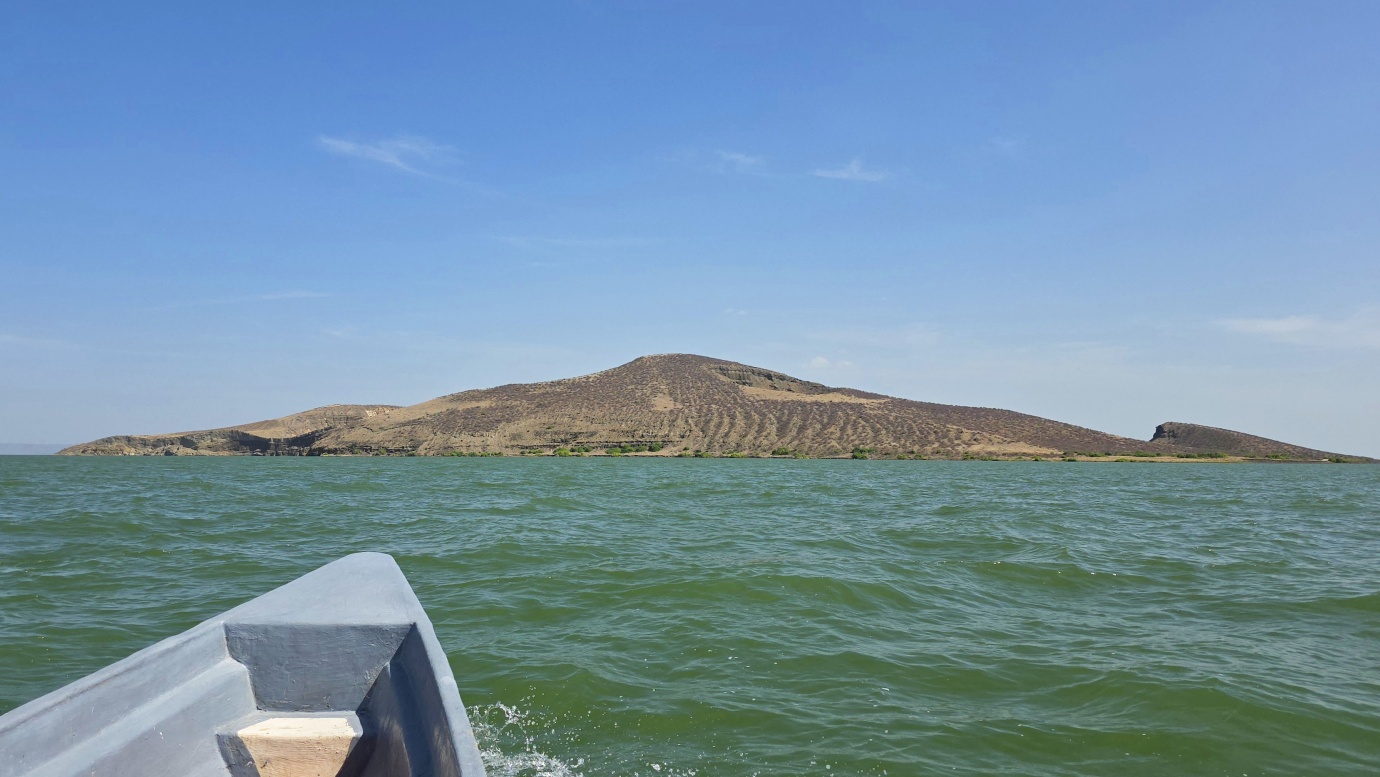
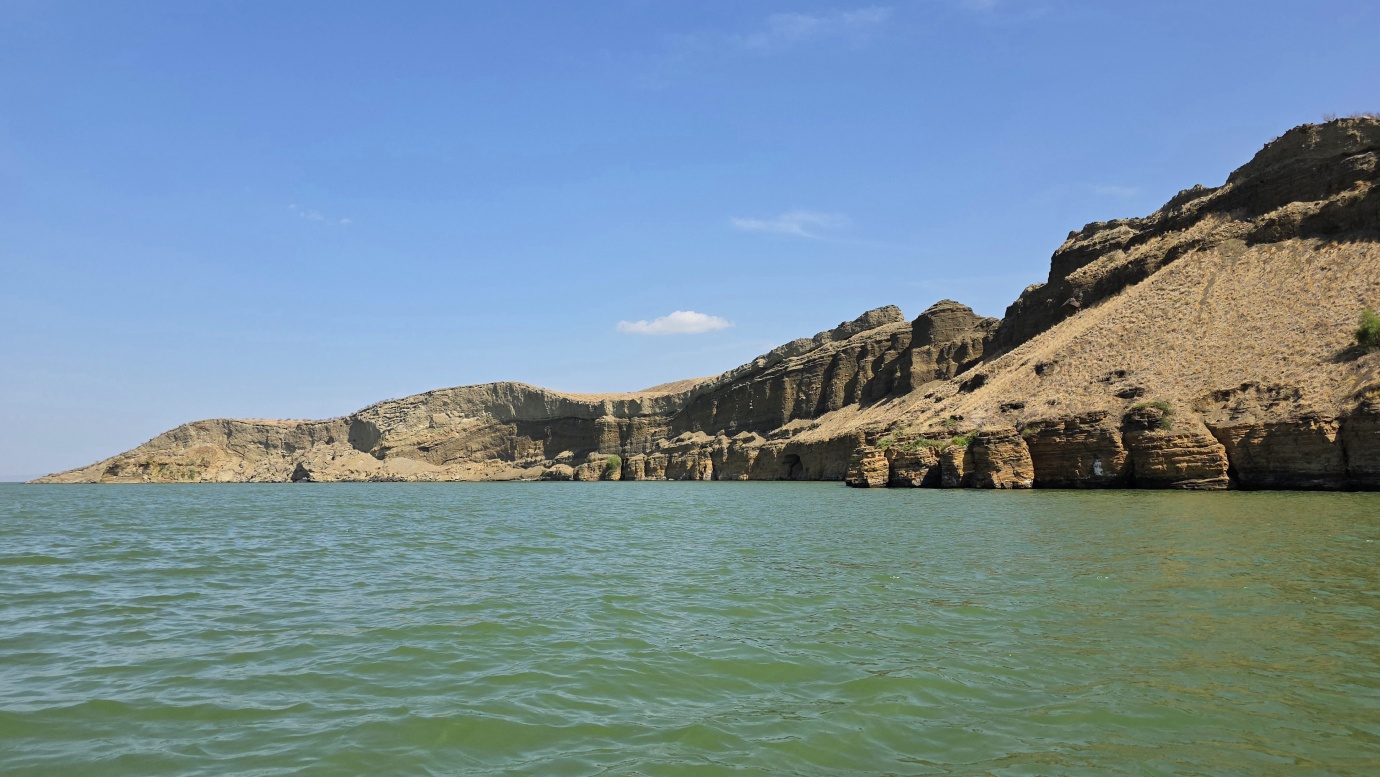
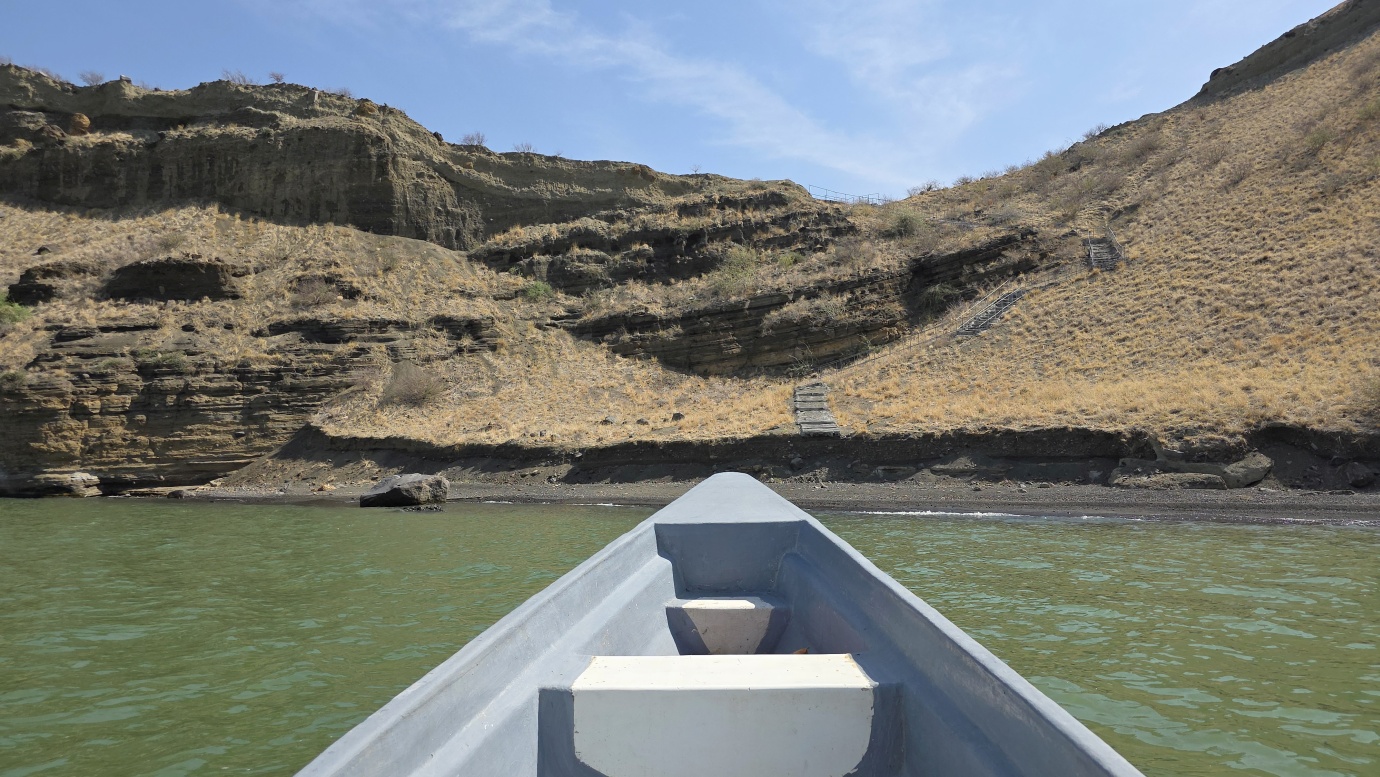
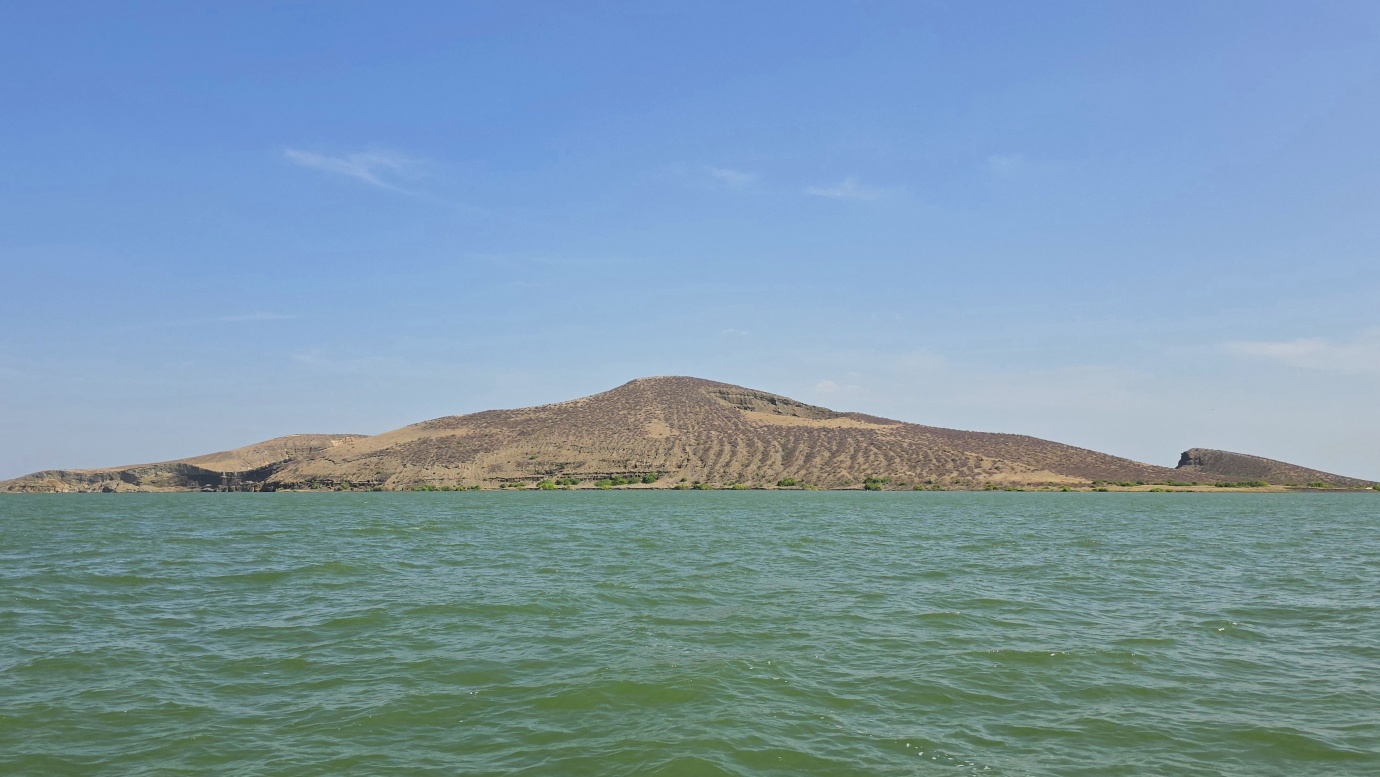
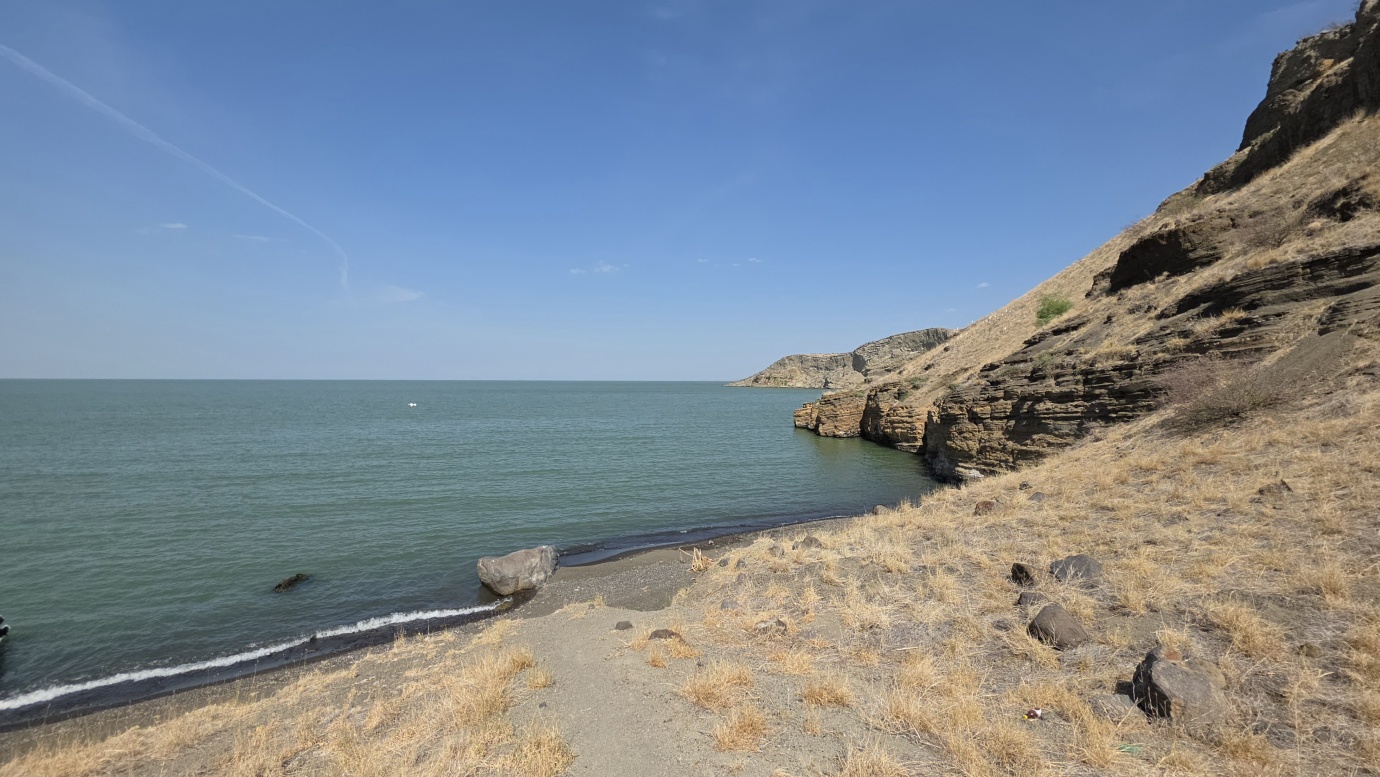
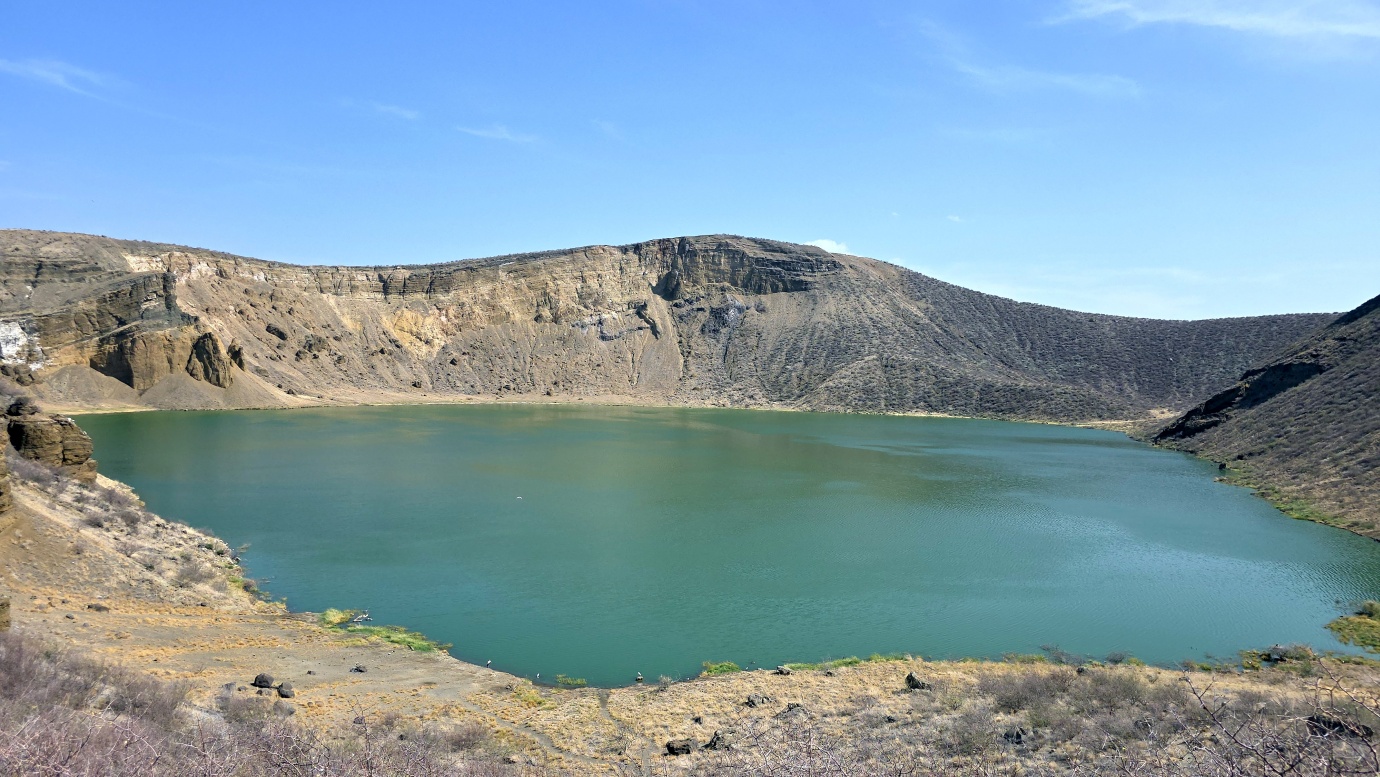
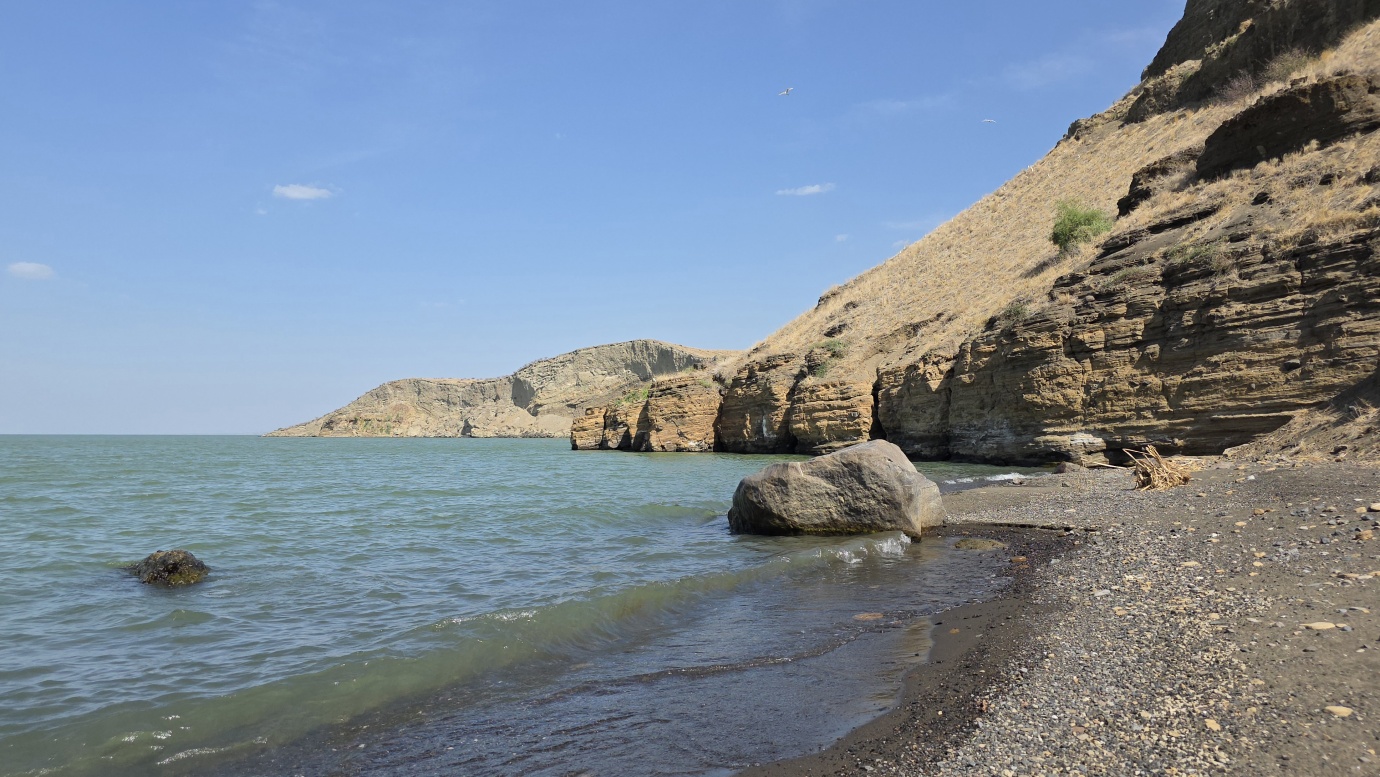
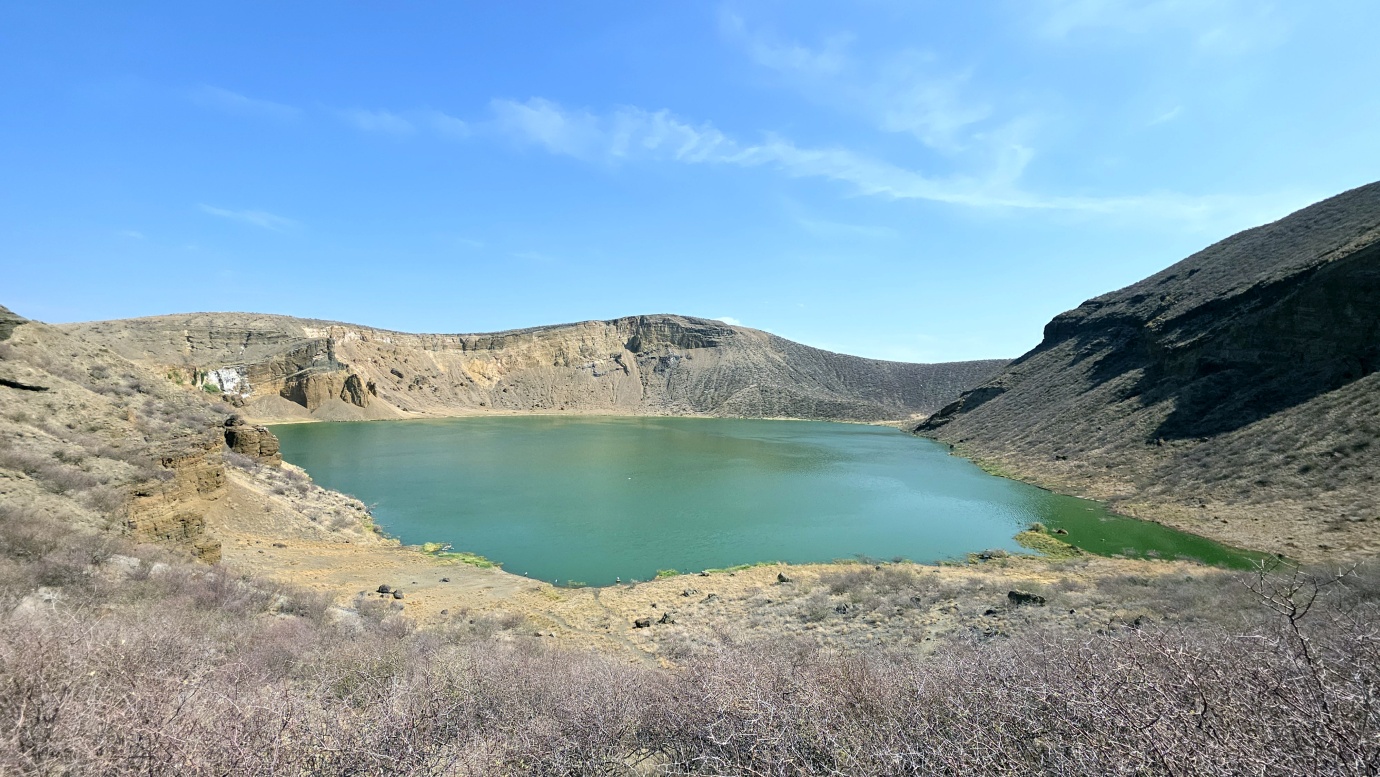
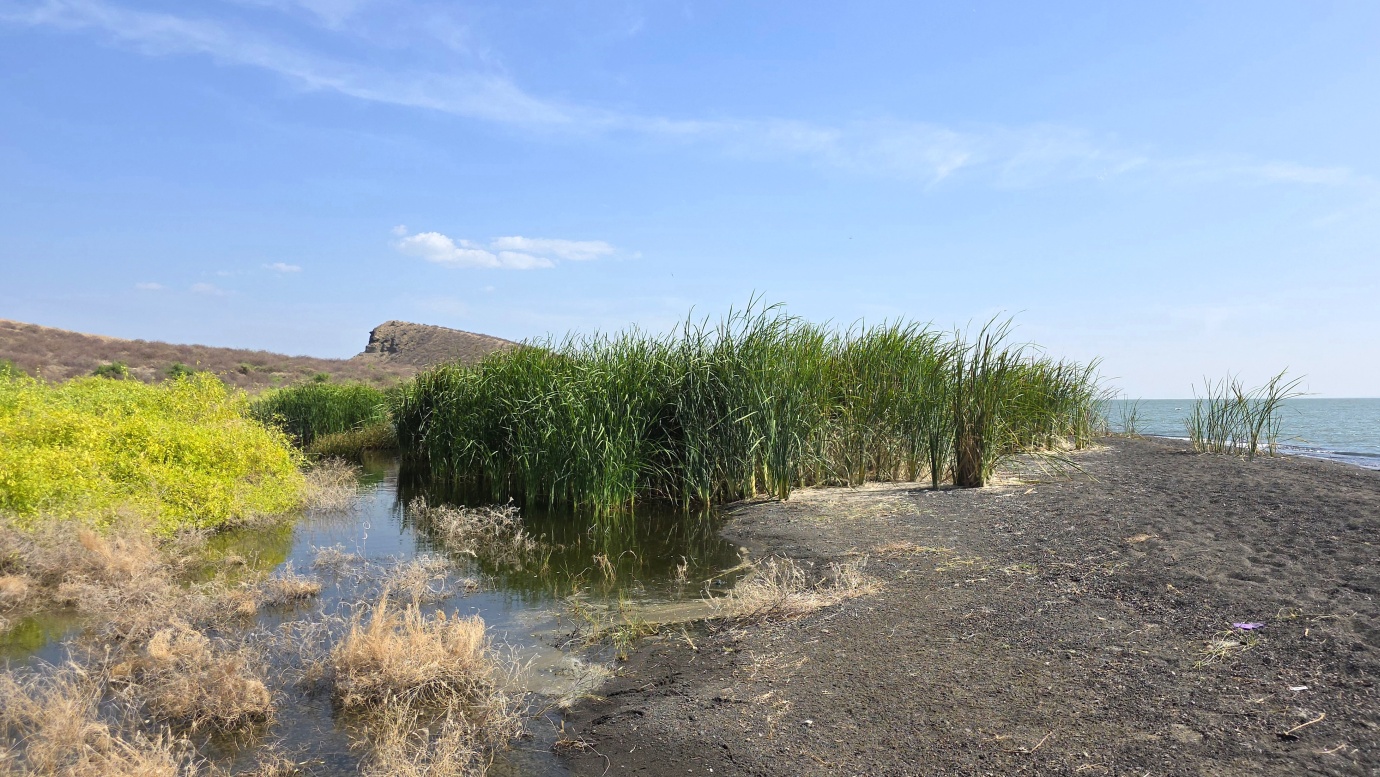
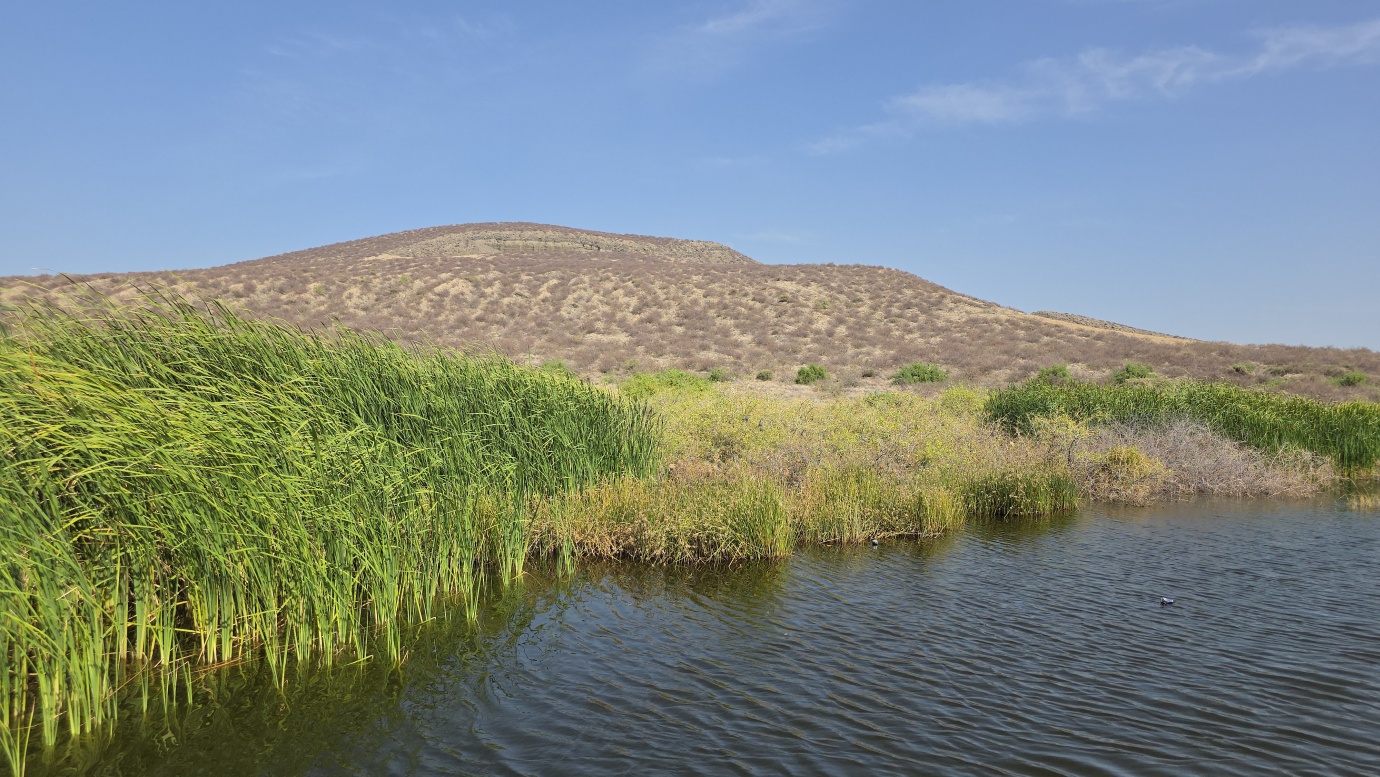
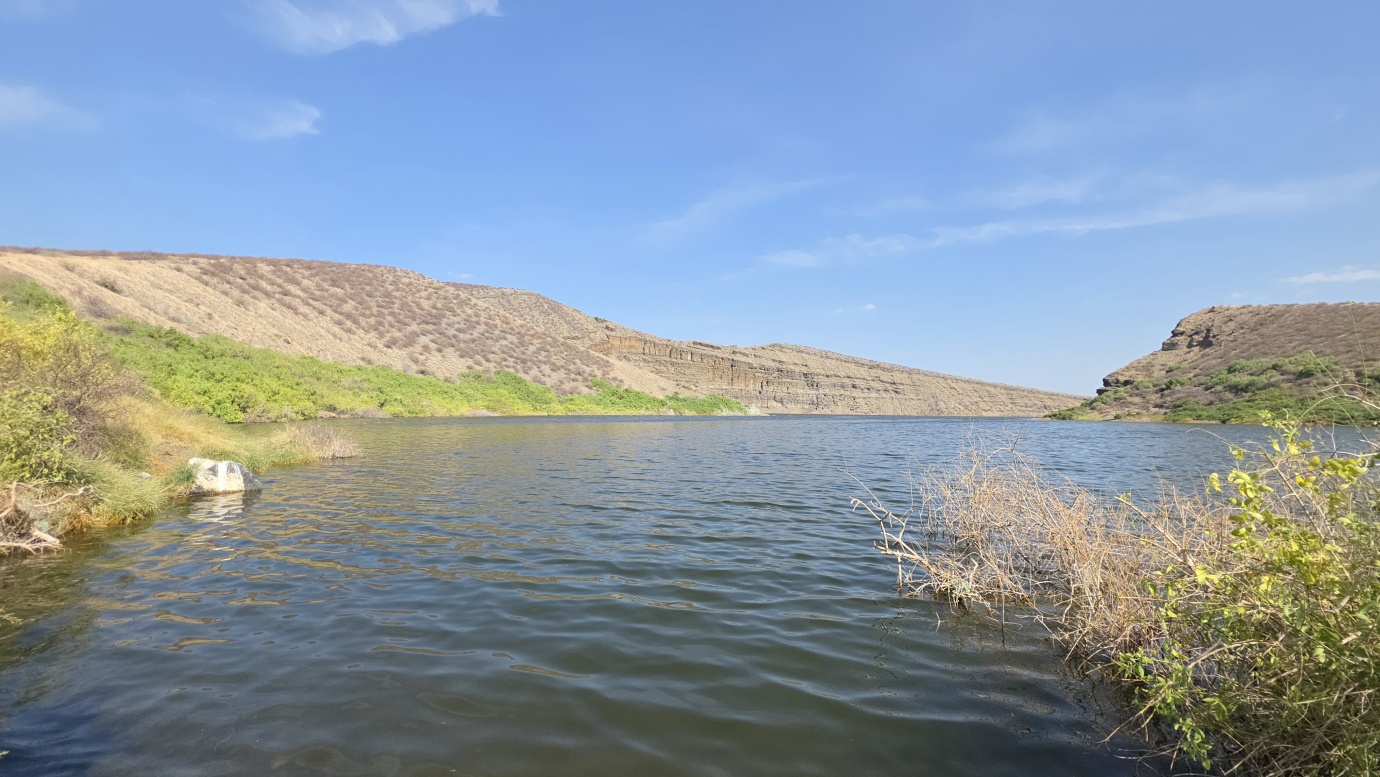
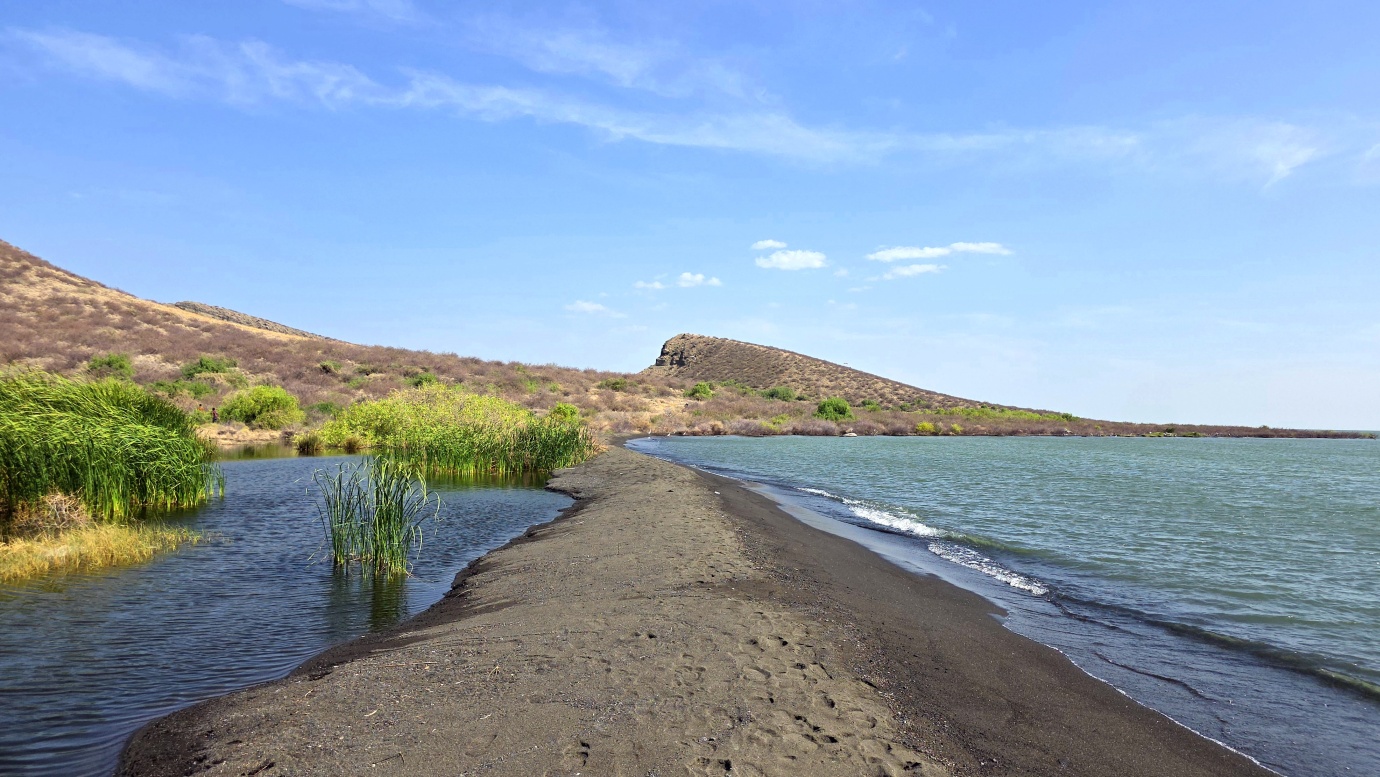
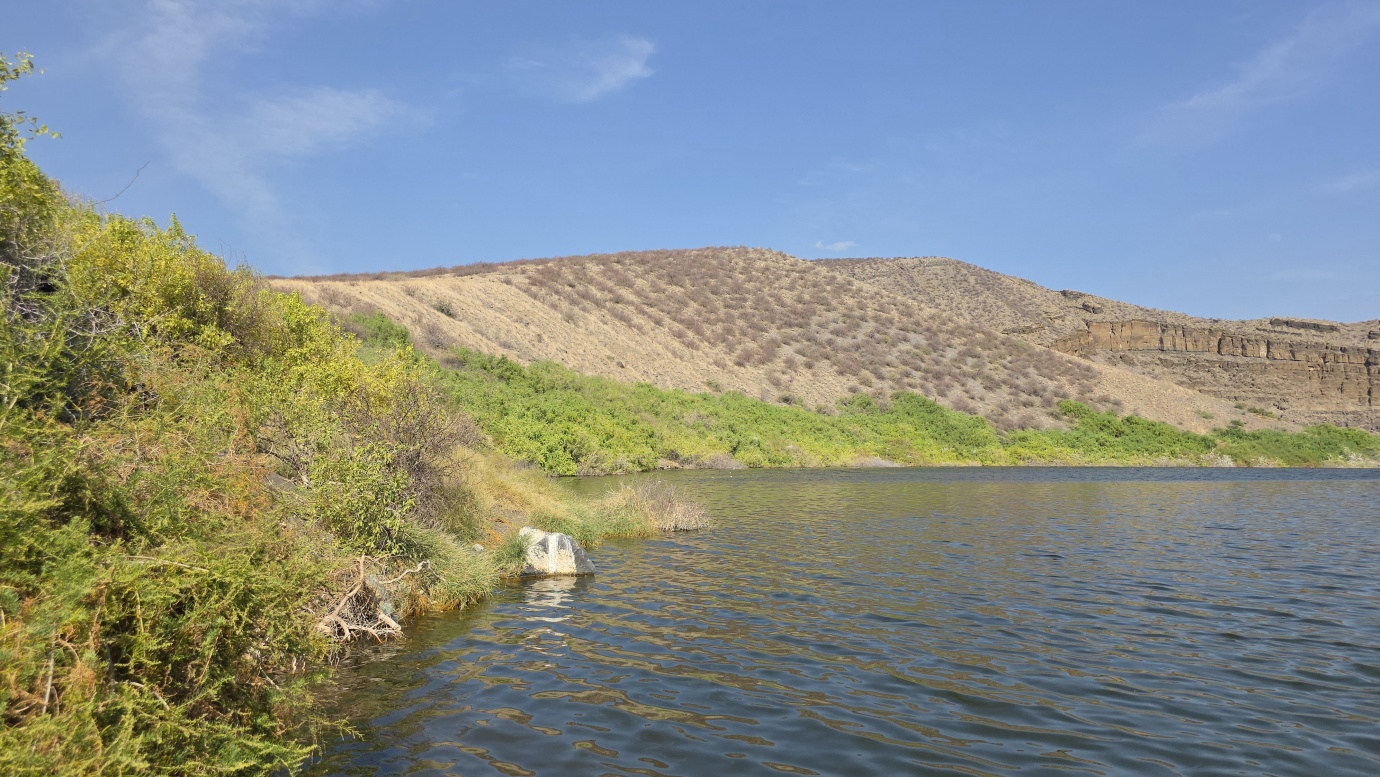
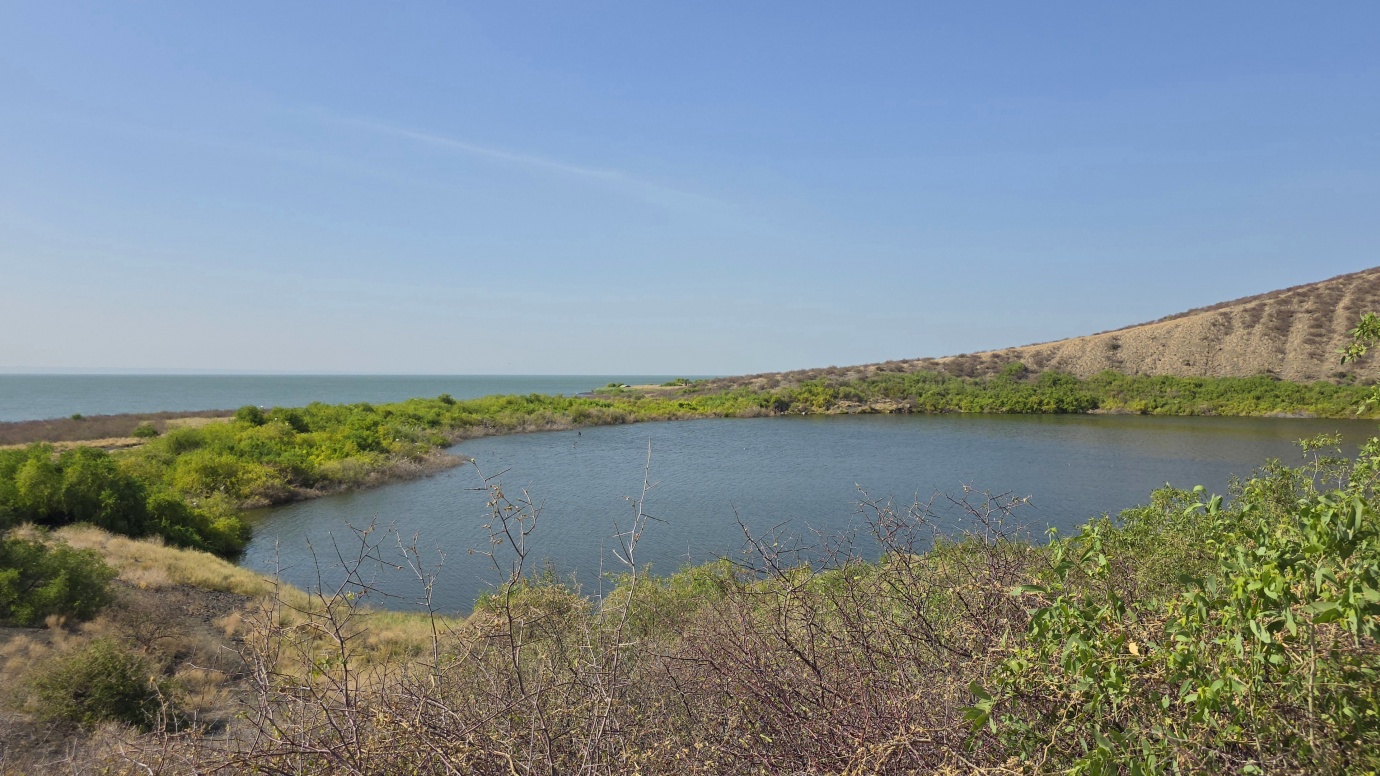
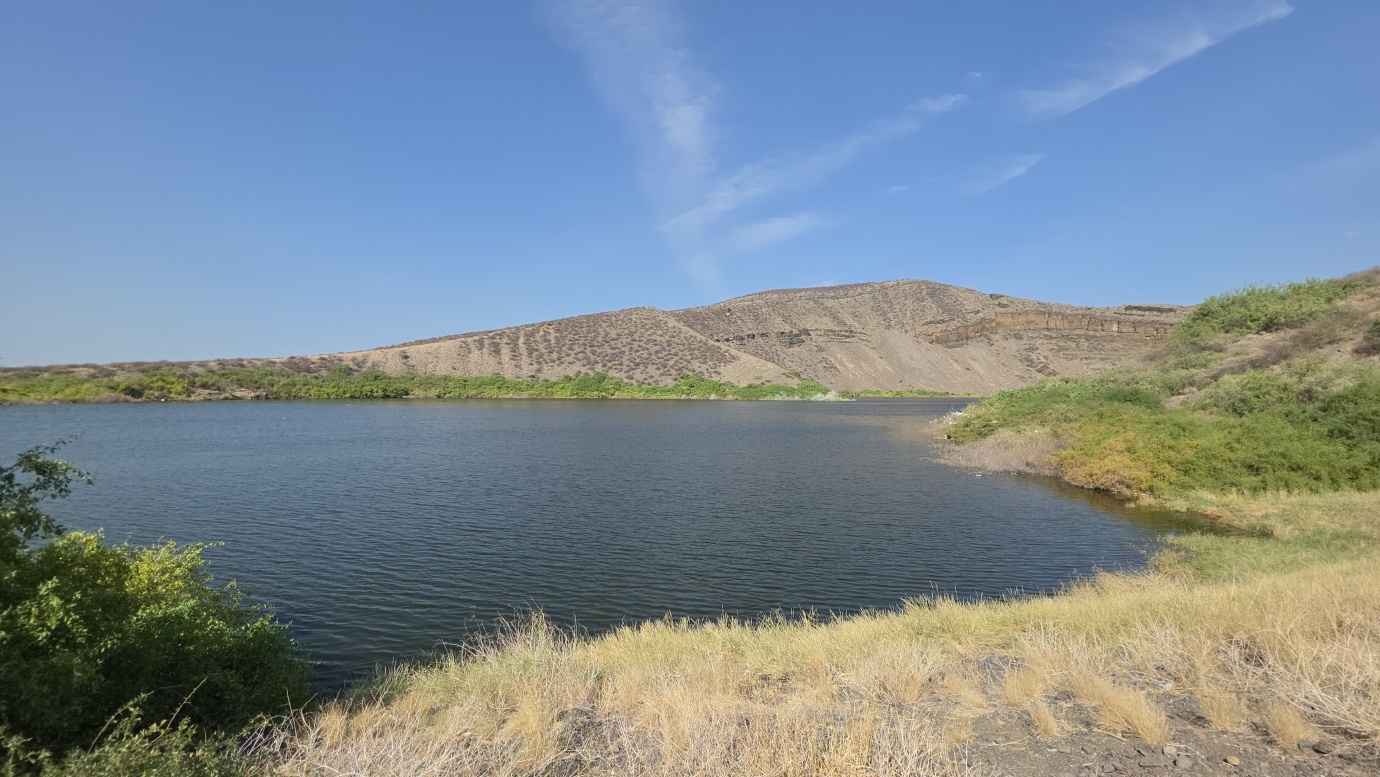
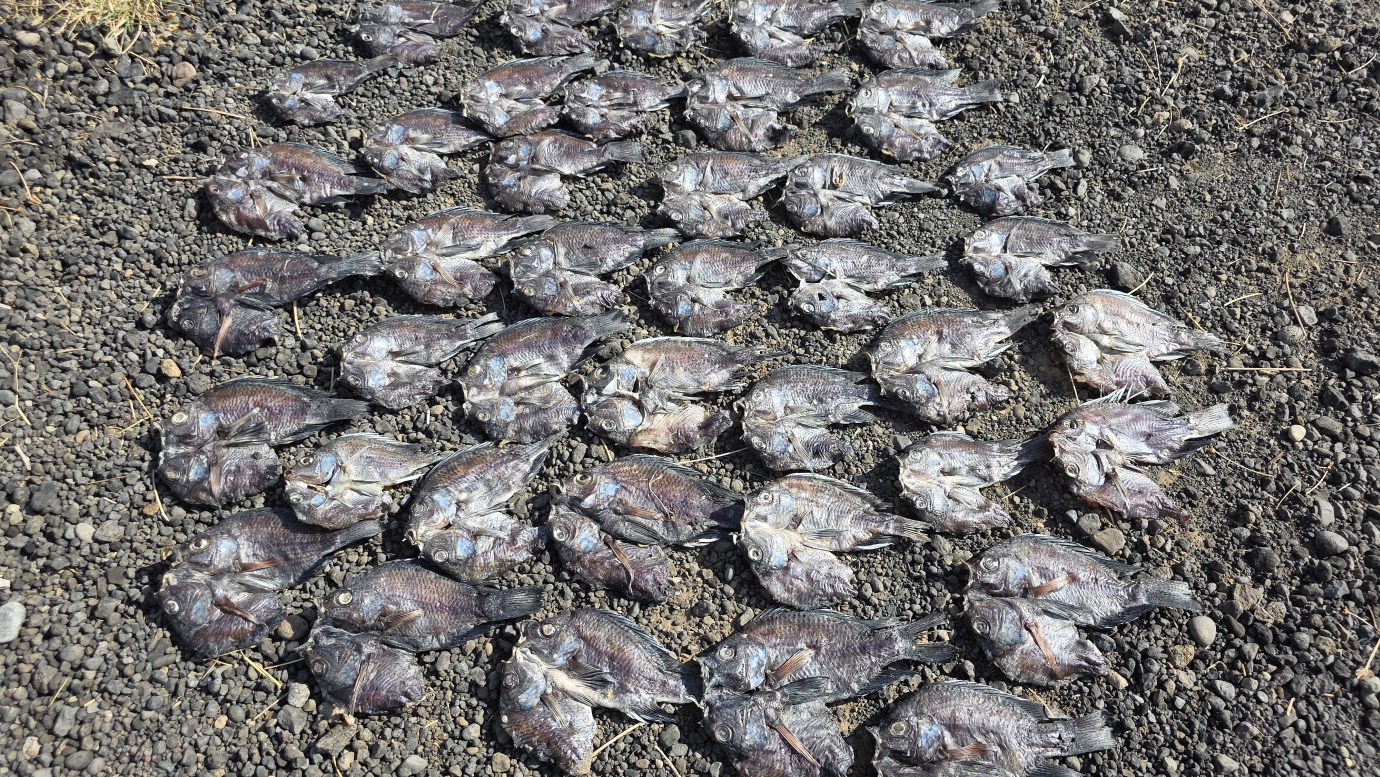
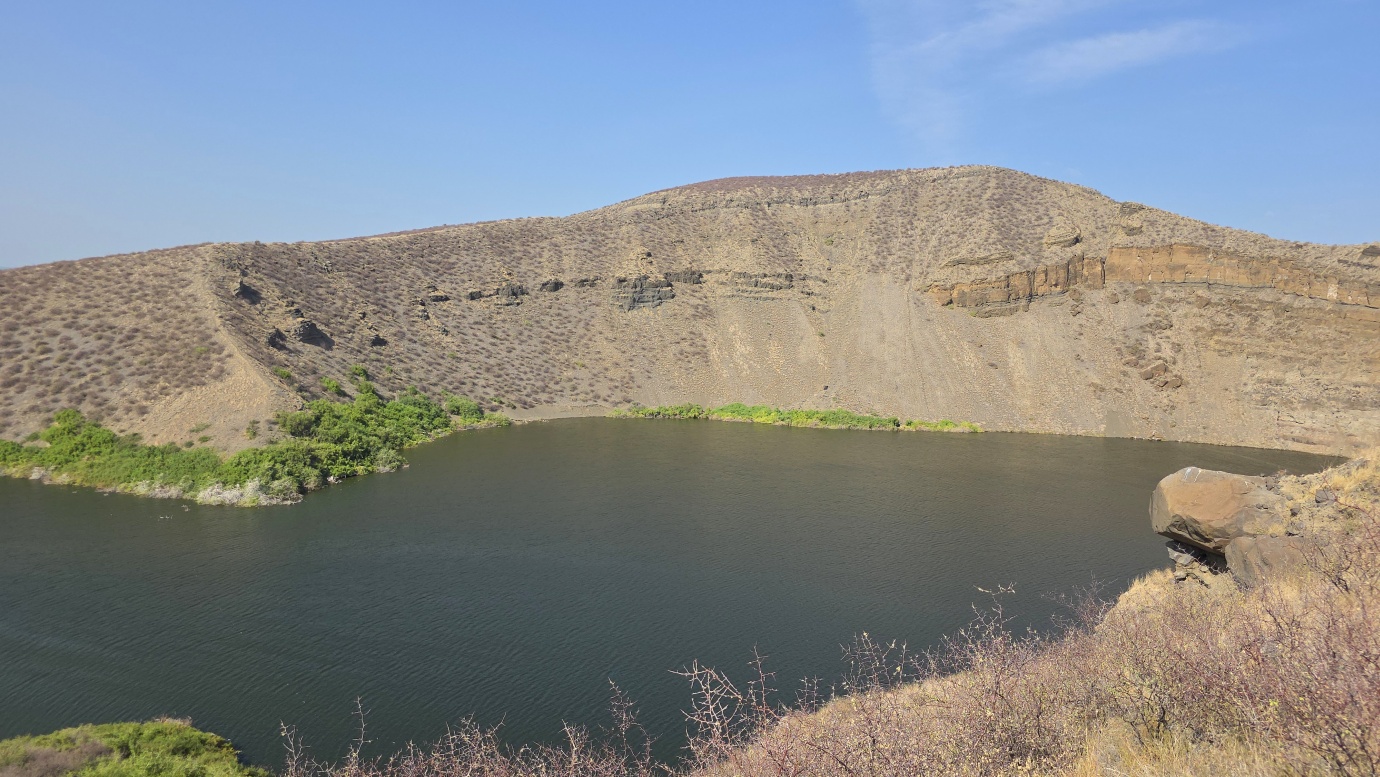
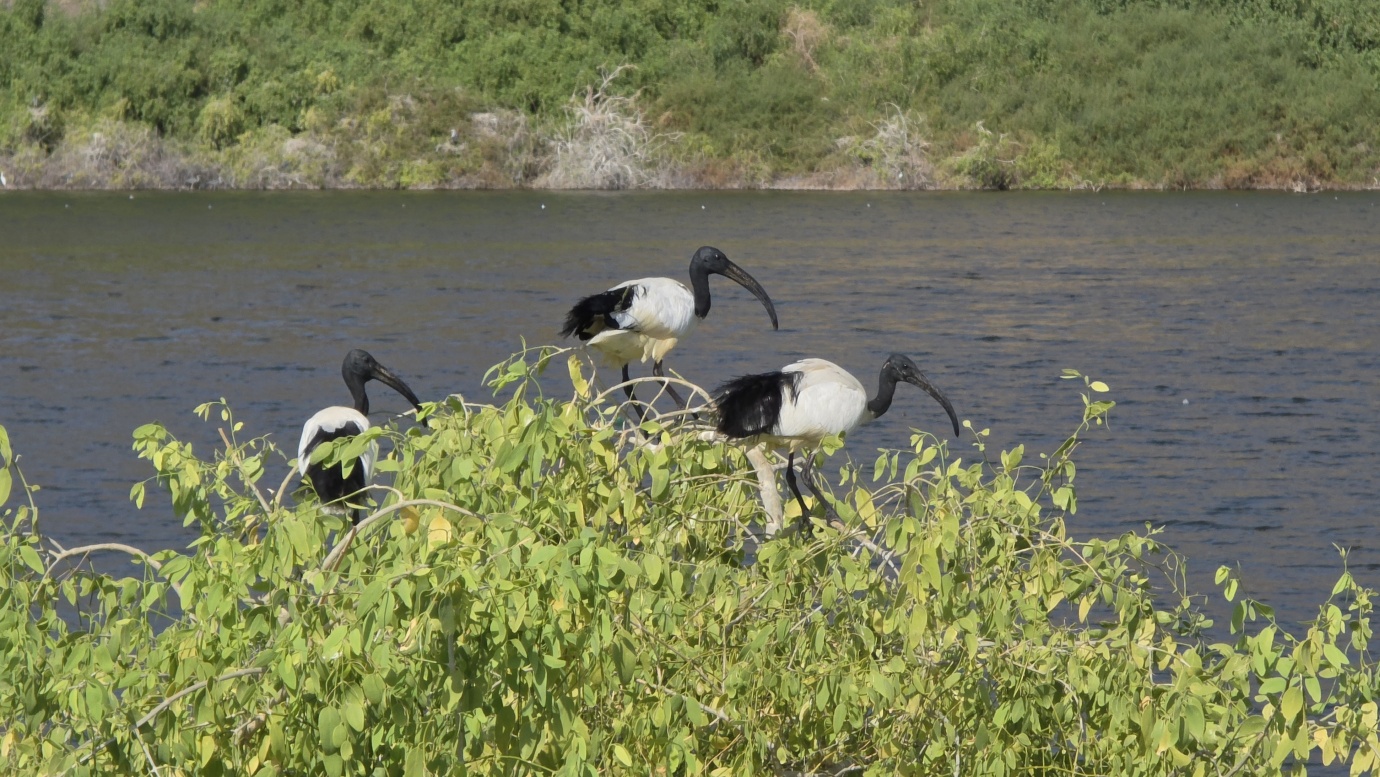
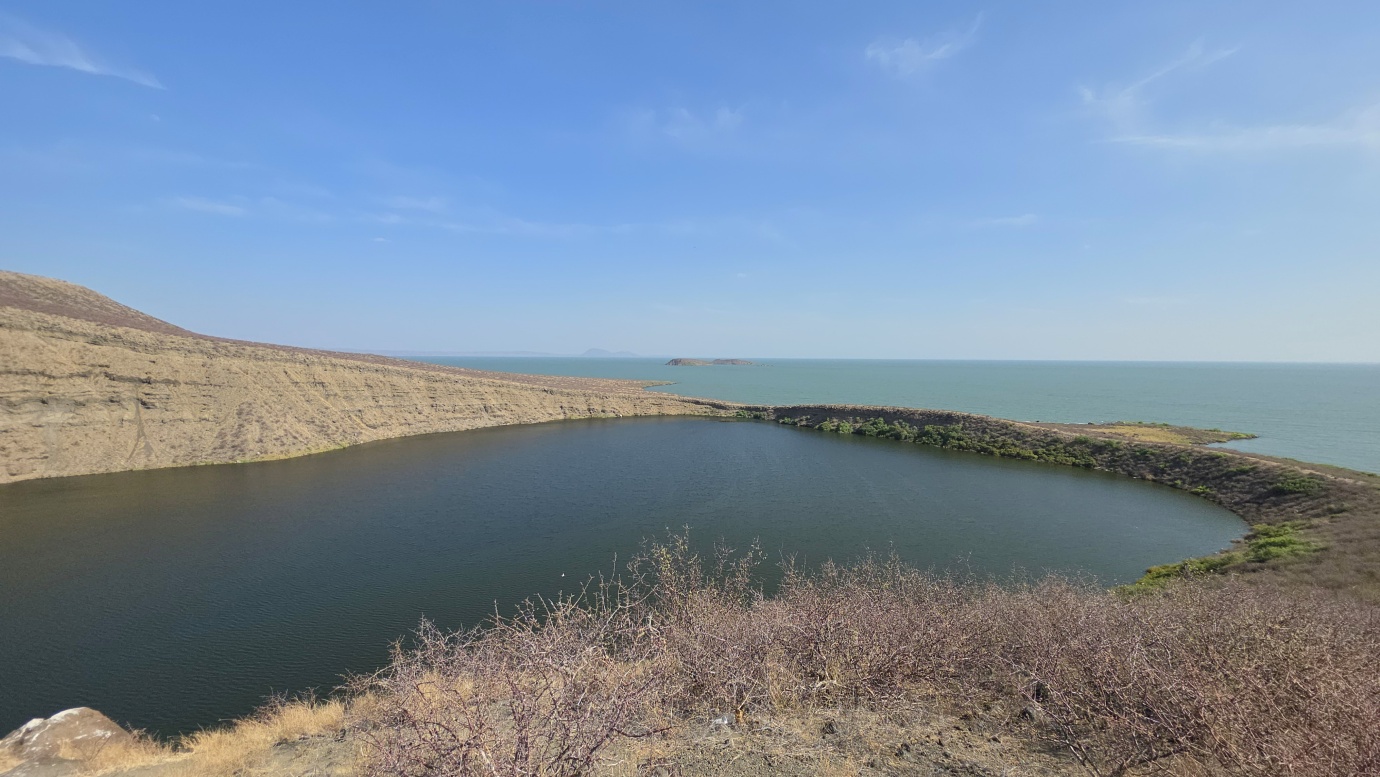
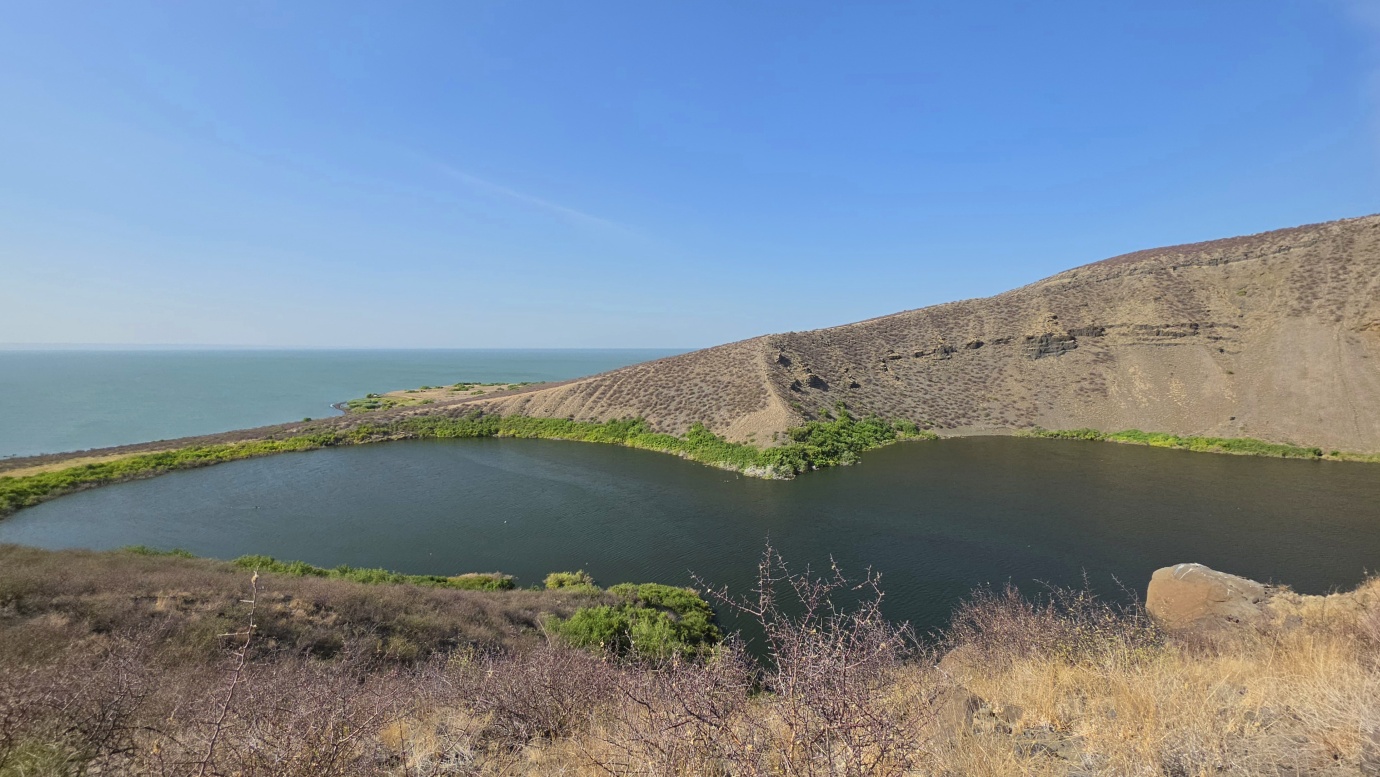
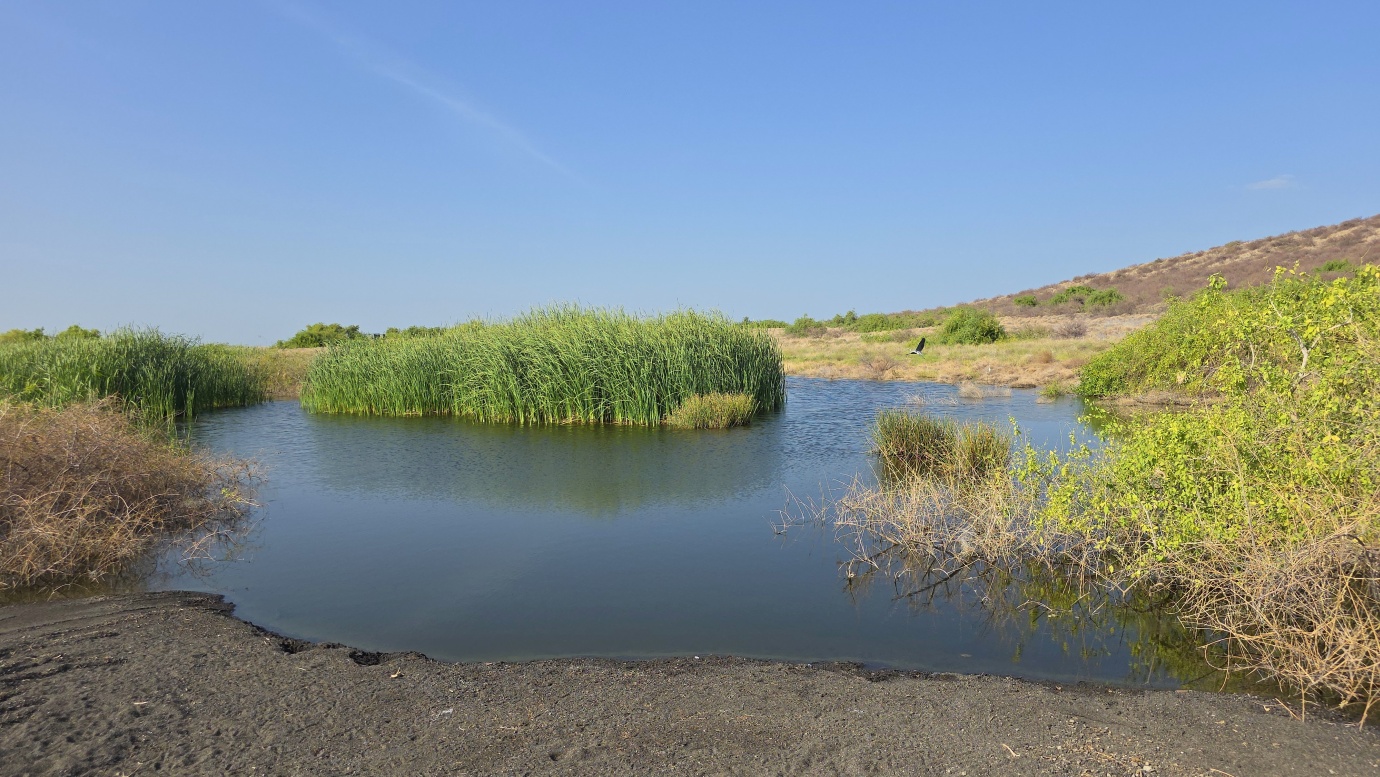
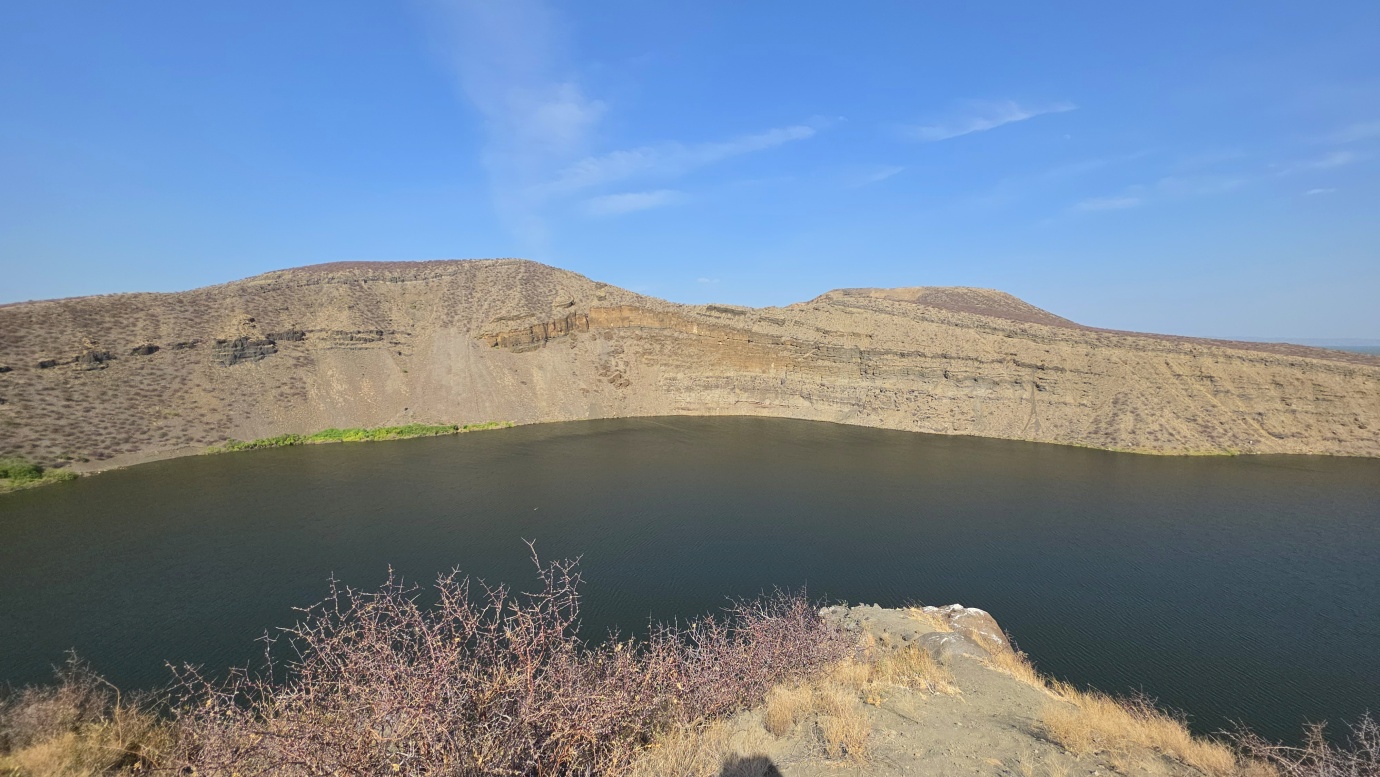
Lake Turkana is the world’s largest permanent desert lake, a saline, alkaline “Jade Sea” in the Rift Valley, known for its volcanic surroundings, rich fossil sites, and abundant Nile crocodiles. It has a unique geography centred around Central Island, an active volcanic cone with three crater lakes (Crocodile, Flamingo, Tilapia) that host diverse wildlife and significant biodiversity, forming a vital part of the UNESCO World Heritage site, Lake Turkana National Parks. The surrounding area is extremely hot and arid, classified as desert and xeric shrubland, receiving less than 250 mm of rainfall annually. Strong, sudden winds are frequent. The lake’s primary perennial water source is the Omo River from the Ethiopian Highlands, which provides about 90% of its inflow.
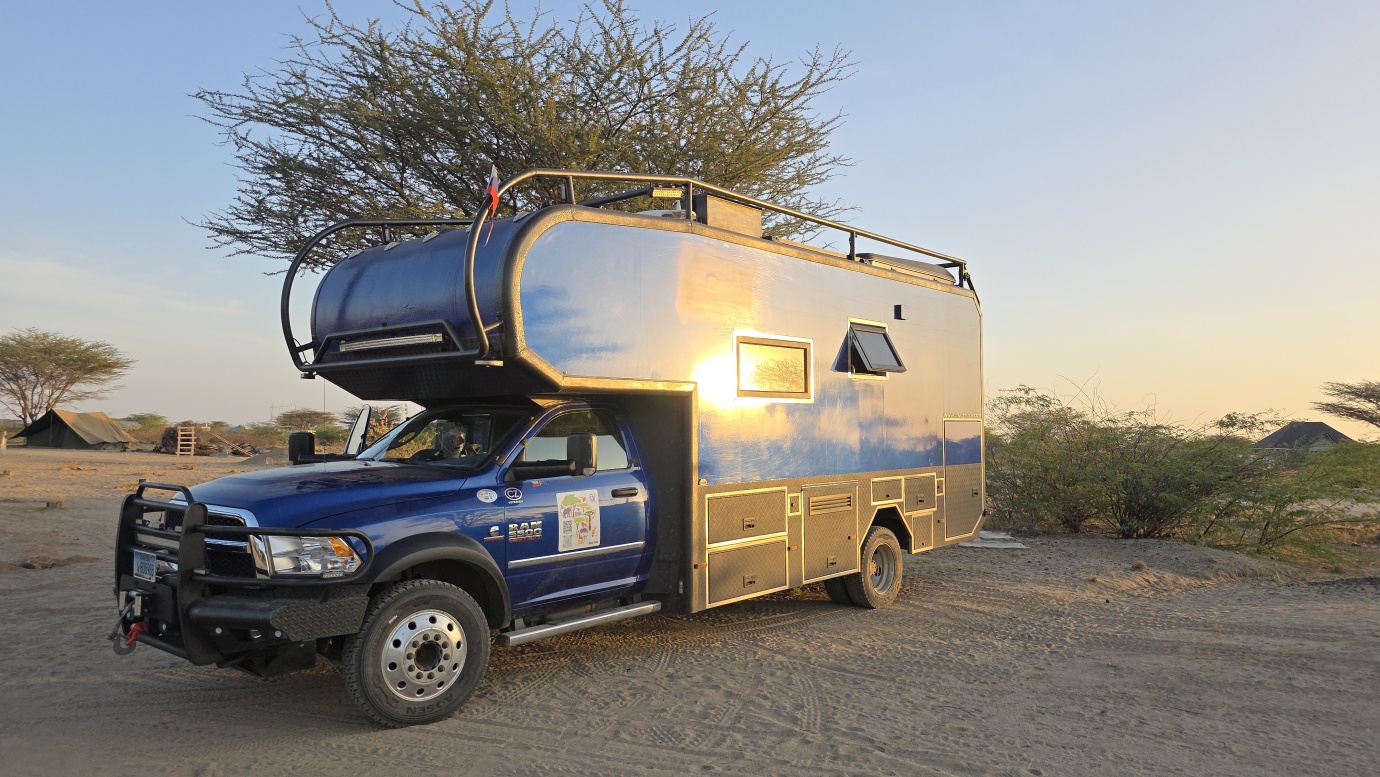
We paid the entrance fee to the national park at the KWS office in the town (🎟️6,484 KES) and left our truck there. They were pretty friendly and gave us the lift to the little harbour, where we had made our deal for the boat ride before. It took us around 5 hours to explore the Central Island with a boat ride and a few hikes to craters.