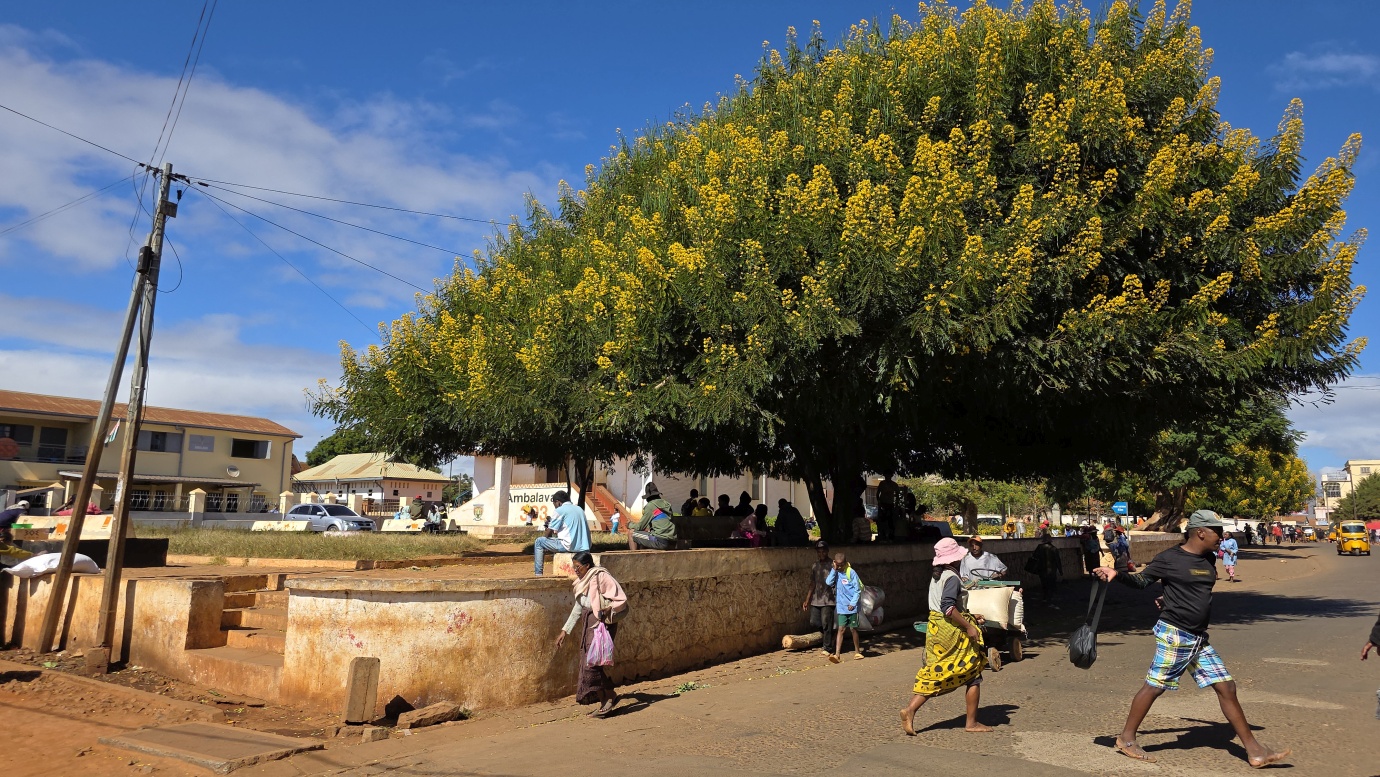
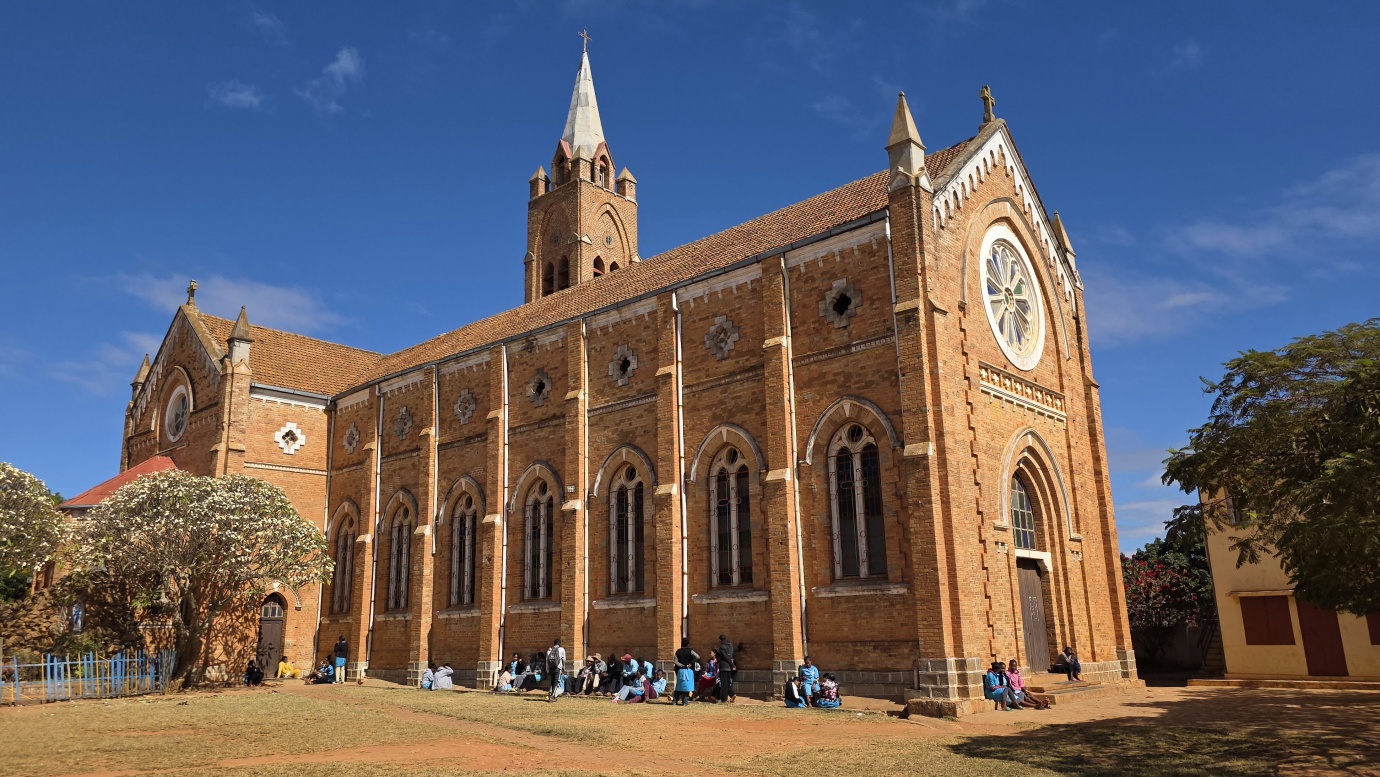
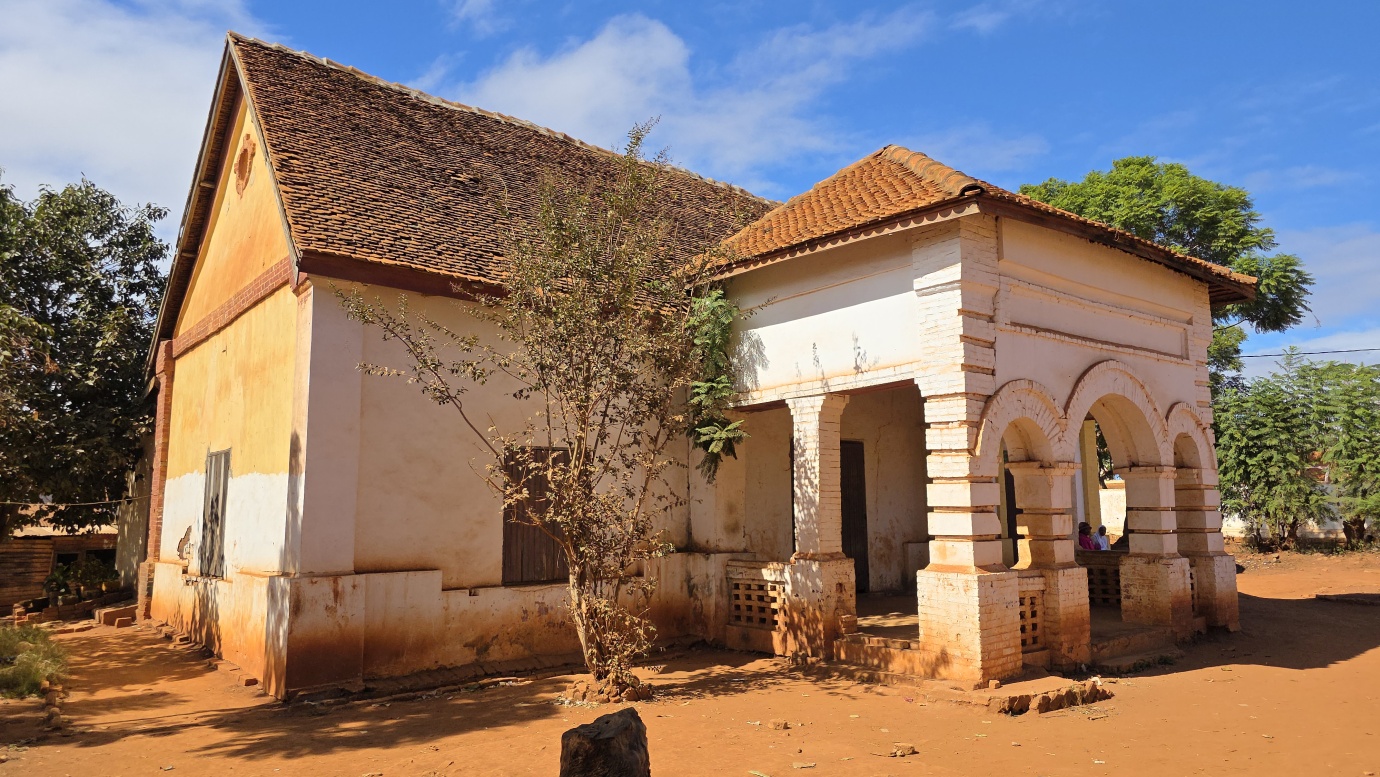
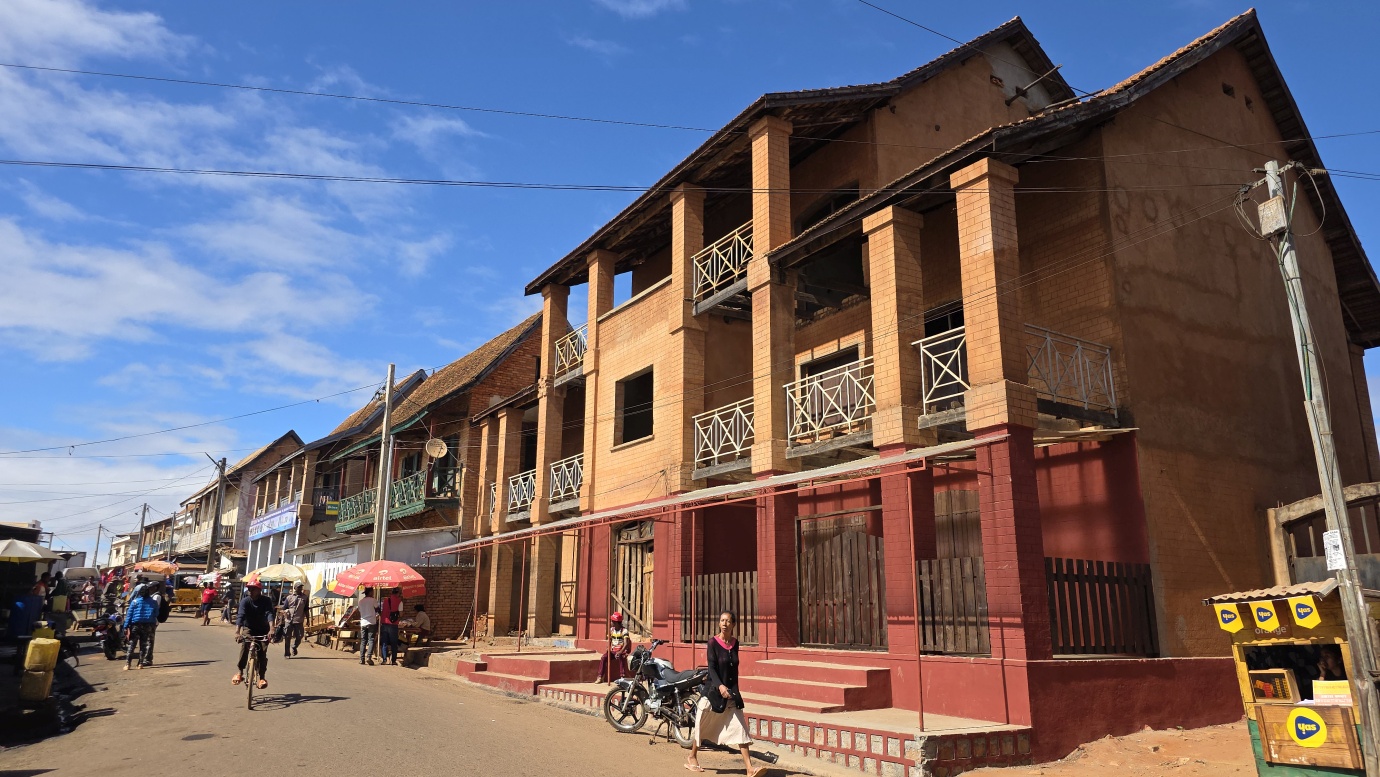
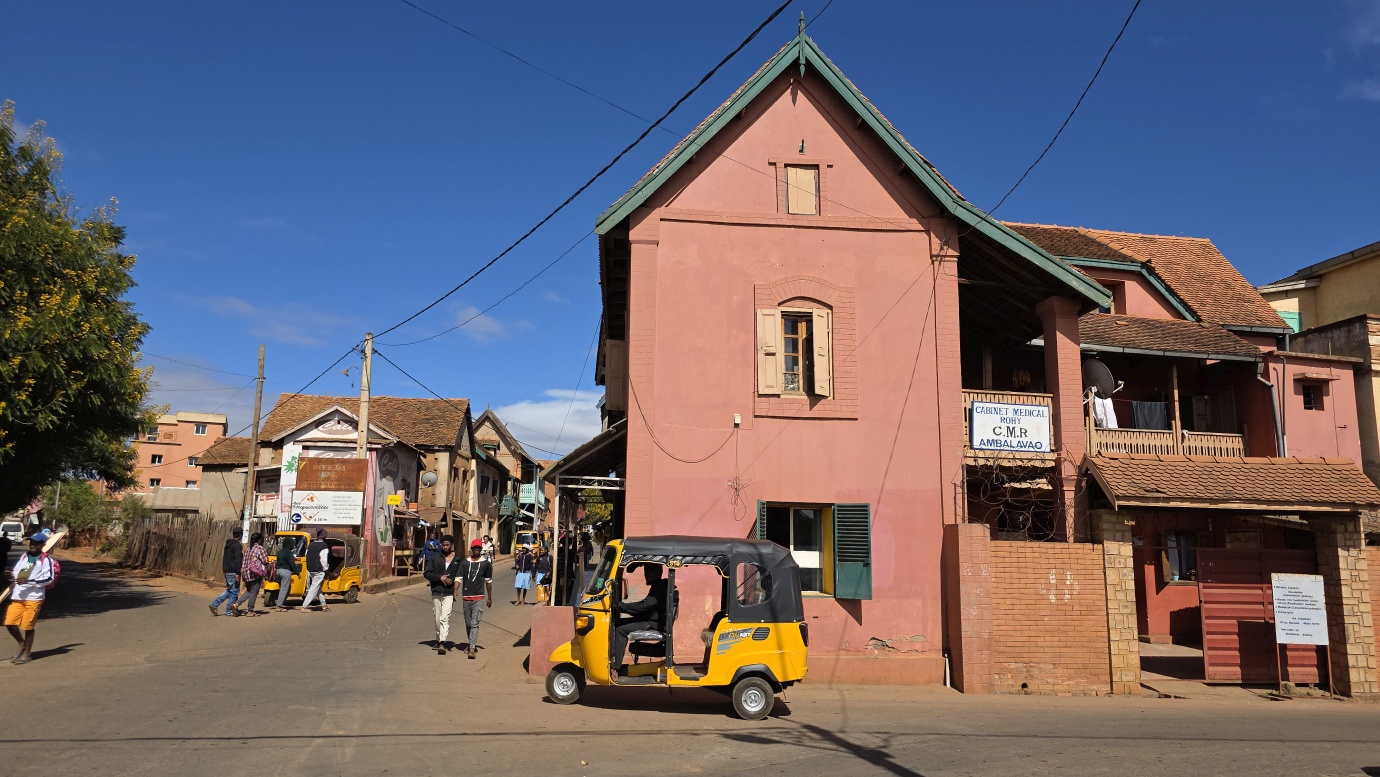
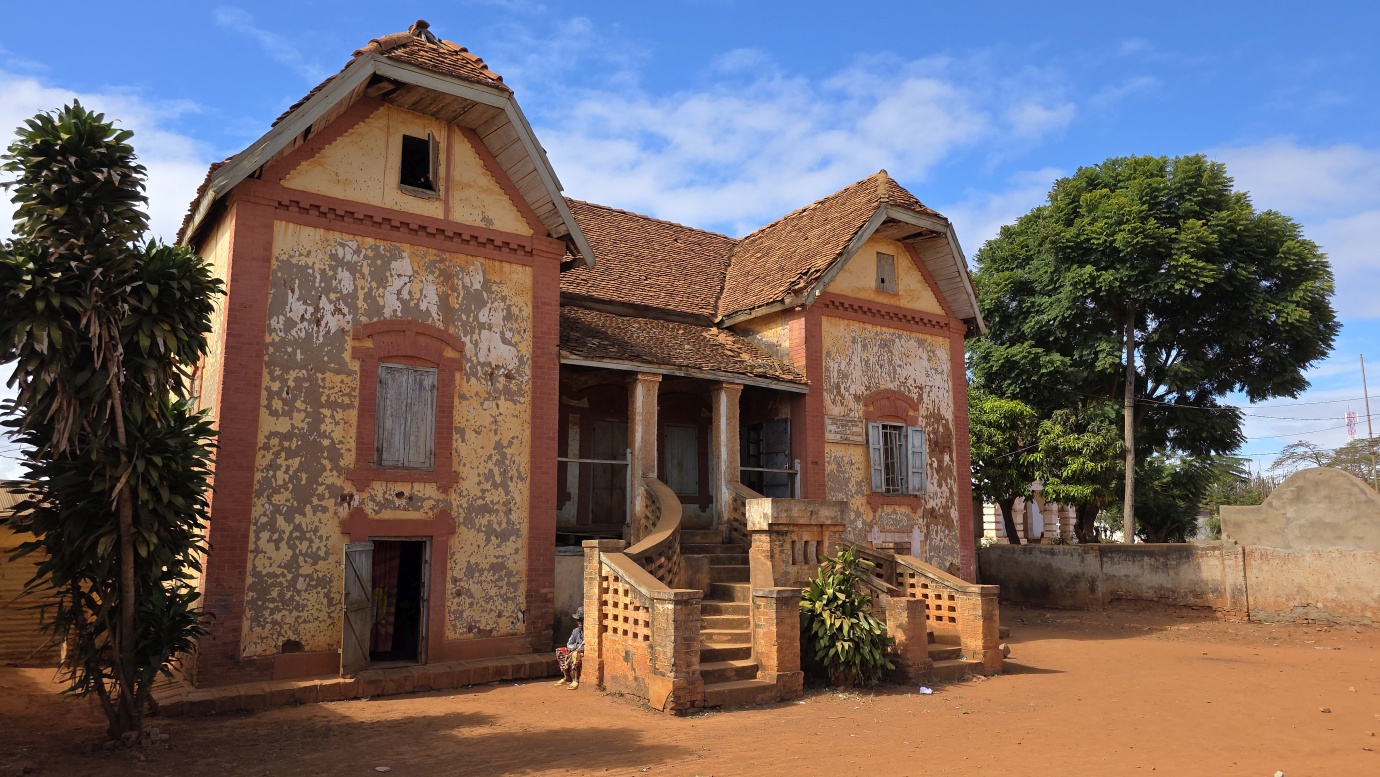
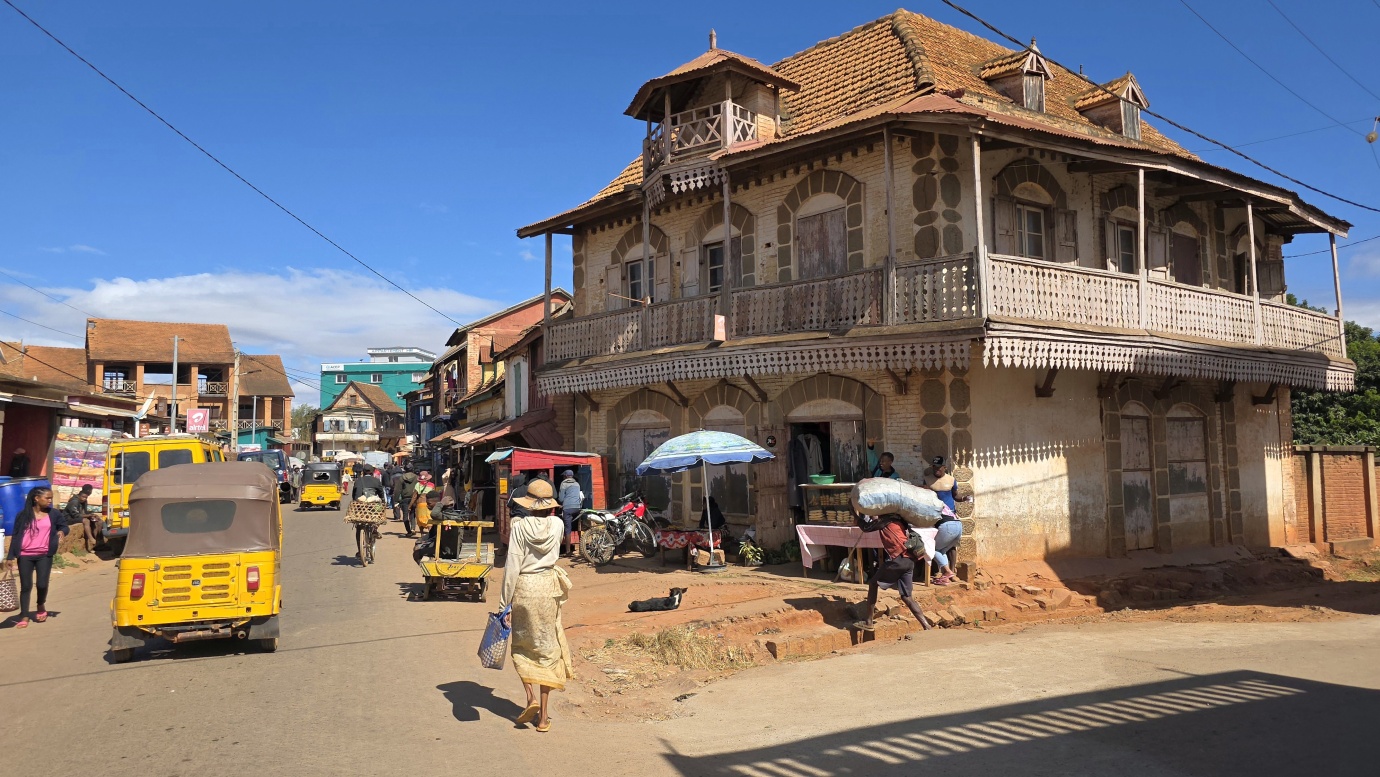
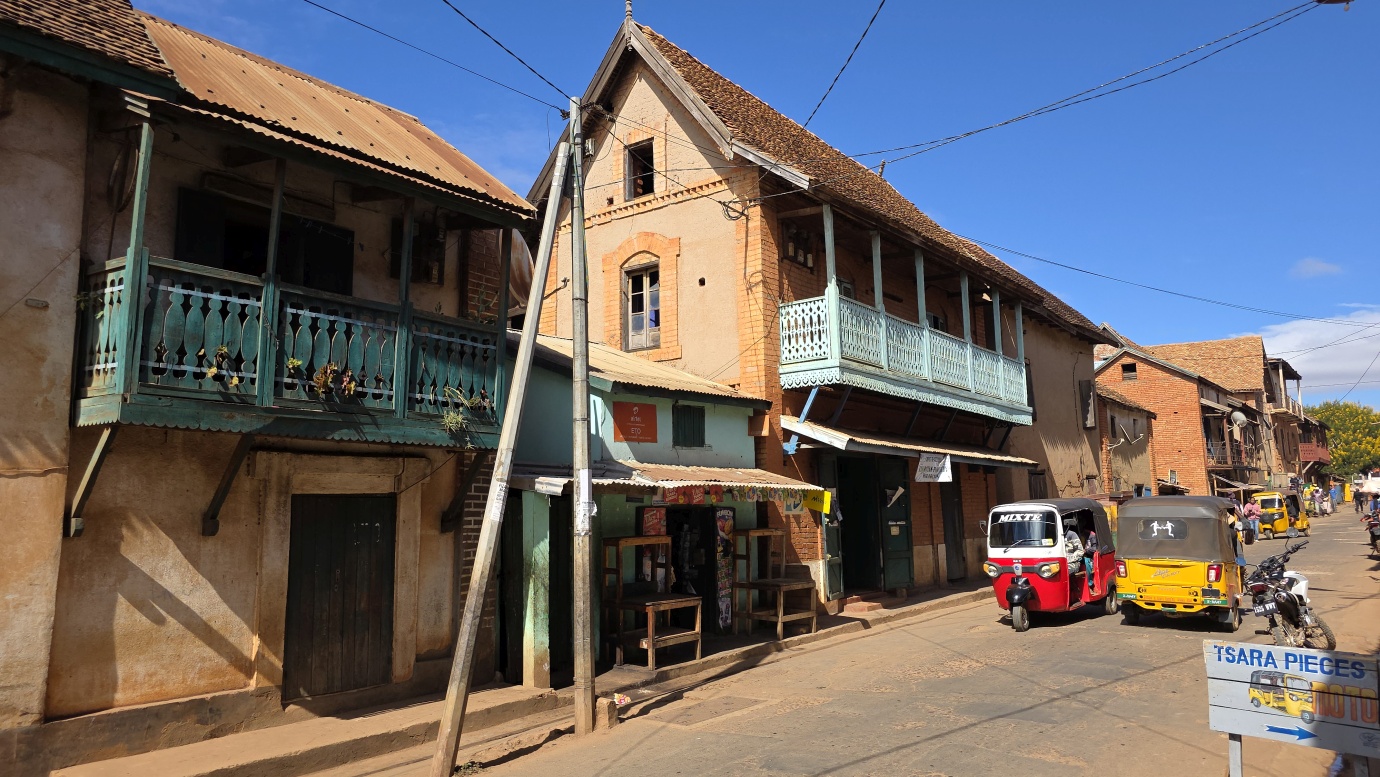
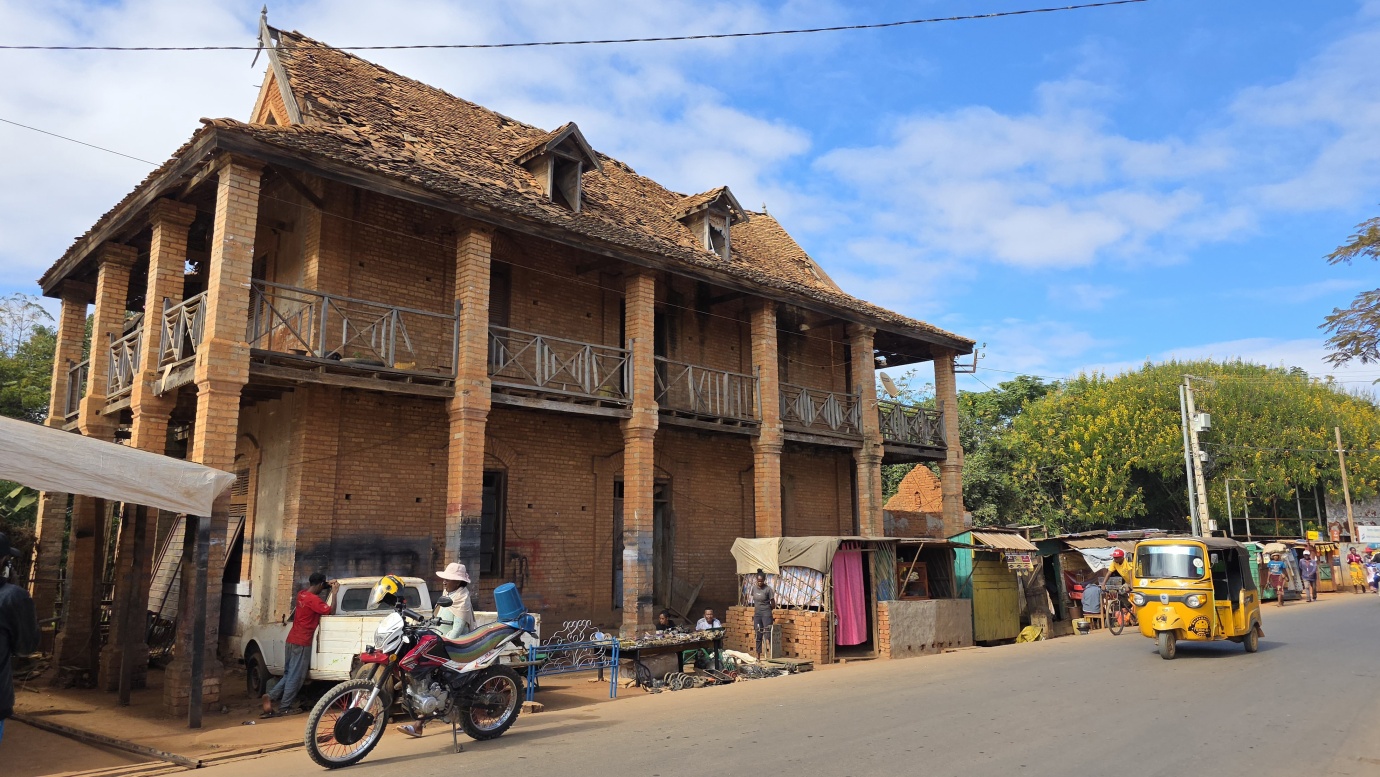
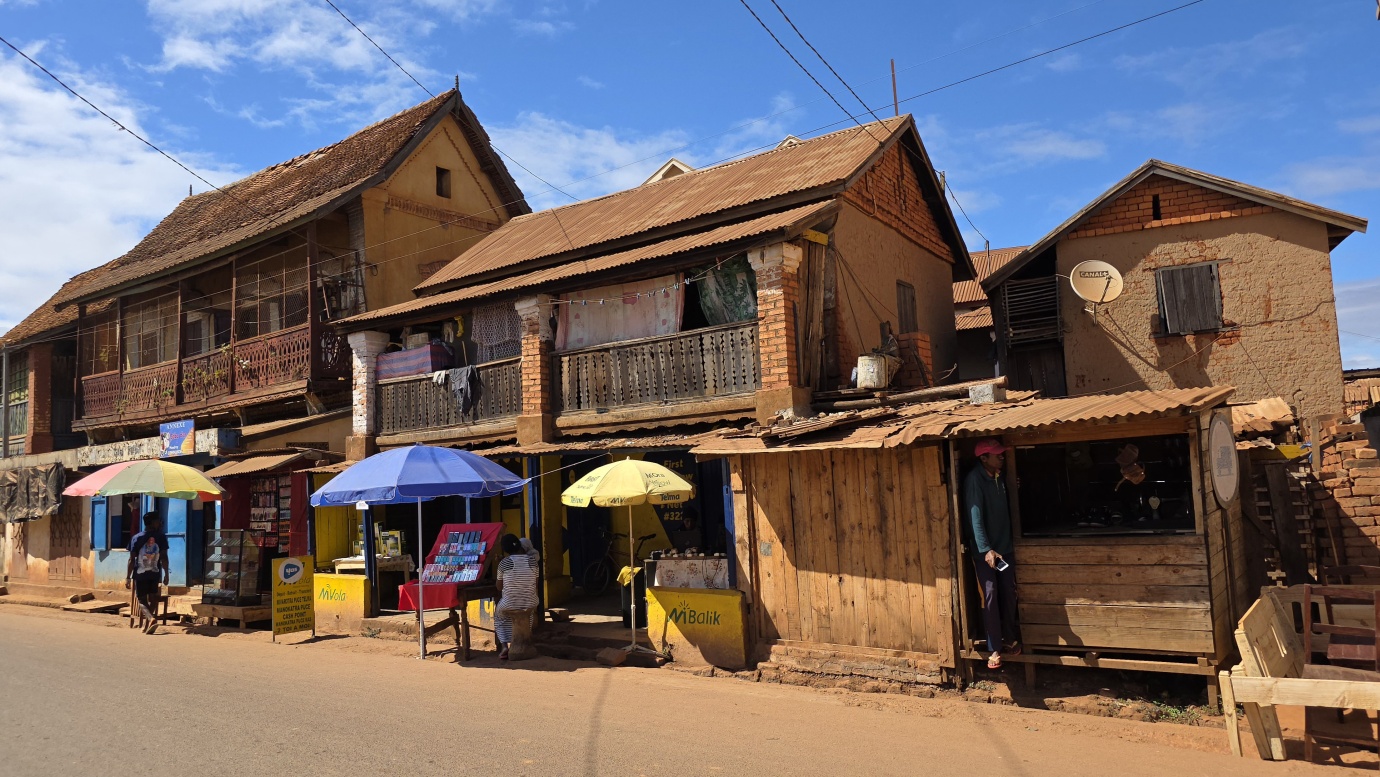
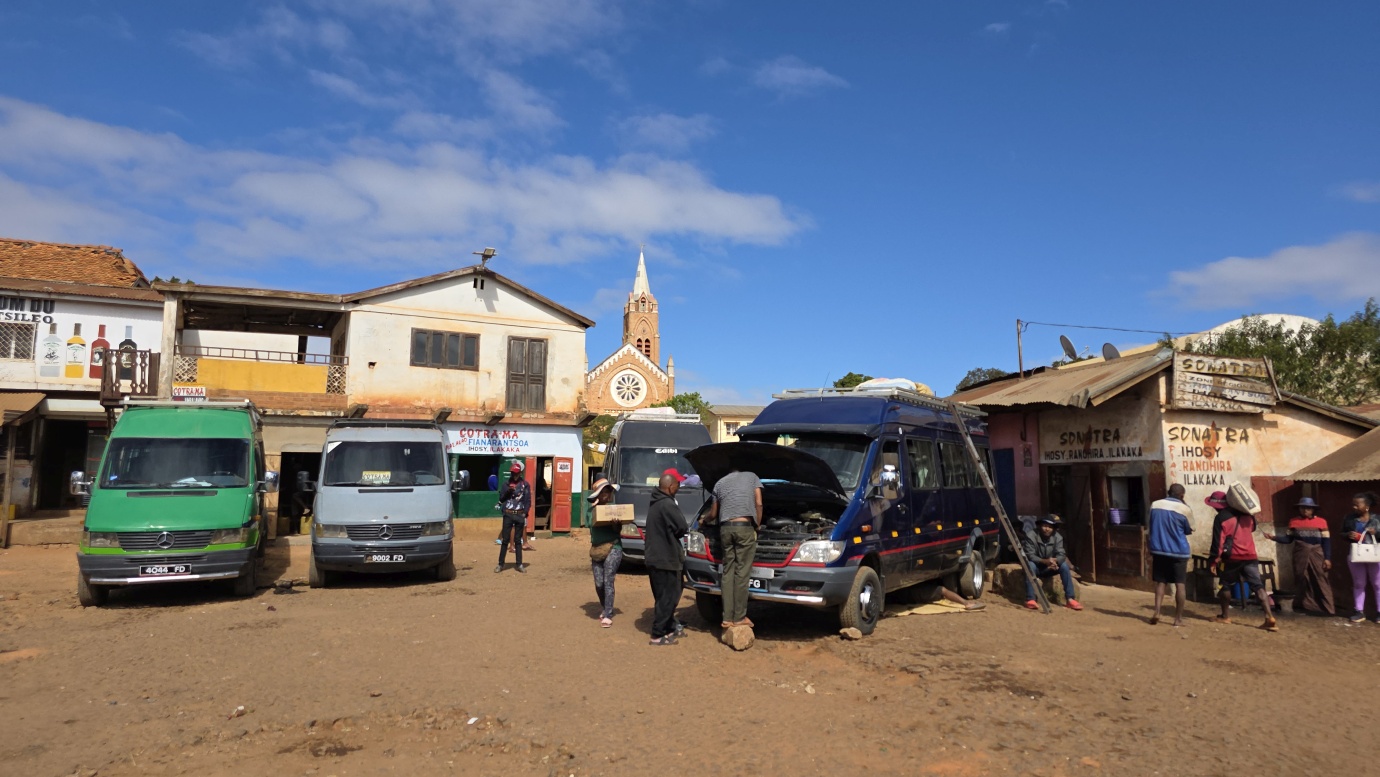
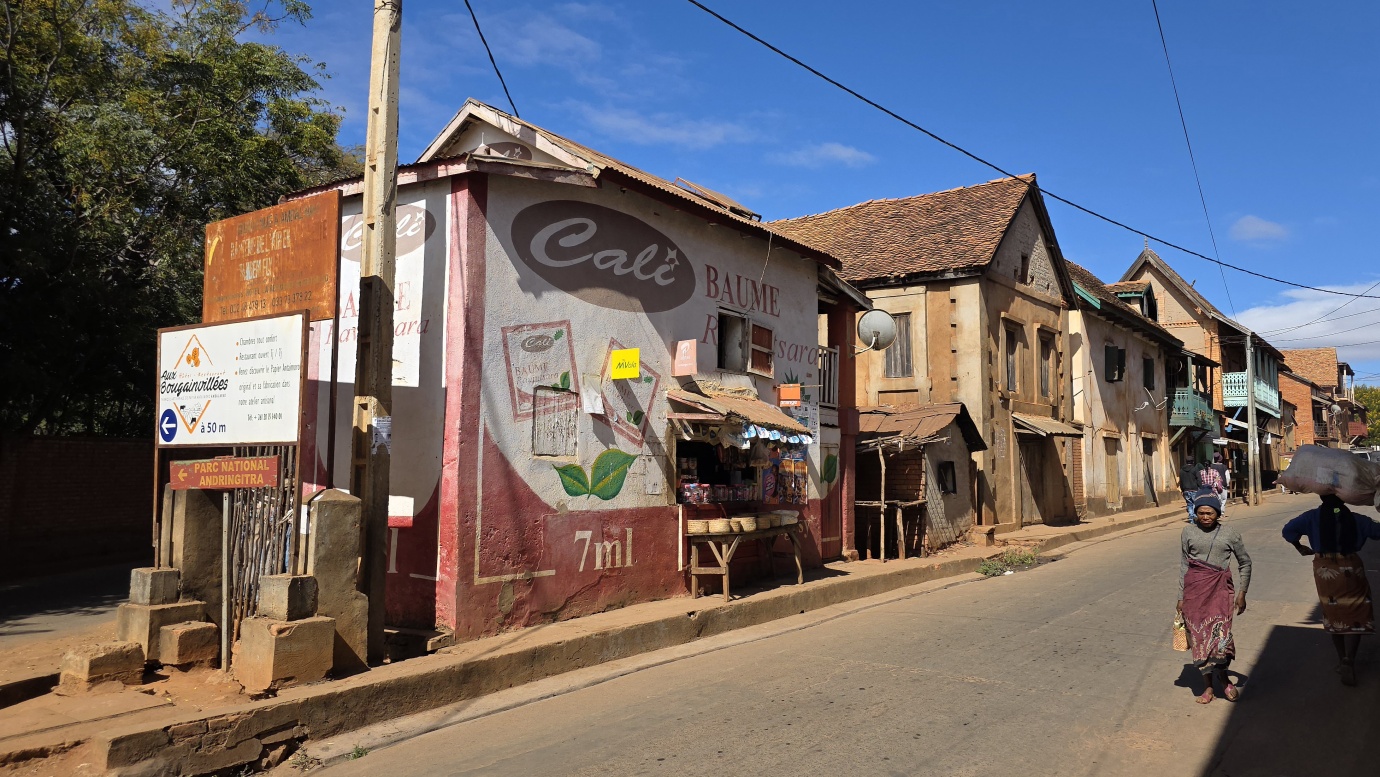
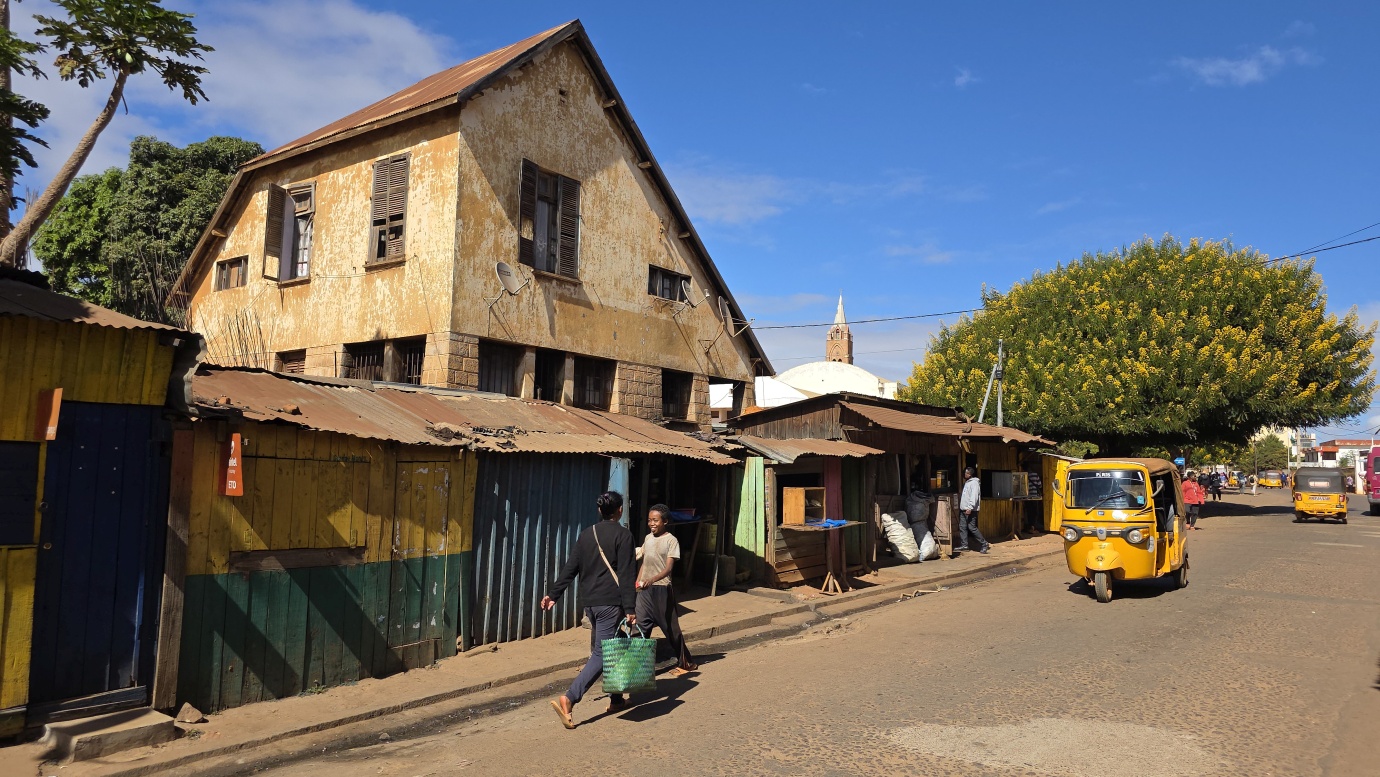
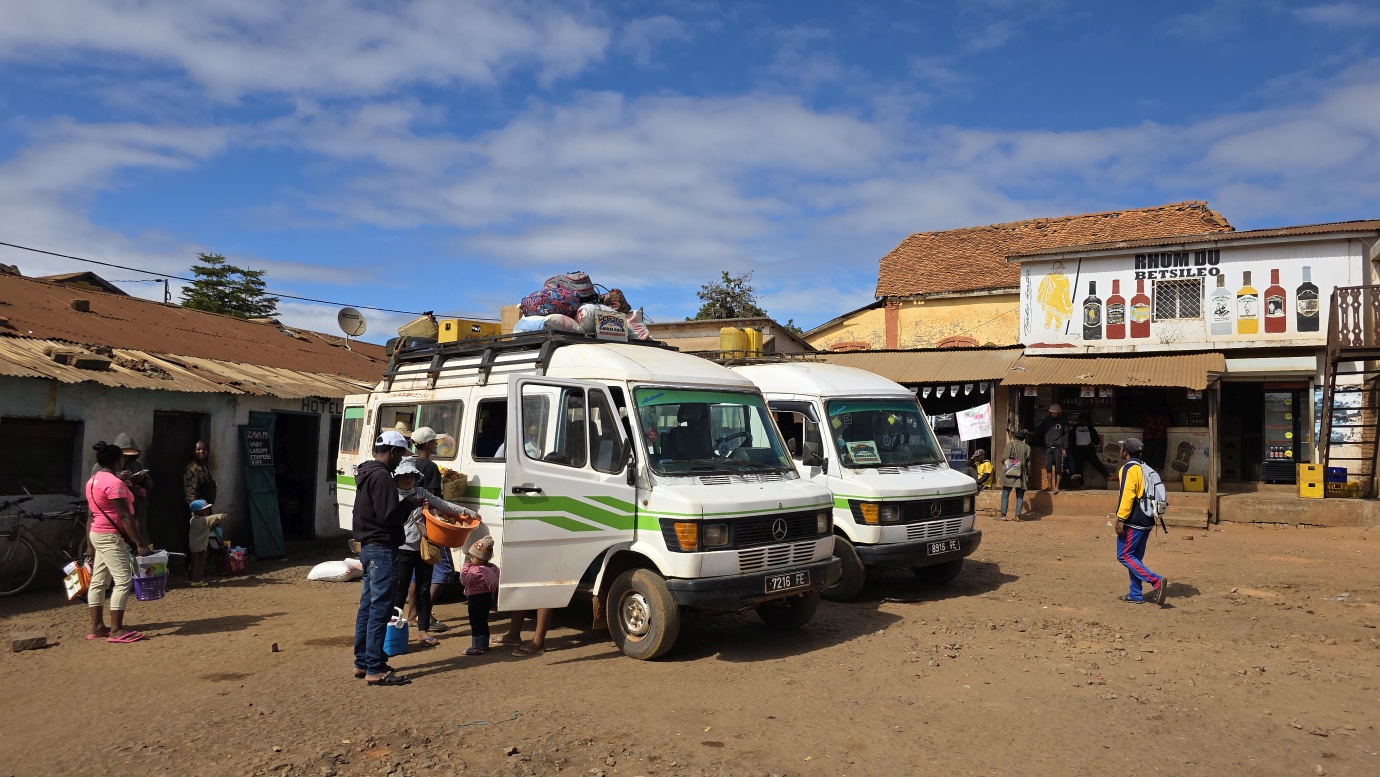
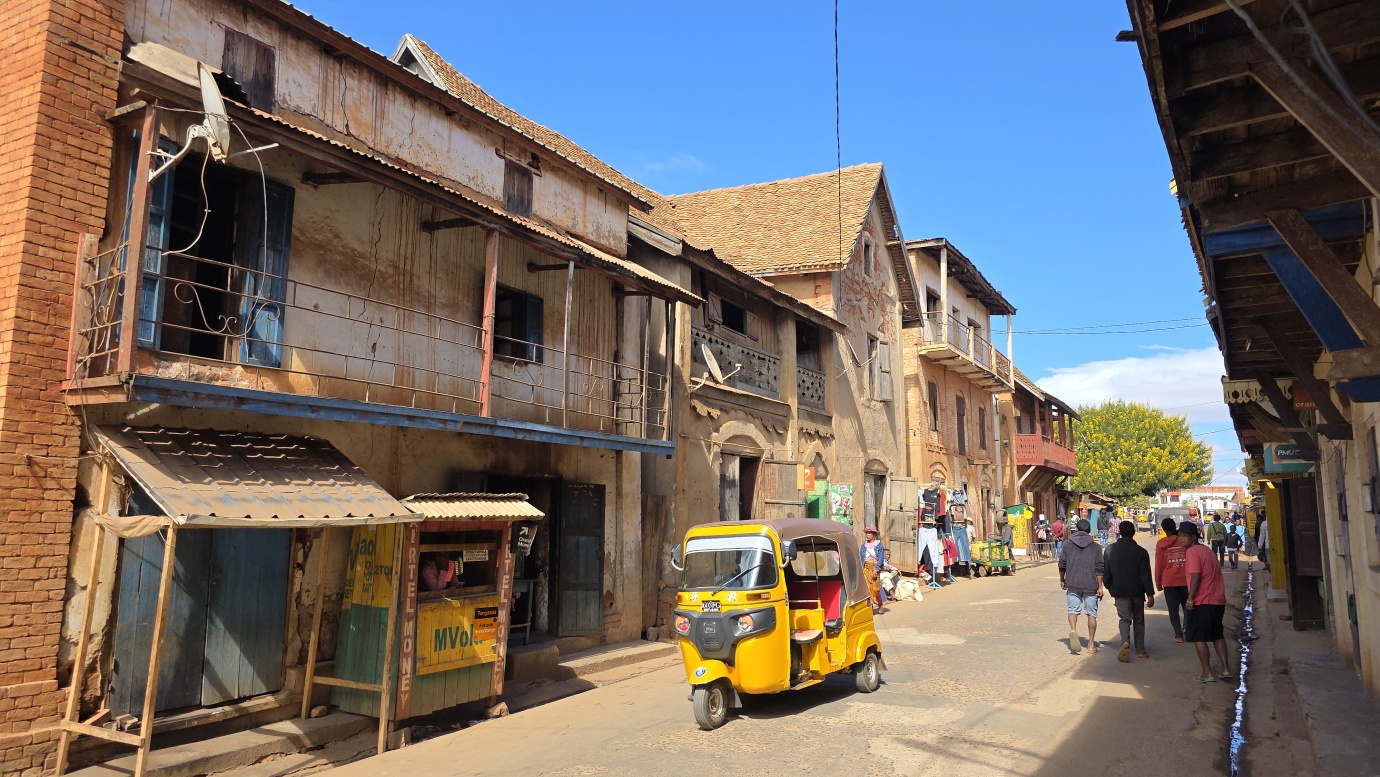
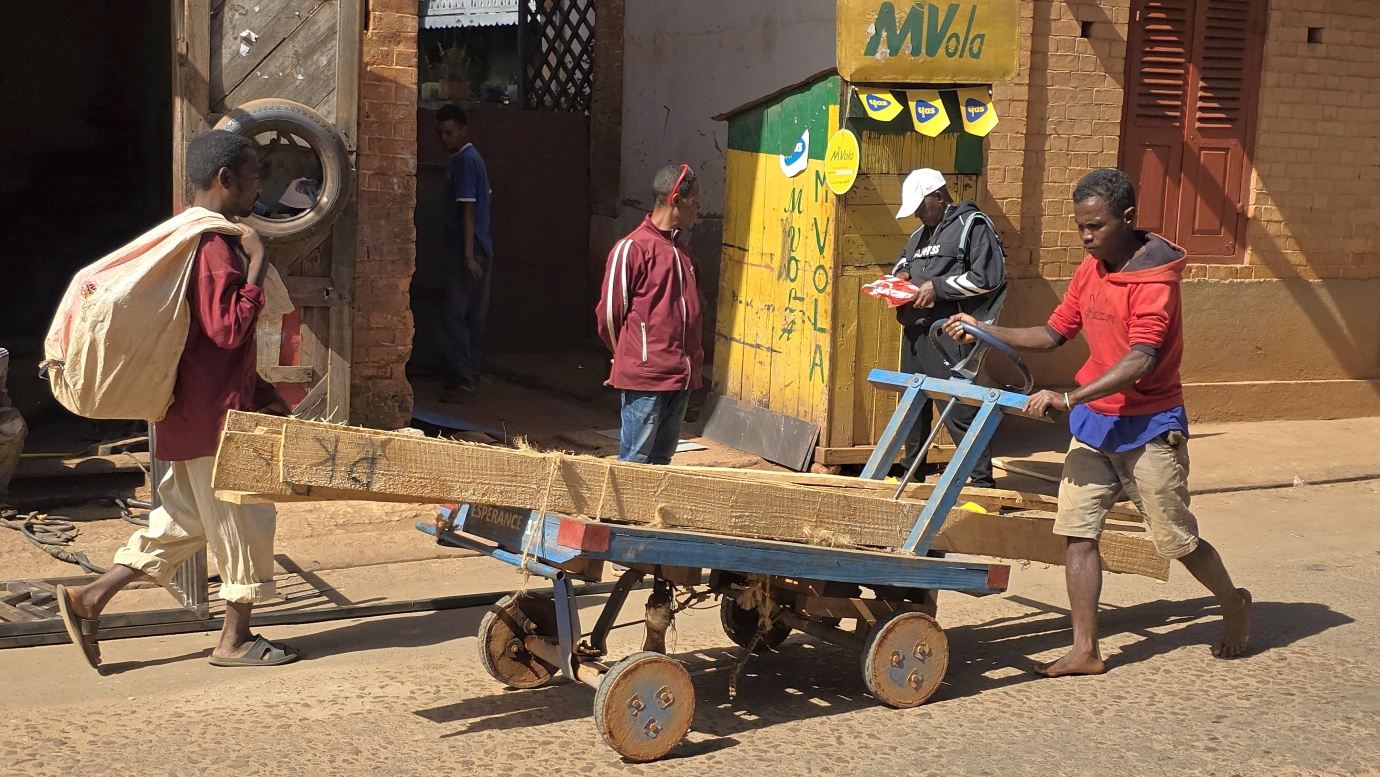
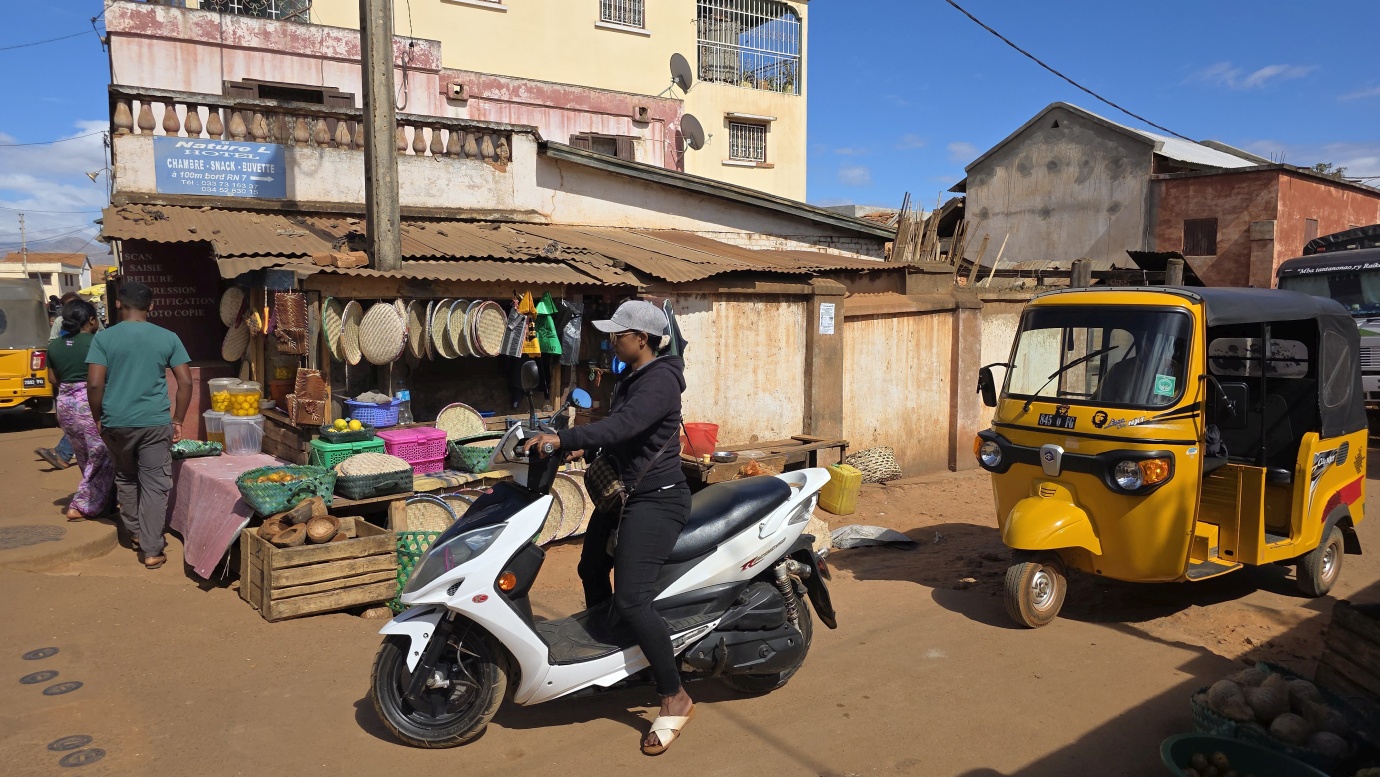
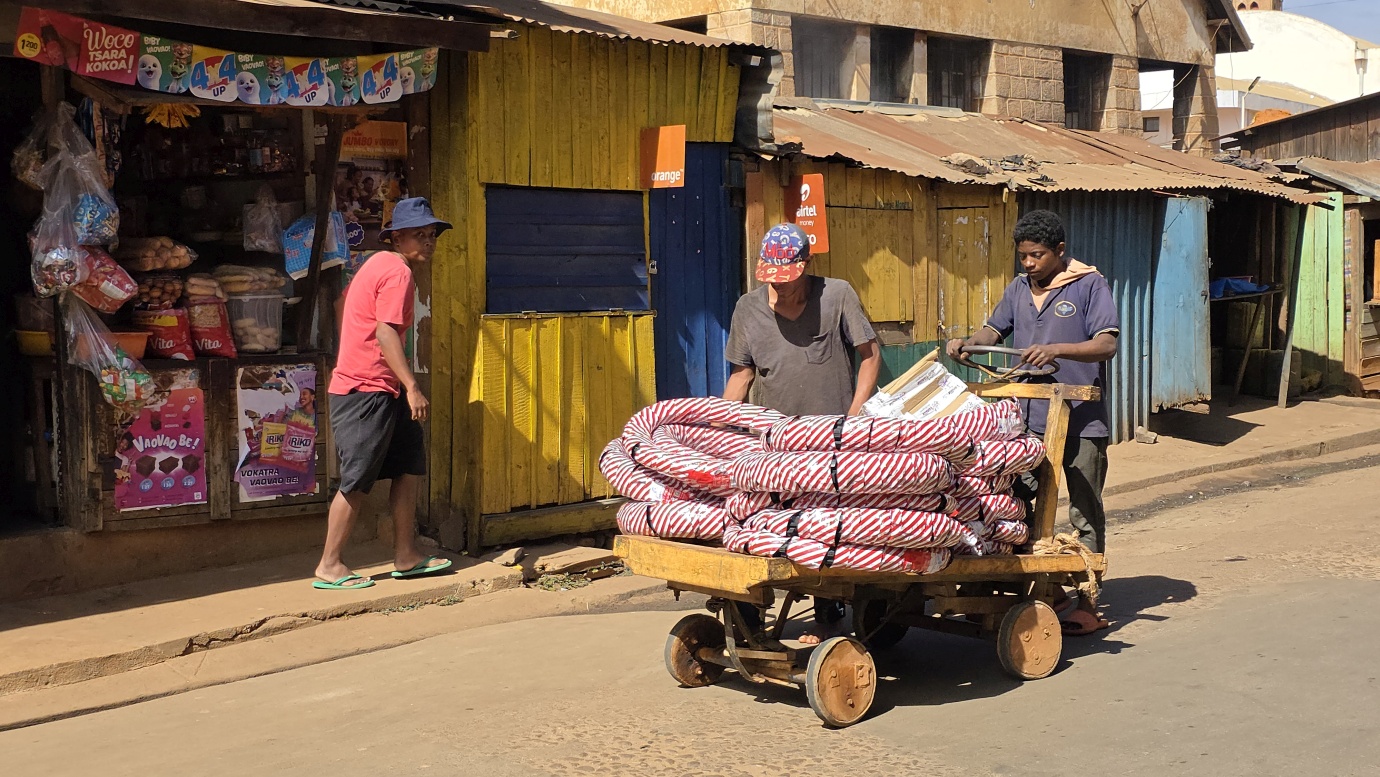
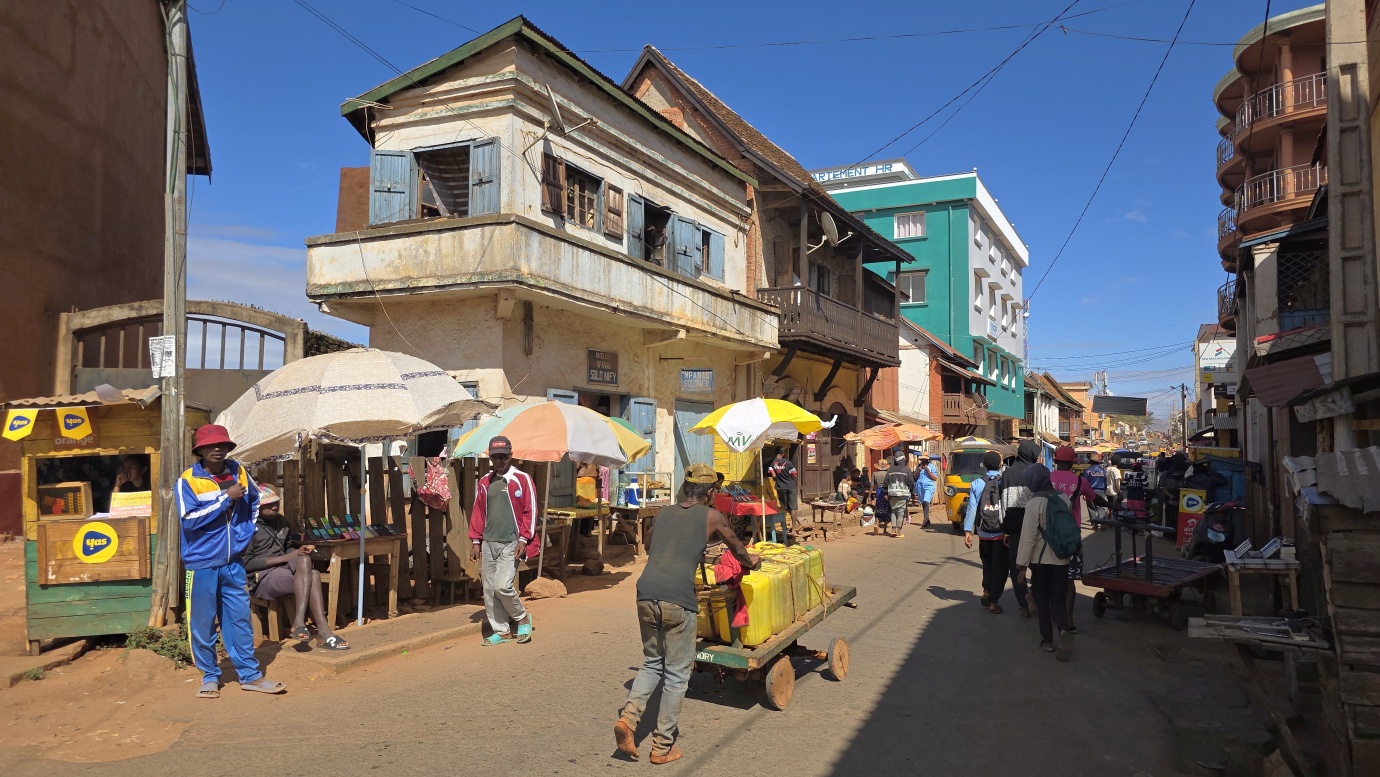
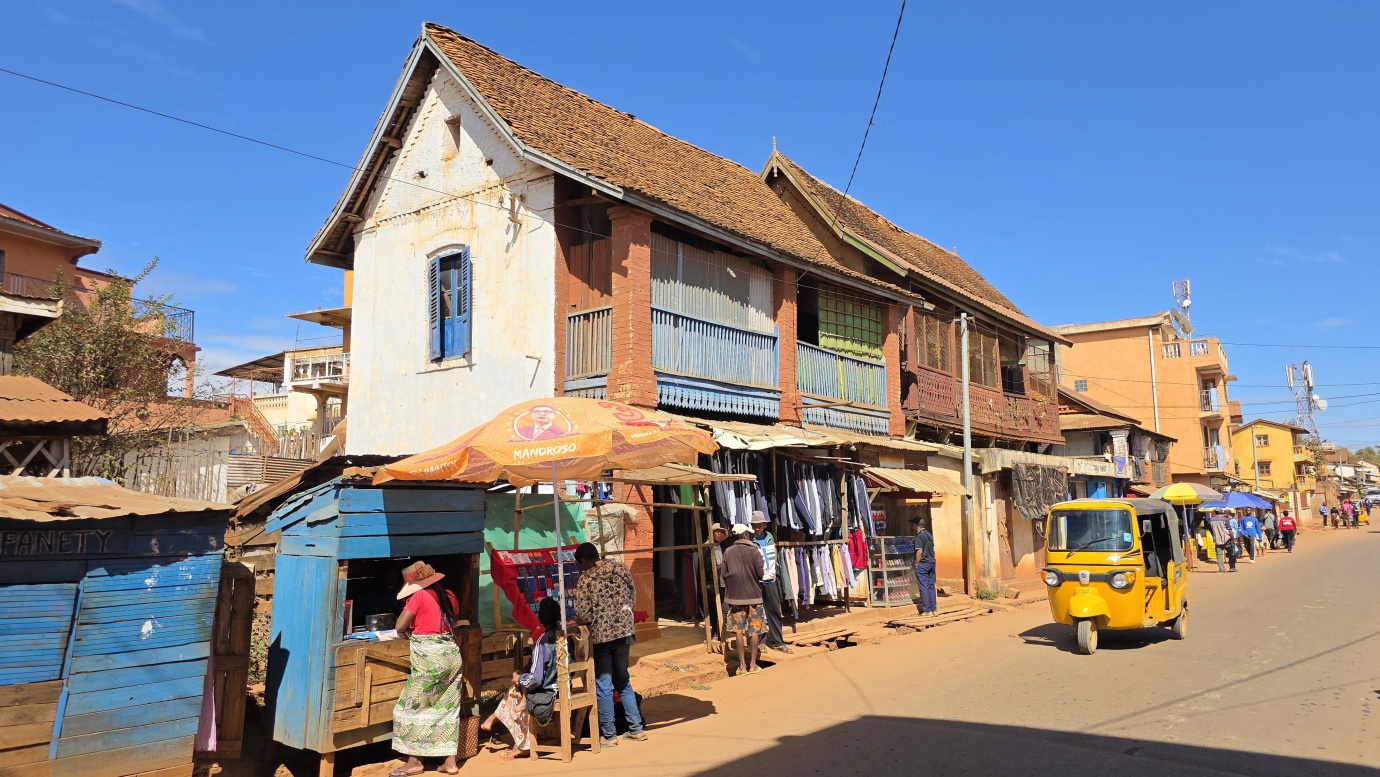
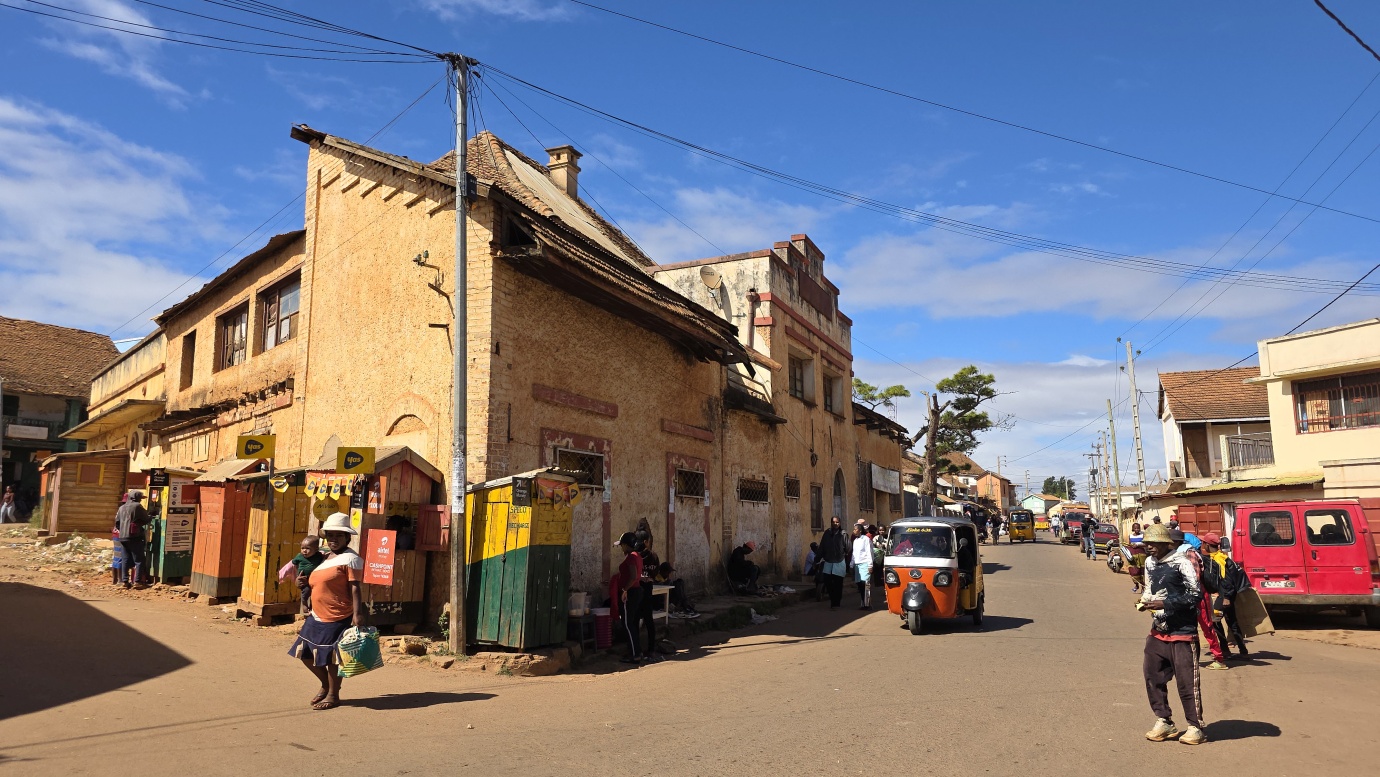
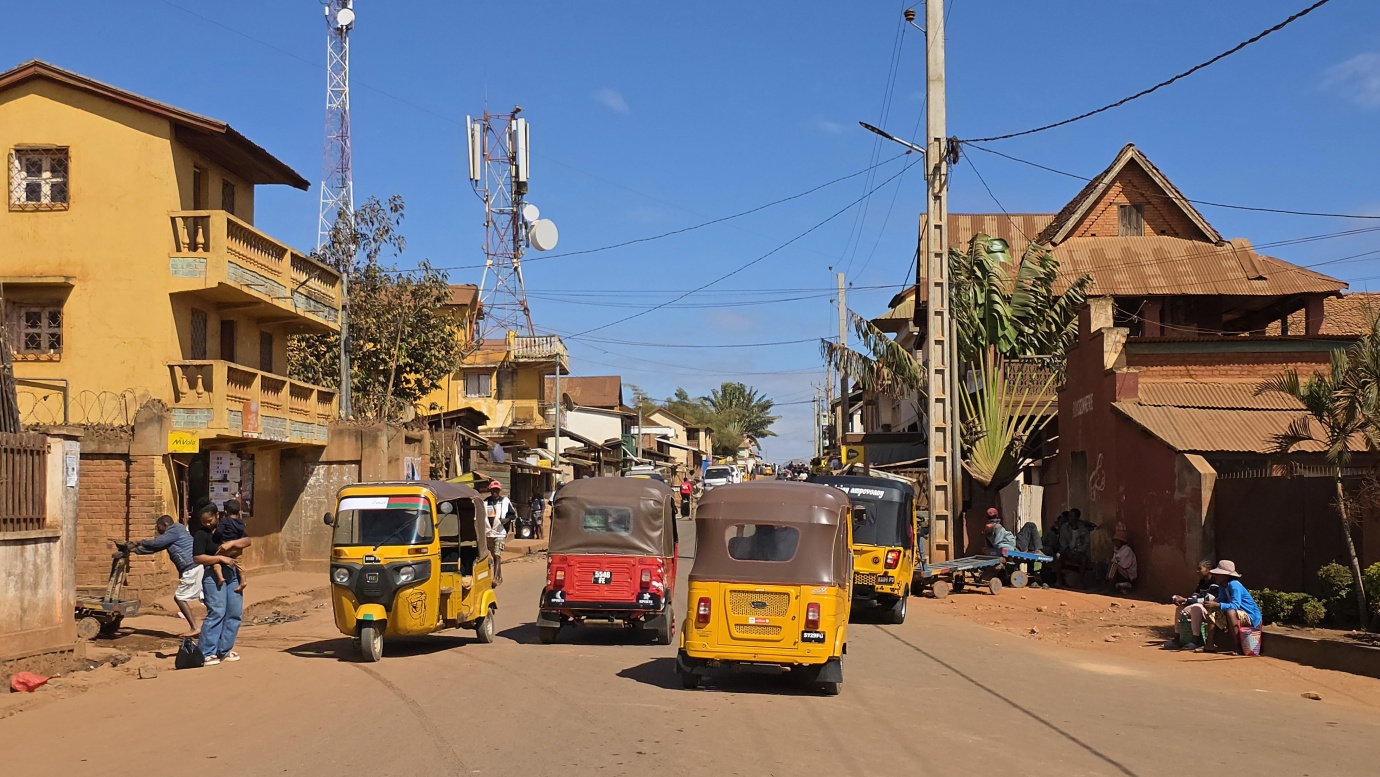
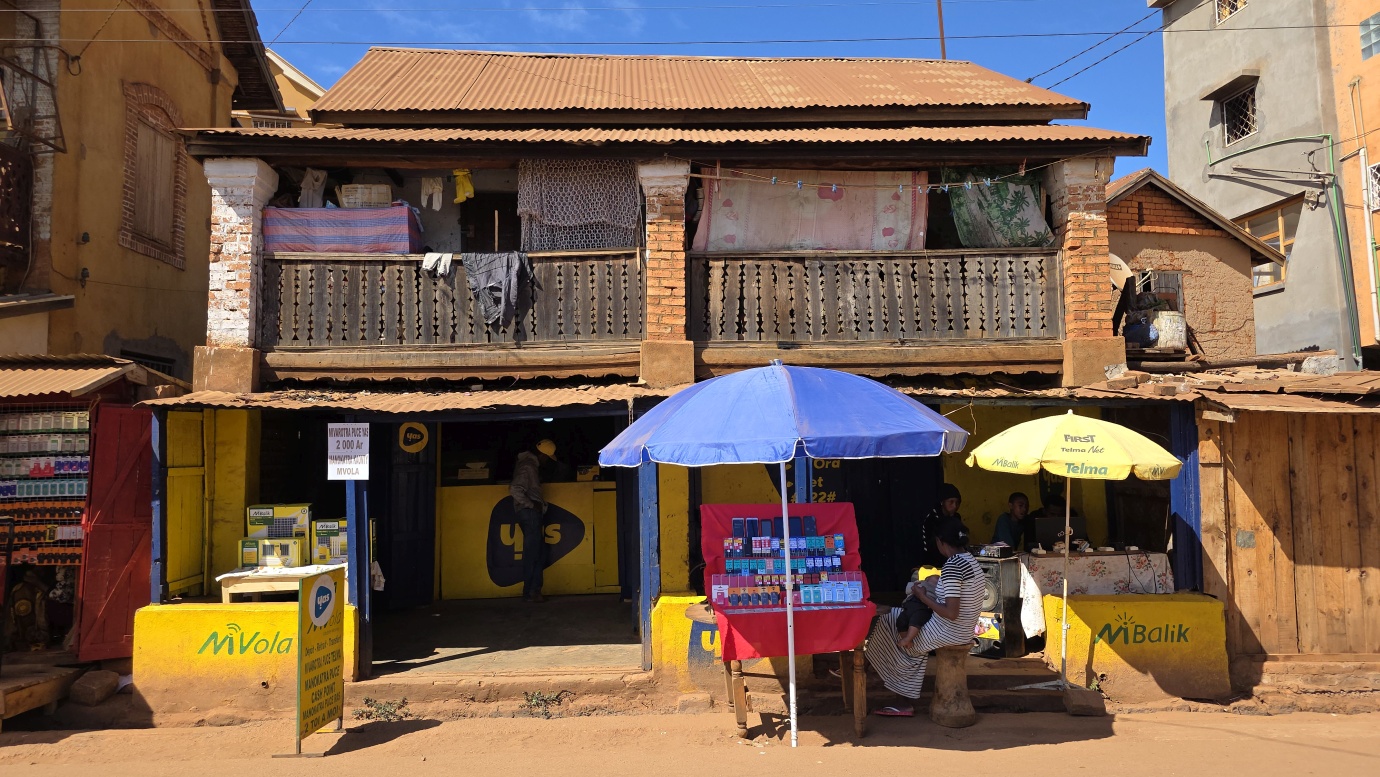
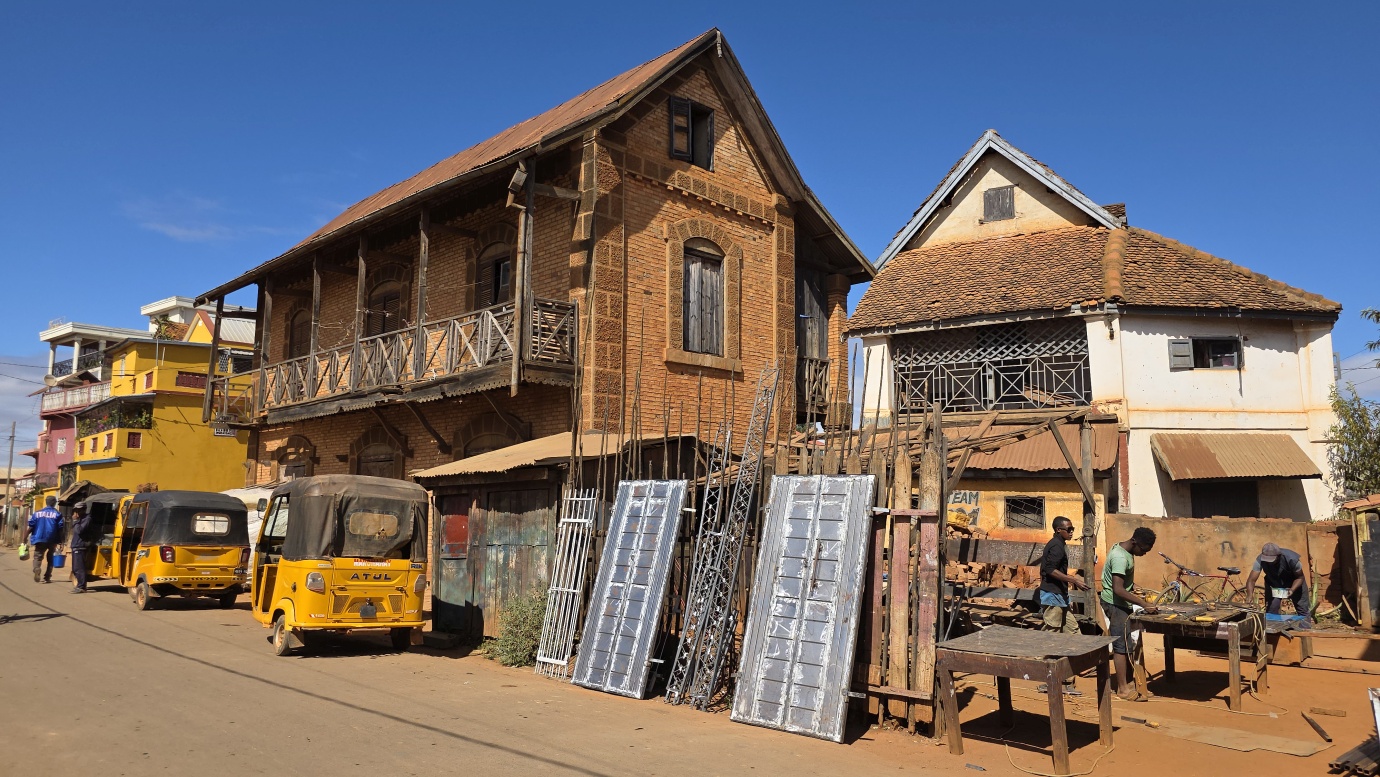
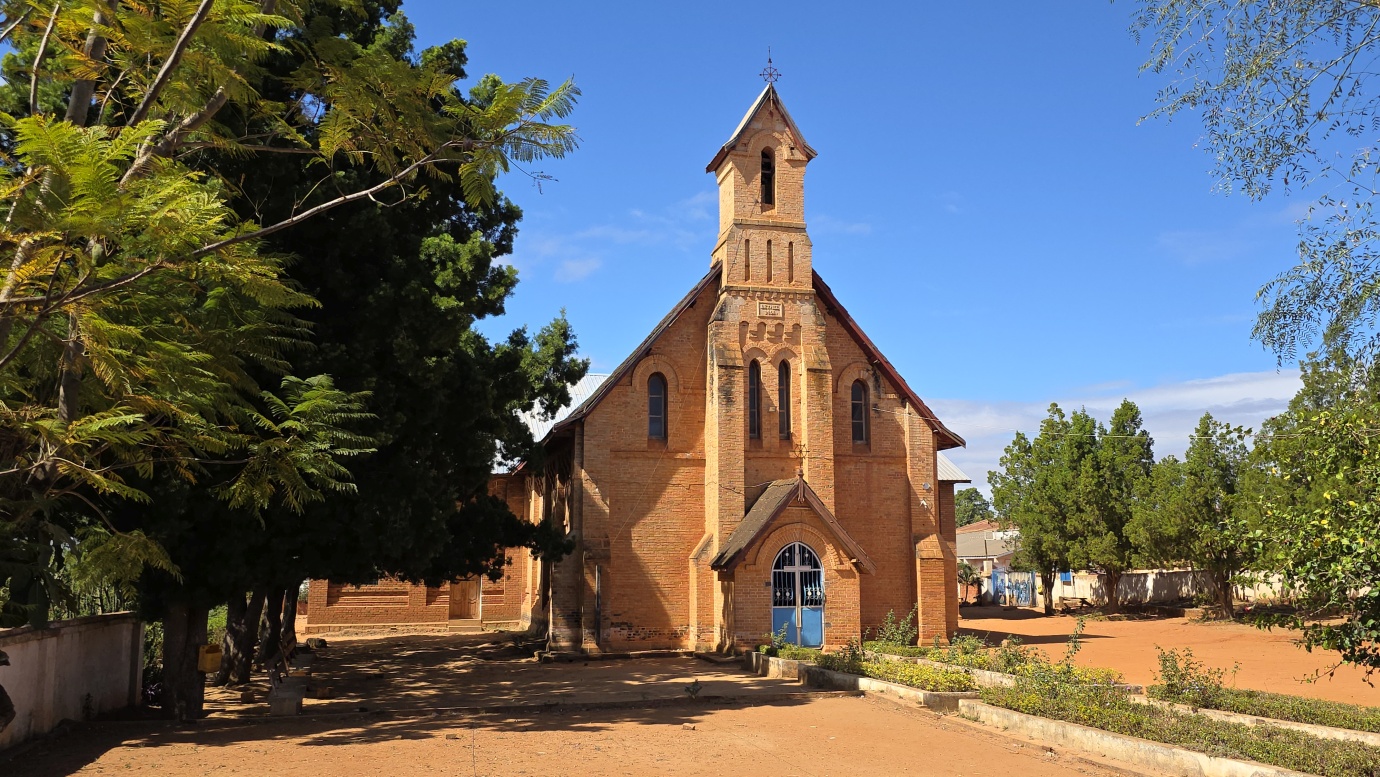
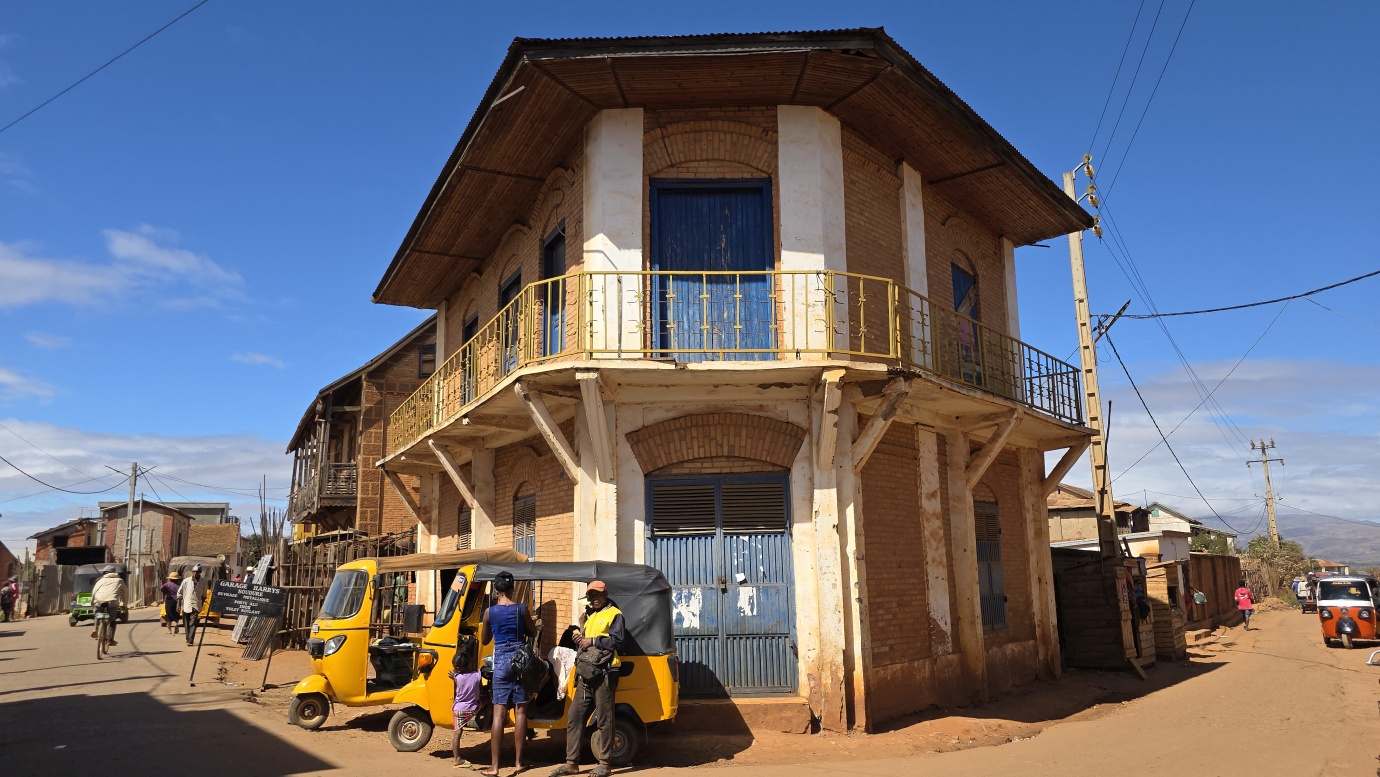
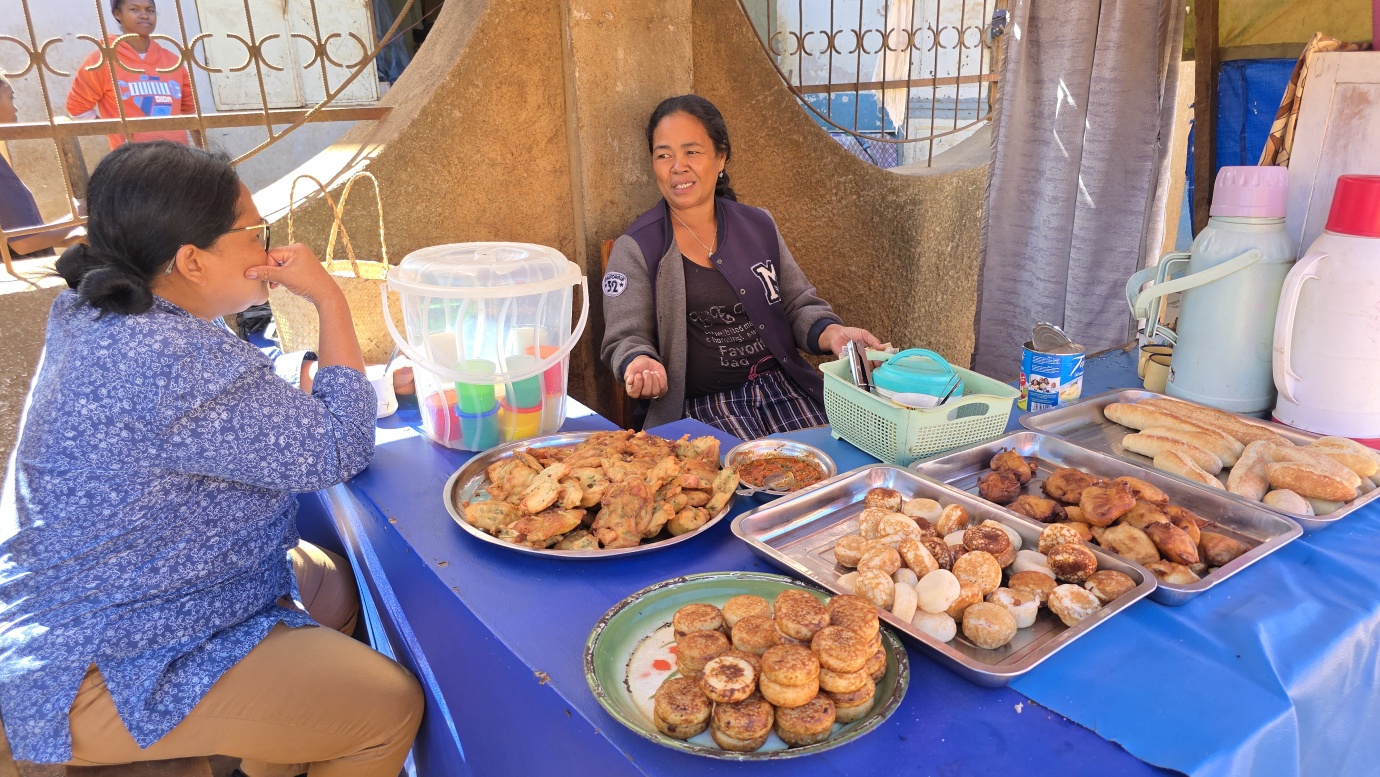
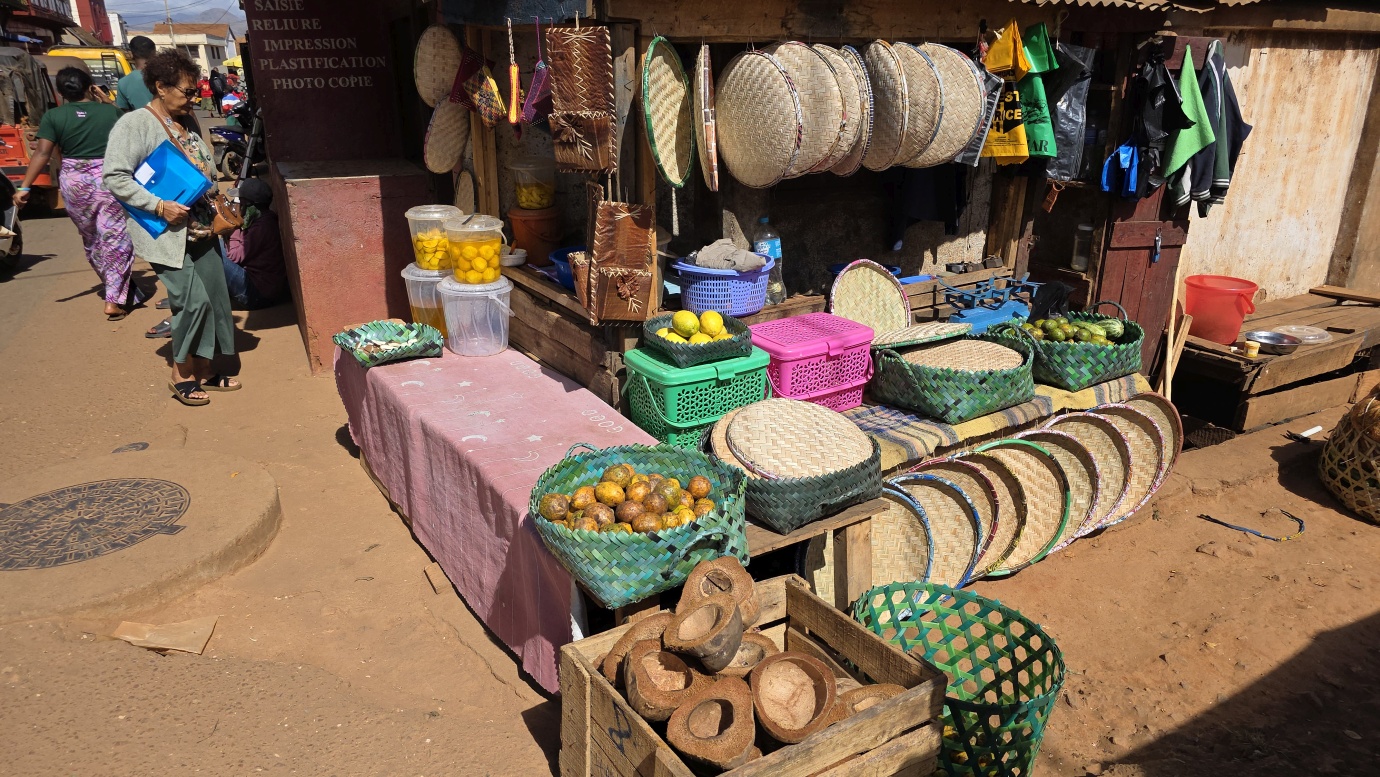
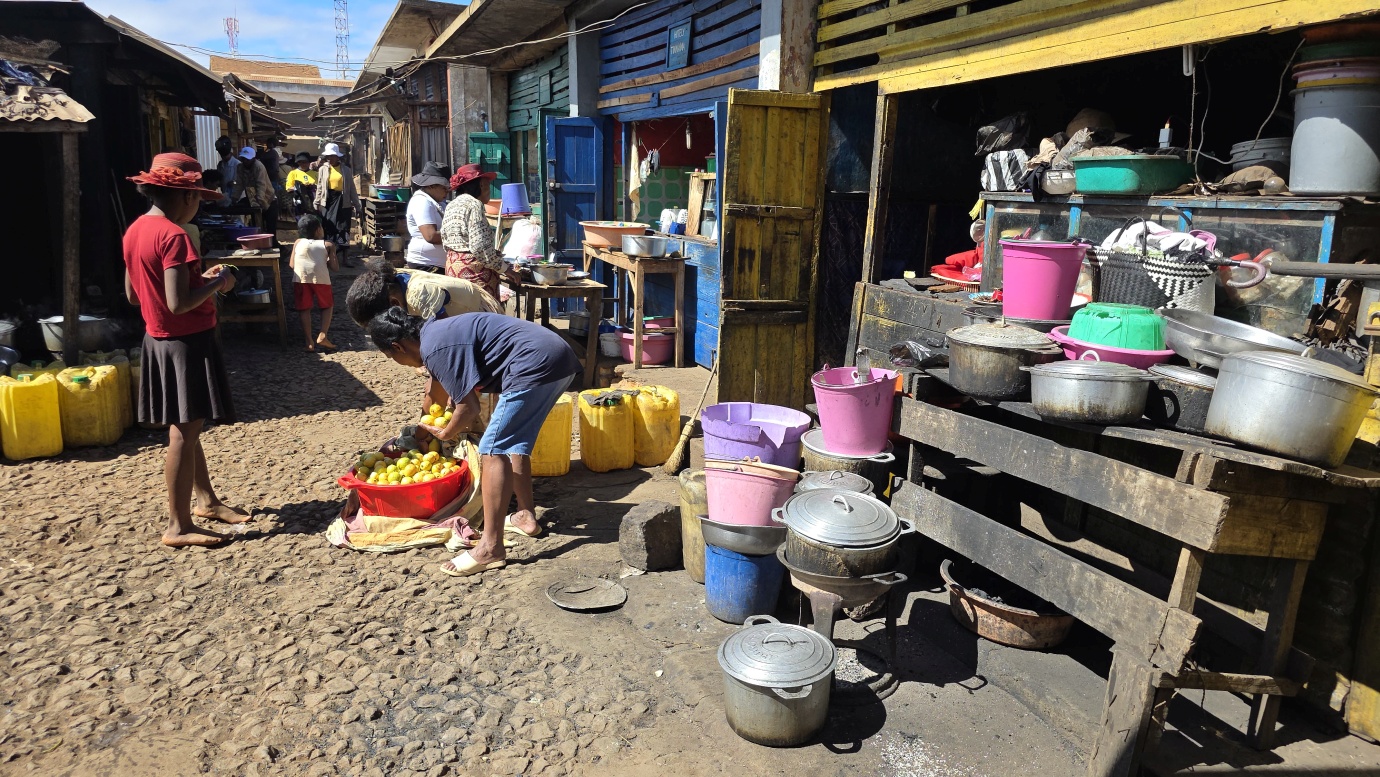
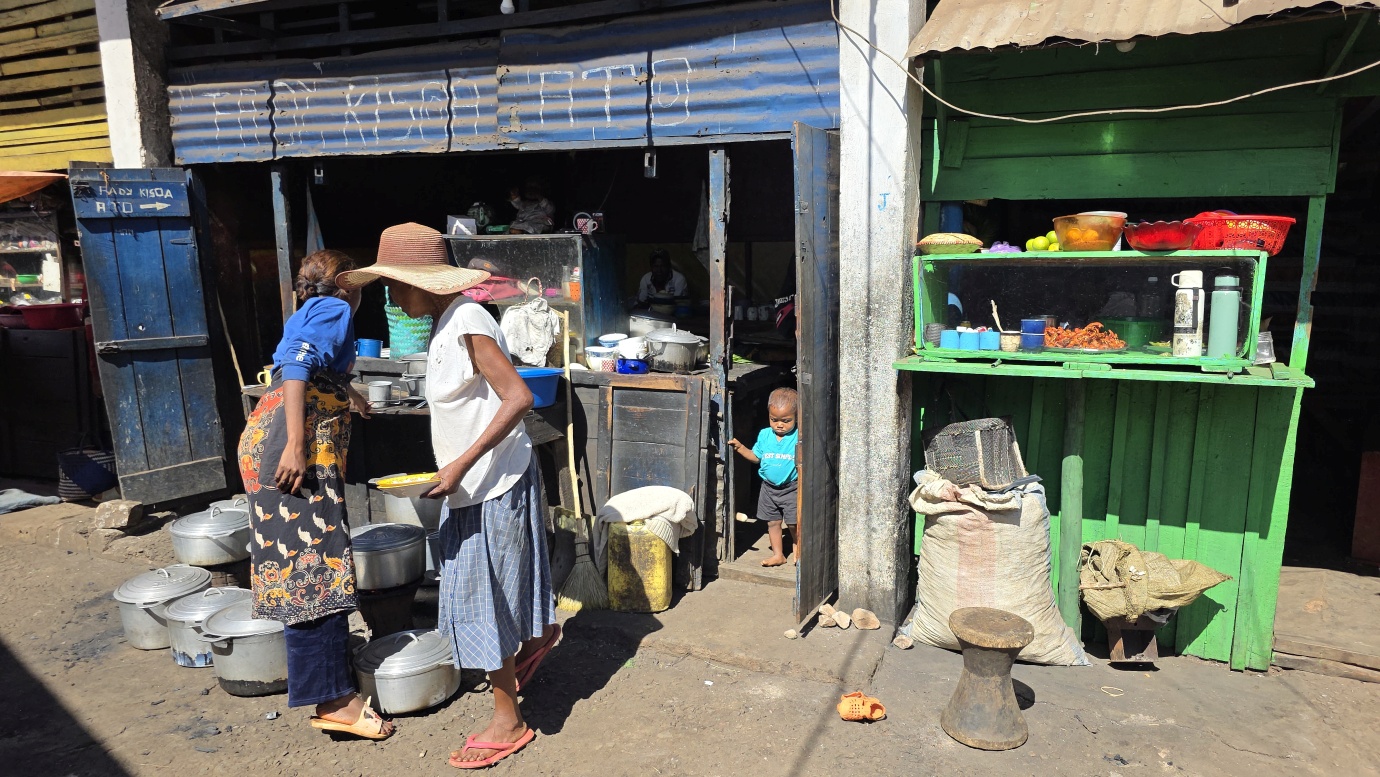
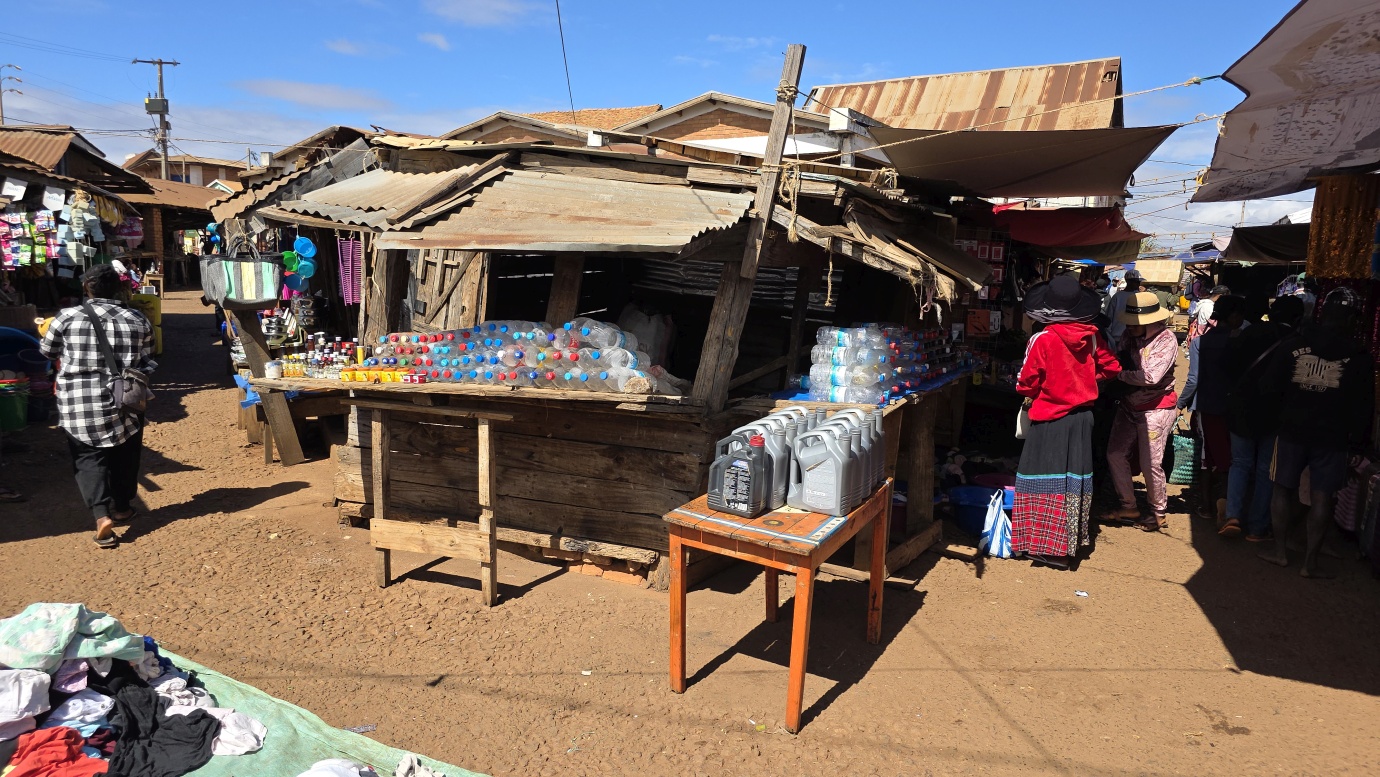
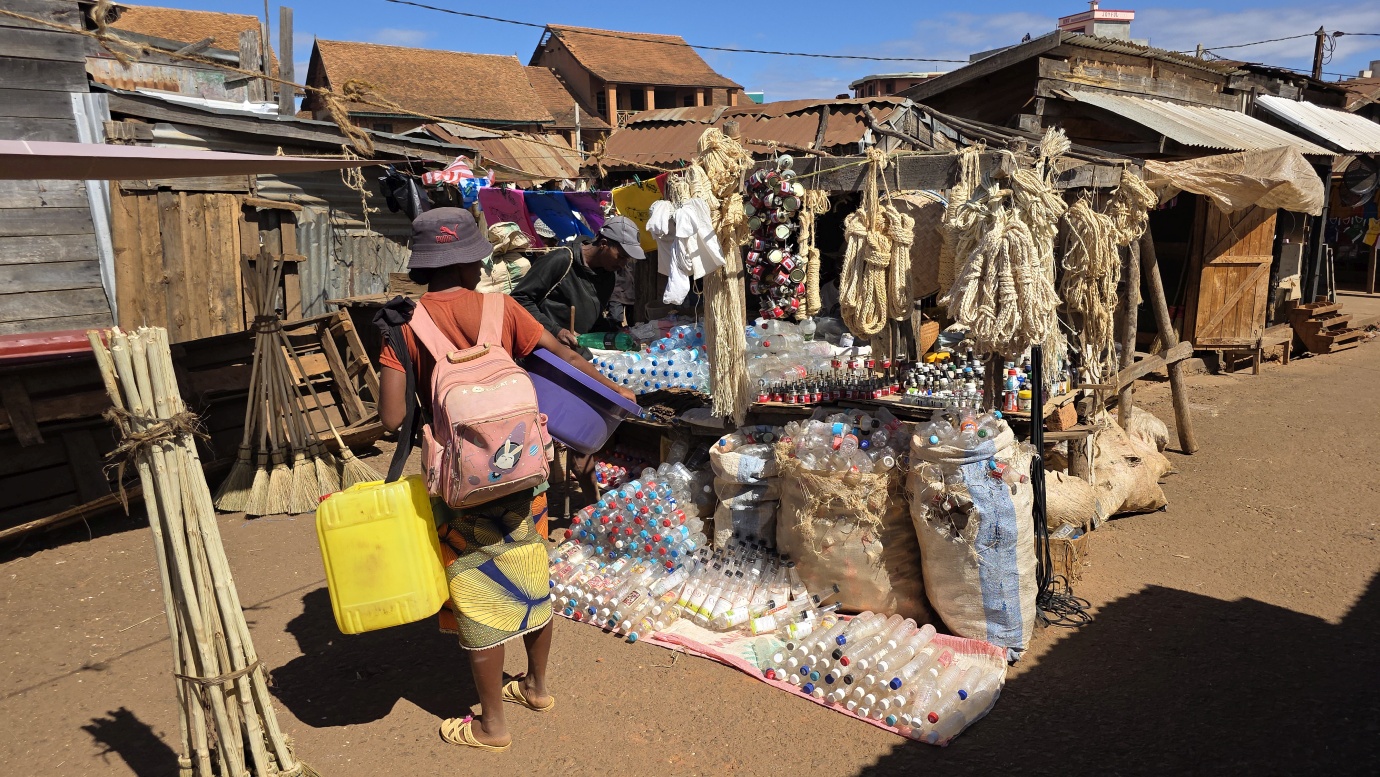
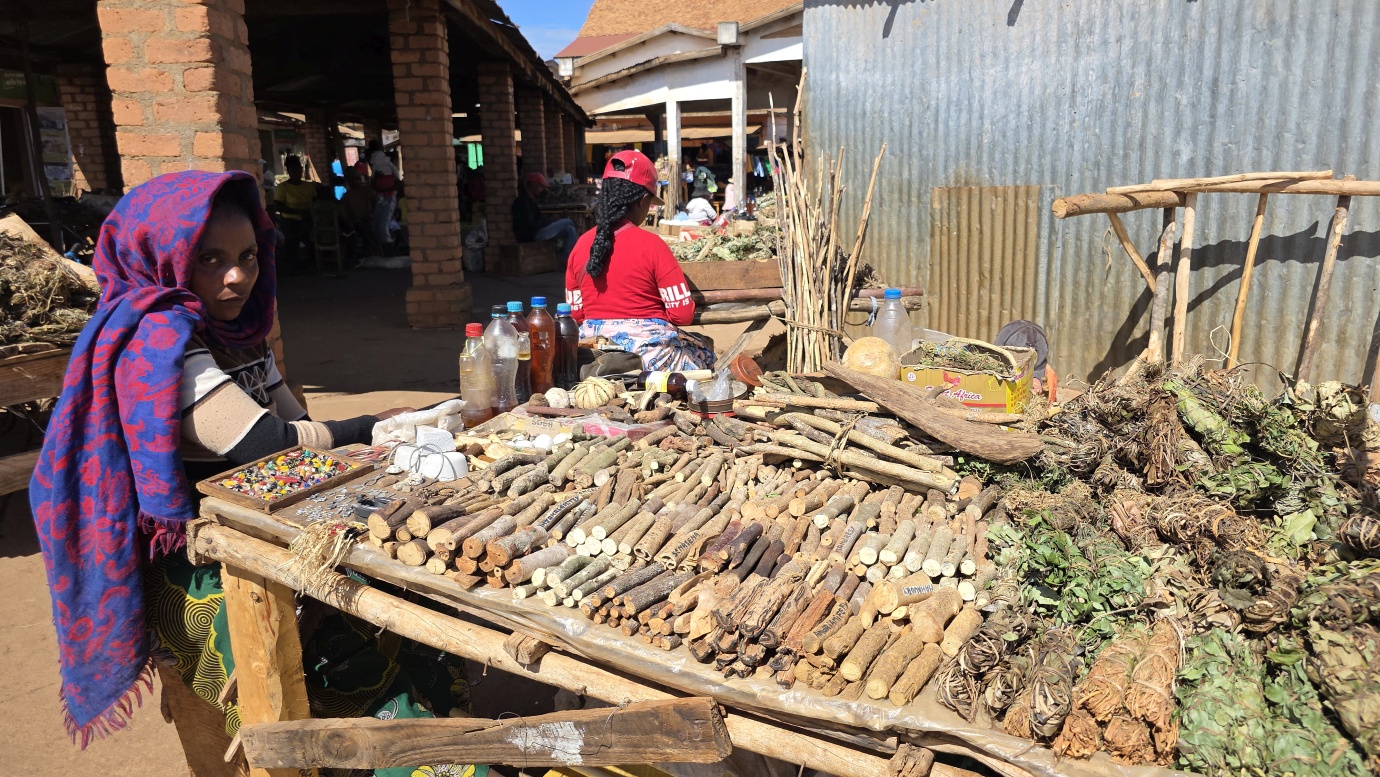
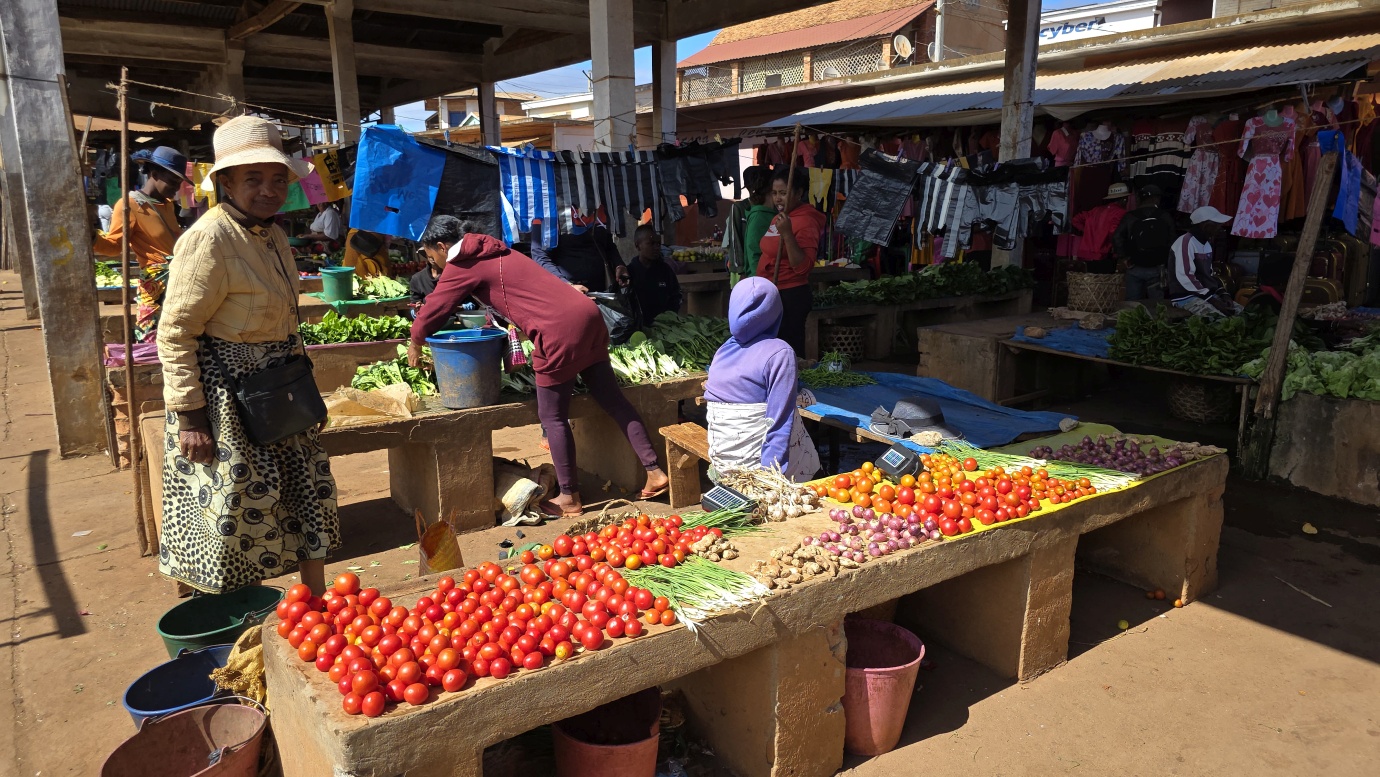
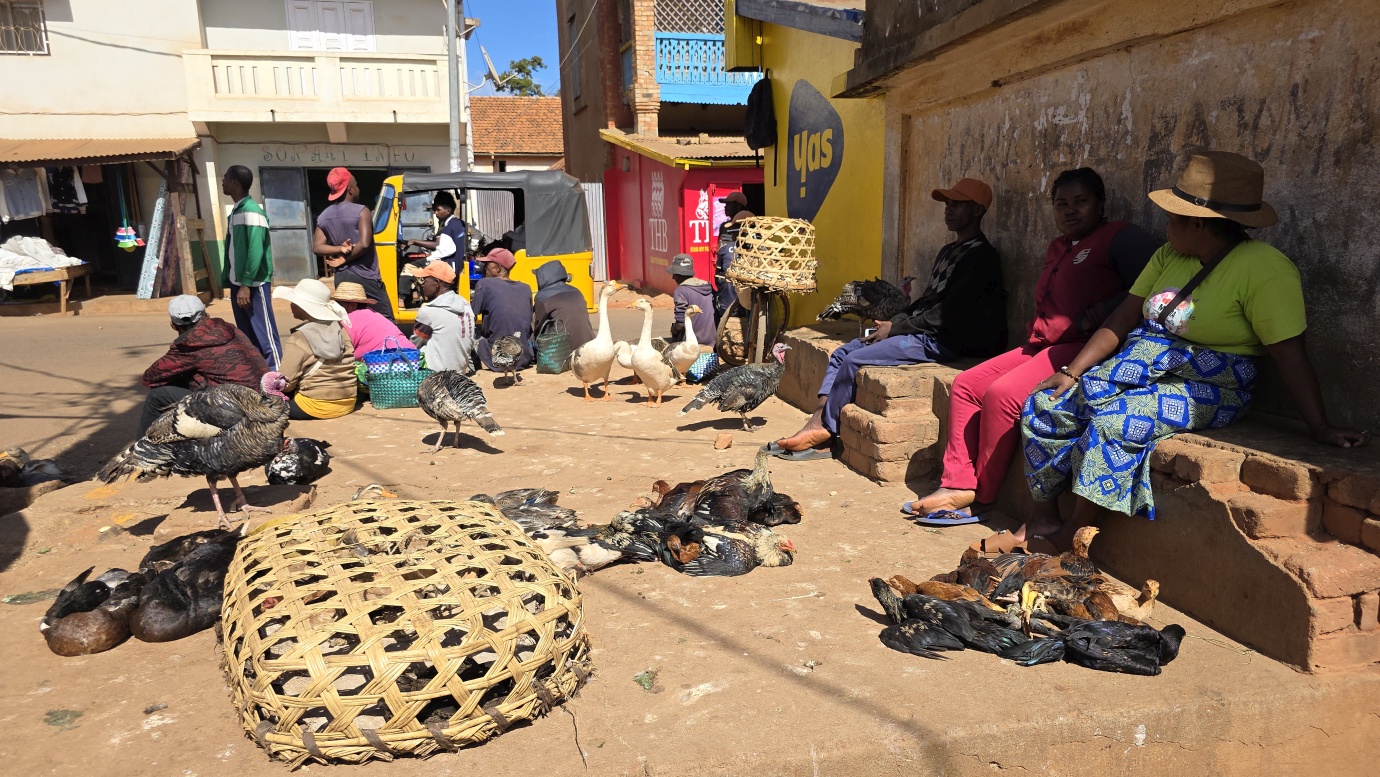
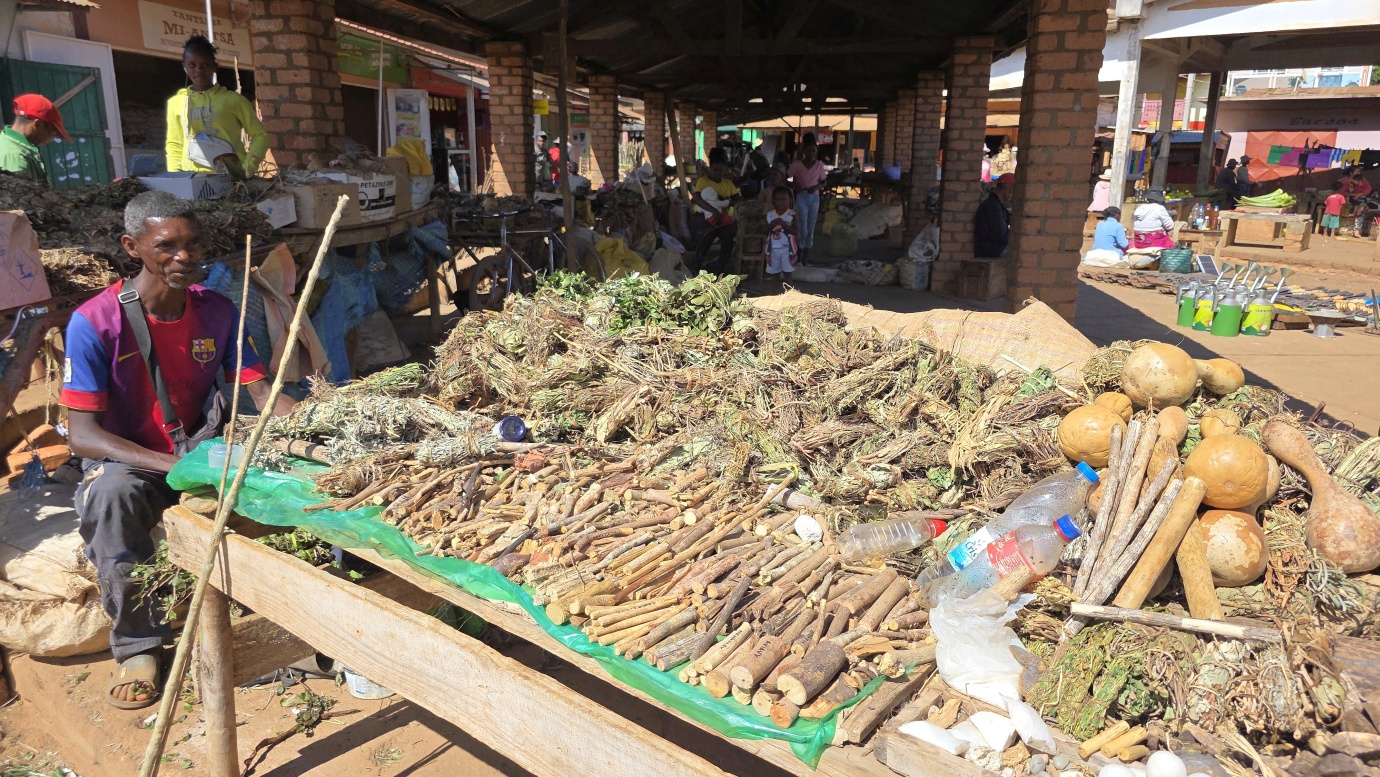
In the morning, we arrived in Ambalavao, a picturesque Betsileo people town known for its charming wooden verandas and intricately decorated balustrades. Situated between Madagascar’s central Highlands and the arid southern regions, Ambalavao is dramatically framed by the towering Andringitra Massif and lies near the striking rocky formations known as the “Gates of the South.”
Ambalavao serves as an important economic and cultural hub, renowned for hosting Madagascar’s largest zebu market, where cattle trading remains central to regional commerce. The town is also celebrated for its production of traditional Antaimoro paper, handcrafted from the bark of the avoha plant using centuries-old techniques, and for its wild-silk weaving traditions. For us, it was also the gateway to the breathtaking Andringitra National Park and the nearby Anja Community Reserve, famous for its populations of ring-tailed lemurs.
Historically, Ambalavao and its surrounding region played a significant role during the 18th and 19th centuries, when it became a contested battleground among the Betsileo, Bara, and the expanding Merina Kingdom. One of the area’s most poignant historical landmarks is the Rock of Ifandana, located southeast of the town, where local inhabitants reportedly chose collective suicide rather than submit to Merina rule under King Radama I. Ambalavao’s modern development accelerated under French colonial administration beginning in 1900, when it was designated a district capital and later connected to Antananarivo by road in 1916, further cementing its regional importance.