

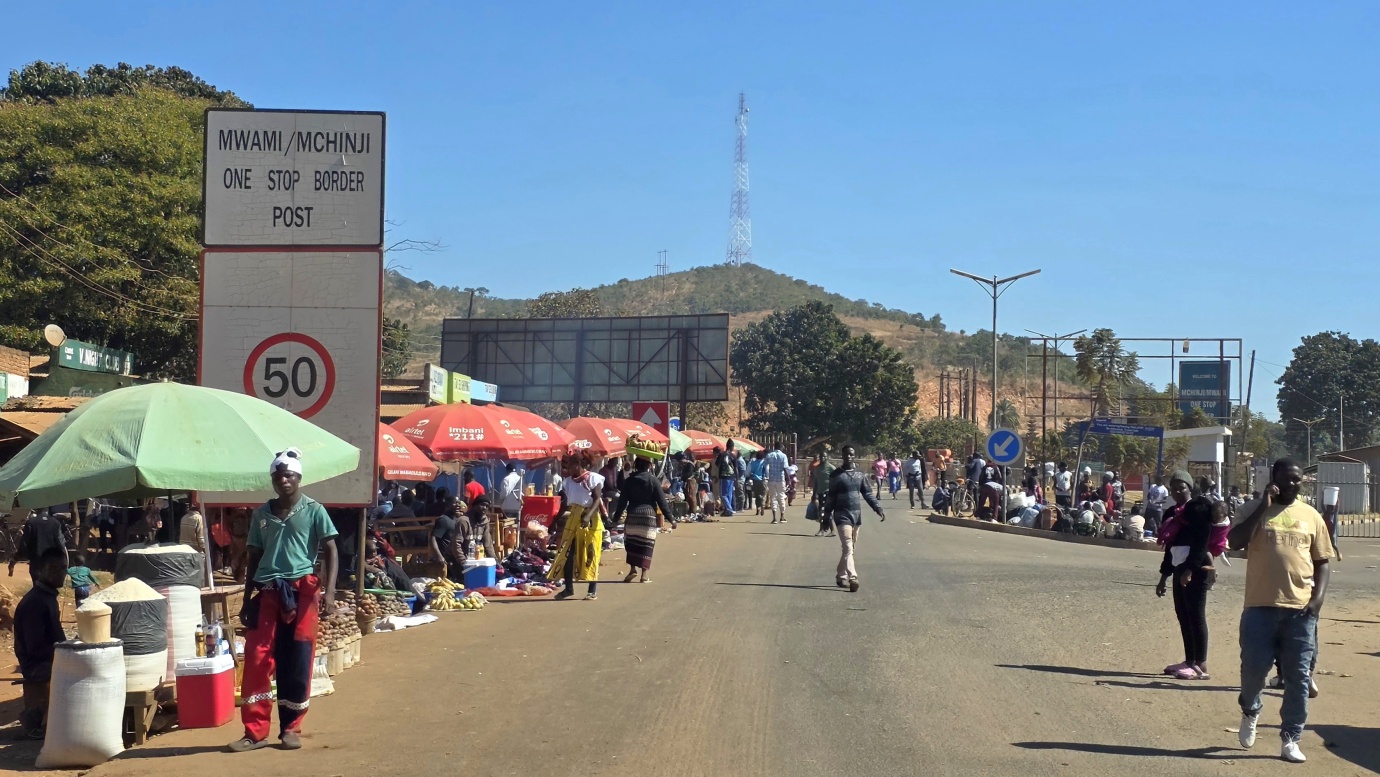
We arrived at a surprisingly modern border building just before lunchtime. The first stop was the health check, and that’s where we encountered our first scam. We were told that our yellow fever vaccination certificate was “not valid” and were sent to the main office. There, they “accidentally” stamped directly over our vaccination records, effectively ruining the entire Yellow Card. Later, the supervisor apologised for the mistake and wrote an explanation on another page, but unfortunately the vaccination booklet is now permanently damaged.
After that, the rest of the immigration process went quite smoothly. We received our exit stamp from Malawi, had our Carnet de Passages (CPD) stamped at customs, and were granted a 30-day entry stamp for Zambia.
The most time-consuming part was processing the truck, as it had to be entered into the customs system. Once everything was completed, we paid the required fees by card: USD 20 for the road tax, ZMW 484 for the carbon tax, and ZMW 100 for the municipal fee. With all the paperwork and our CPD stamped, we were finally free to drive through the border exit gate.
There was no bank or official currency exchange at the border, so we exchanged money with the fixers waiting outside the exit gate. The rate was only 16.50 ZMW per USD, well below the official rate of around 17.90, but we needed some local cash to buy an Airtel SIM card. The prices were reasonable: ZMW 50 for the SIM, ZMW 200 for a 20 GB monthly plan, or ZMW 400 for a 60 GB plan.
As expected, the money changers tried to short-change us. It took four complaints and four recounts before we finally received the correct amount. They also tried to sell us pre-registered SIM cards, but we were already familiar with that scam and politely declined.
In total, the border crossing took about three hours, mainly because of the Yellow Card incident and the painfully slow Airtel SIM card registration process. Nobody controlled or entered the truck.