

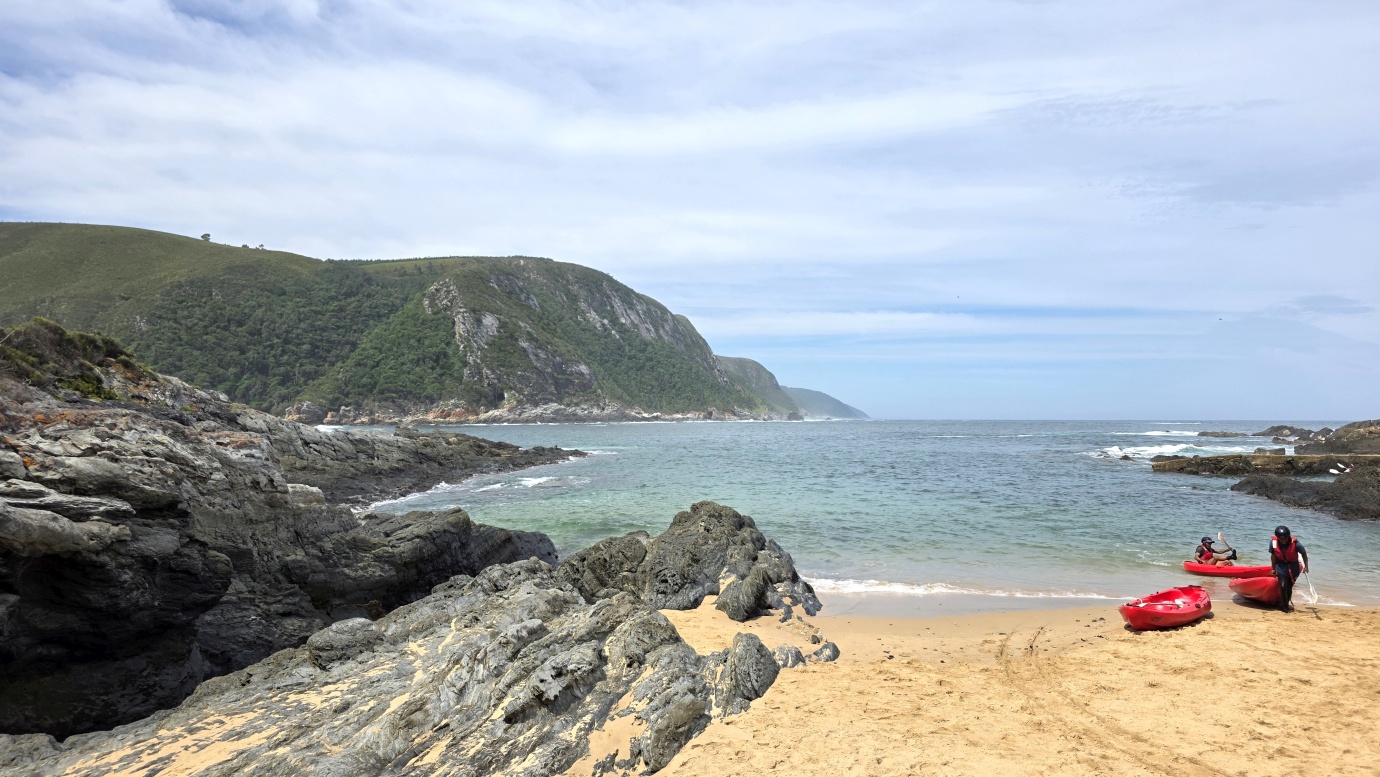
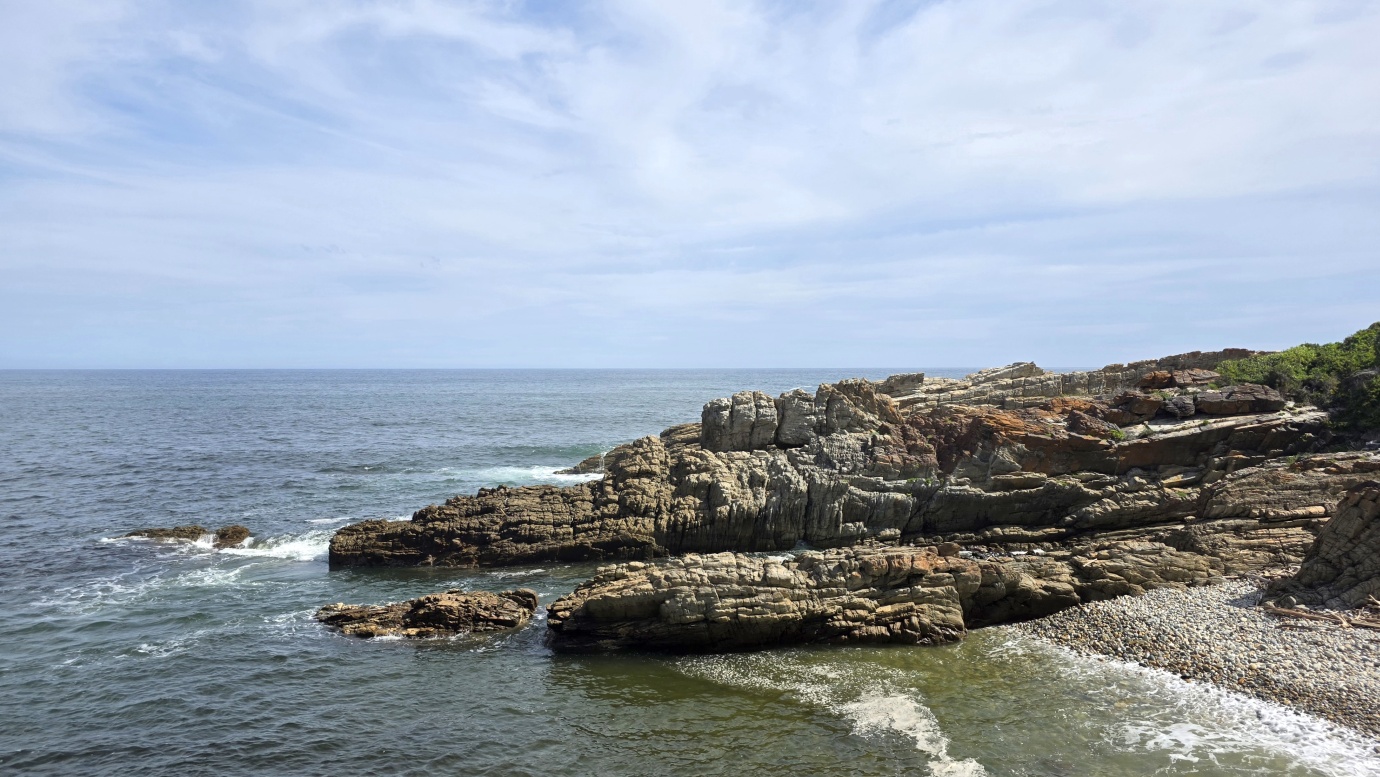
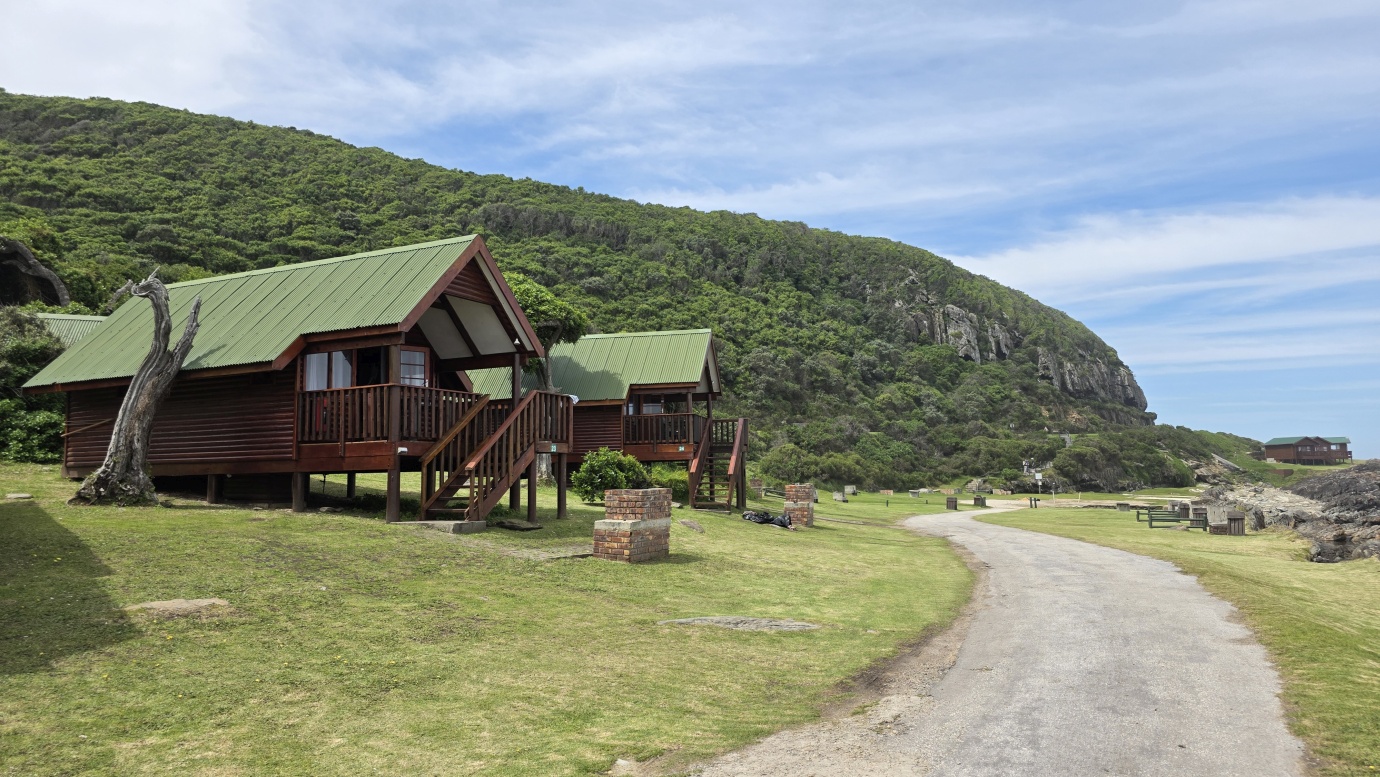
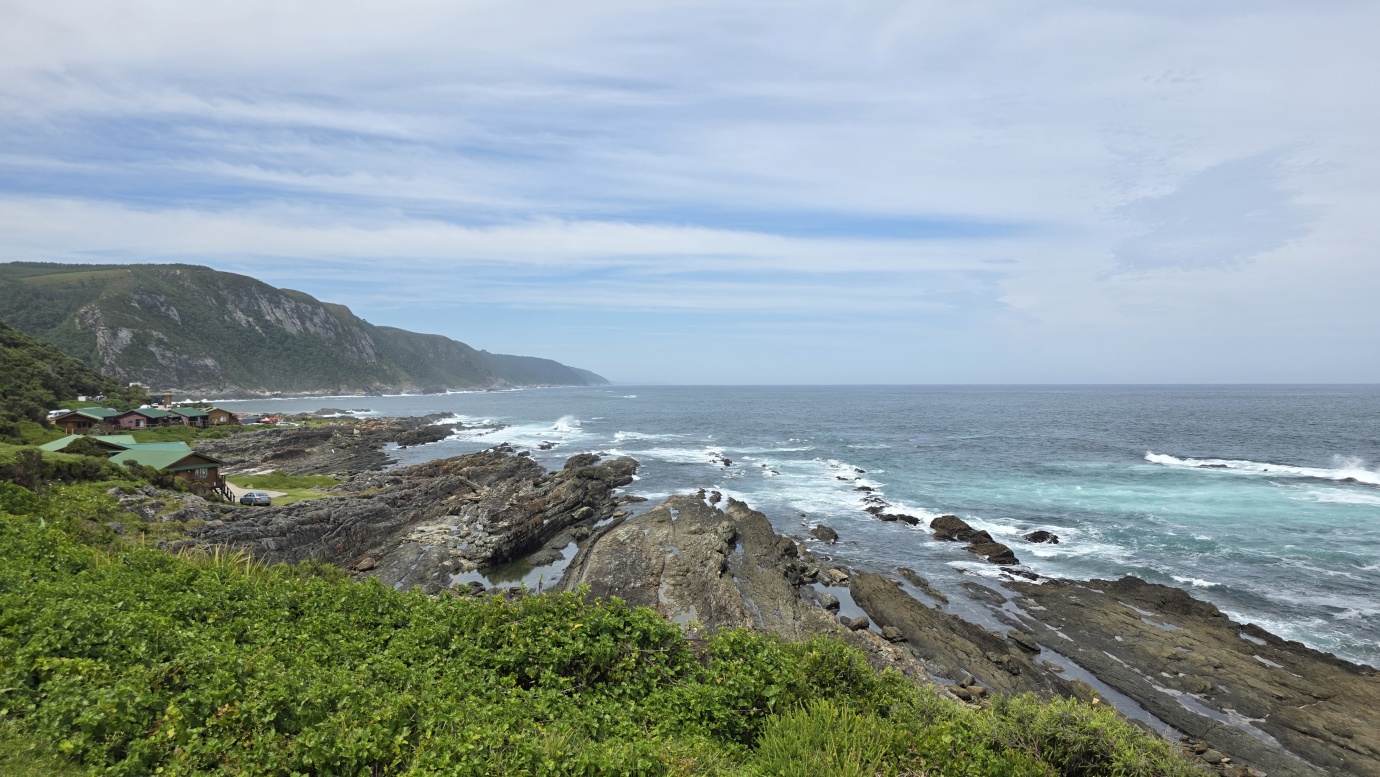
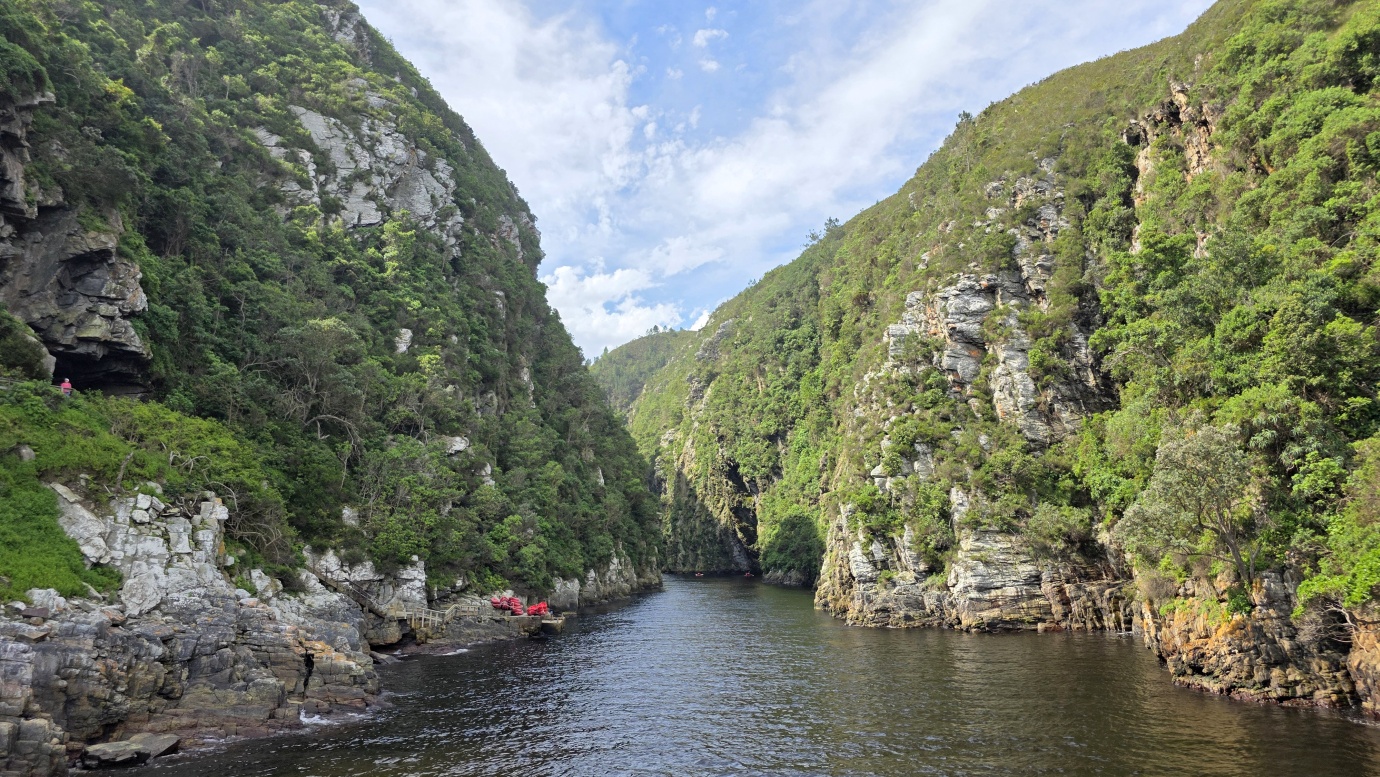
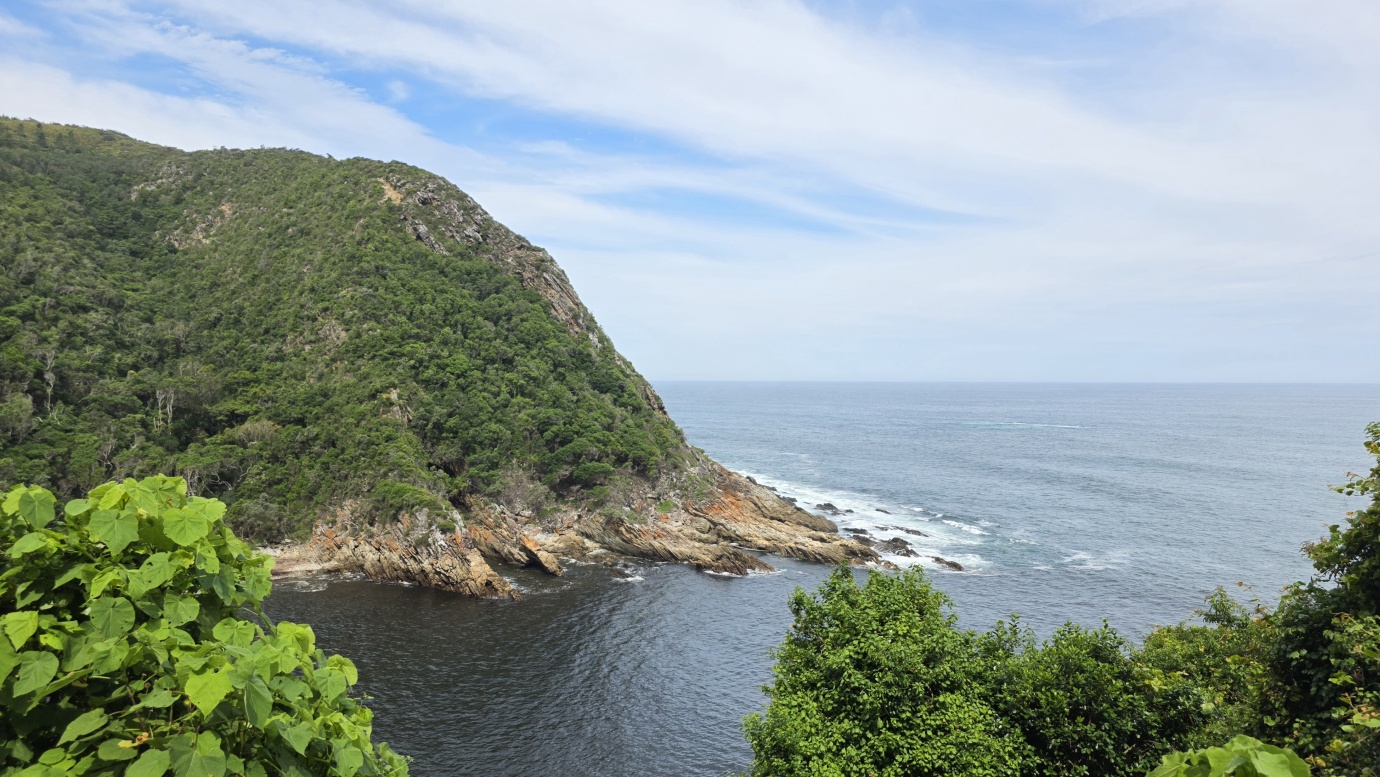
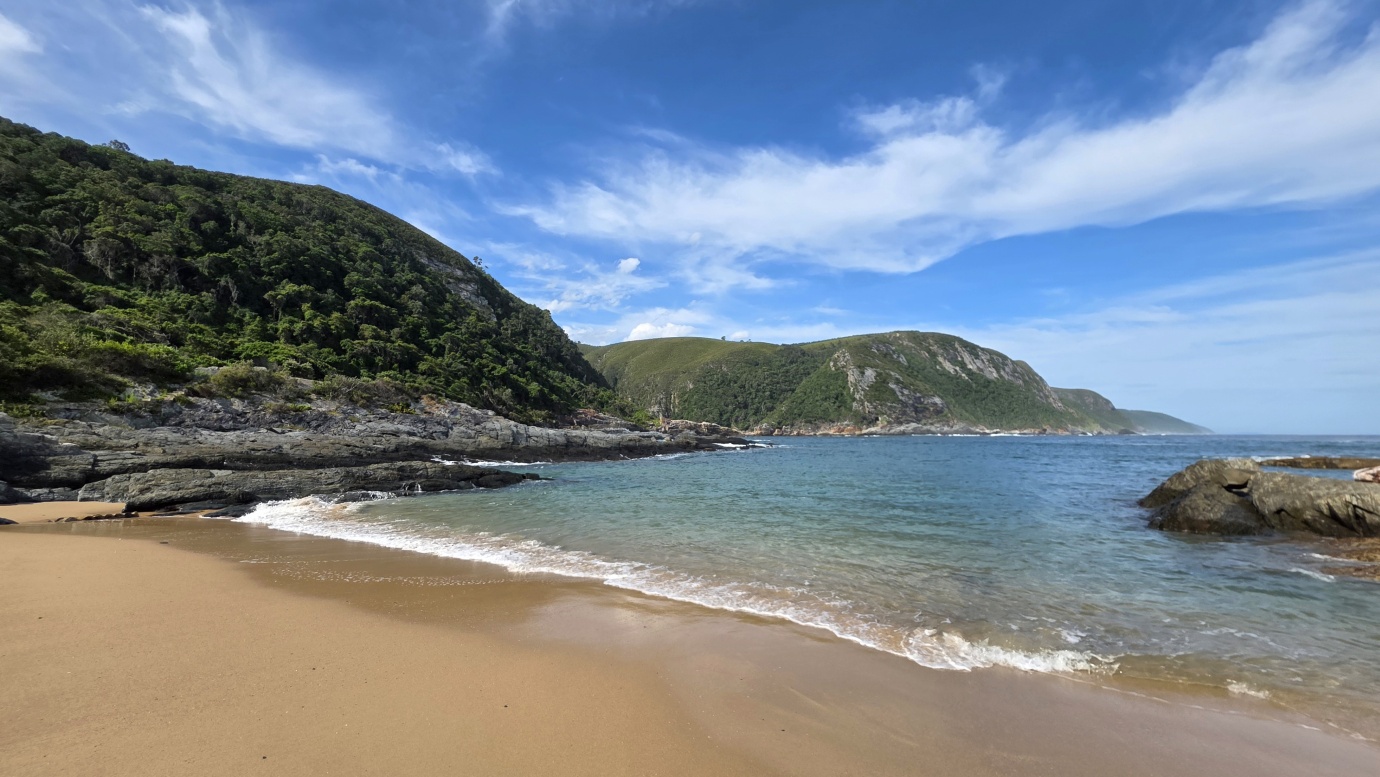
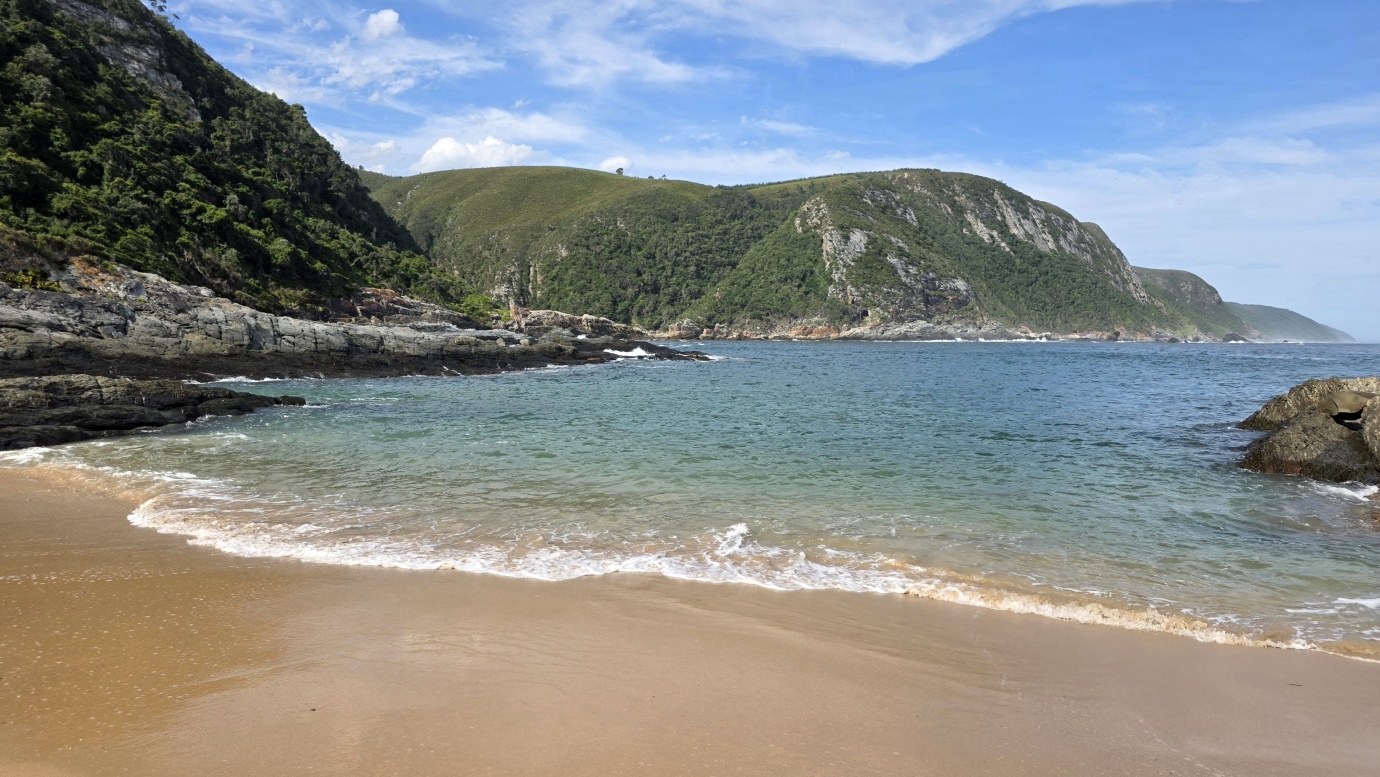
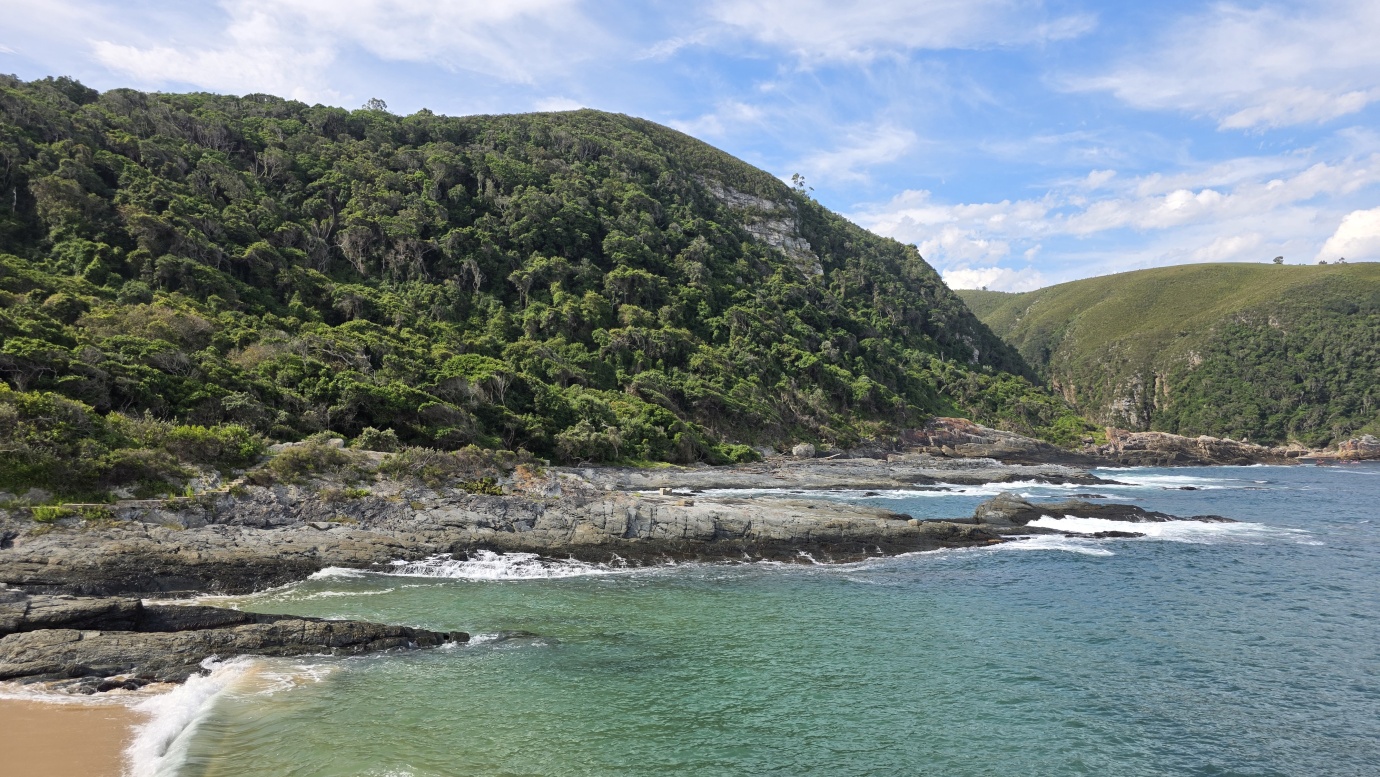
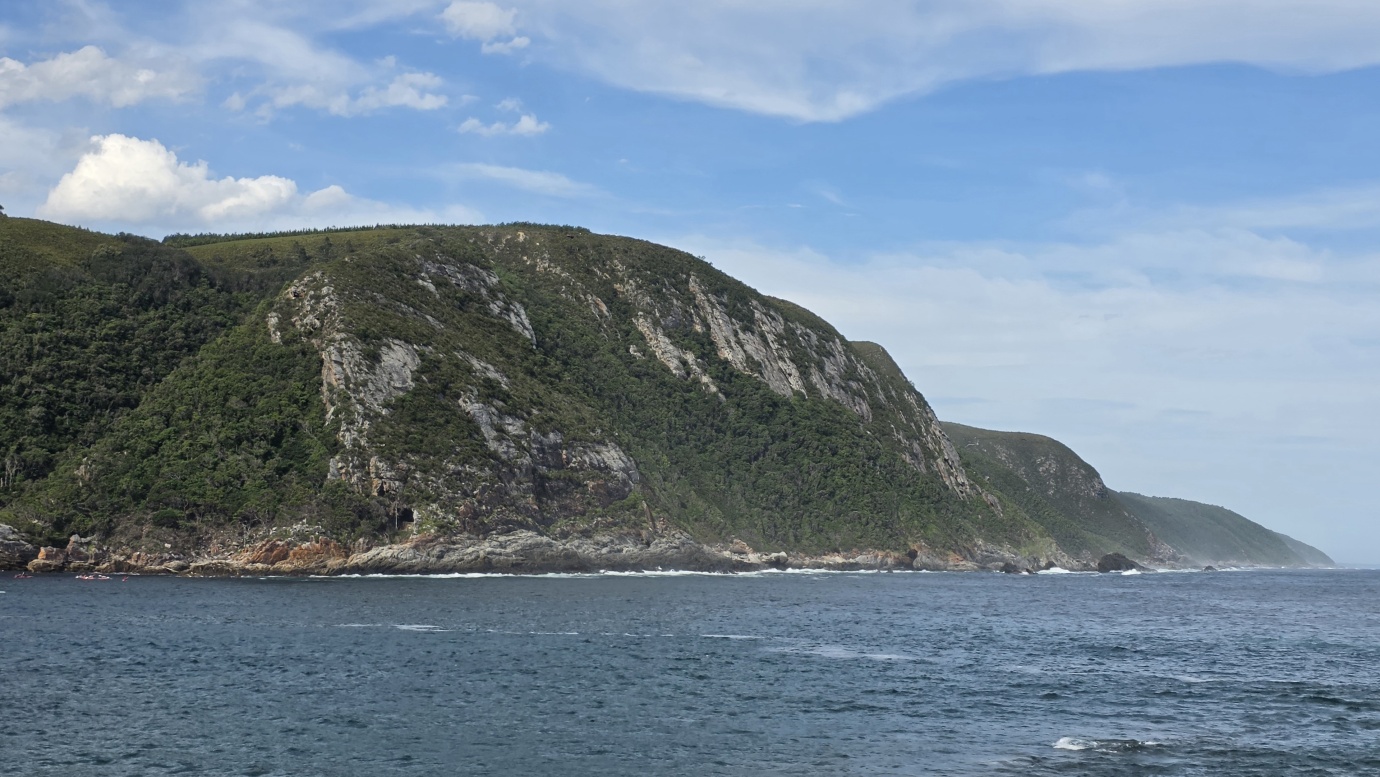
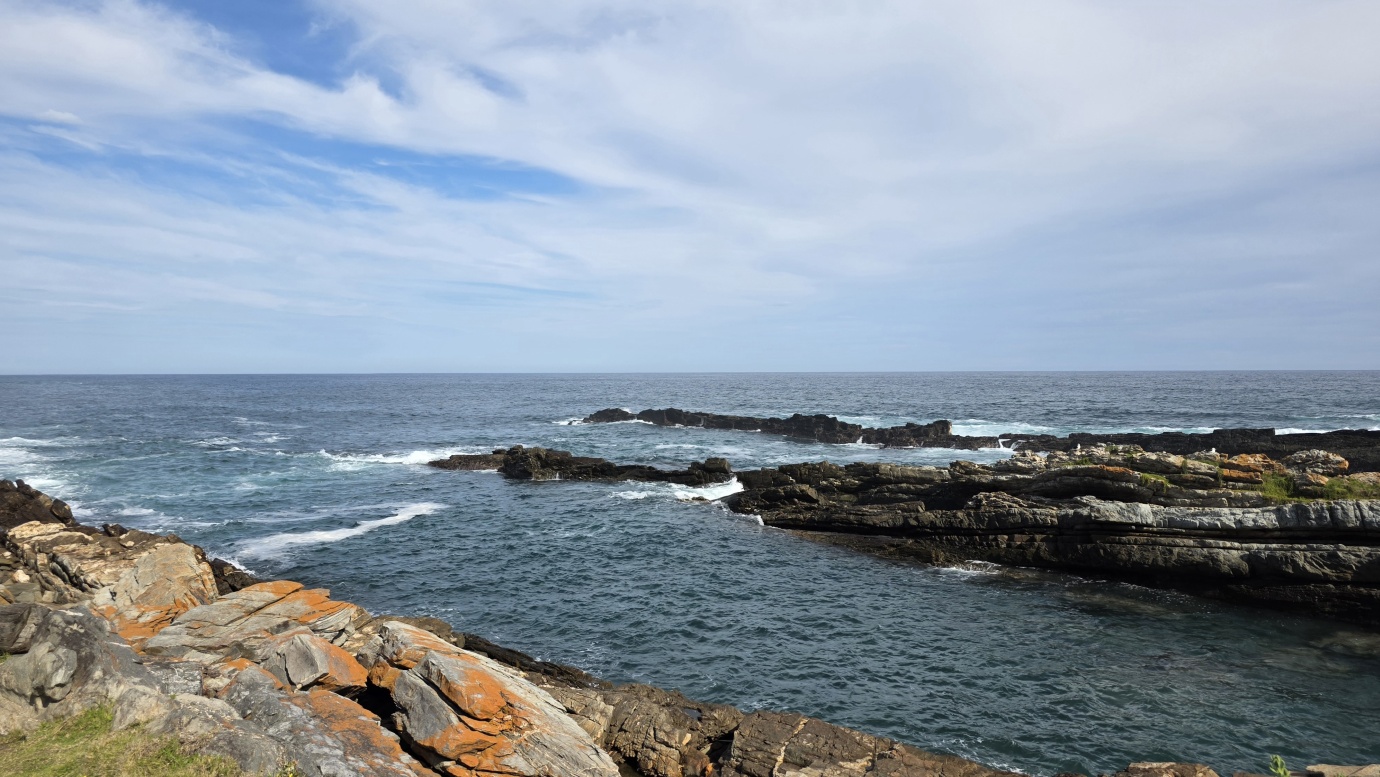
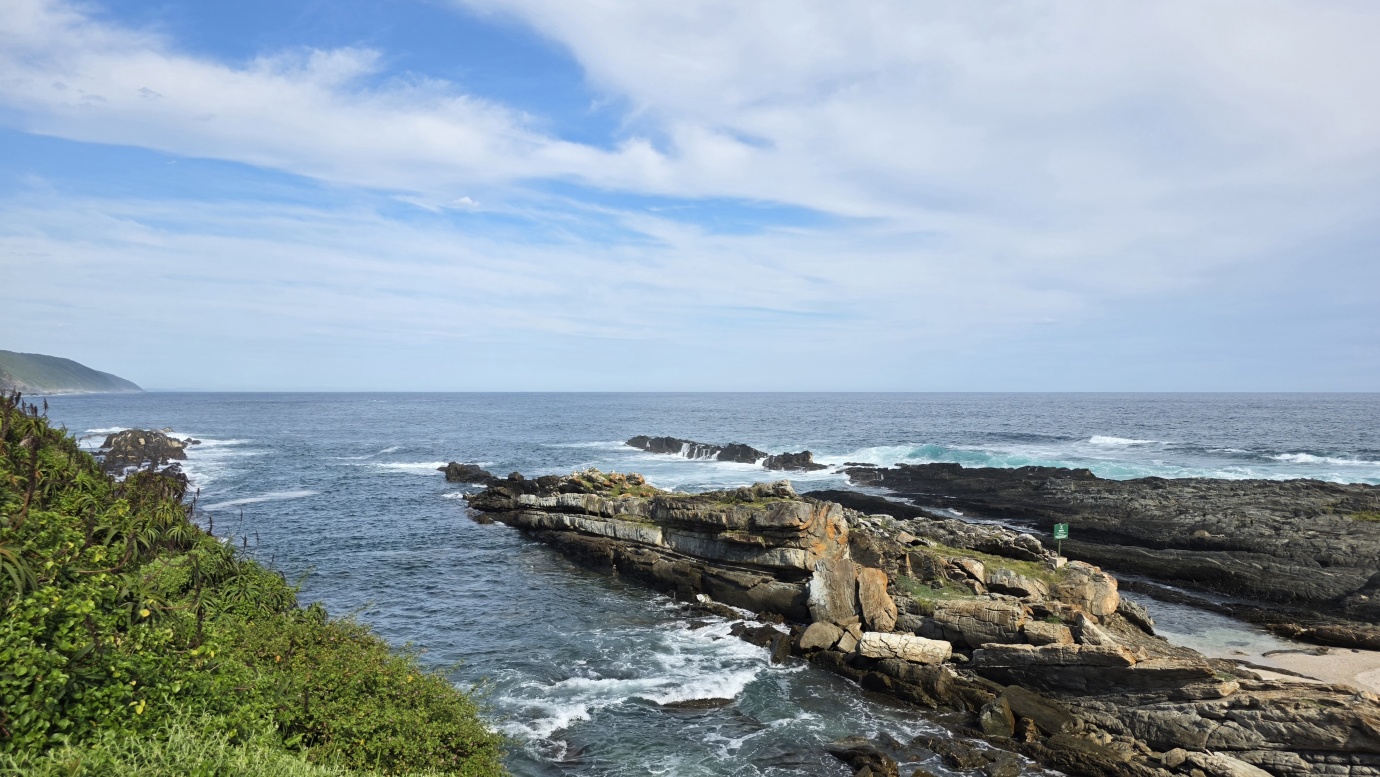
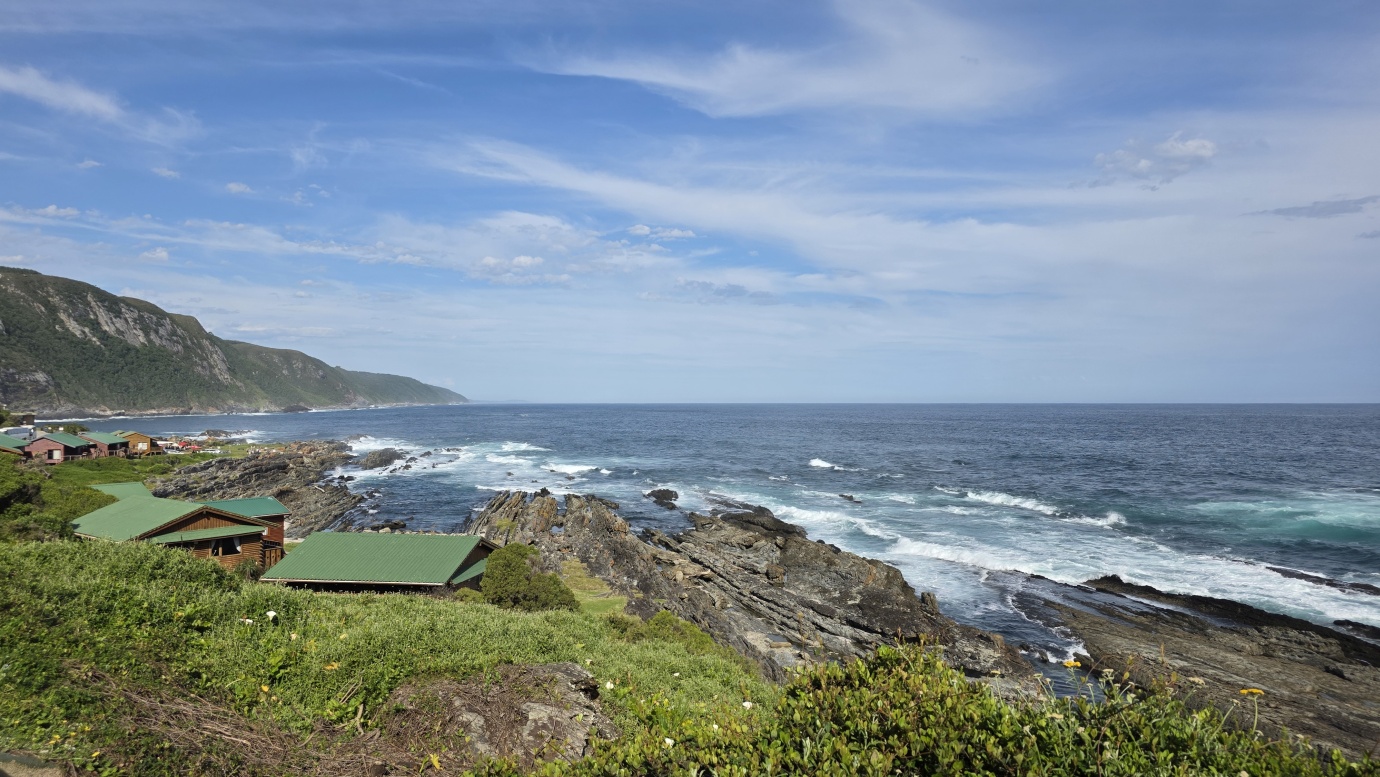
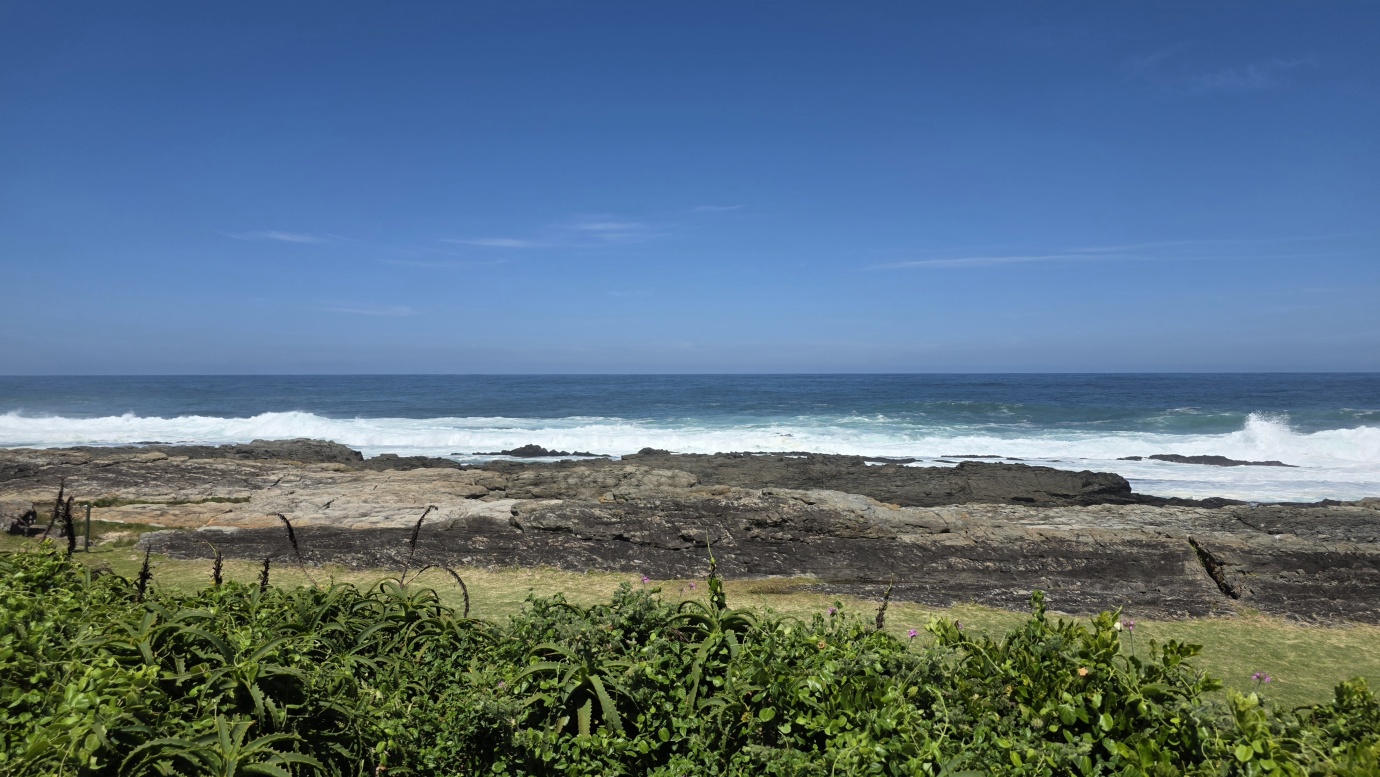
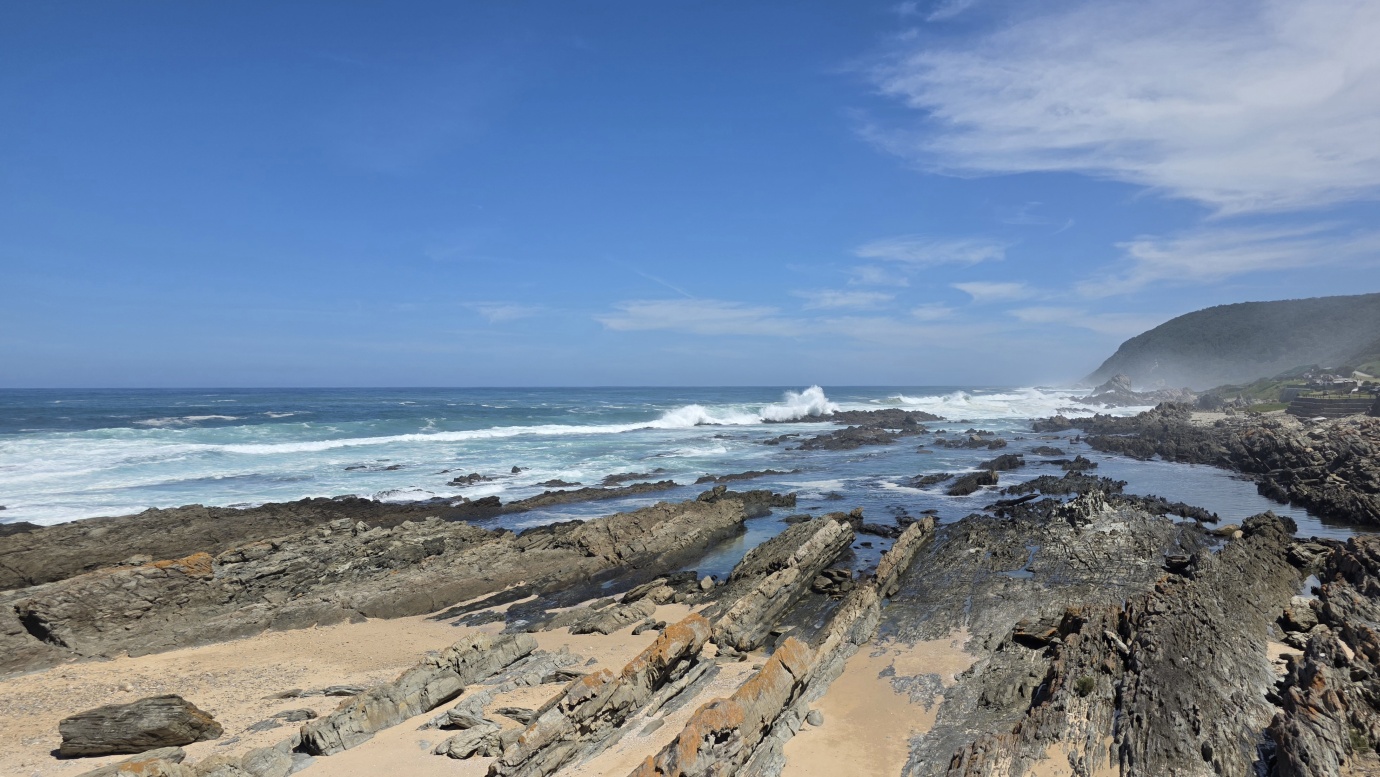
After visiting the Big Tree, we drove a few more kilometres to Tsitsikamma National Park (🎟️367 ZAR), Africa’s first marine national park, proclaimed in 1964. In 2009, it became part of the unified Garden Route National Park, alongside the Wilderness and Knysna protected areas. The name “Tsitsikamma” is commonly translated as “place of much water”, an apt description of this spectacular coastal wilderness, characterised by towering indigenous forests, deep rocky river gorges, fynbos-covered cliffs and a protected marine environment.
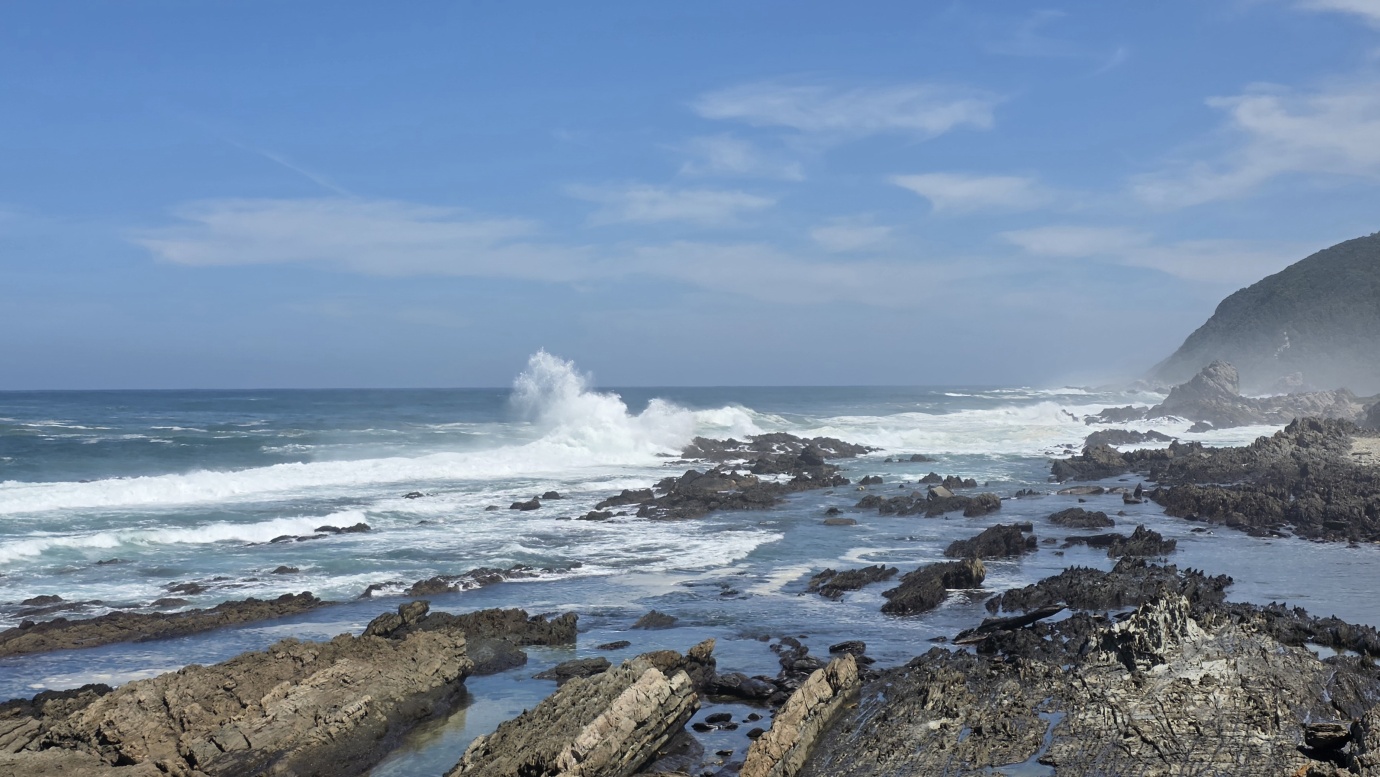
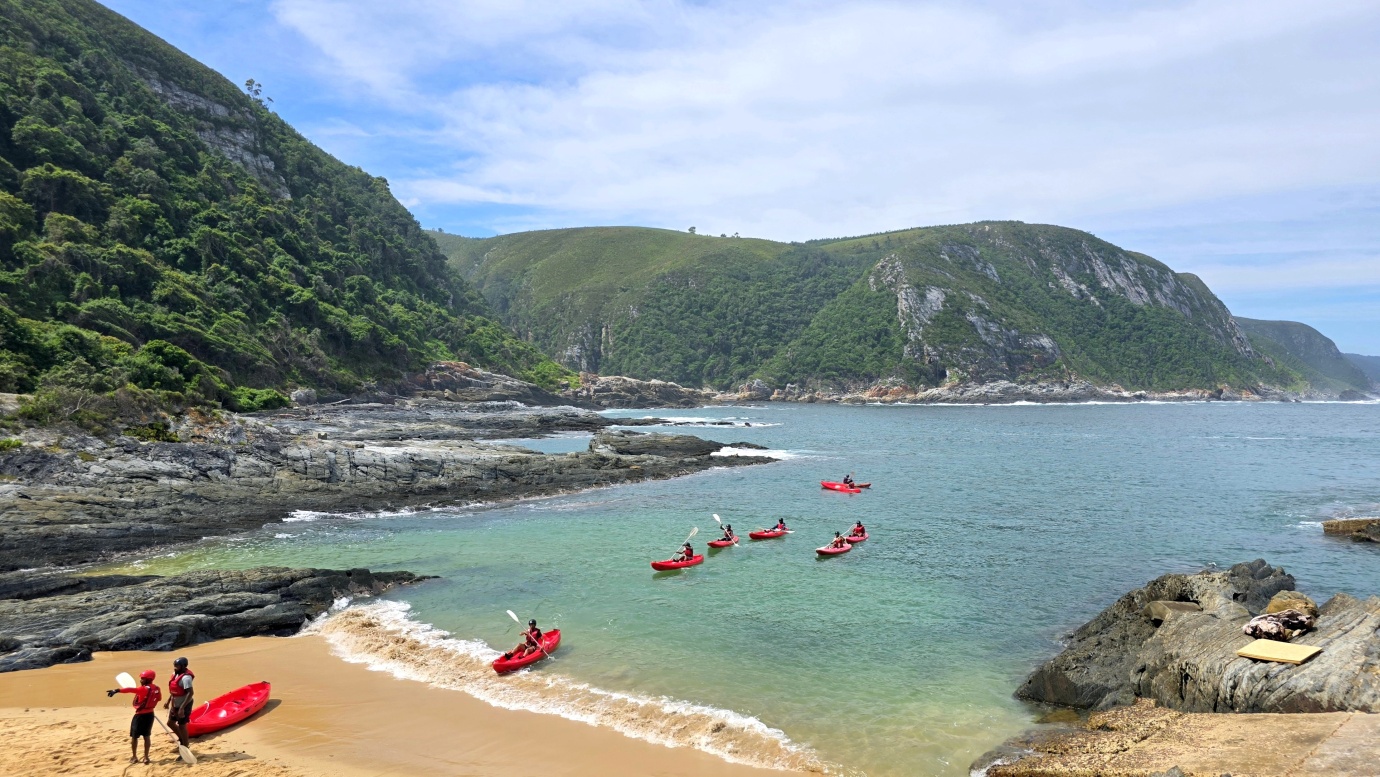
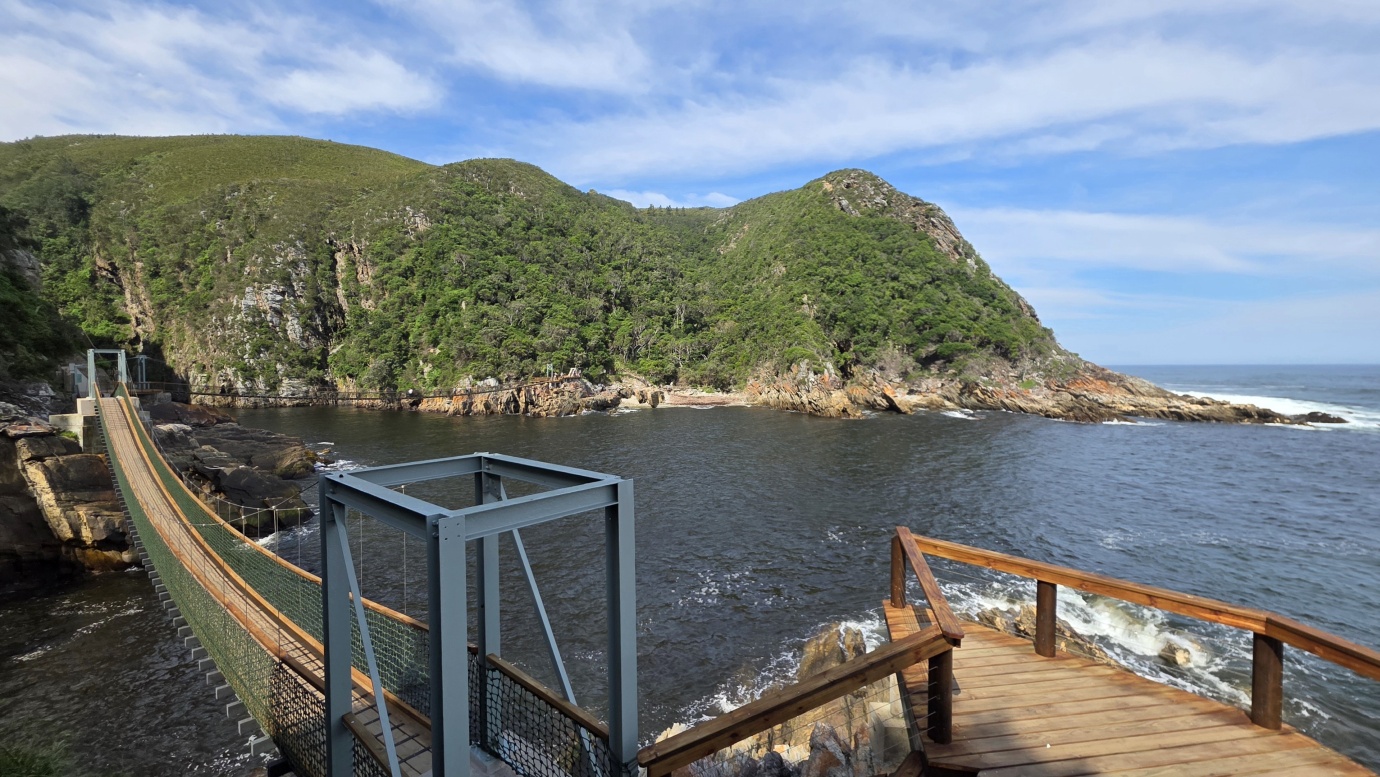
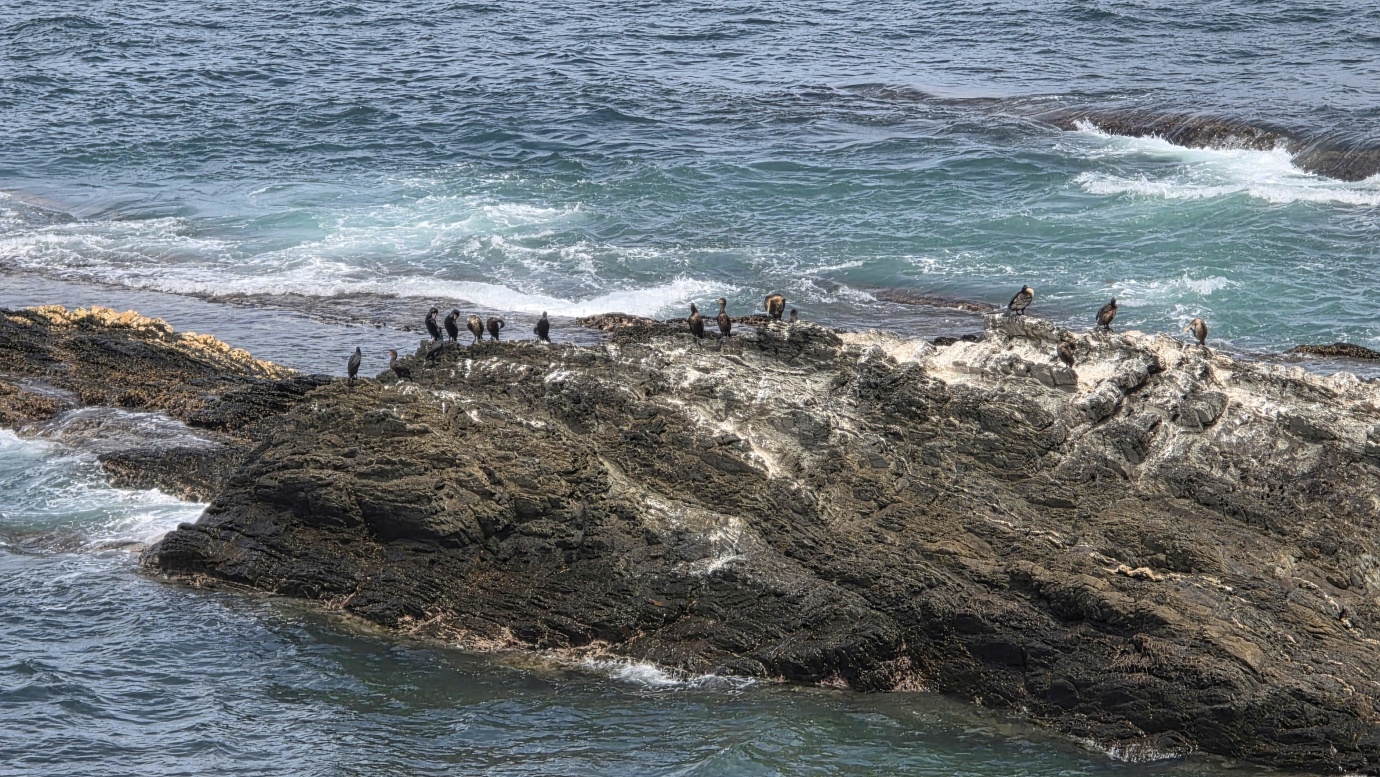
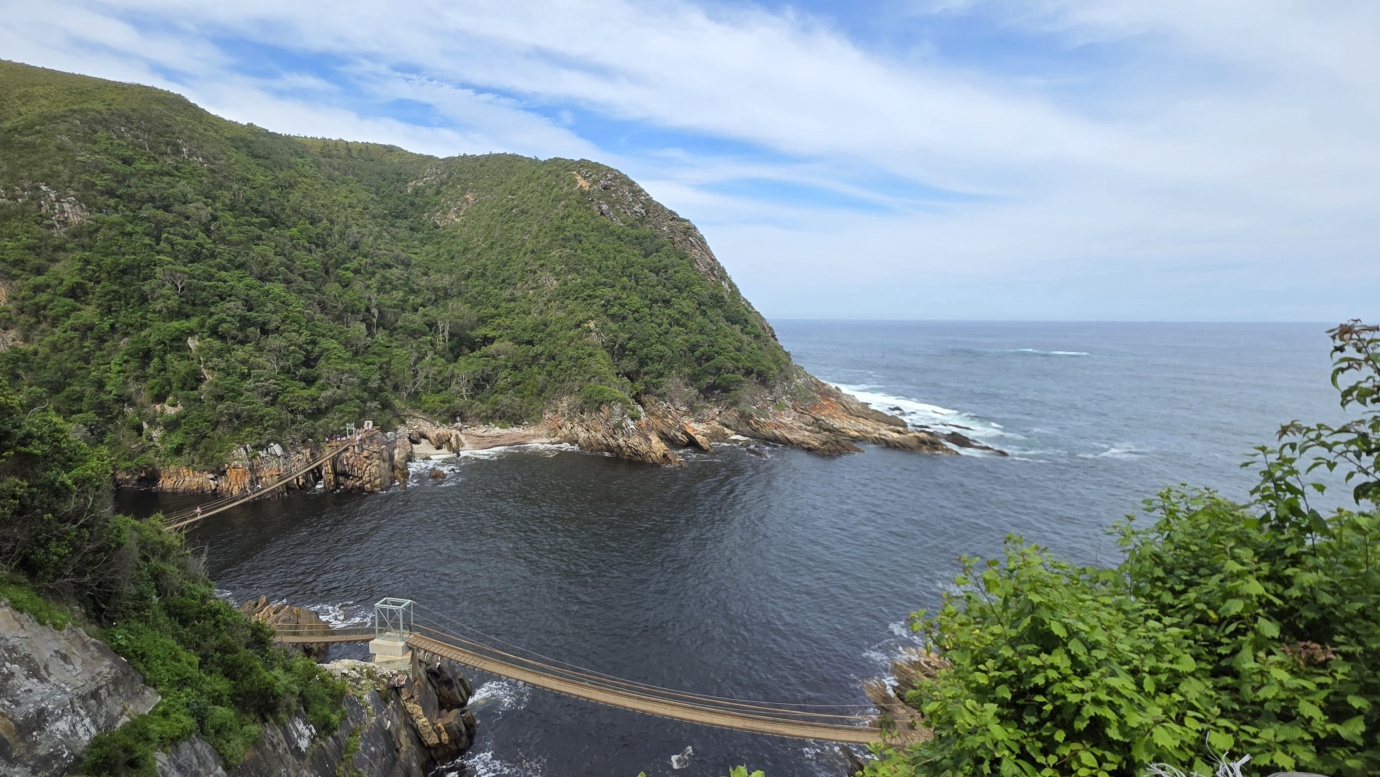
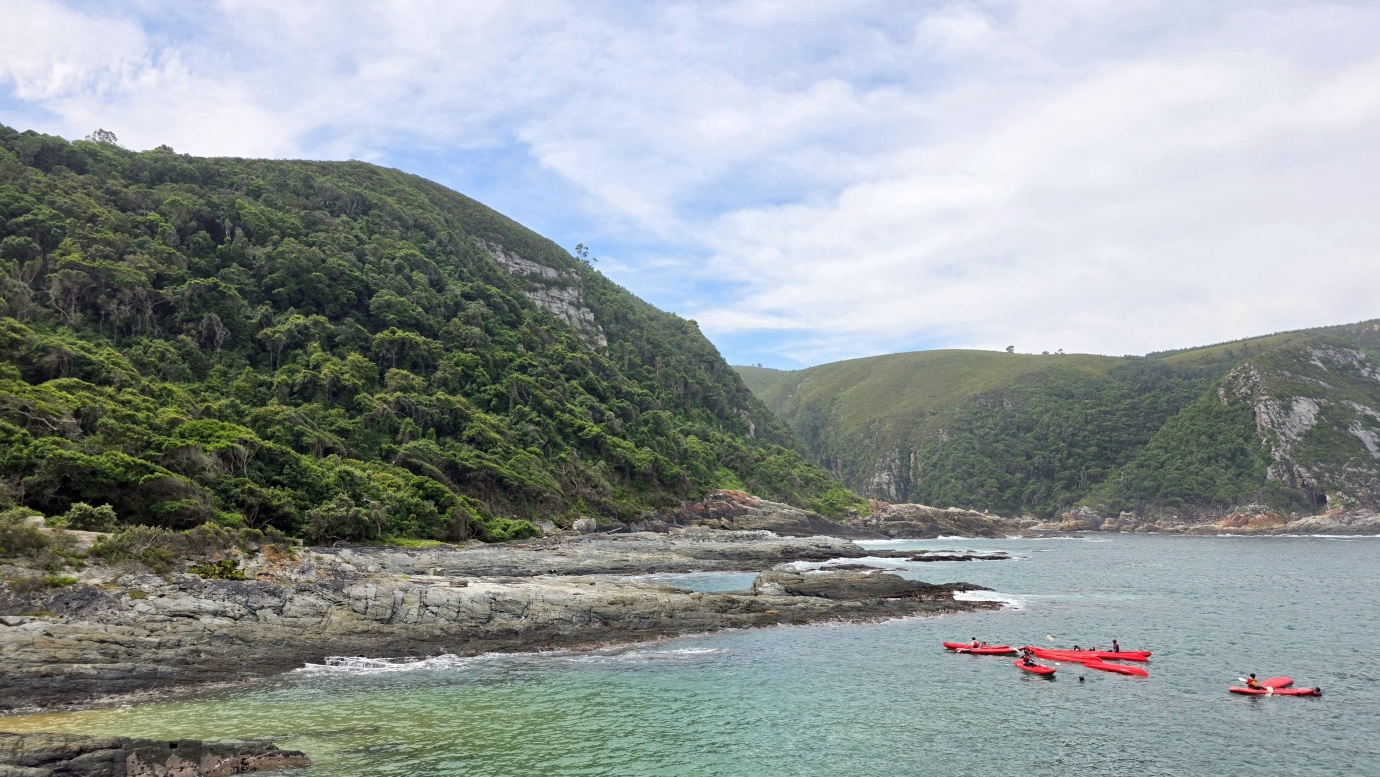
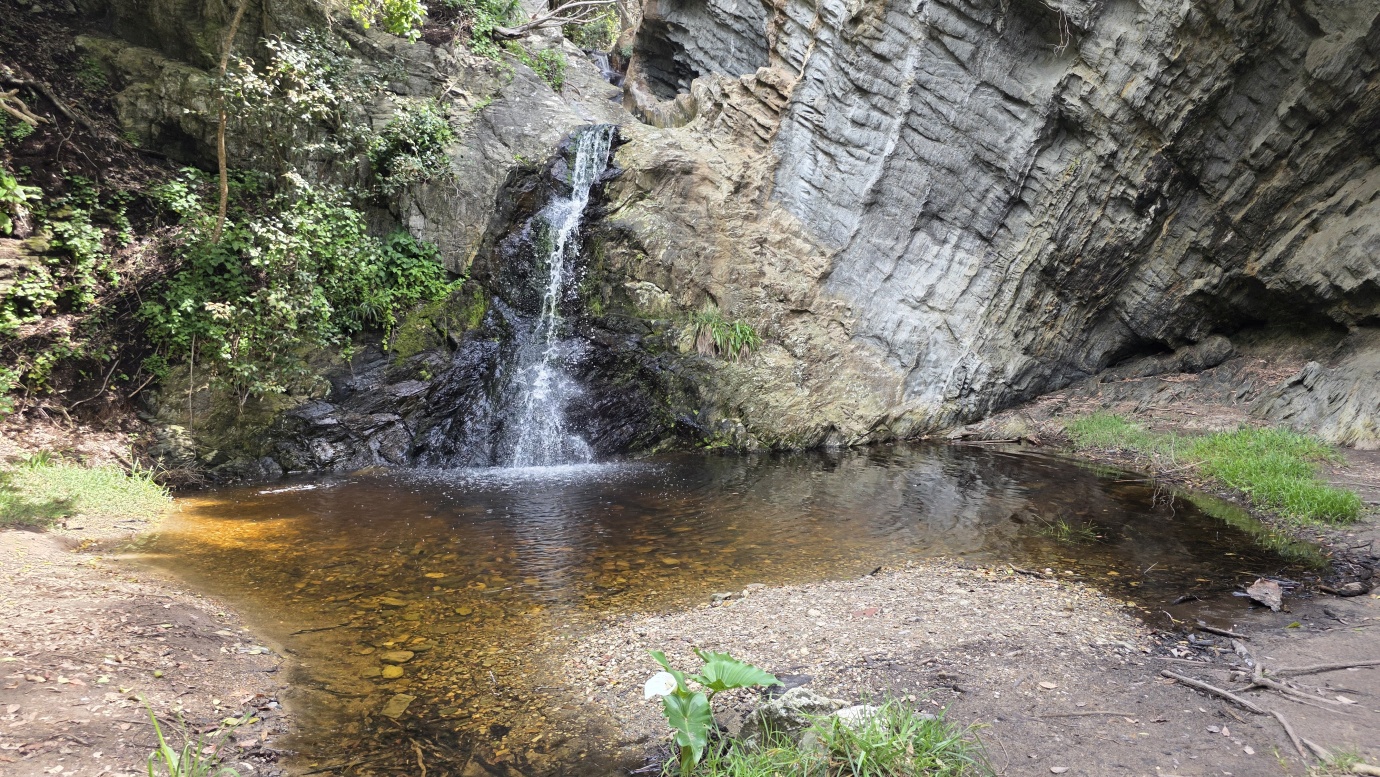
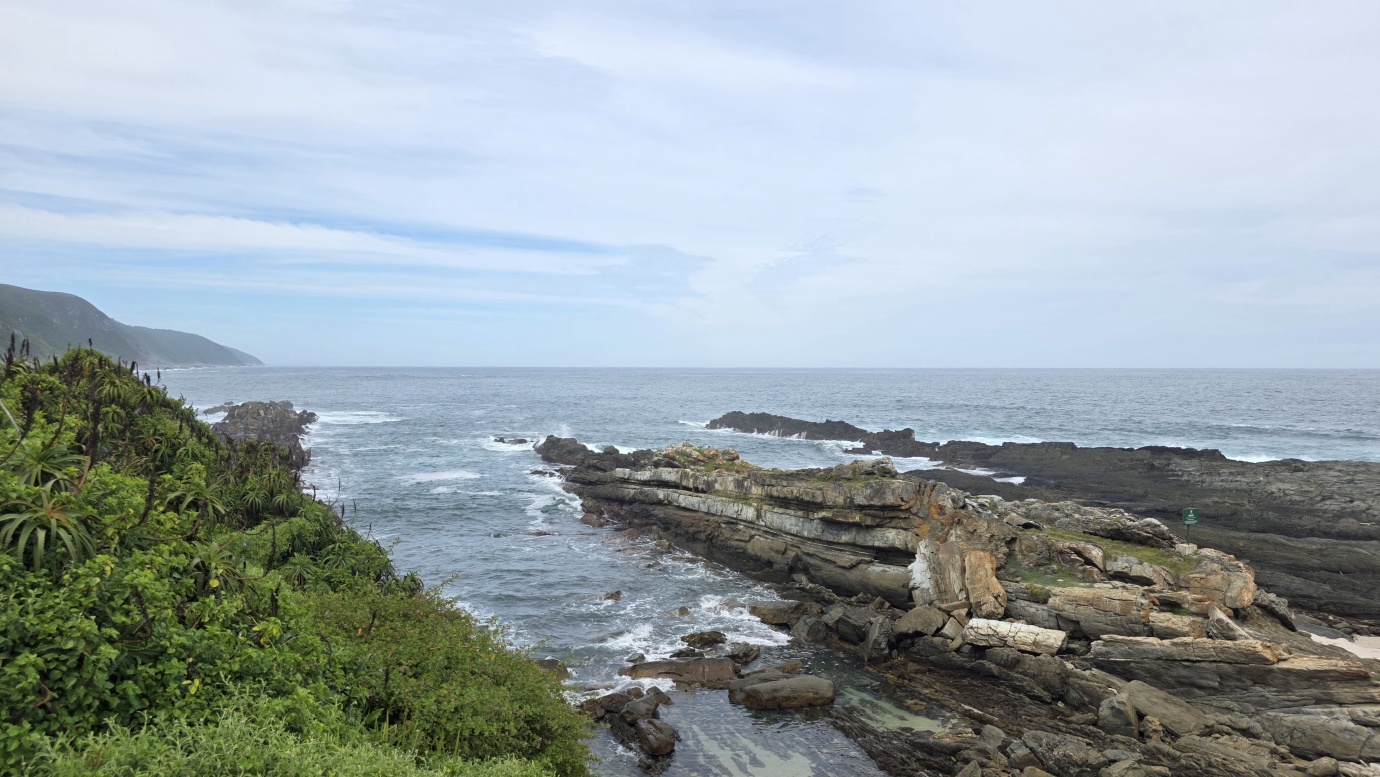
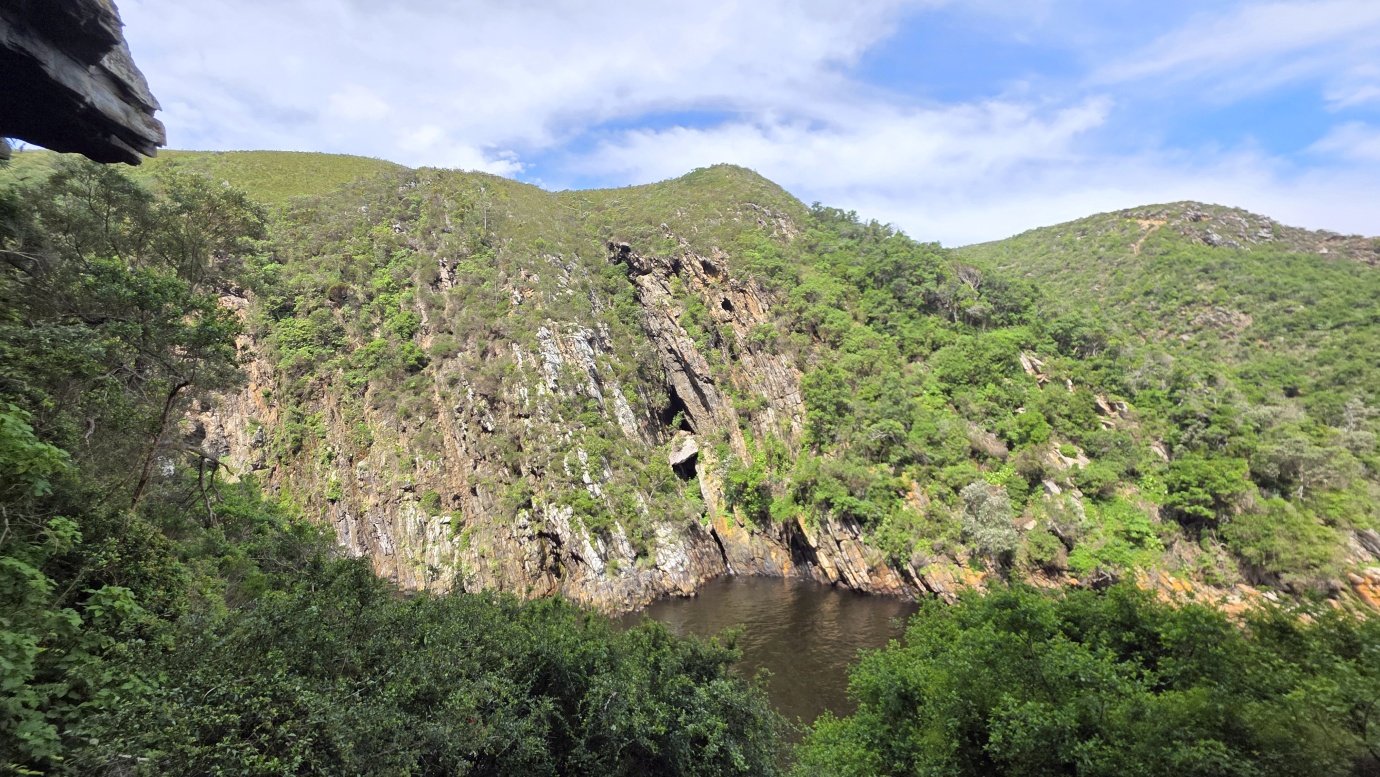
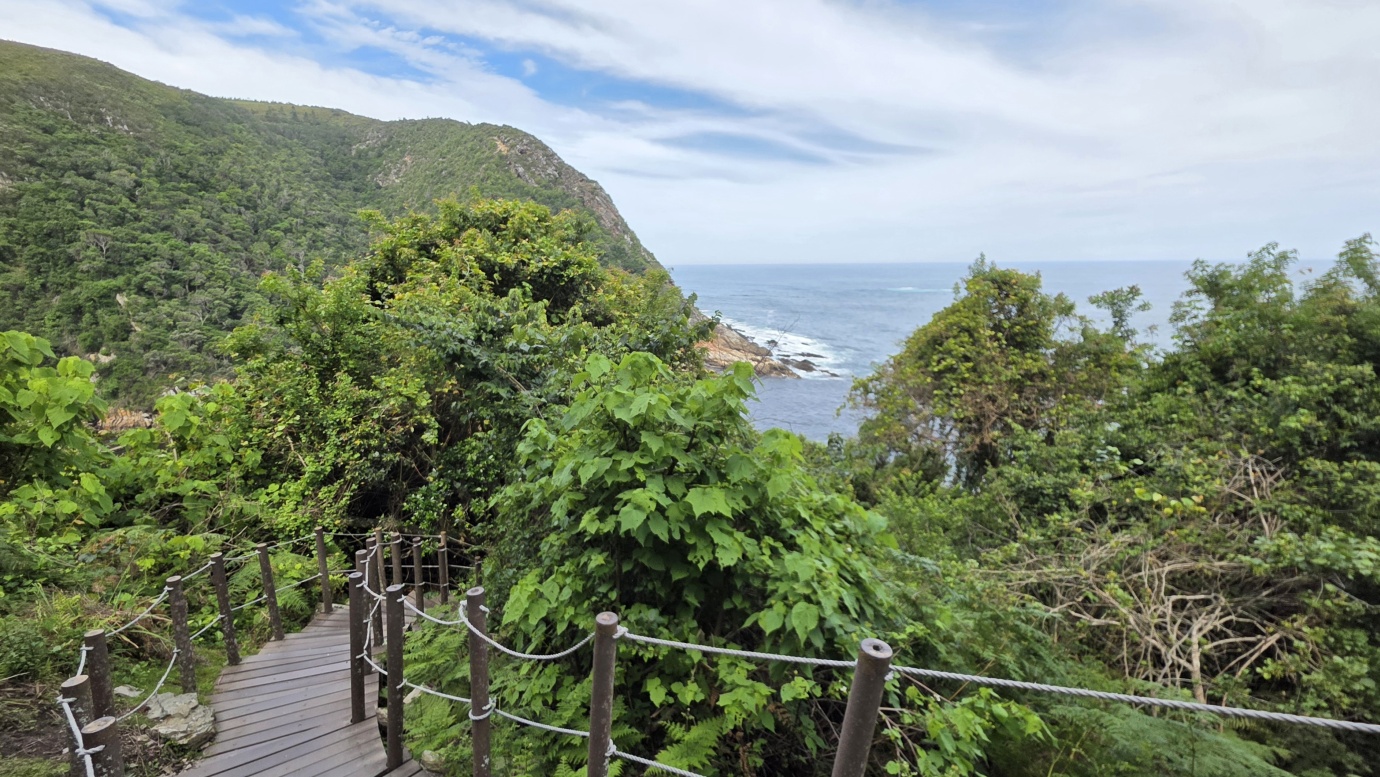
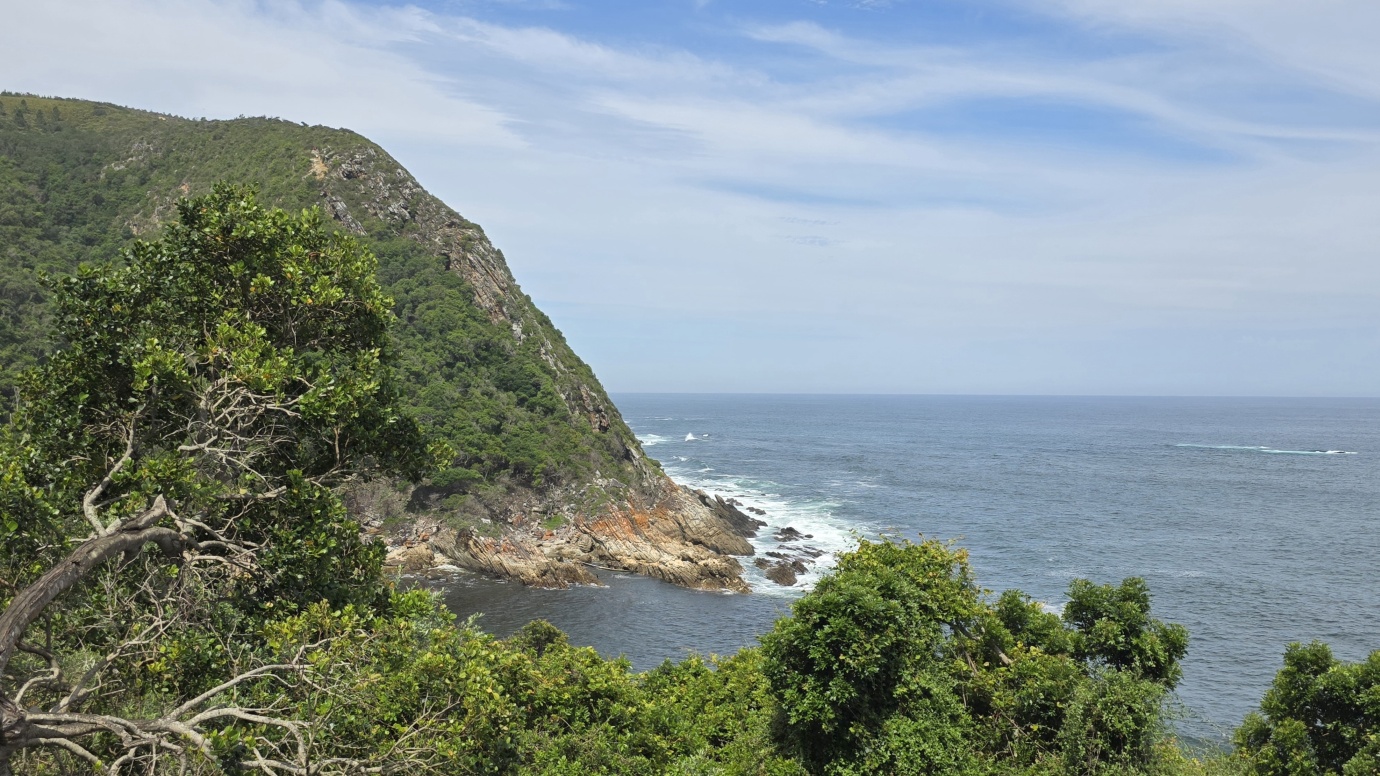
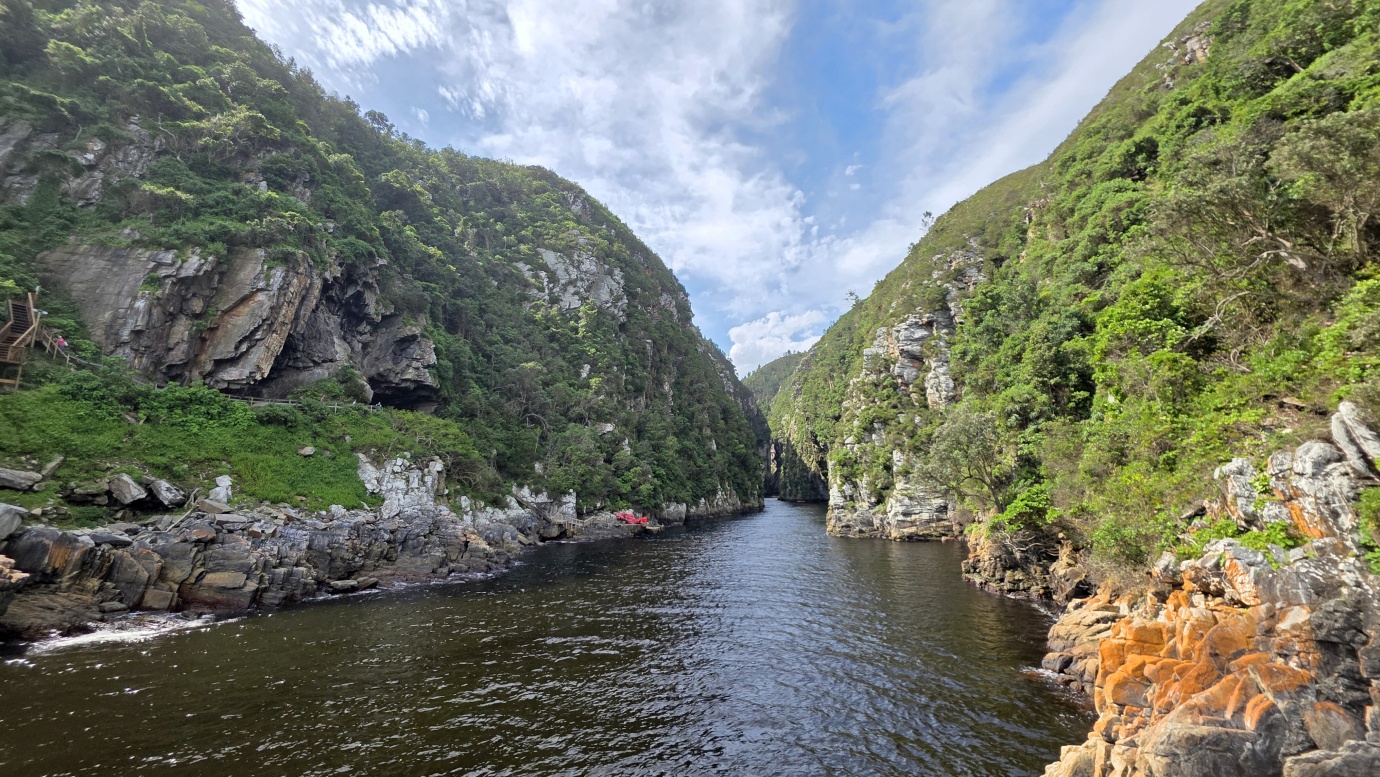
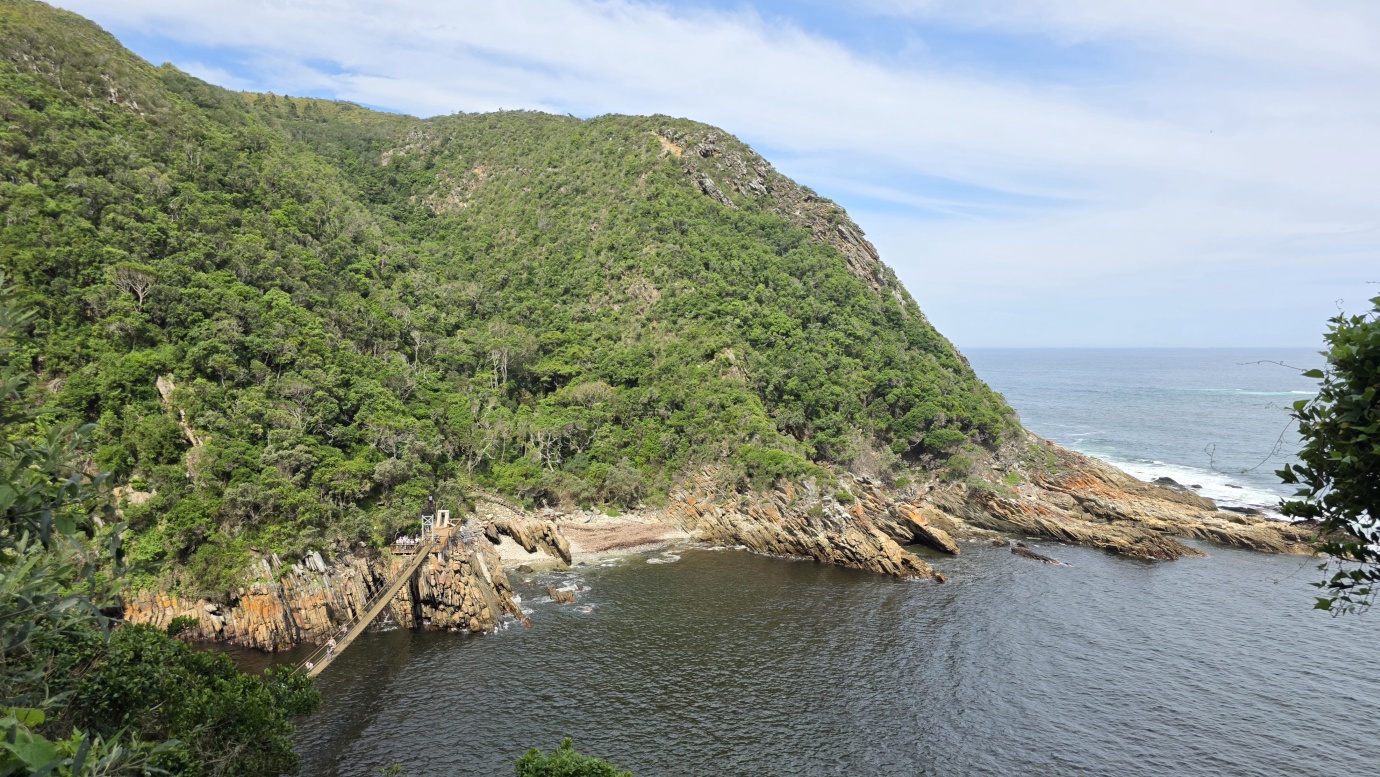
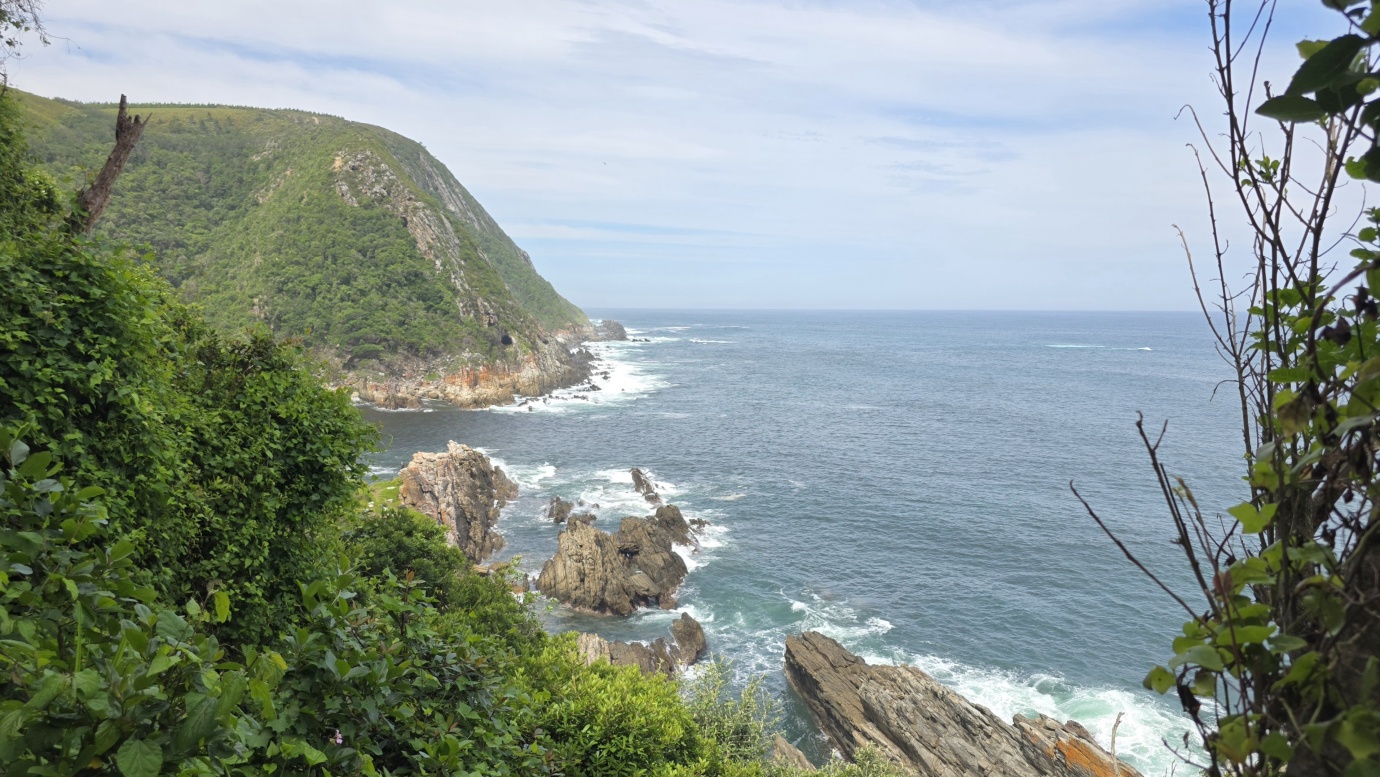
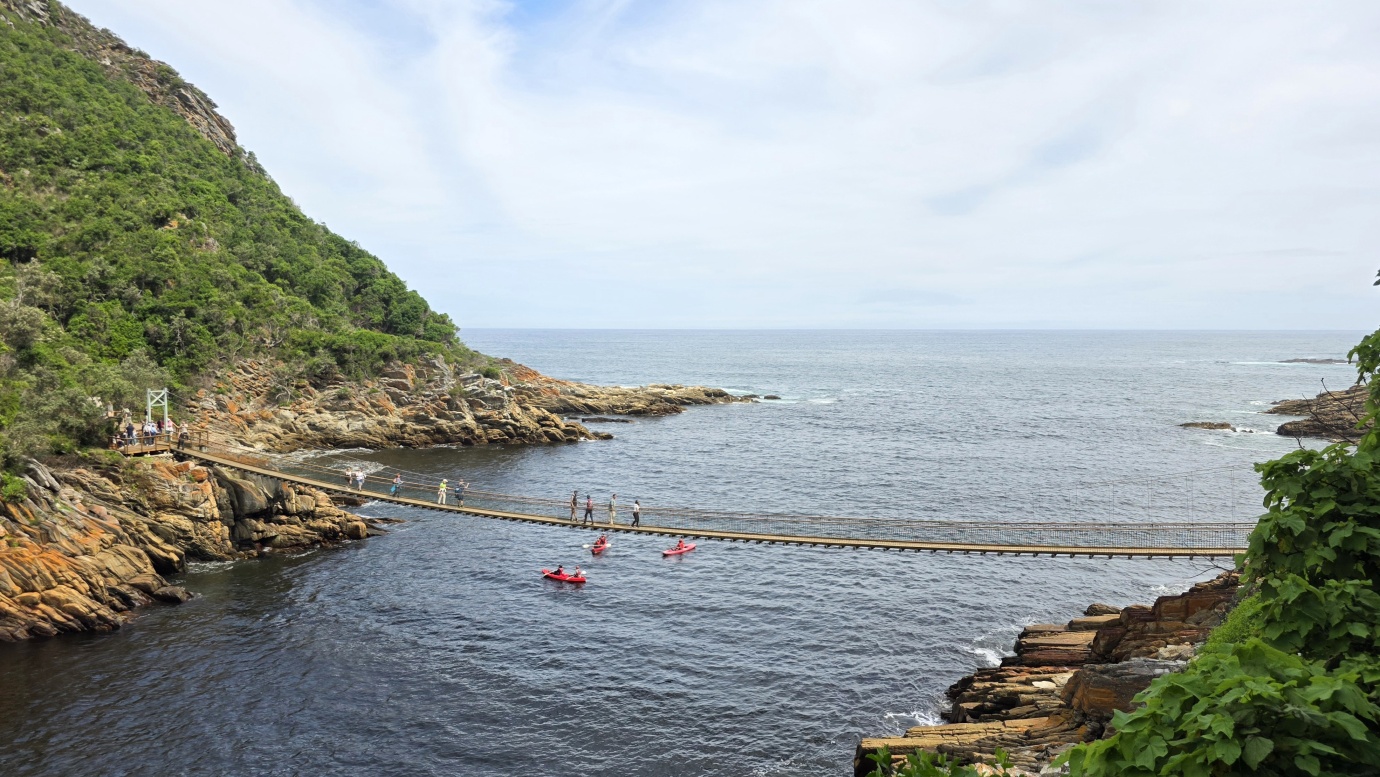
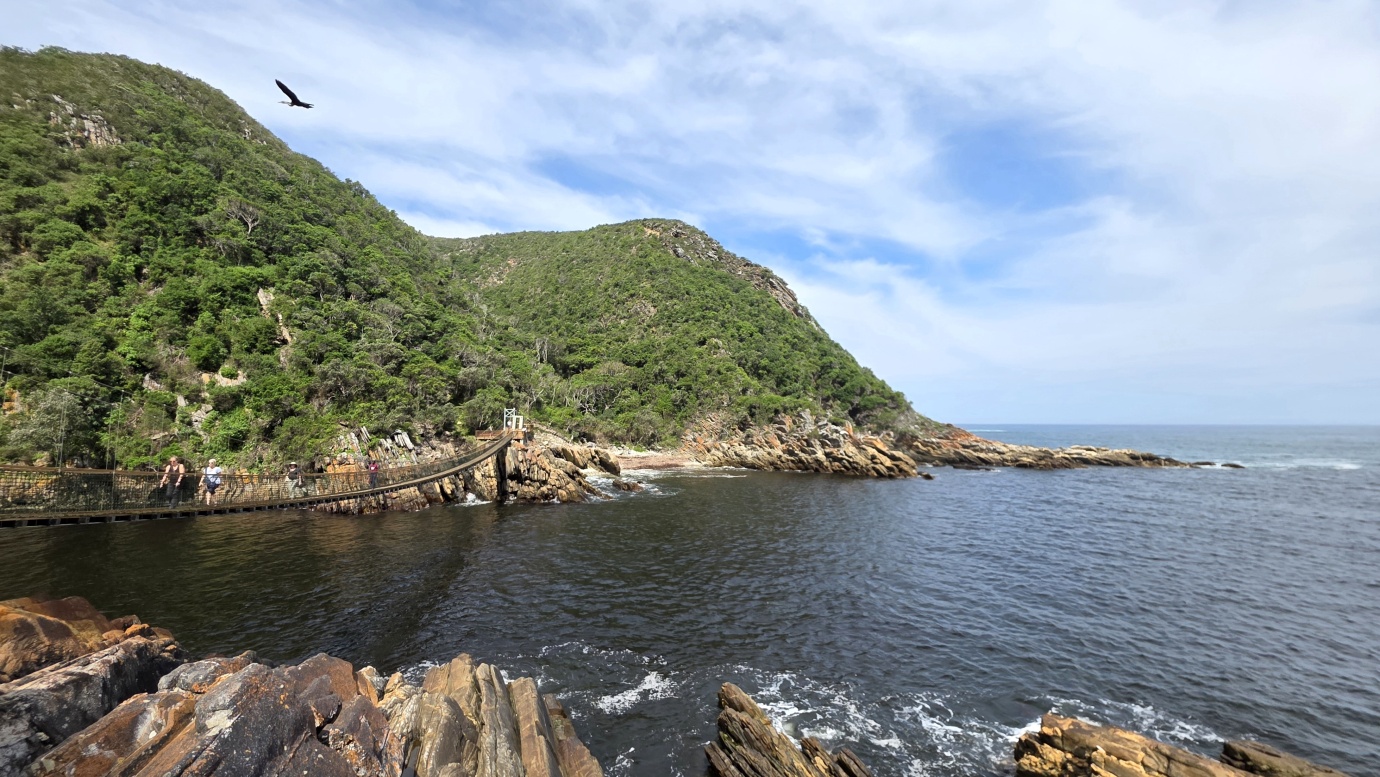
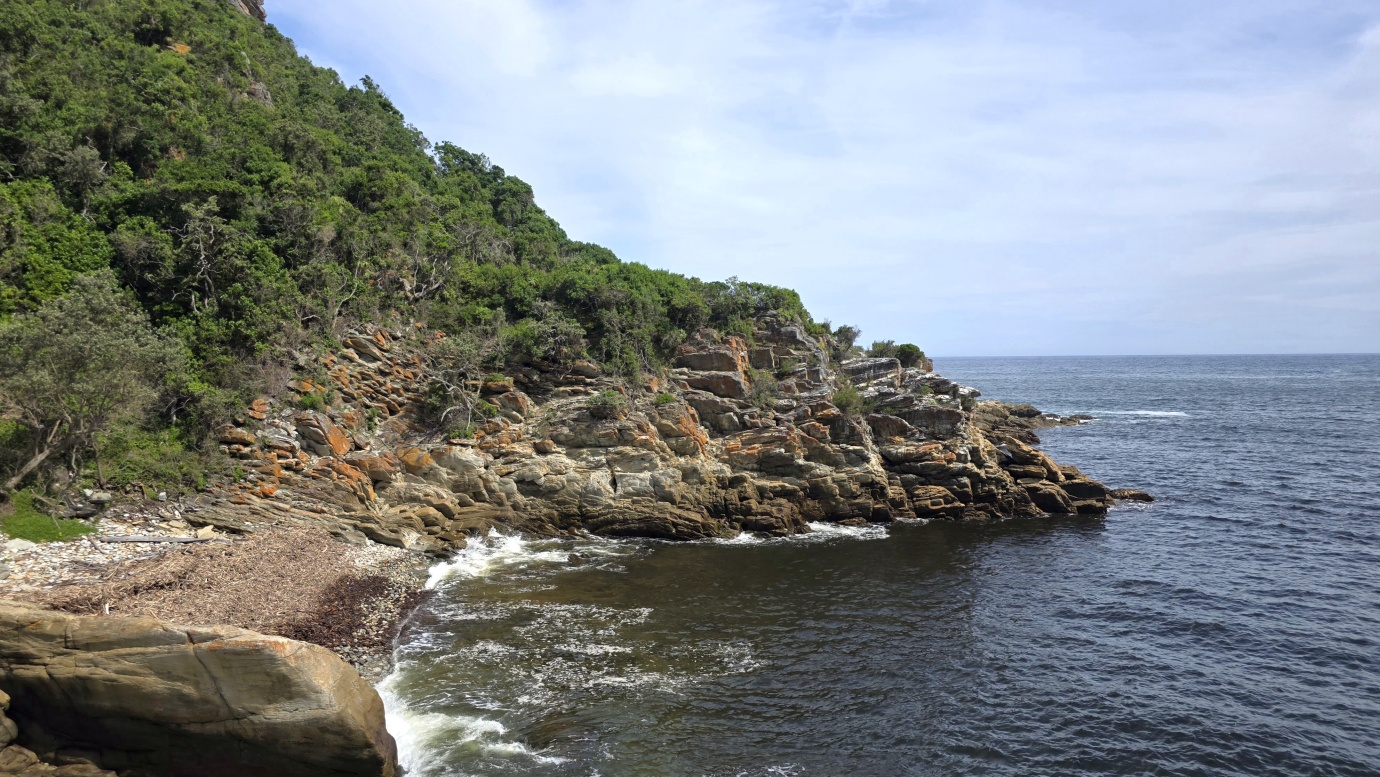
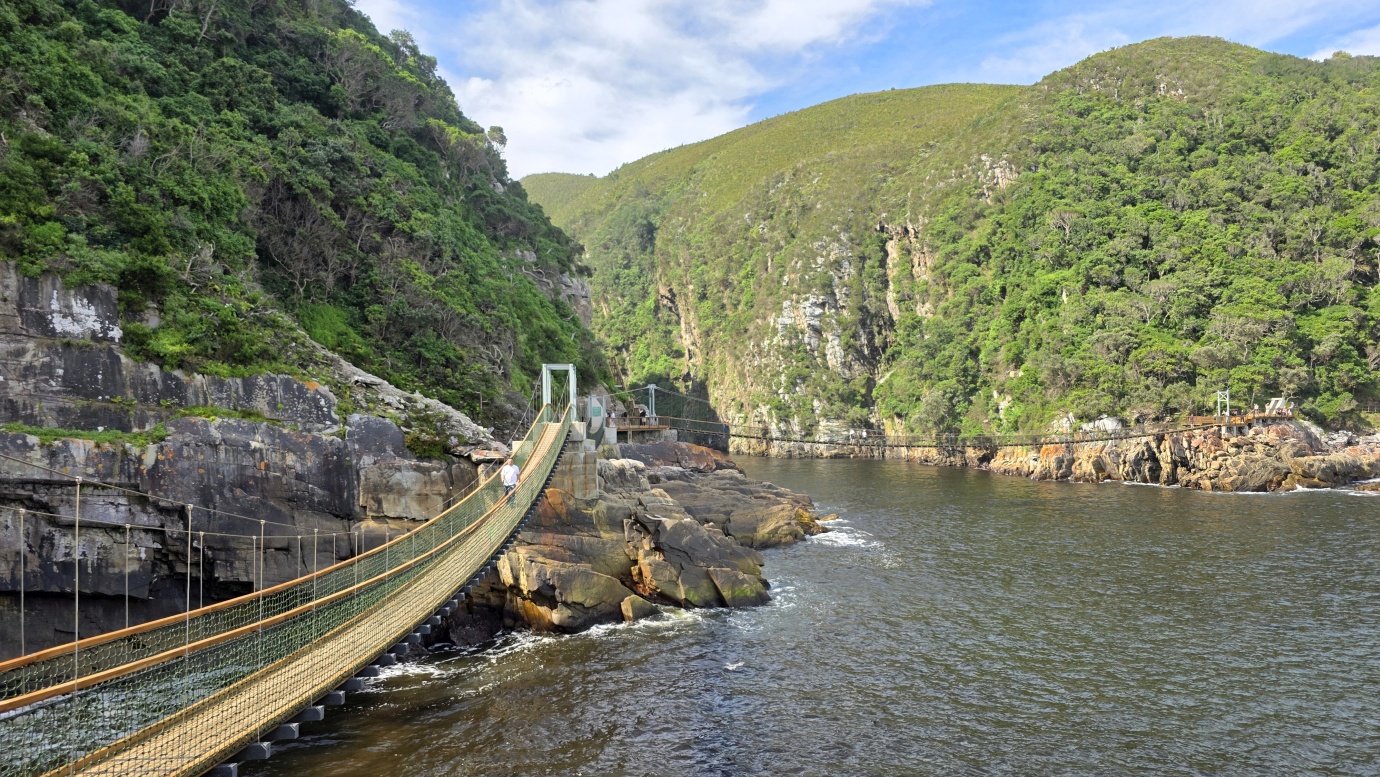
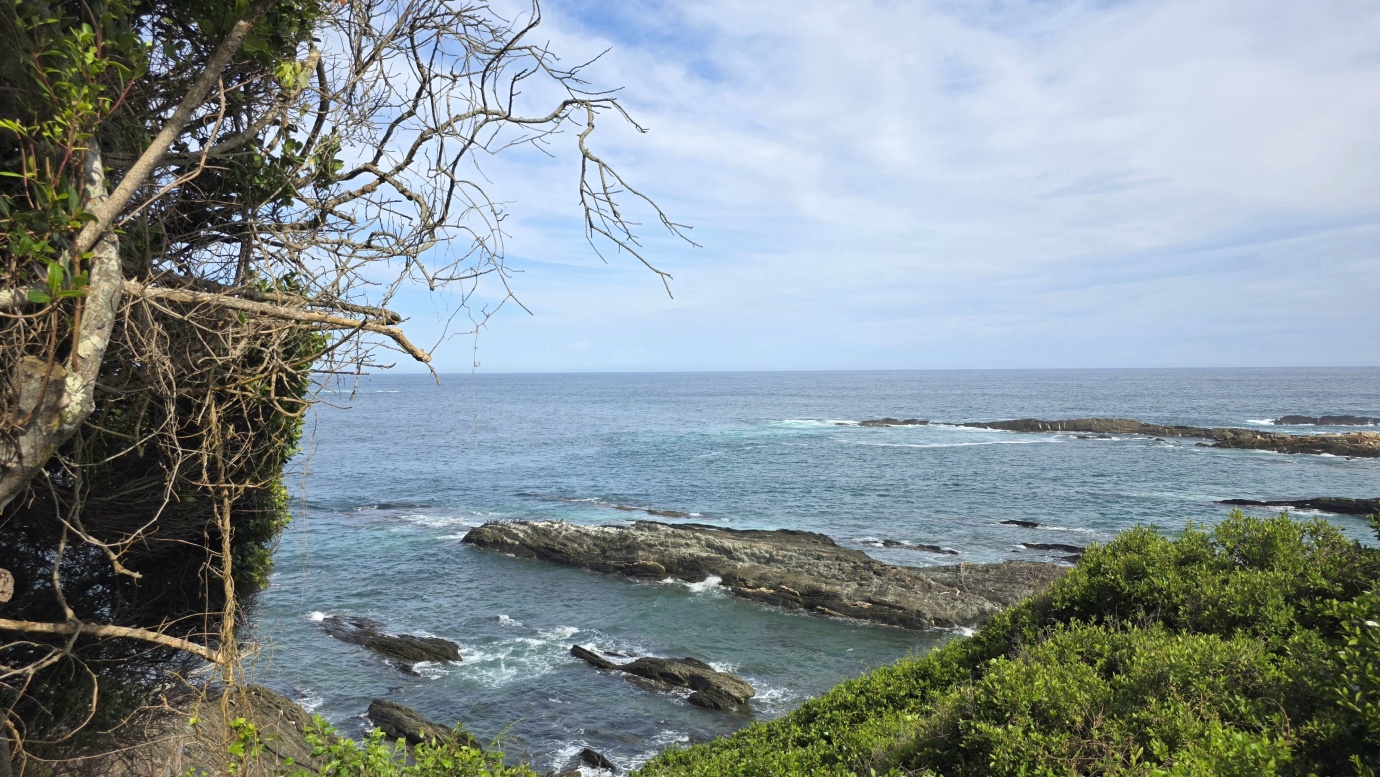
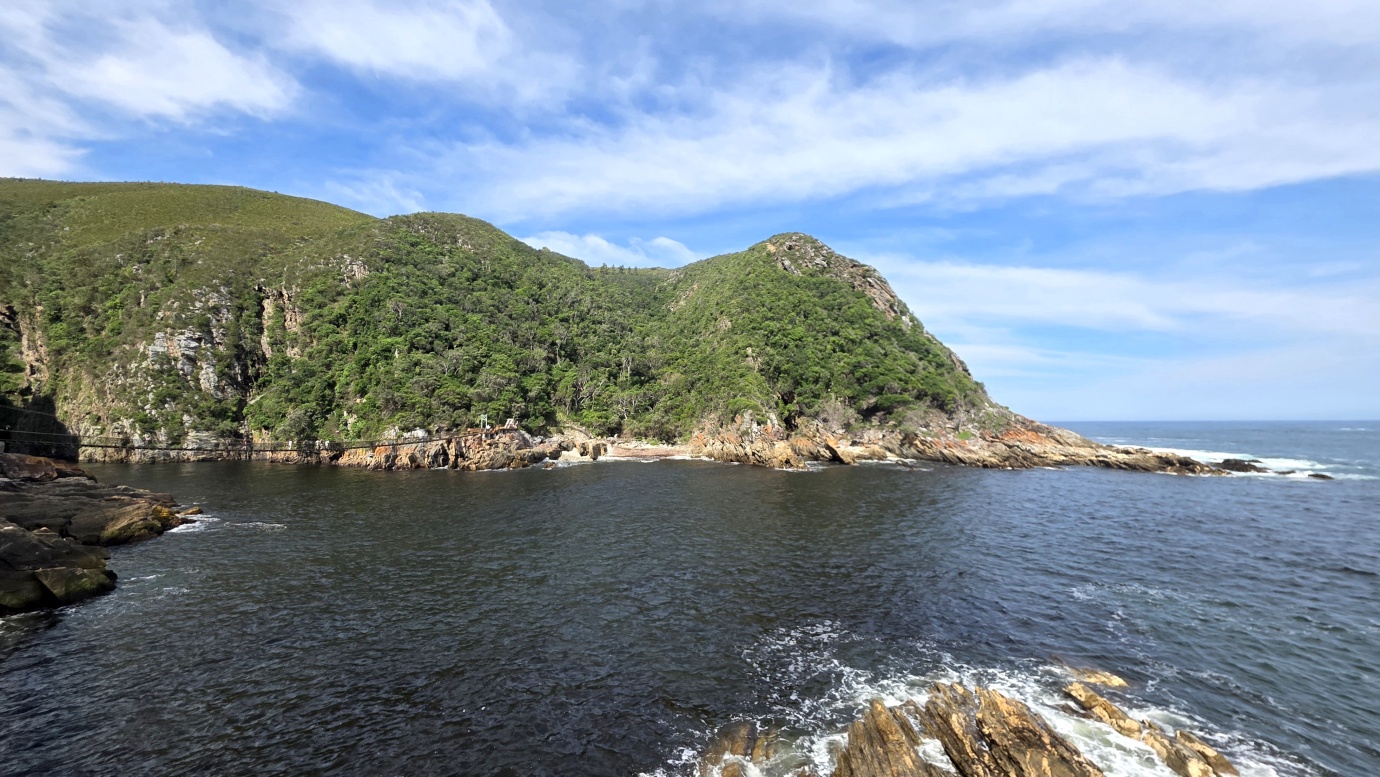
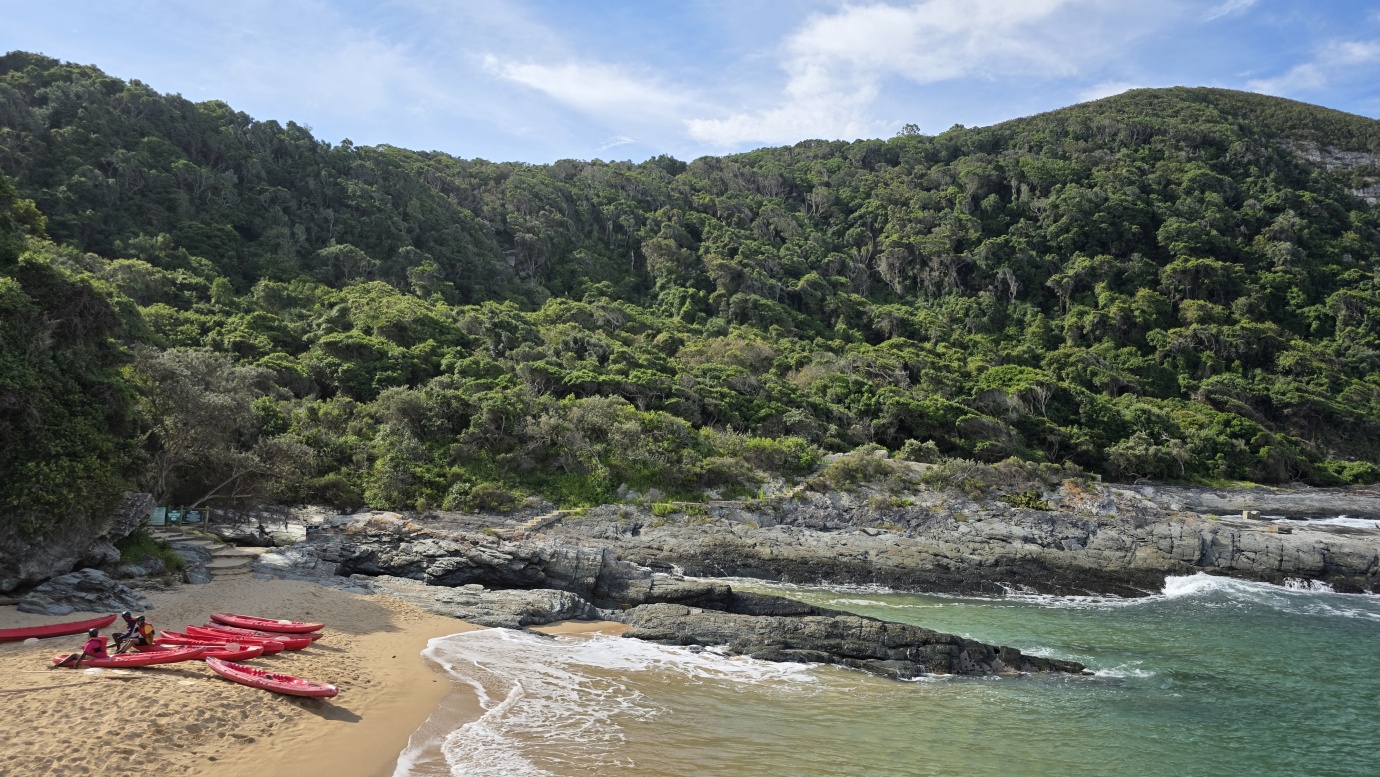
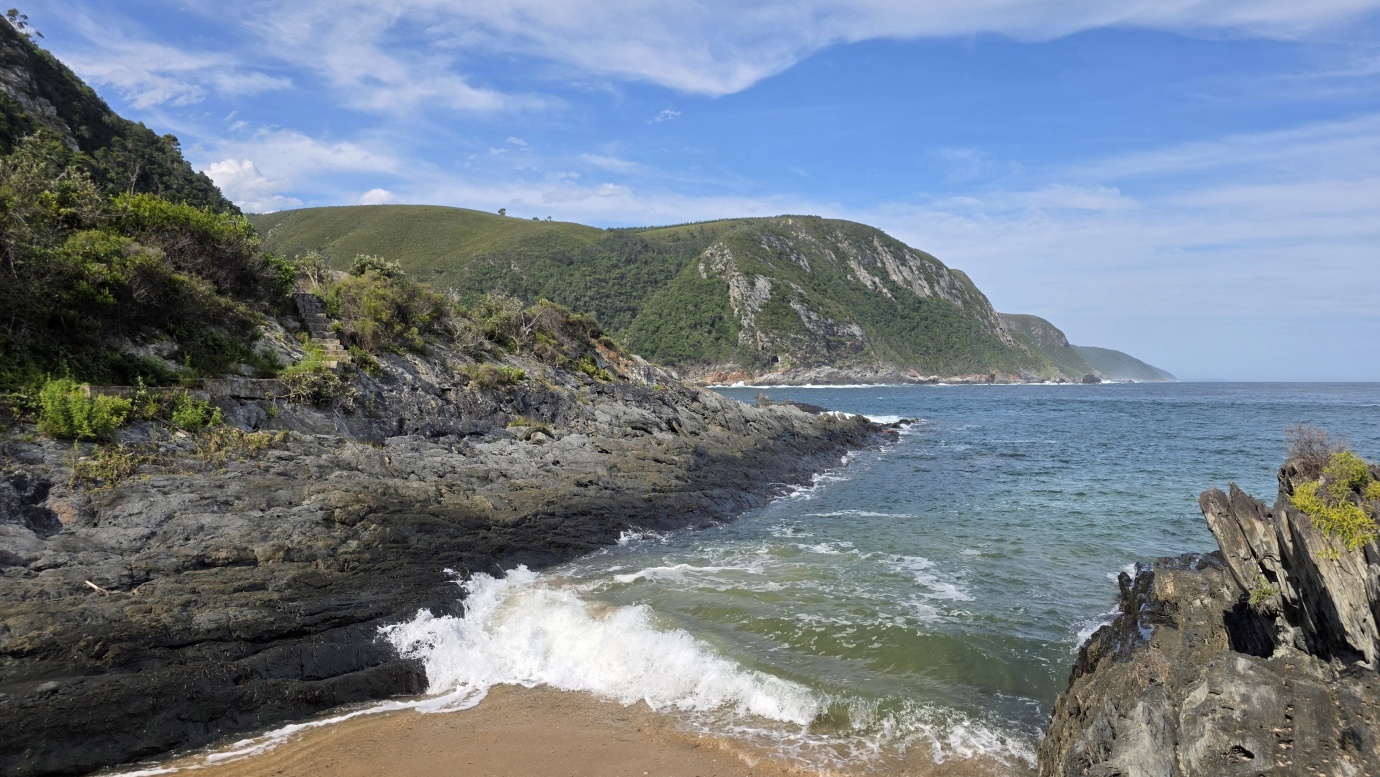
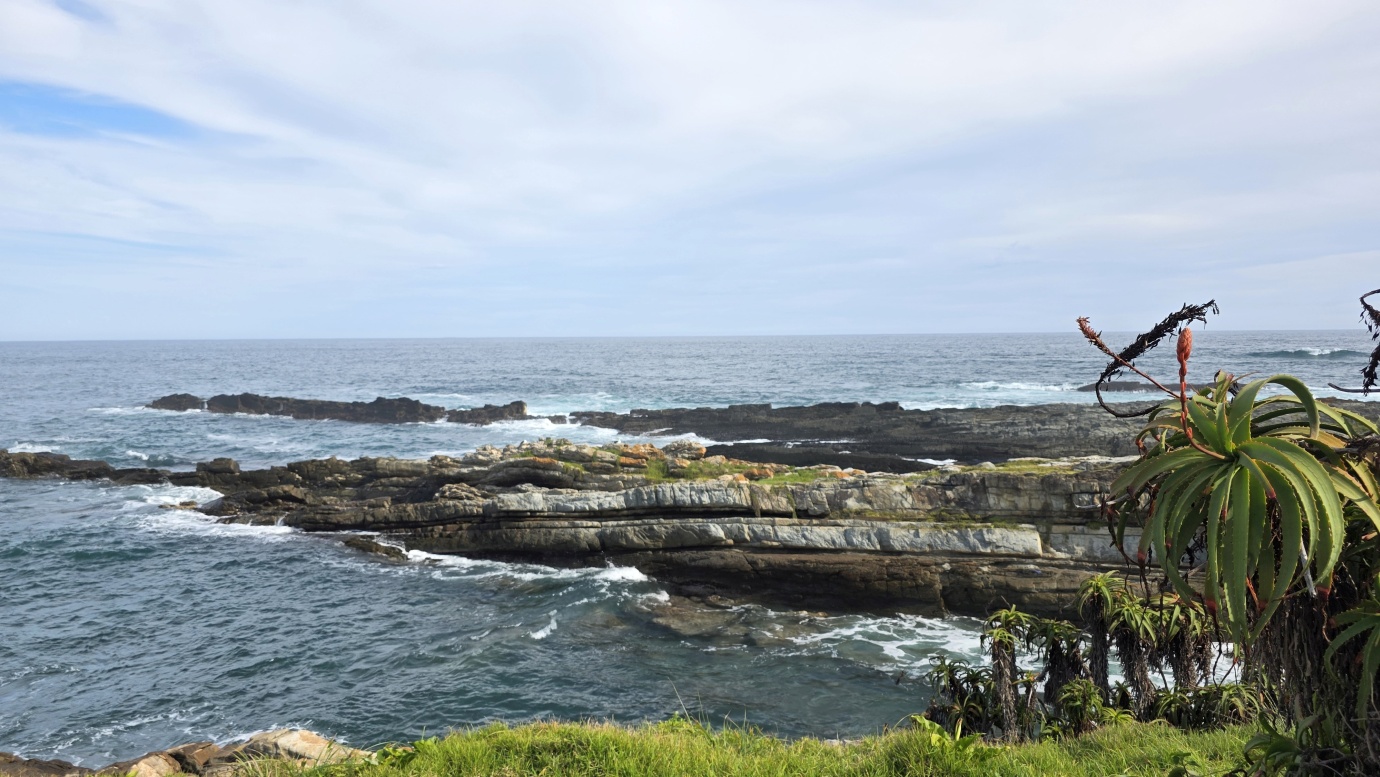
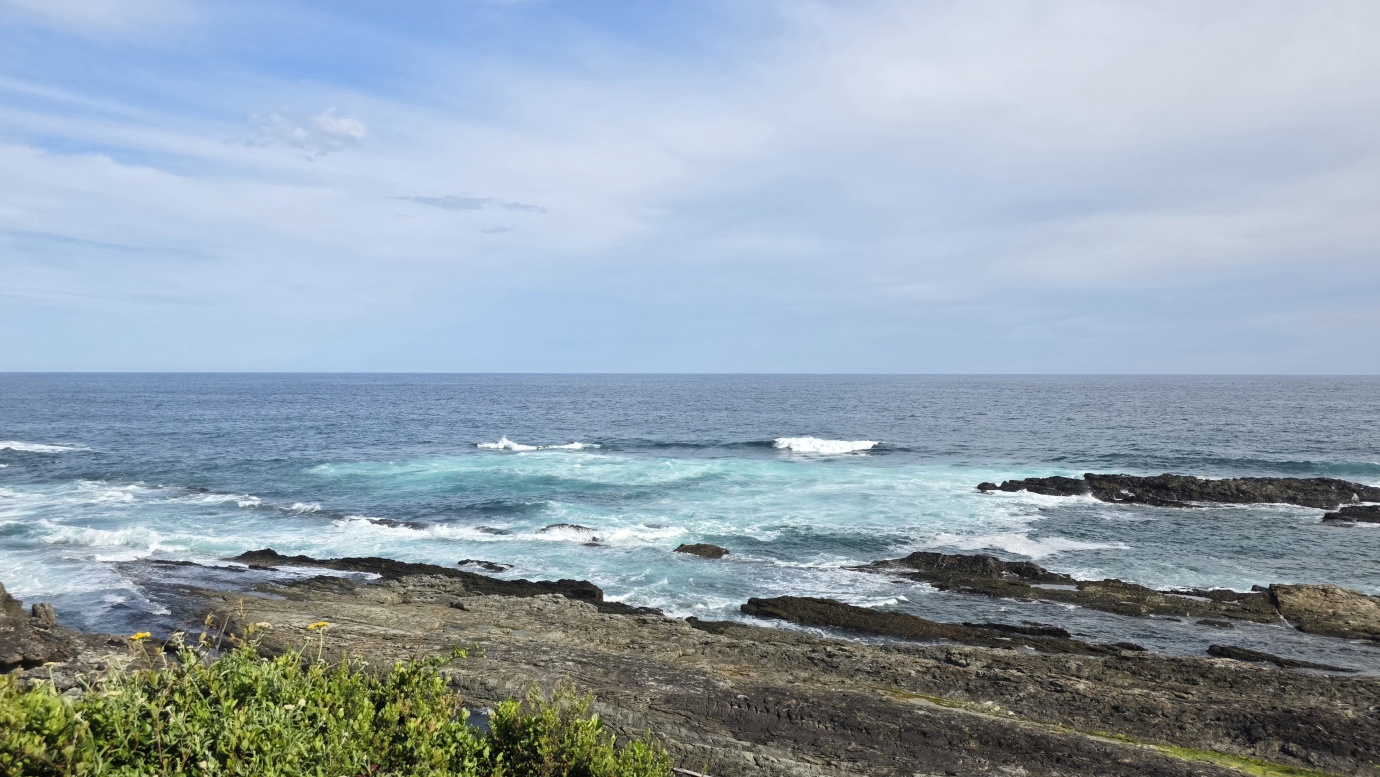
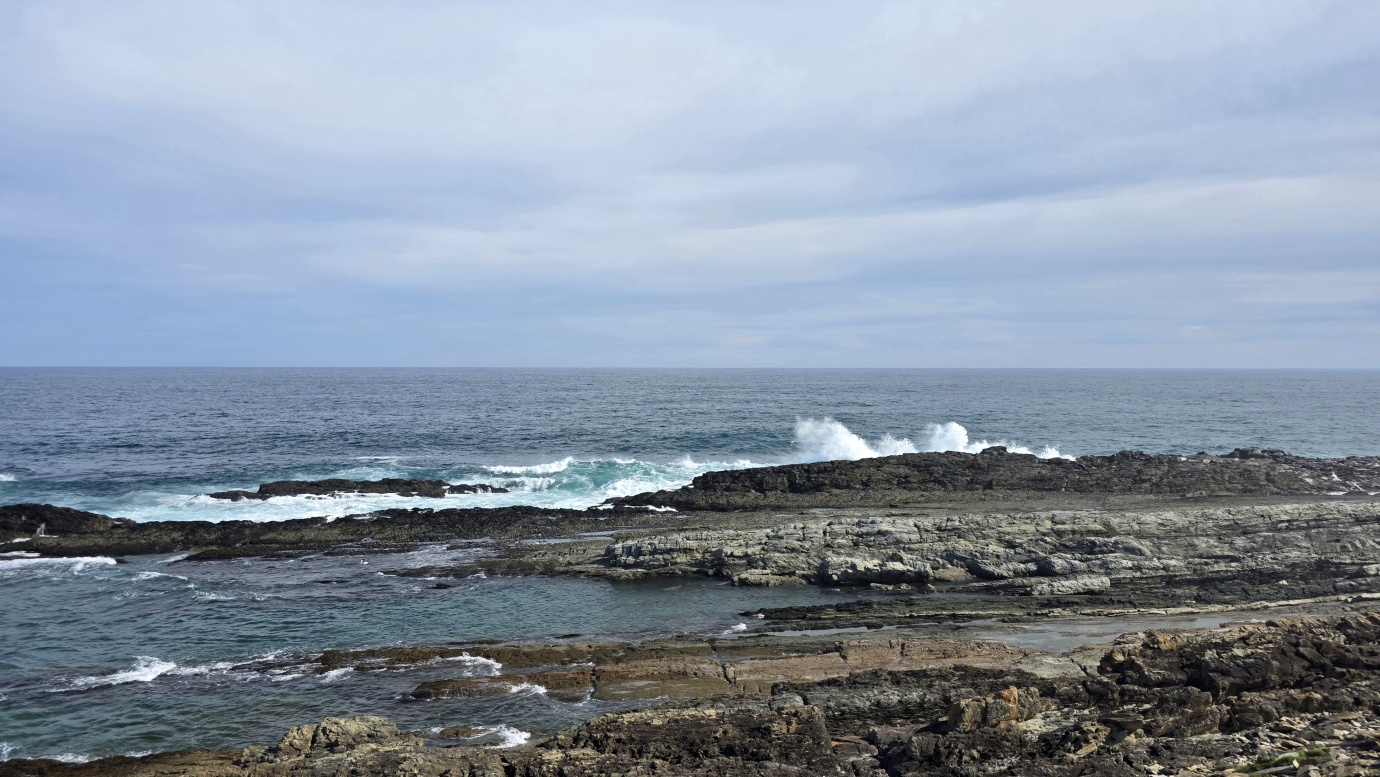
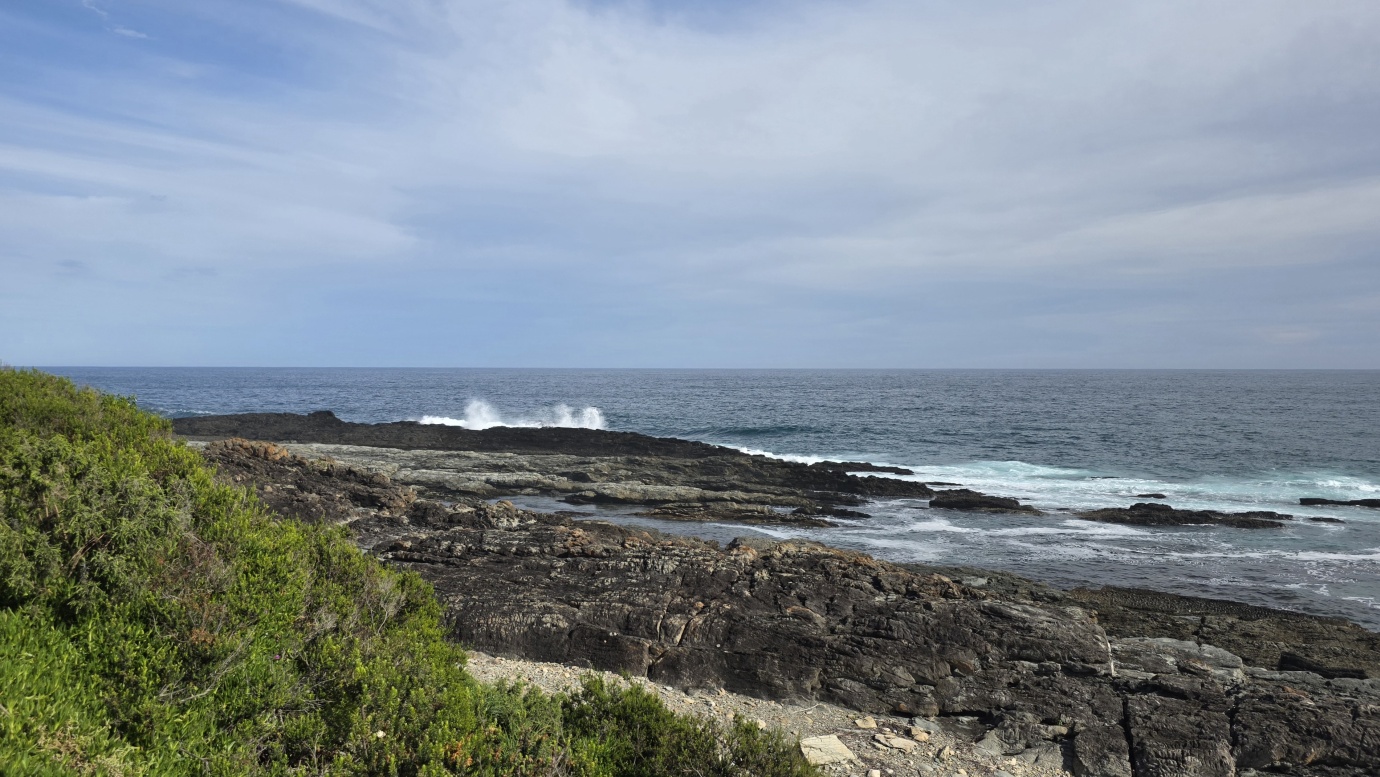
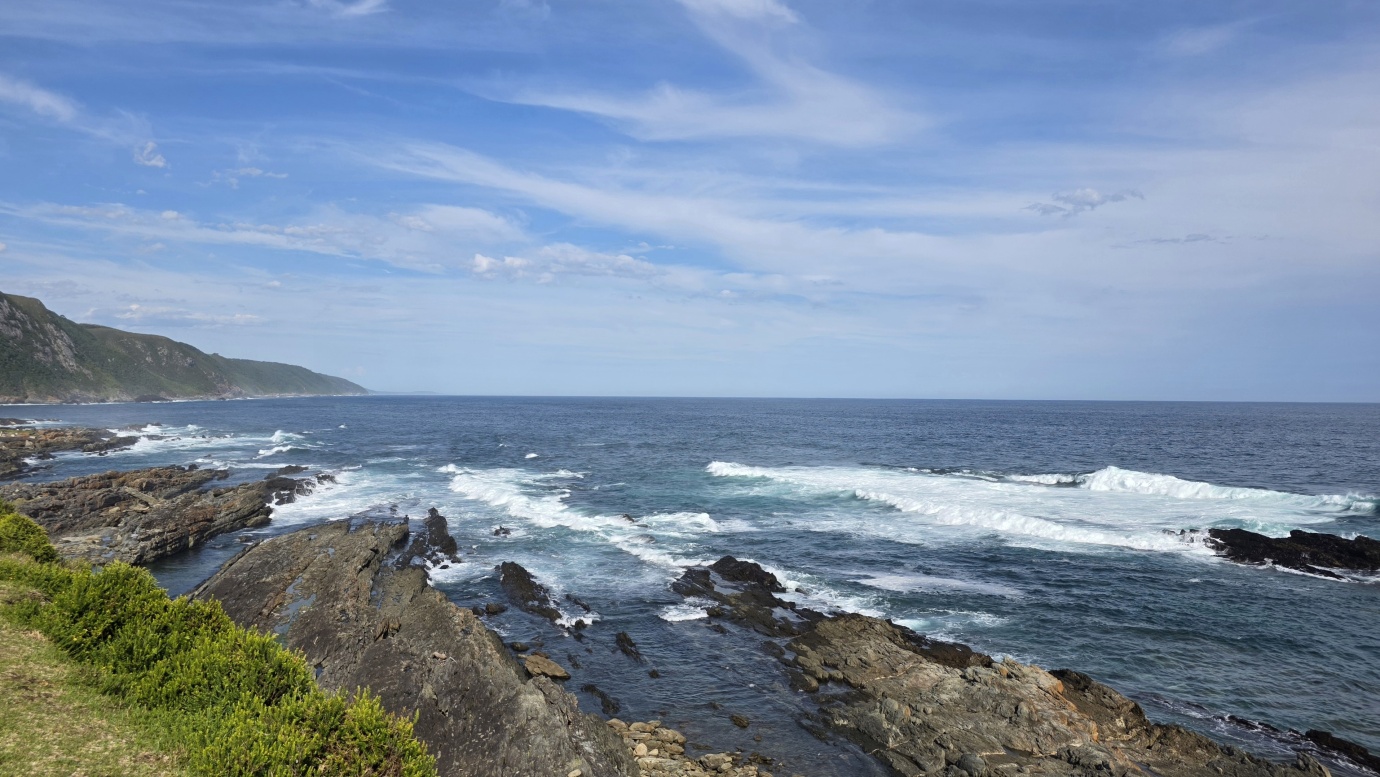
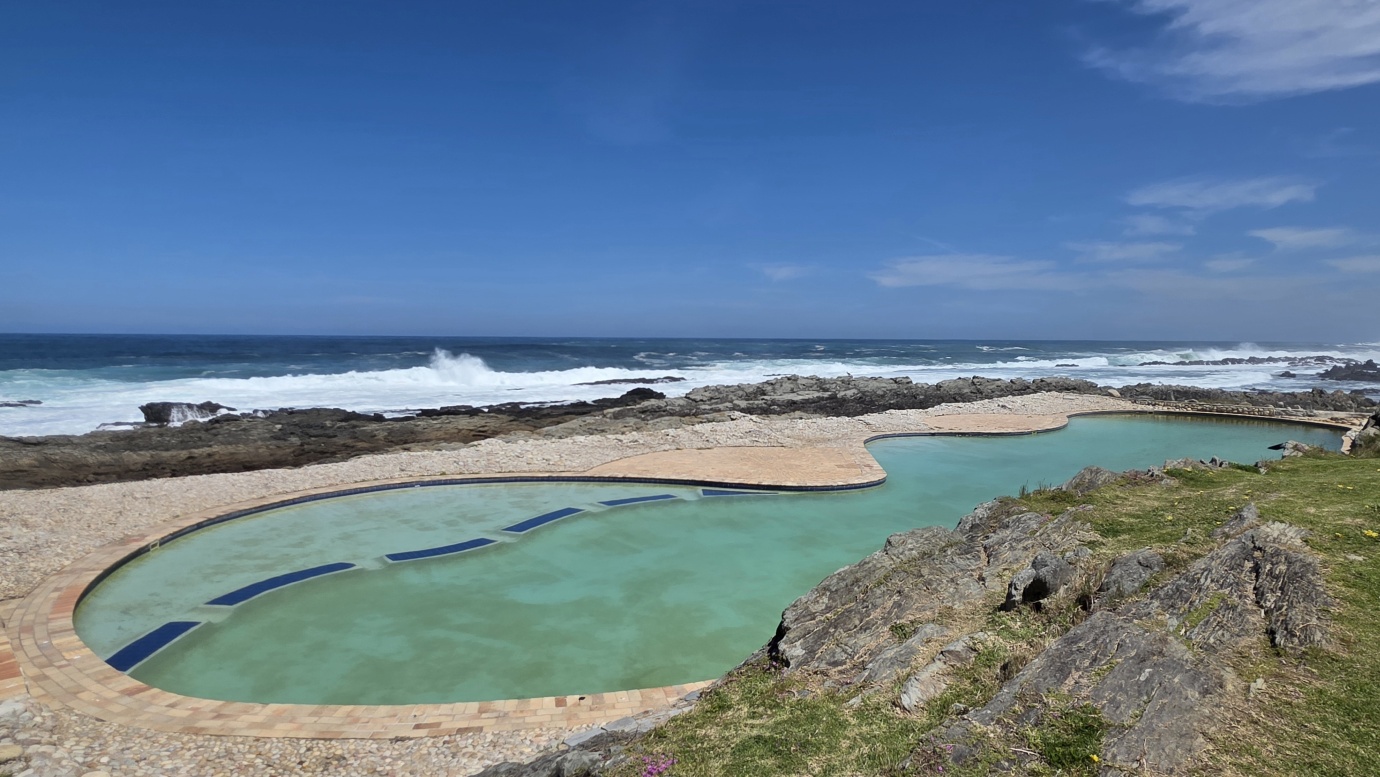
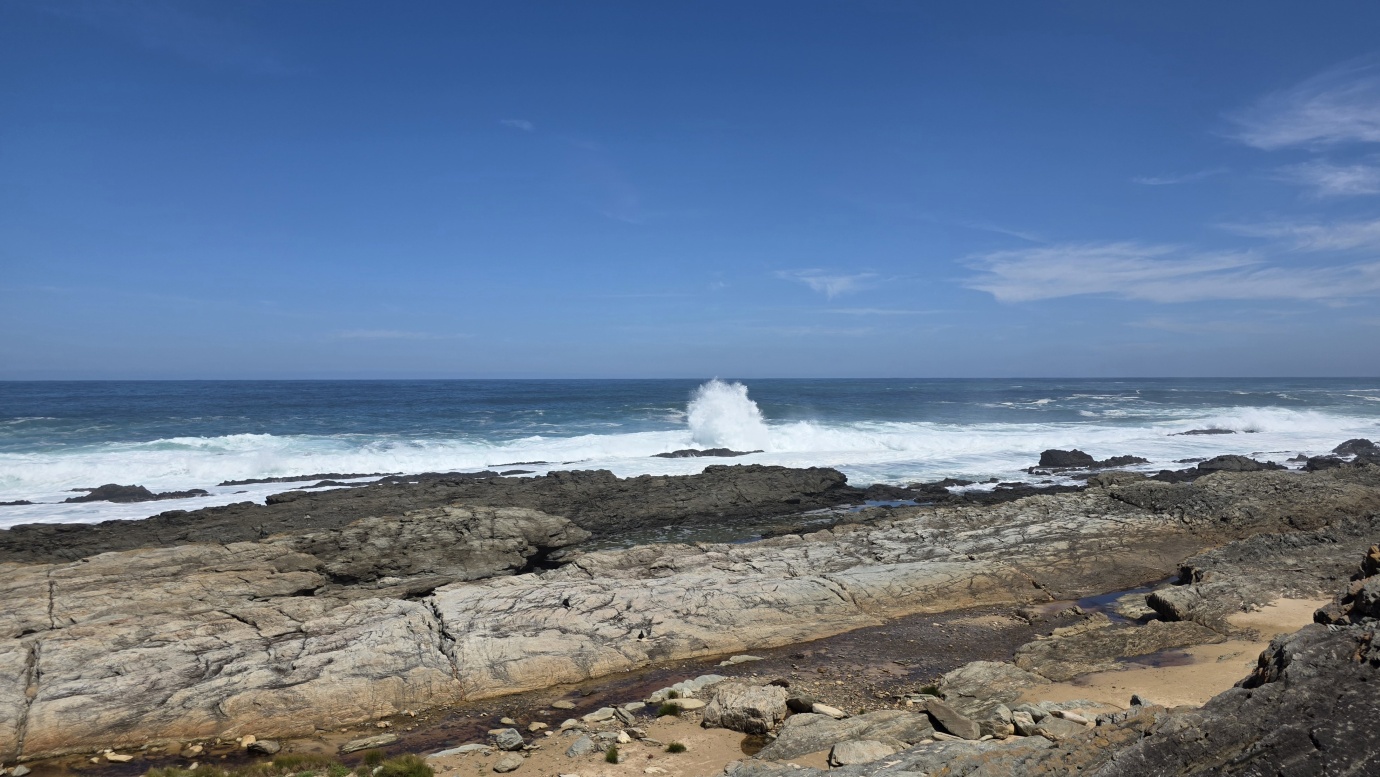
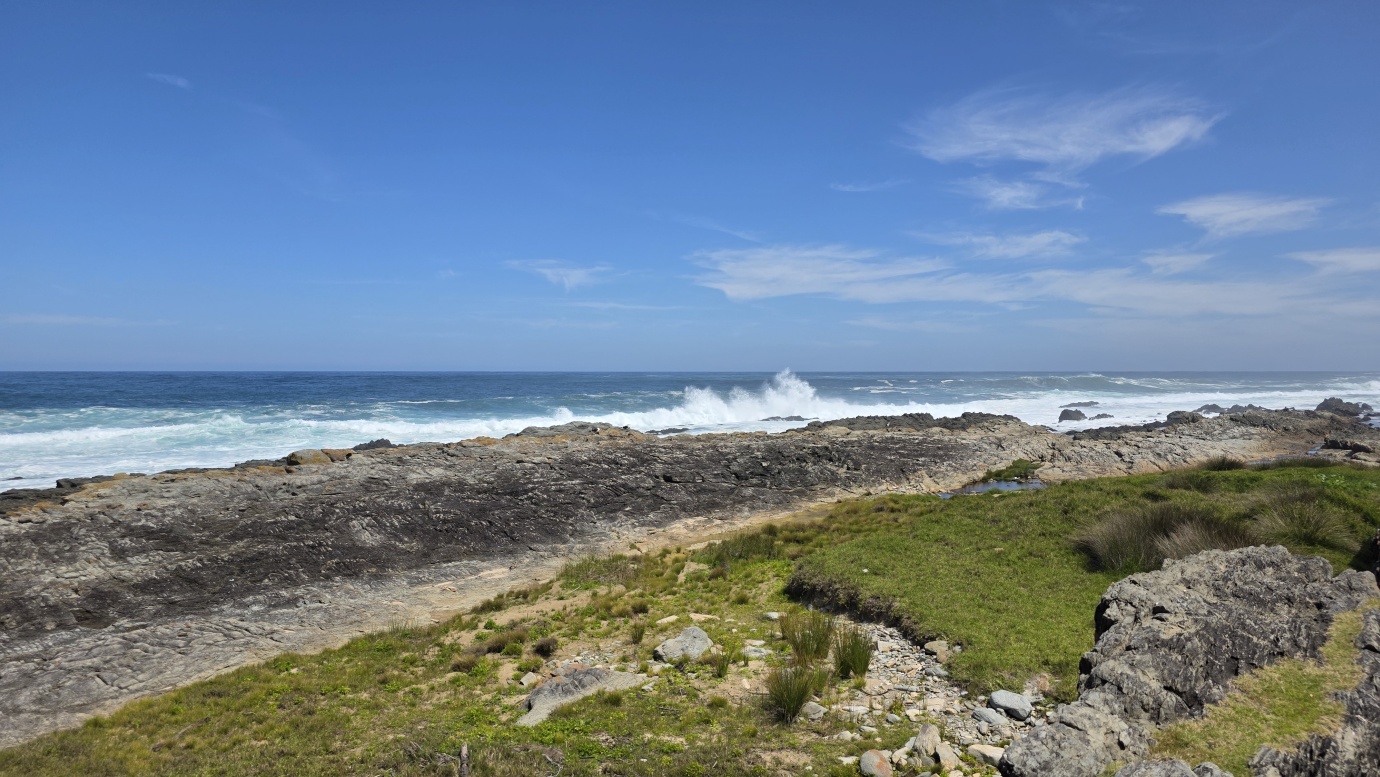
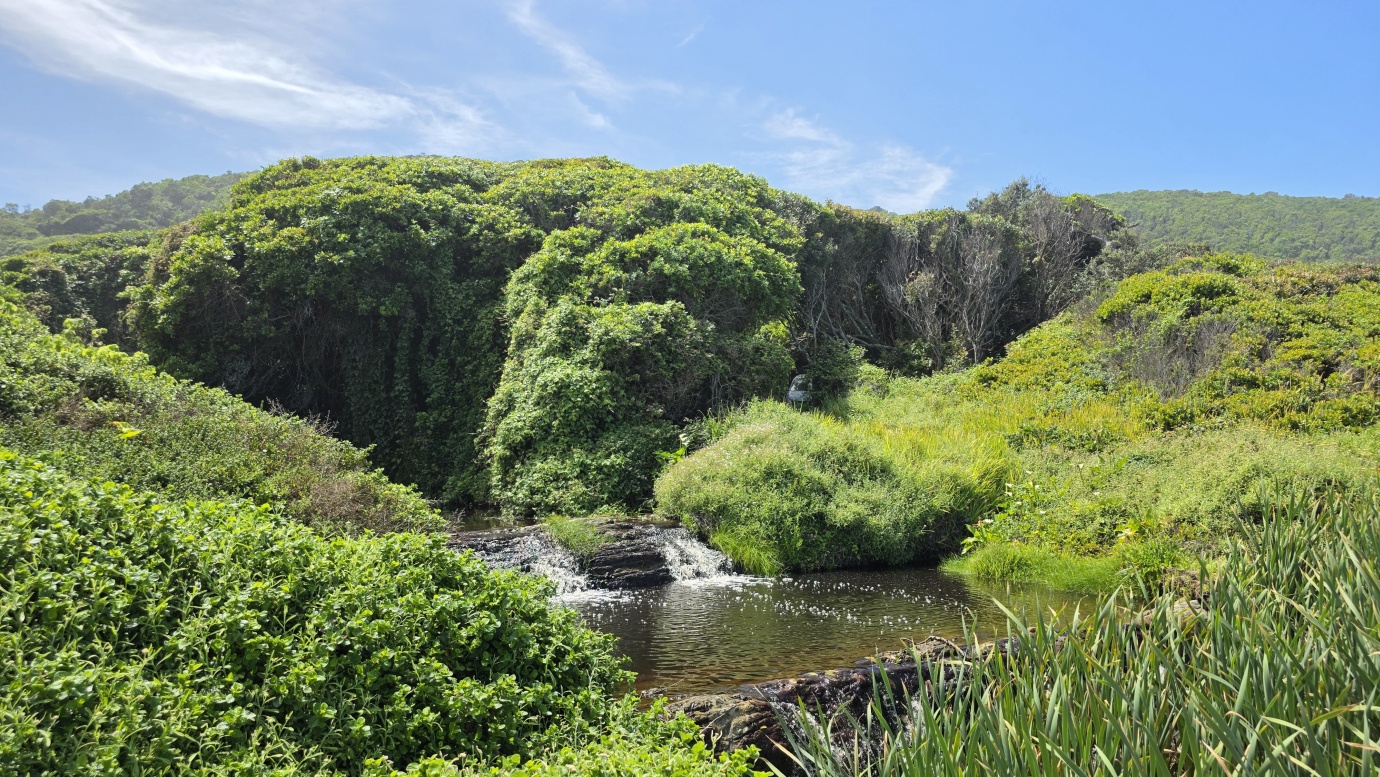
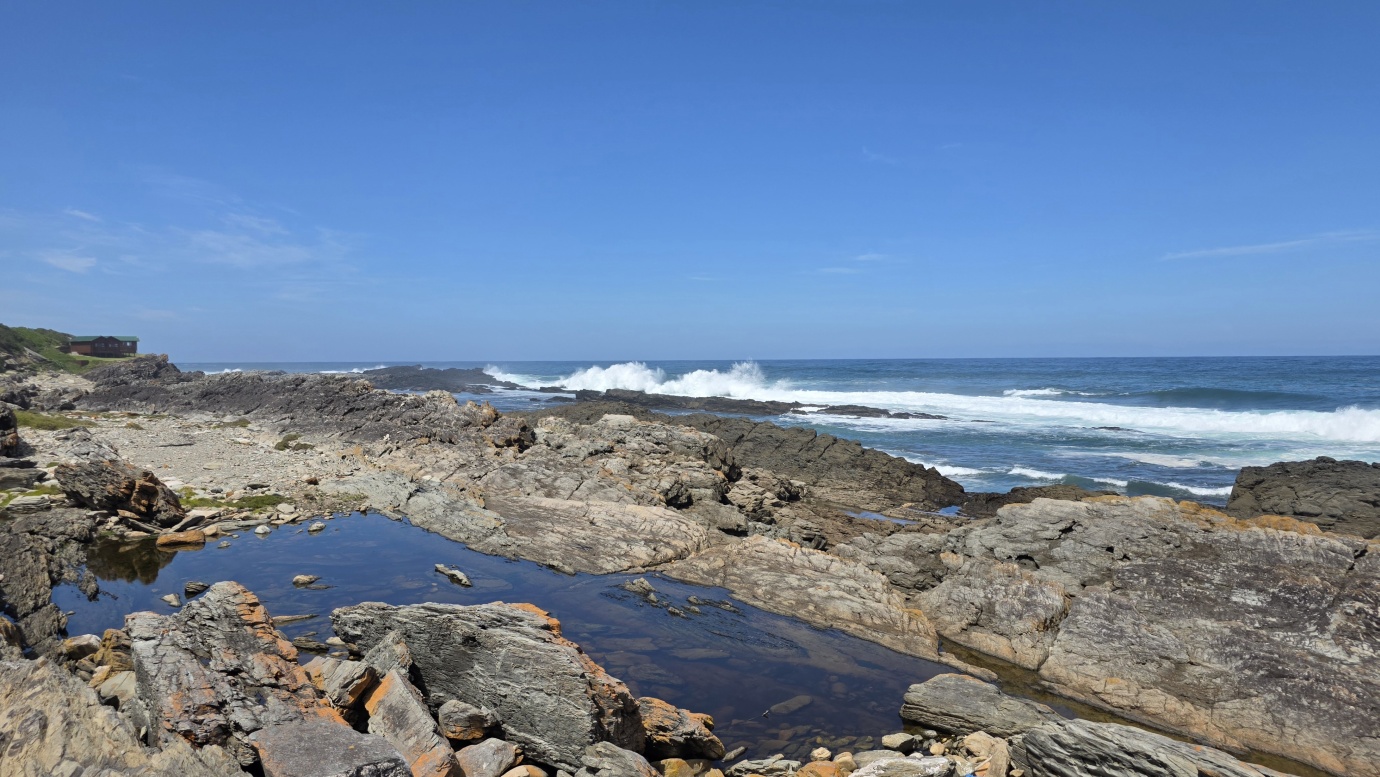
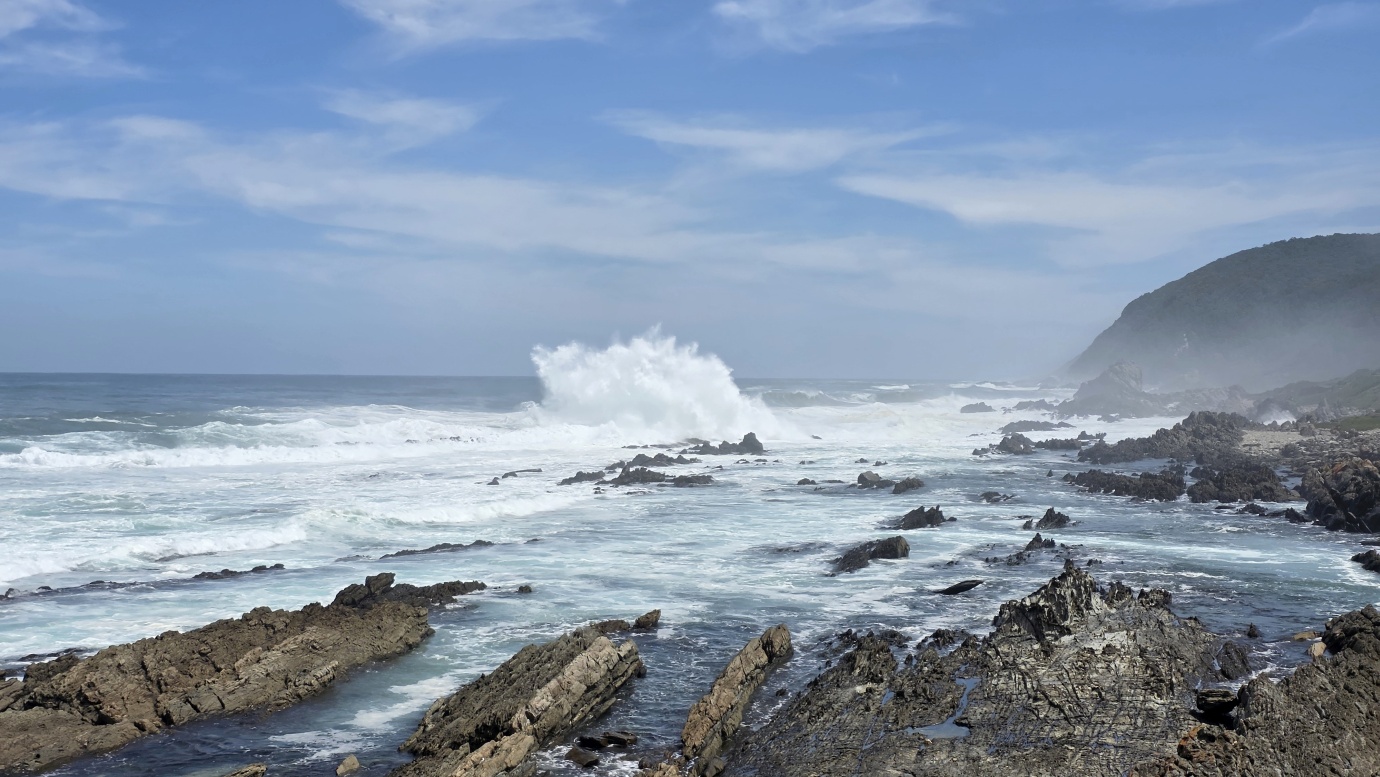
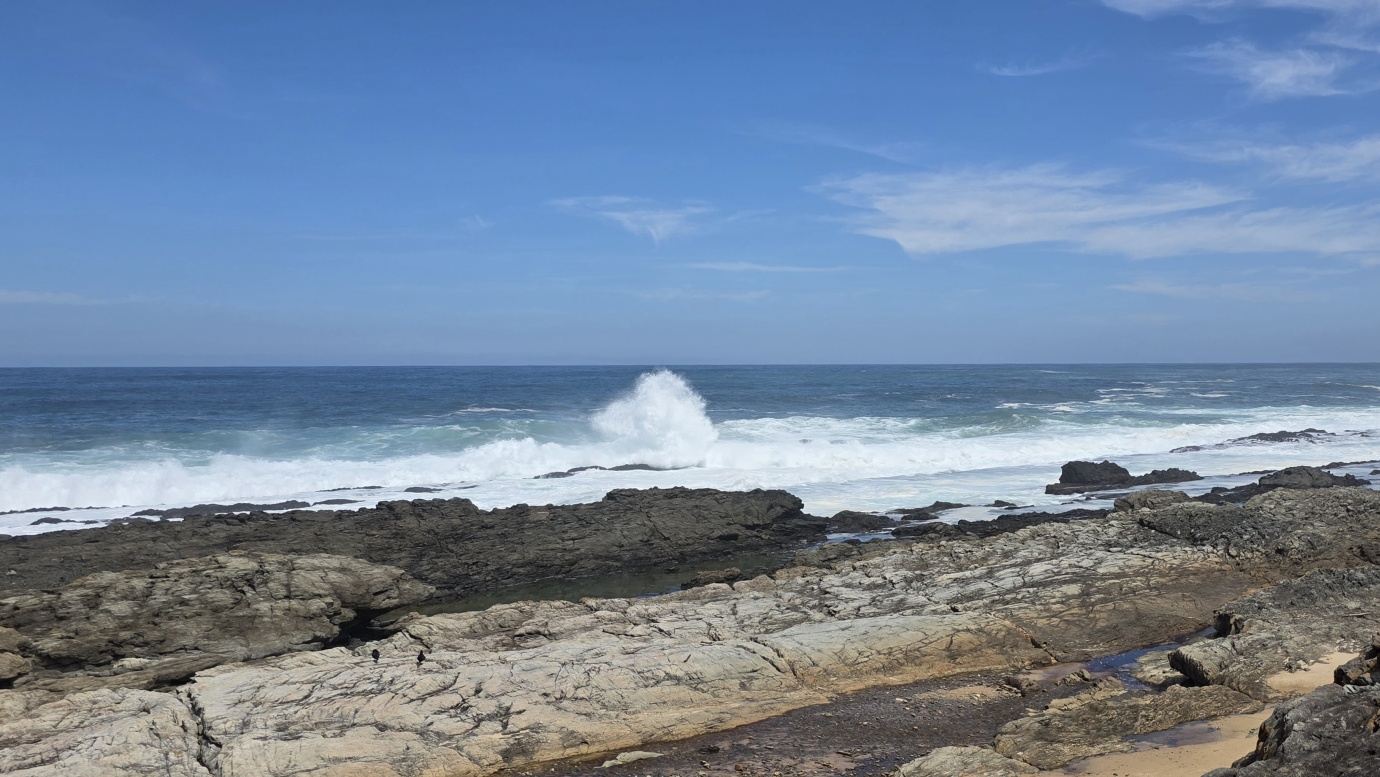
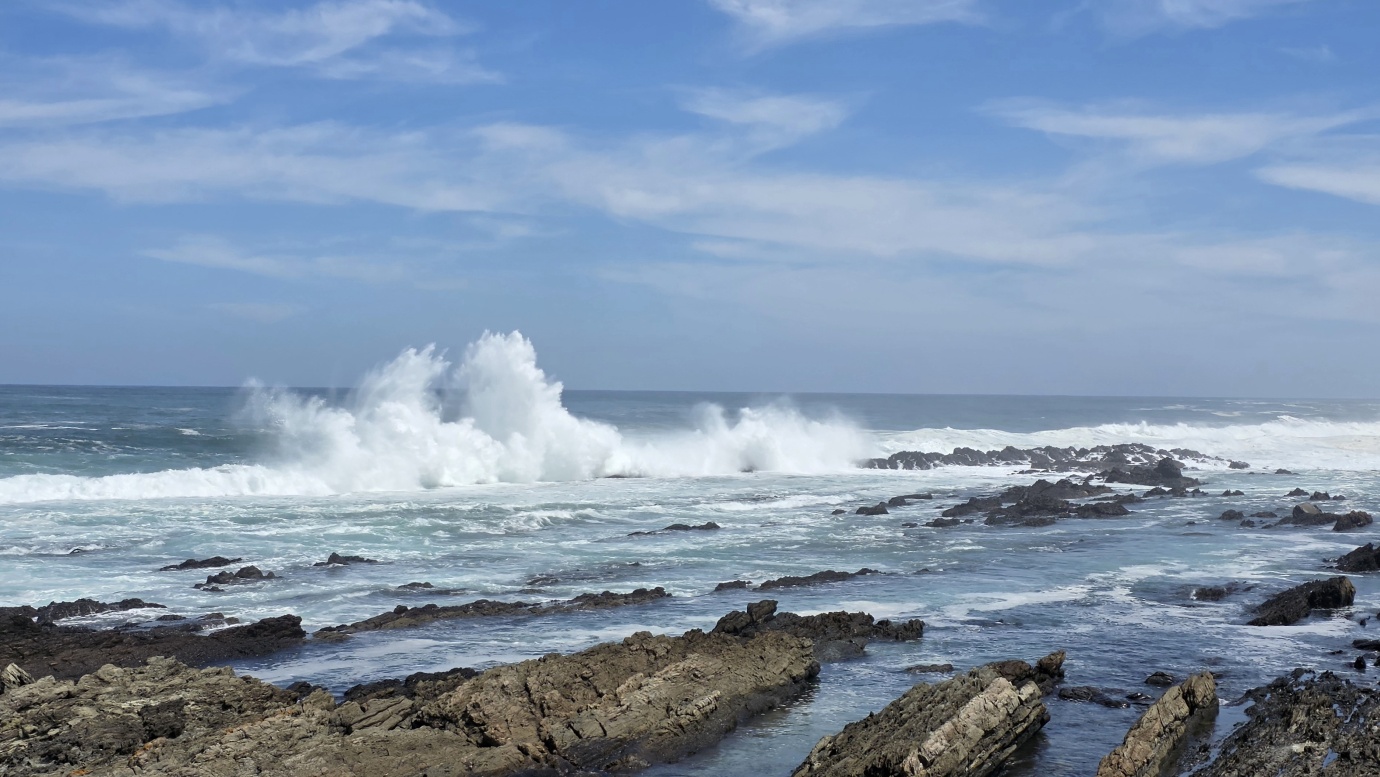
We set off on a short hike at Storms River Mouth, one of the Garden Route’s most iconic attractions. The scenic trail winds through the indigenous Tsitsikamma forest, past a small waterfall and rocky viewpoints, before reaching the famous suspension bridges that span the dramatic gorge where the Storms River meets the Indian Ocean. The walk to the bridges covers about 1 kilometre and offers magnificent views of the rugged coastline and churning waters below.
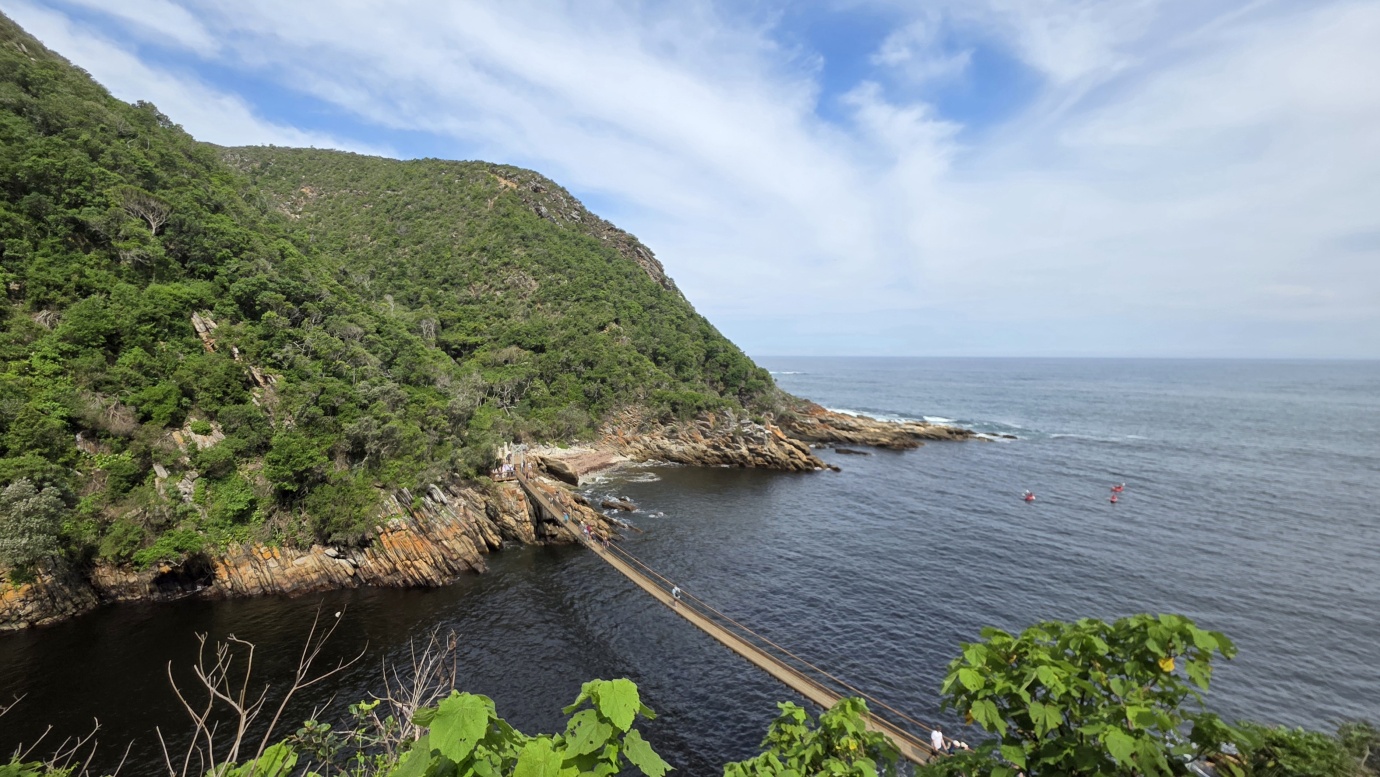
Three suspension bridges span the gorge, with the main bridge stretching 77 metres across the gorge and hanging about 7 metres above the water. Jacky De Vos built the original bridge in 1969 for the National Parks Board, giving visitors safe passage across the otherwise difficult-to-cross river mouth. The National Parks Board added two additional suspension bridges in 2006 to accommodate the growing number of visitors.
More recently, the bridges underwent major rehabilitation, completed in 2026, with rebuilt structures using stainless-steel cables sourced from Switzerland and new wooden decking. The result is an impressive blend of engineering and natural beauty.
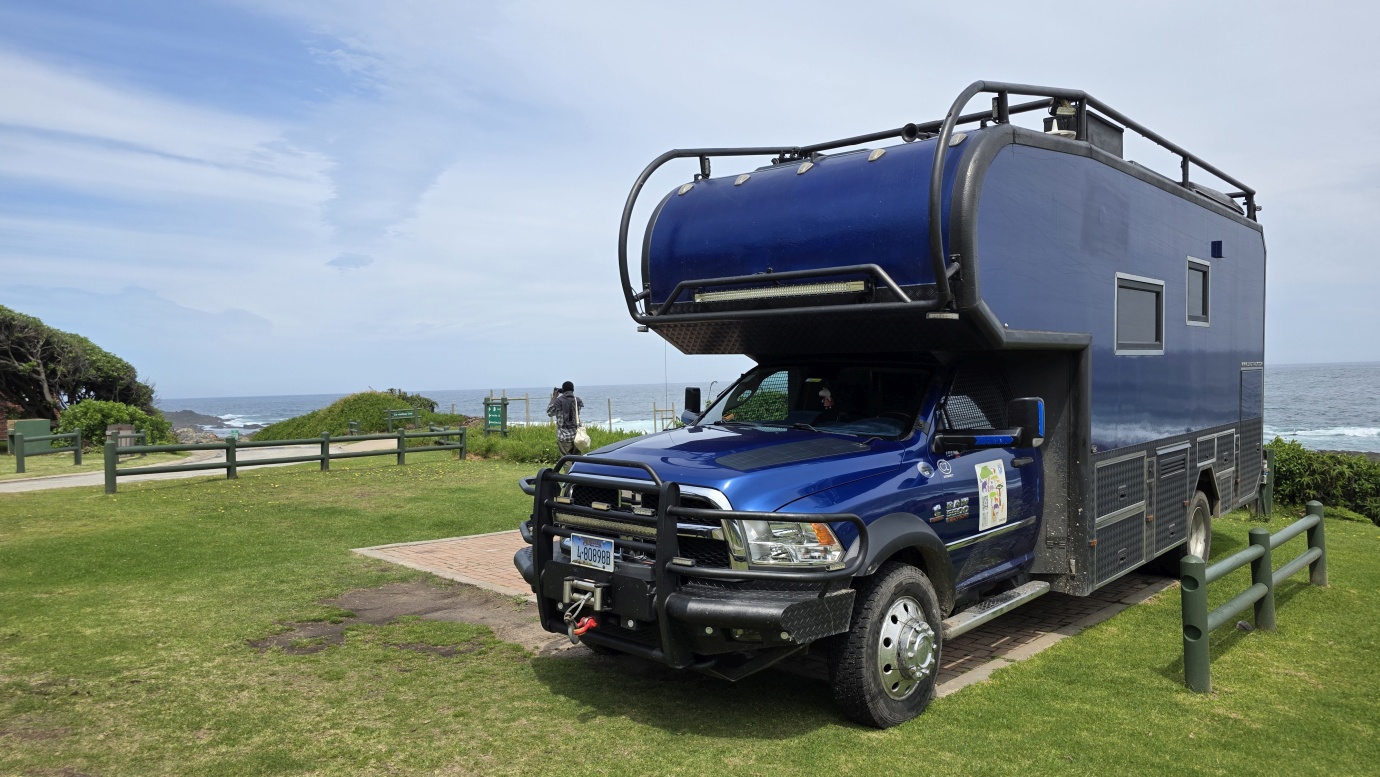
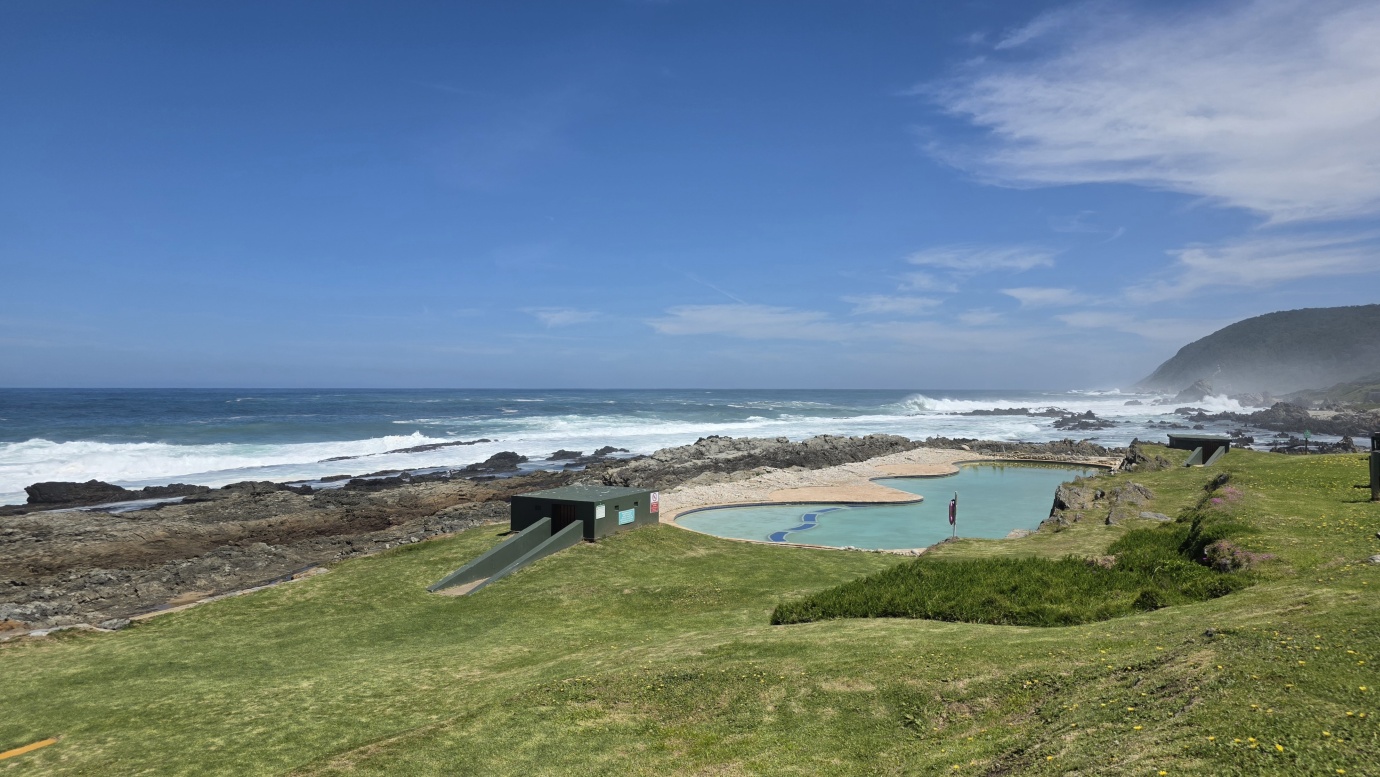
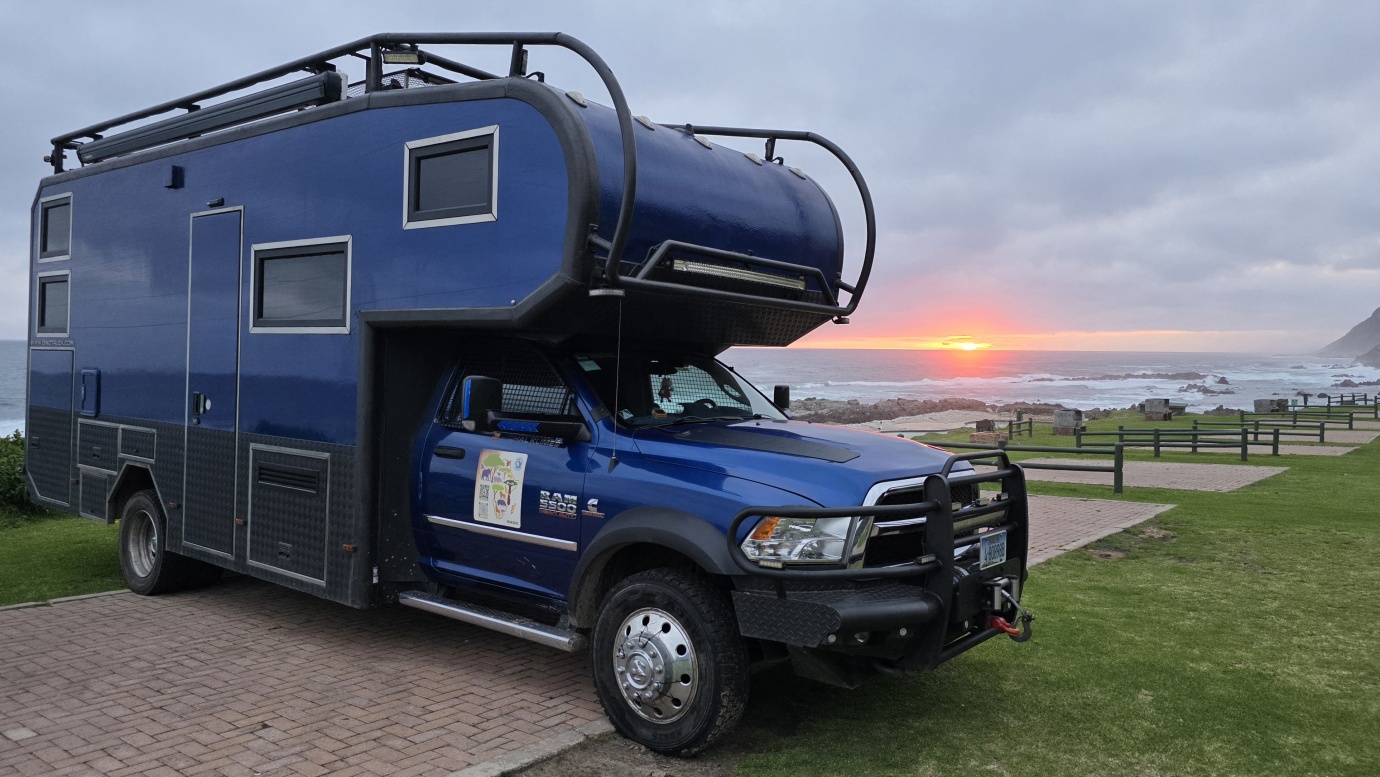
Parking location – Storms River: 34.0230761S 23.8876335E (🚻,🚿,🏊,💦,🔌,🍽️,🅿️530 ZAR)