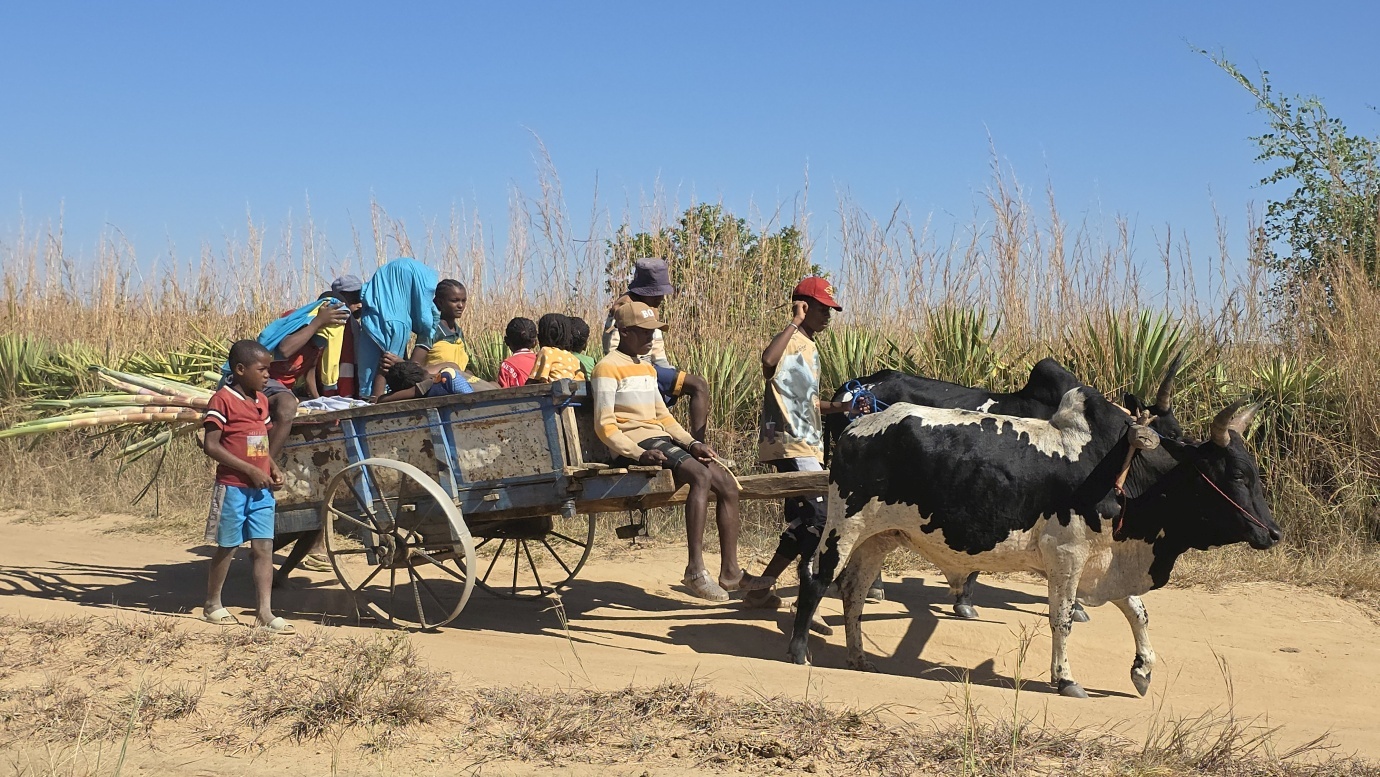
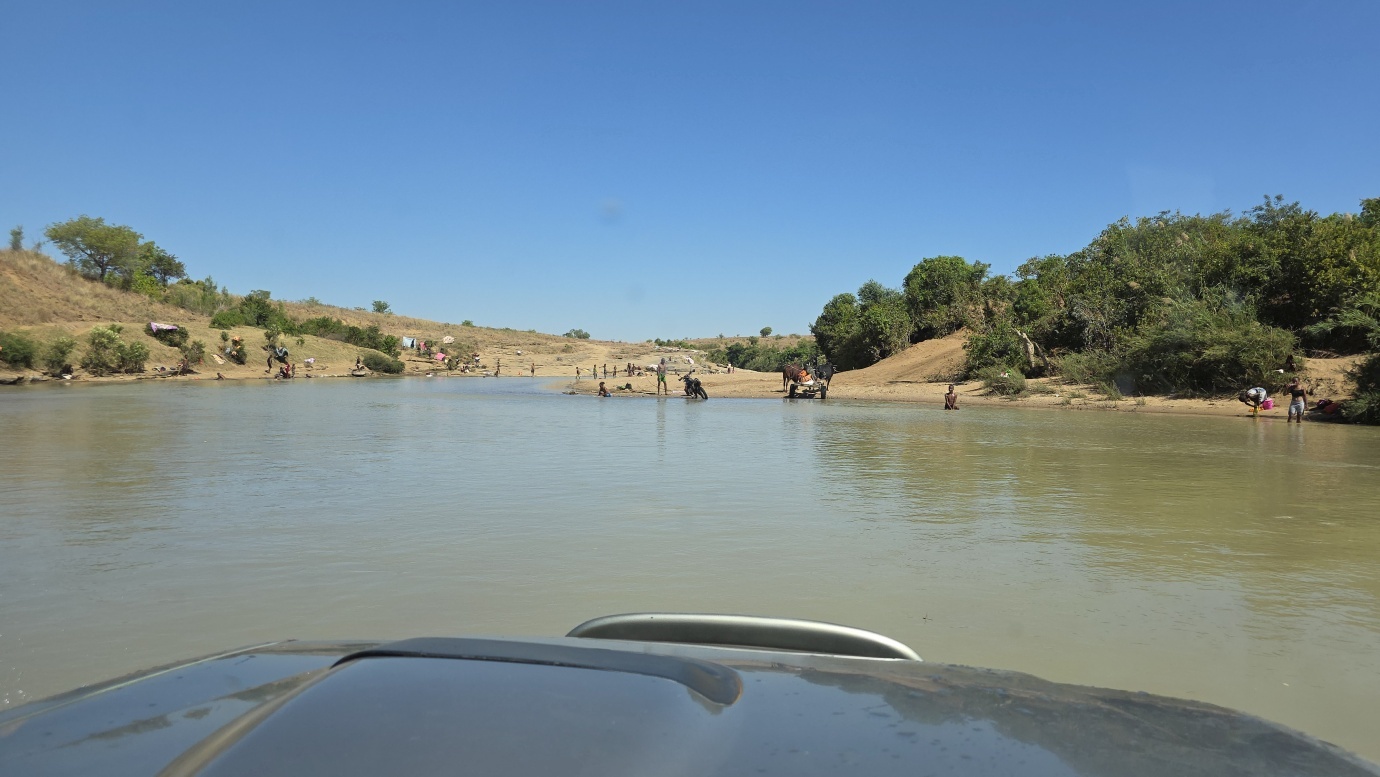
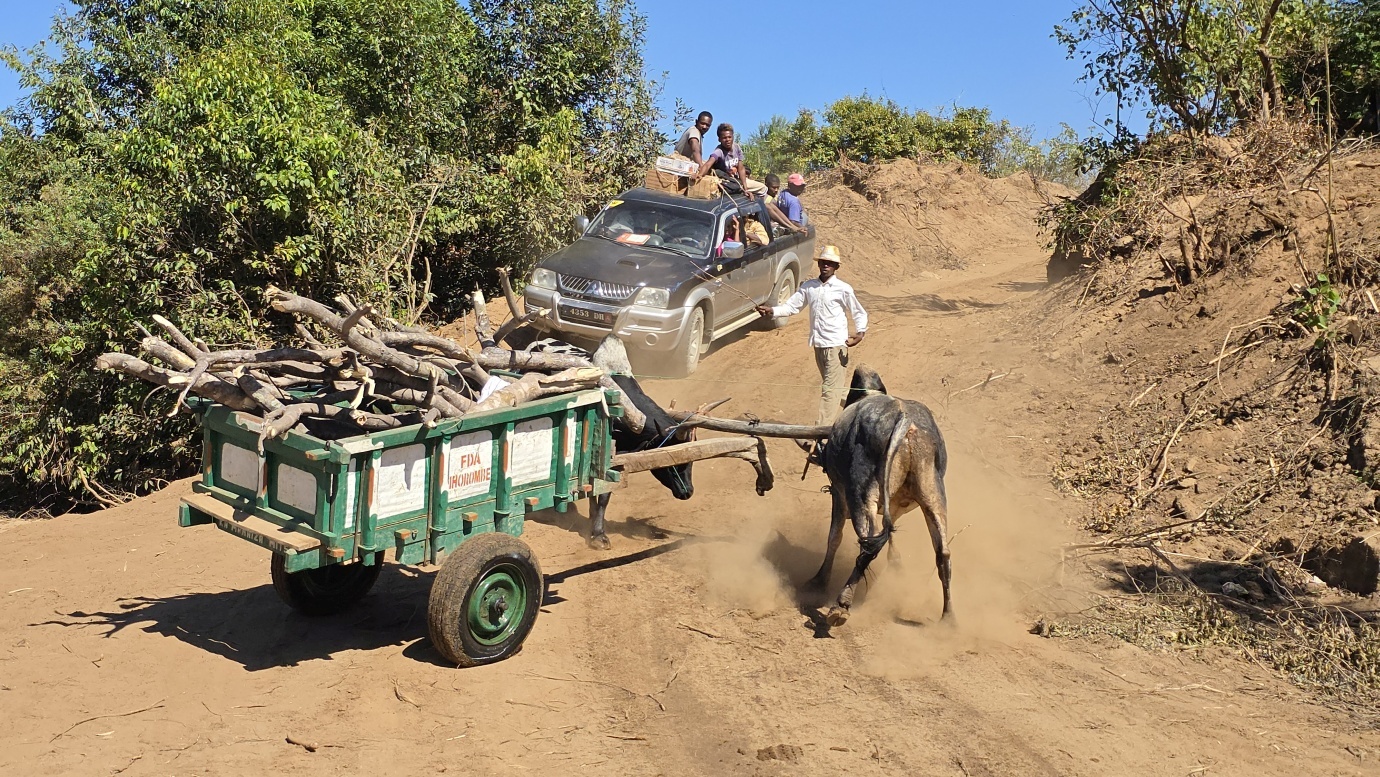
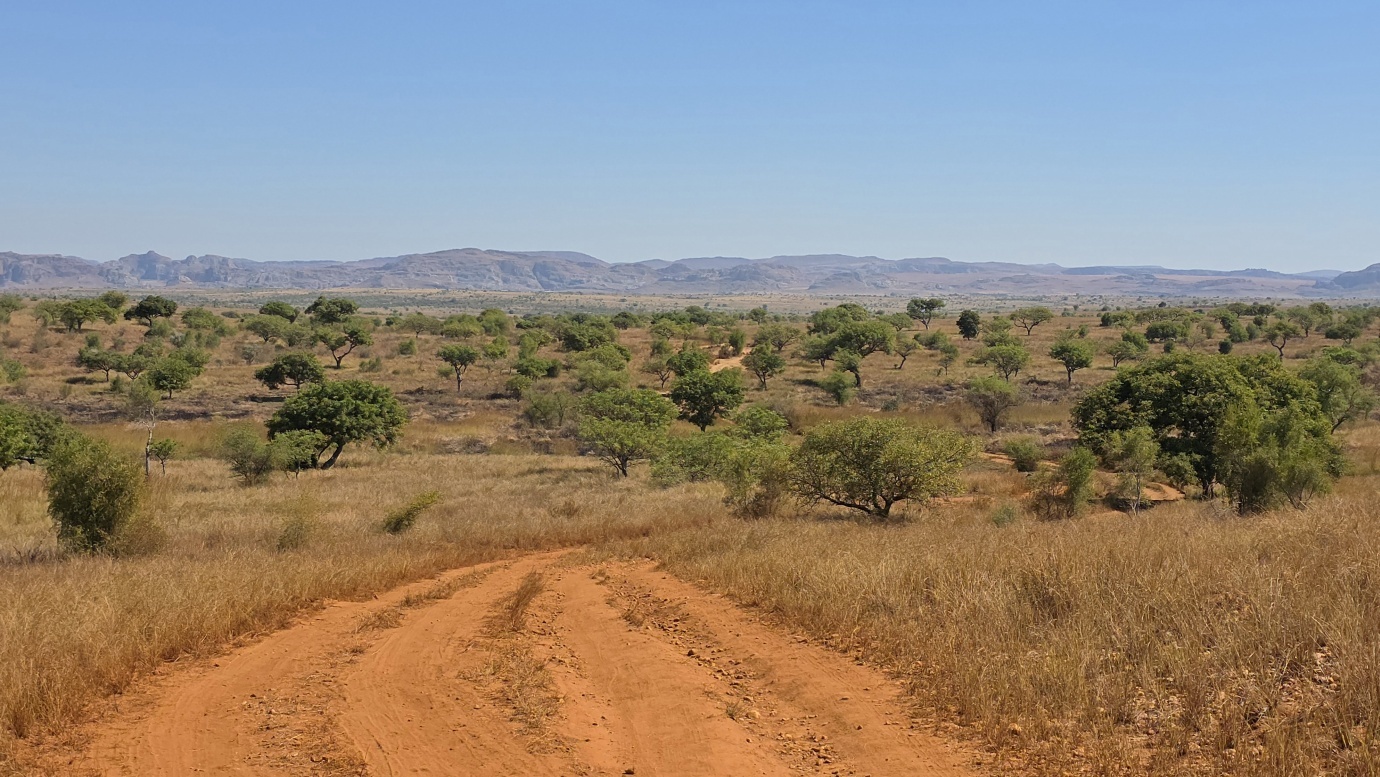
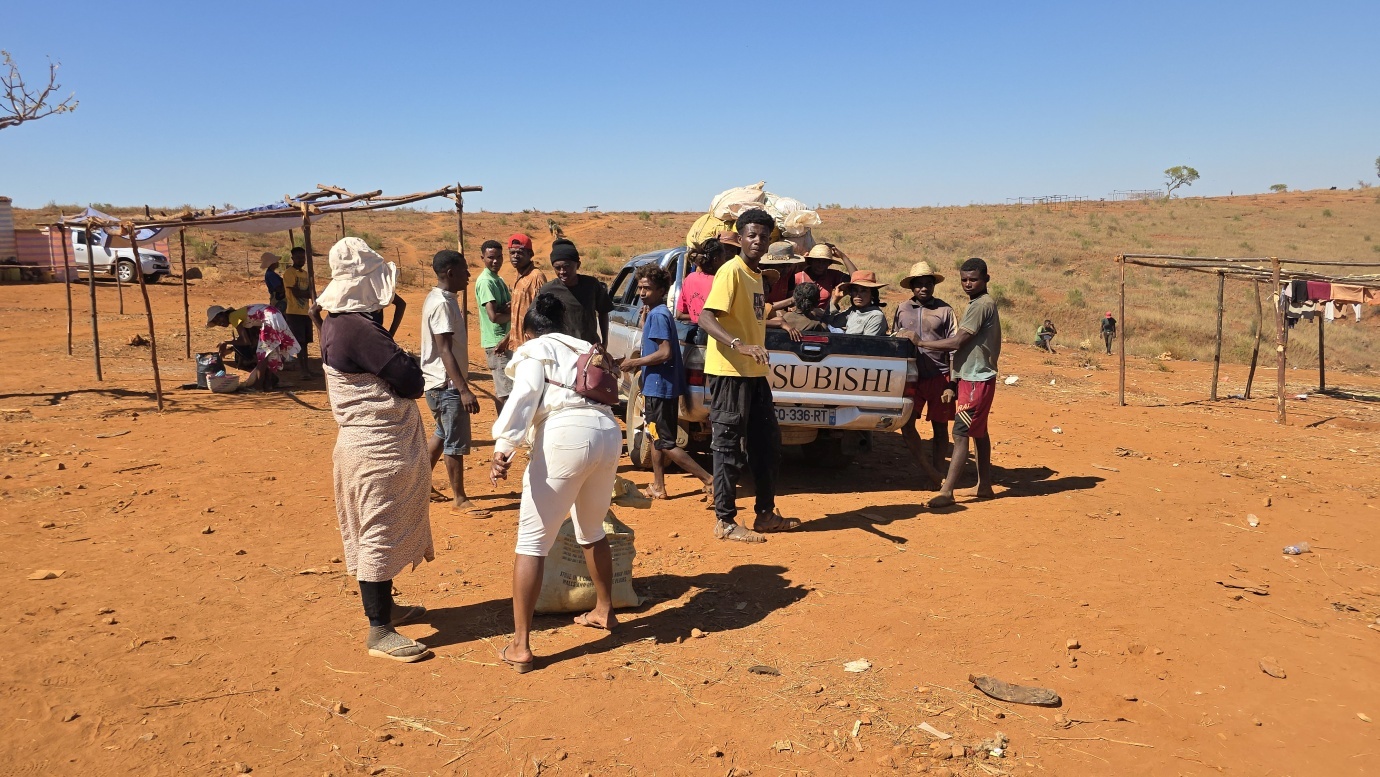
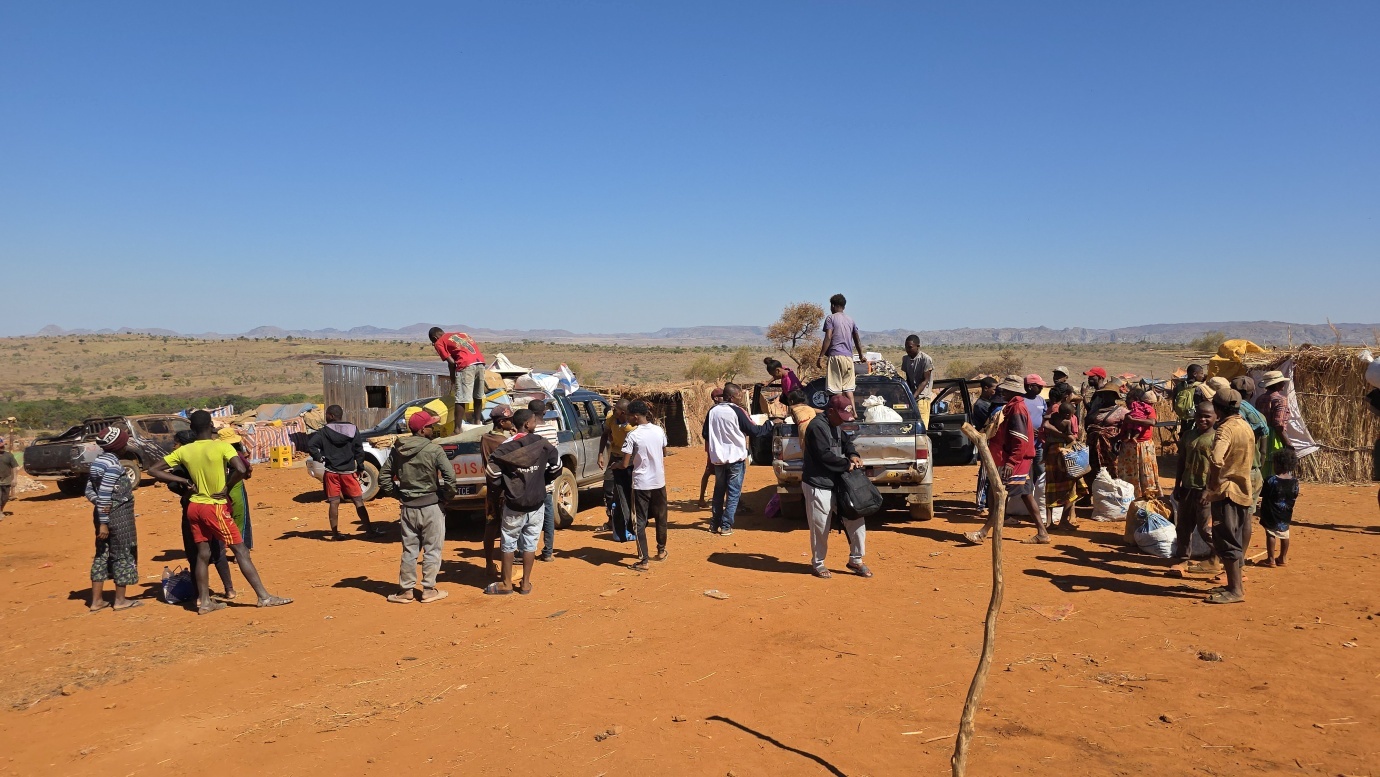
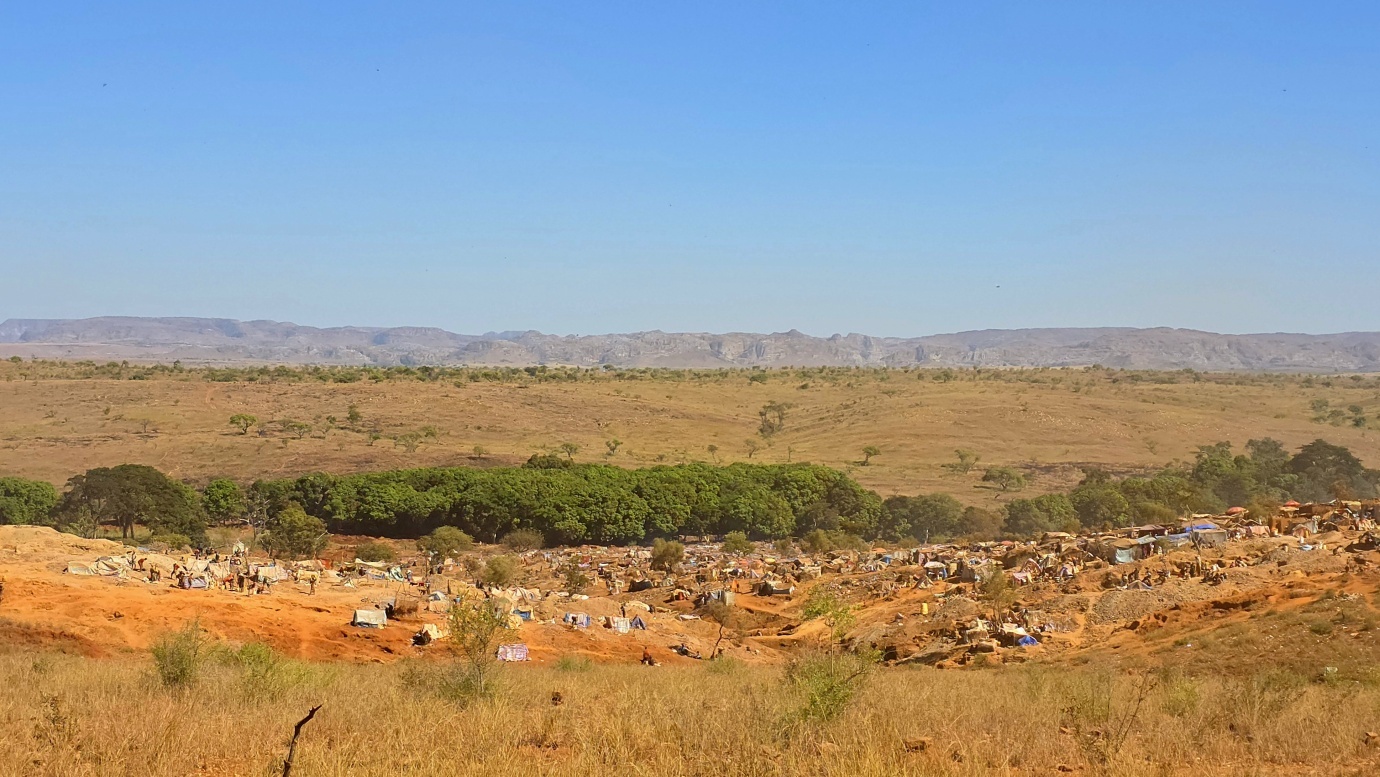
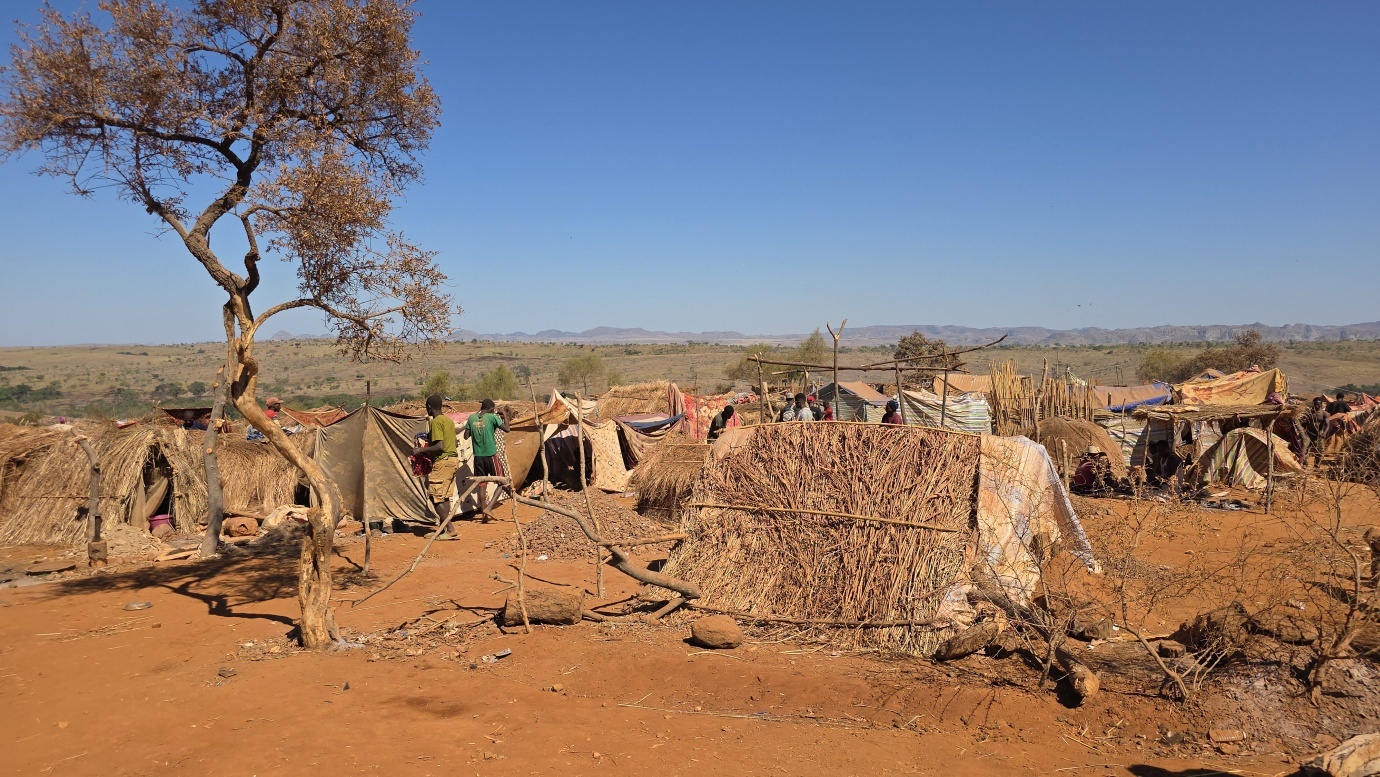
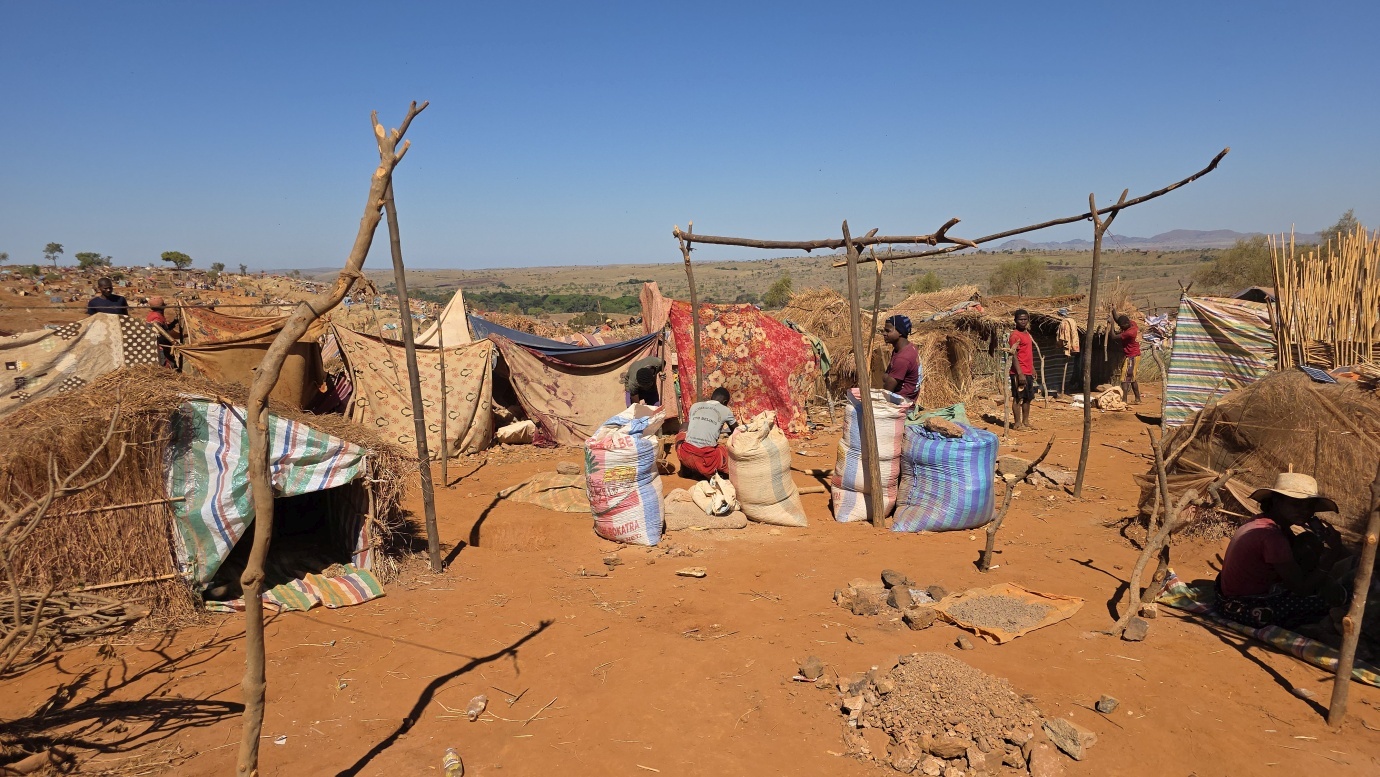
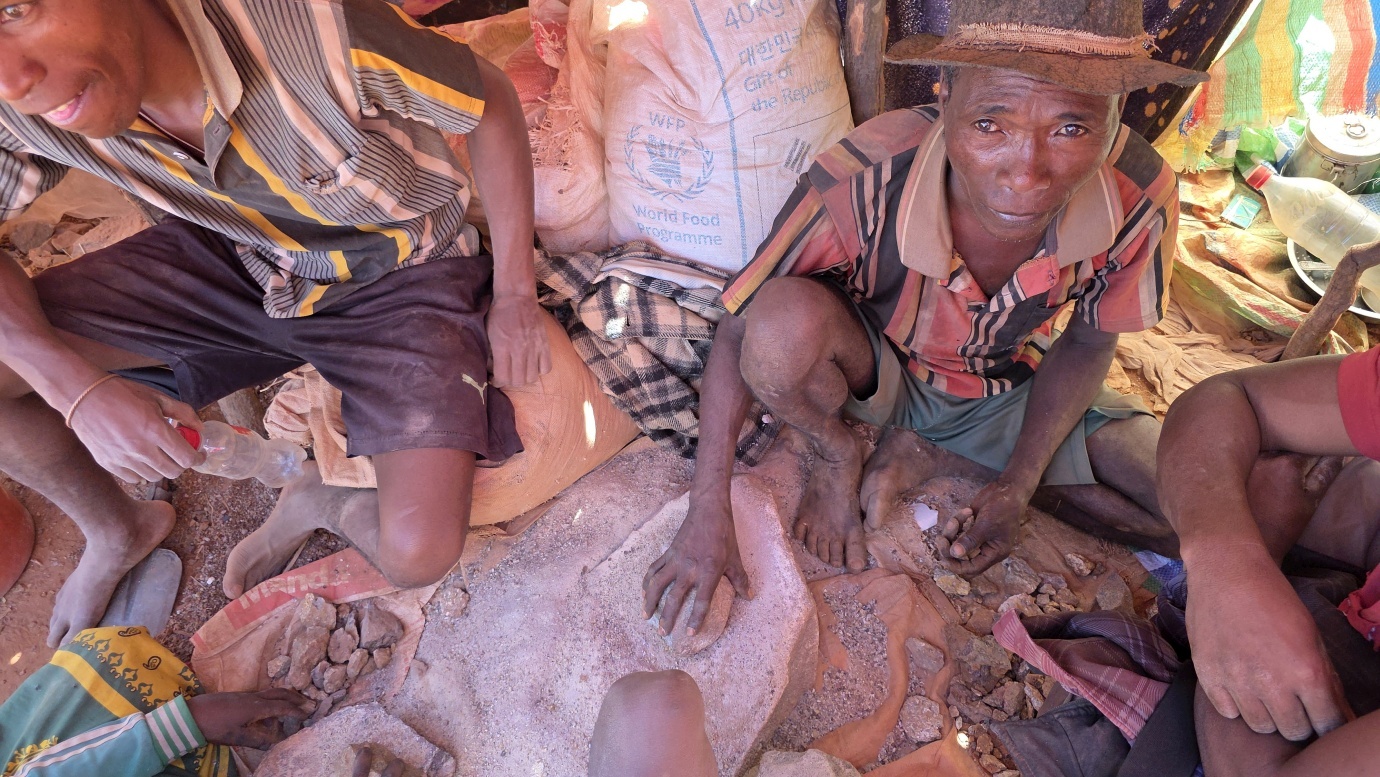
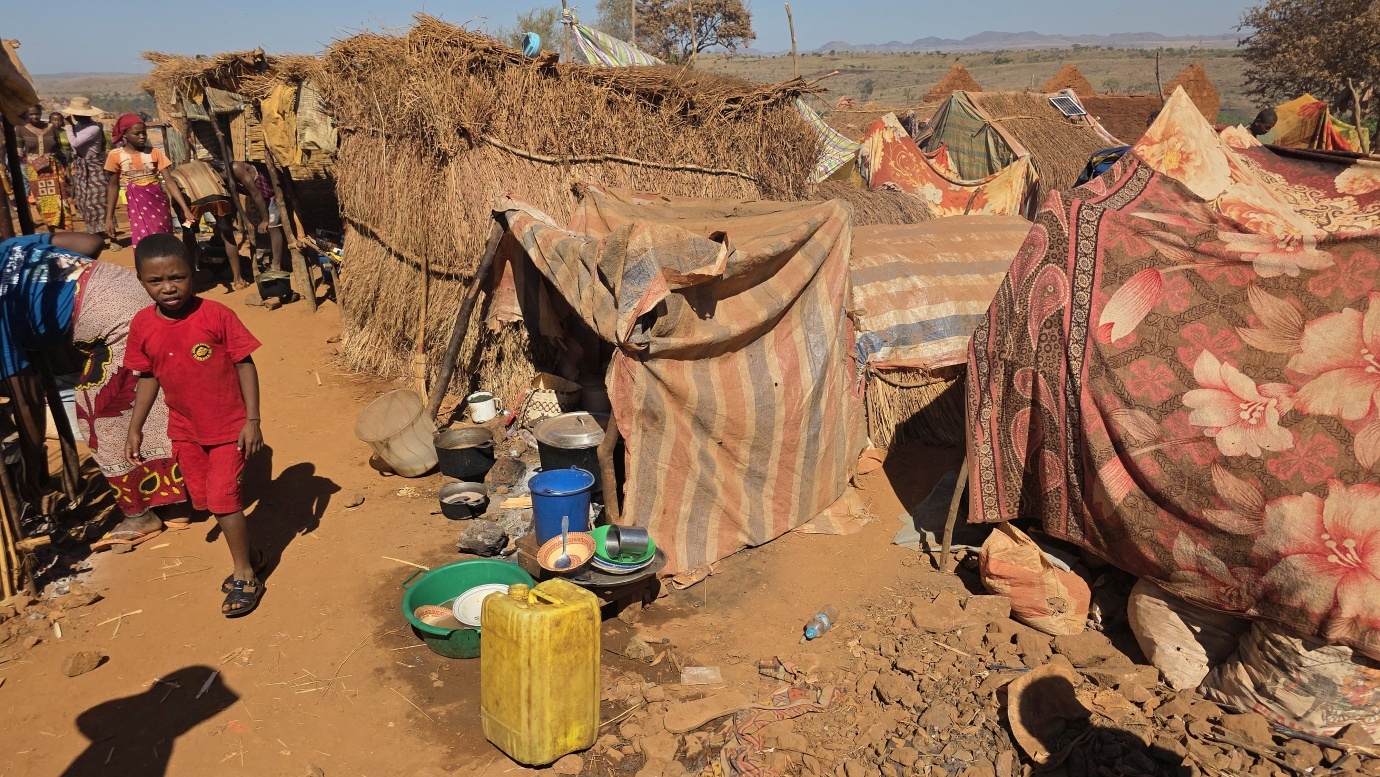
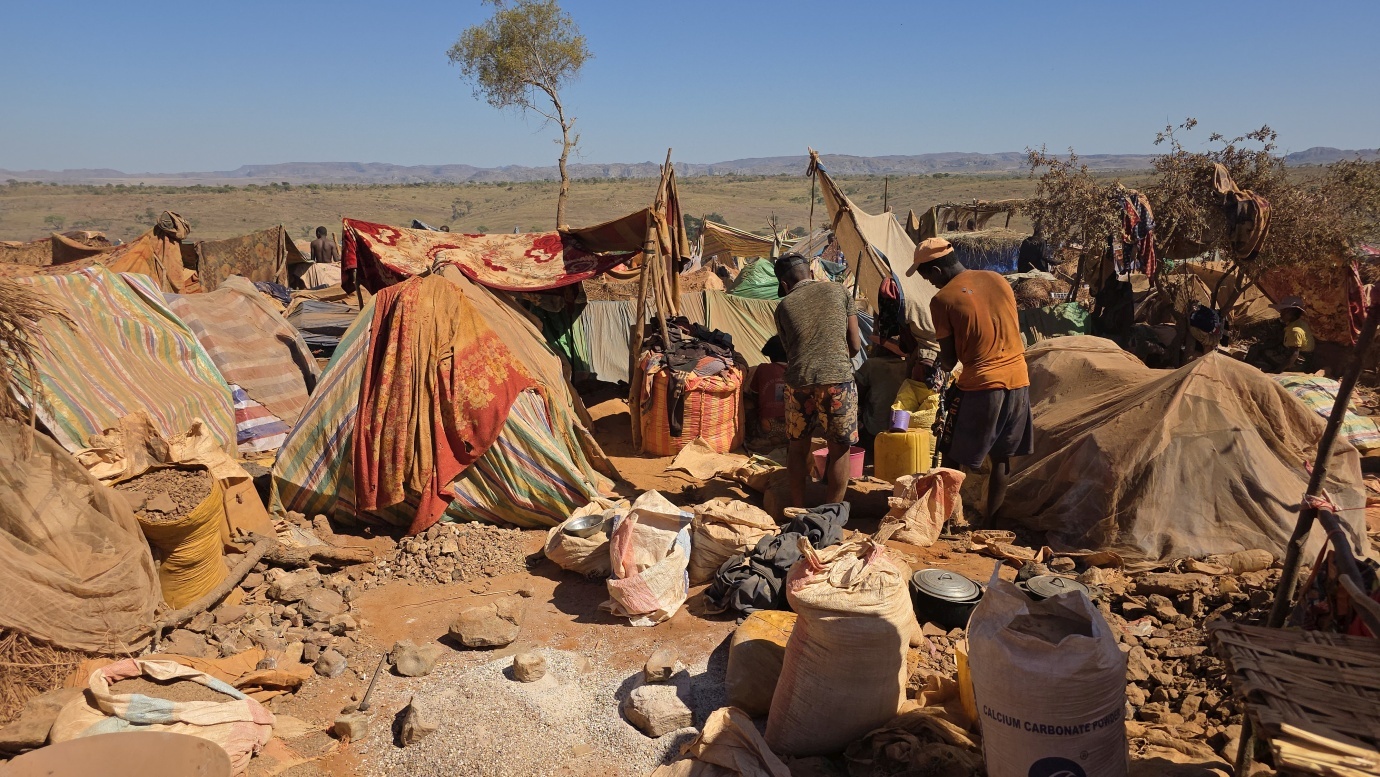
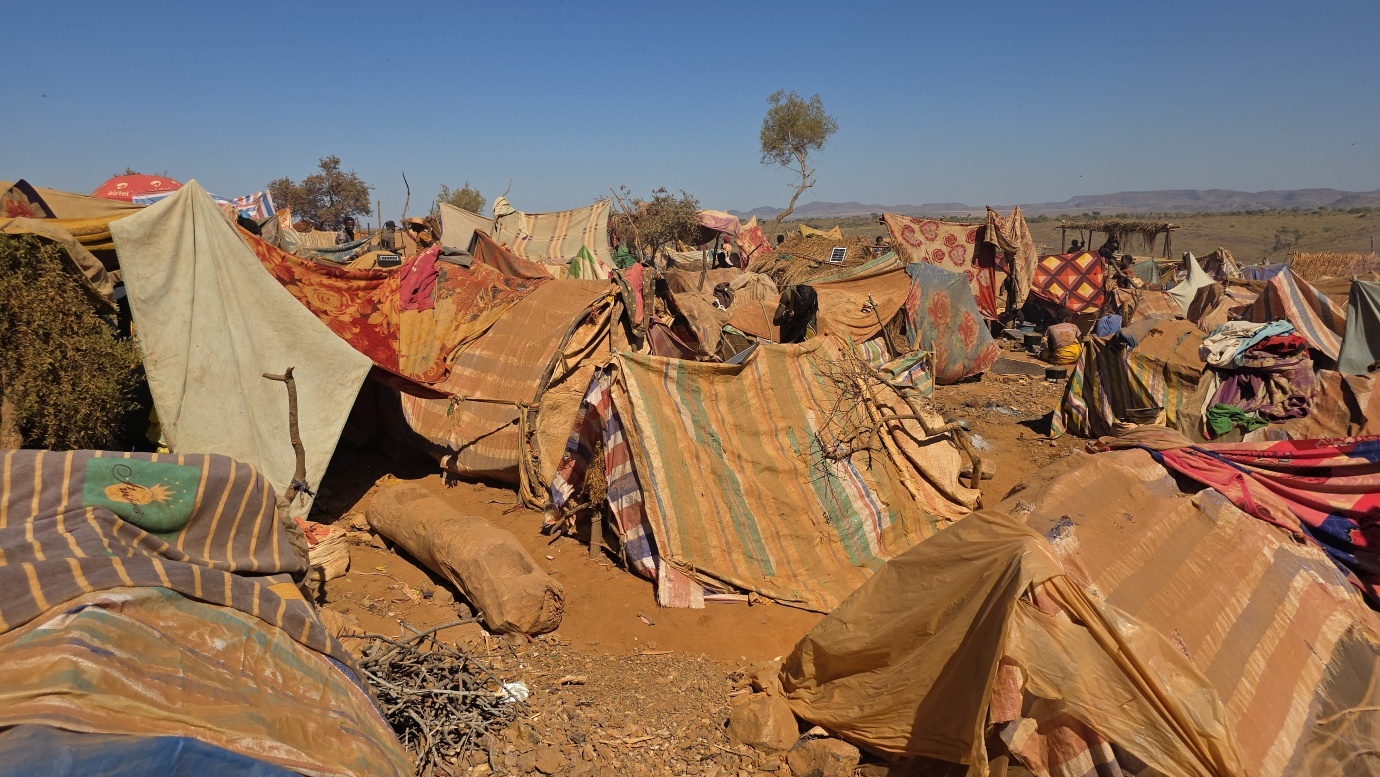
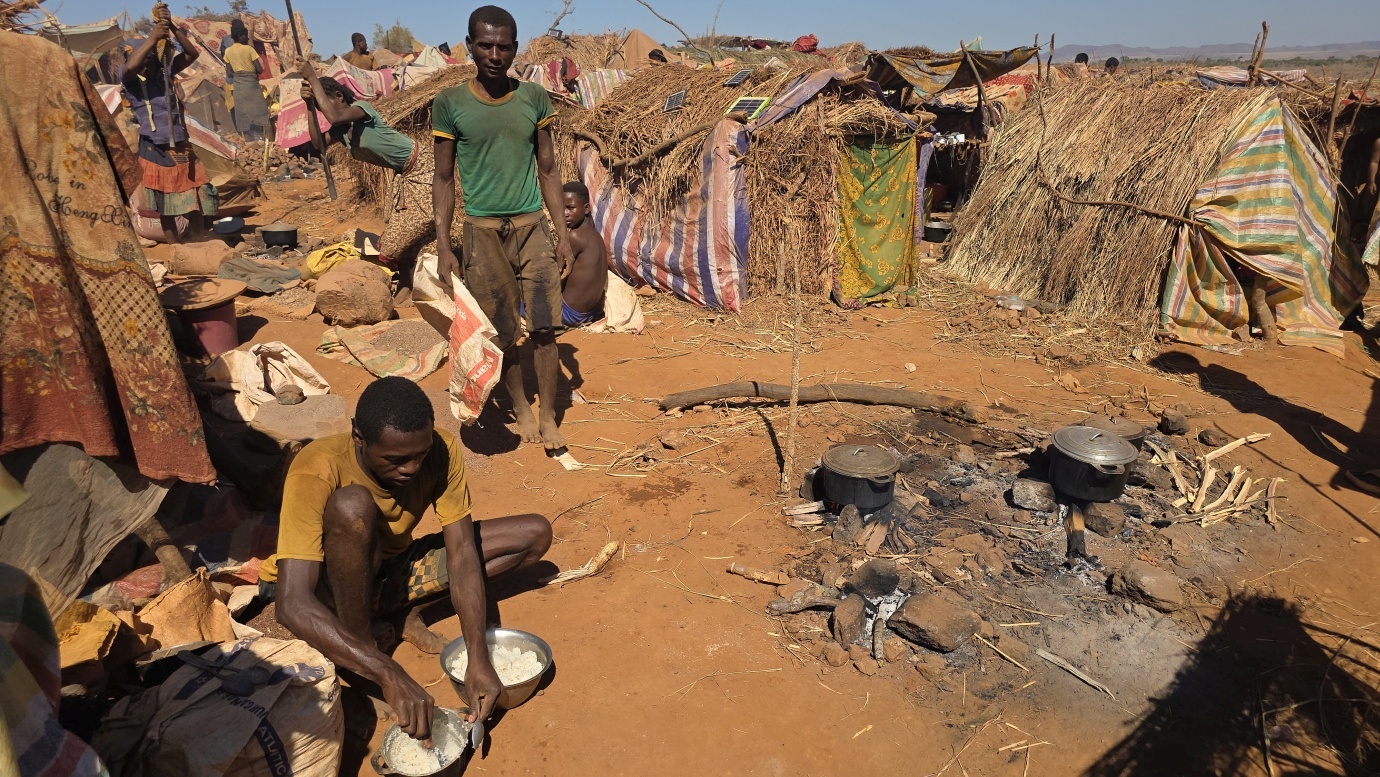
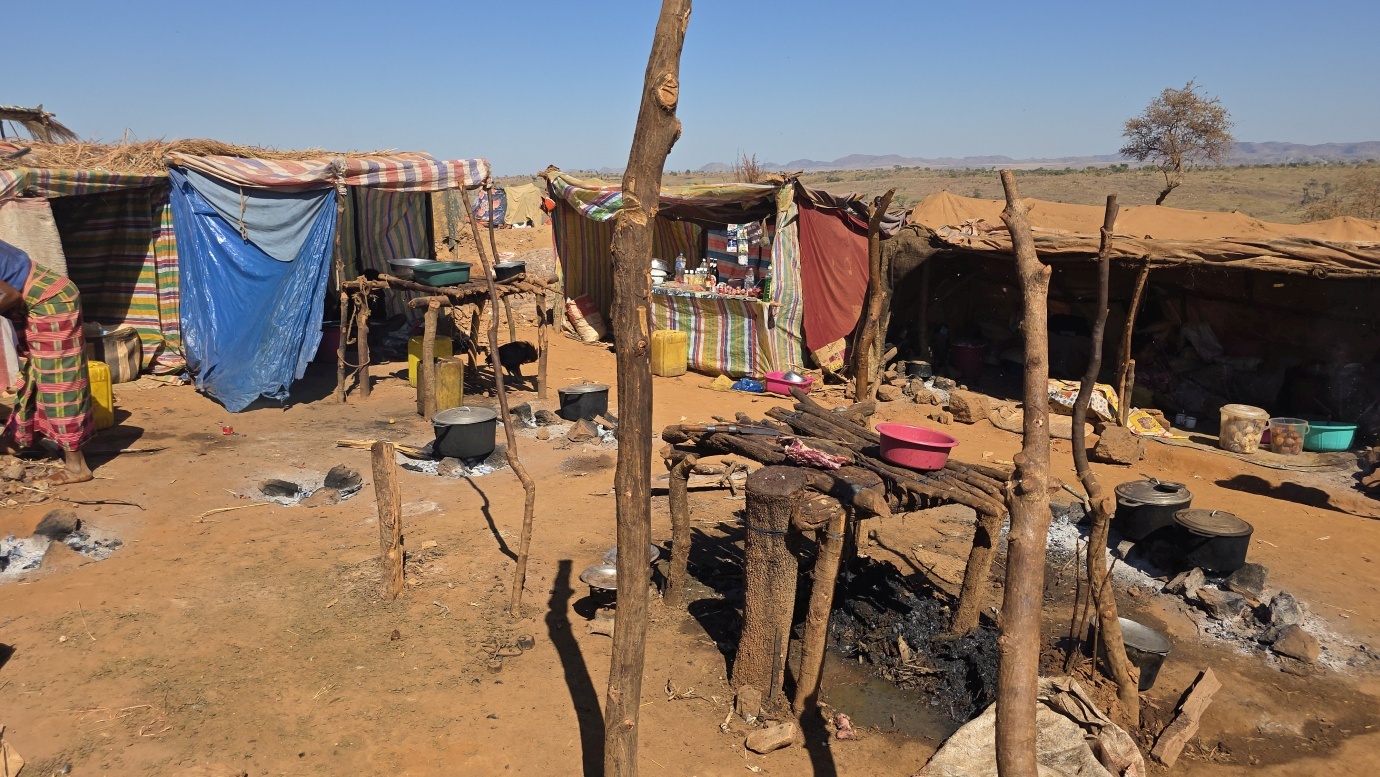
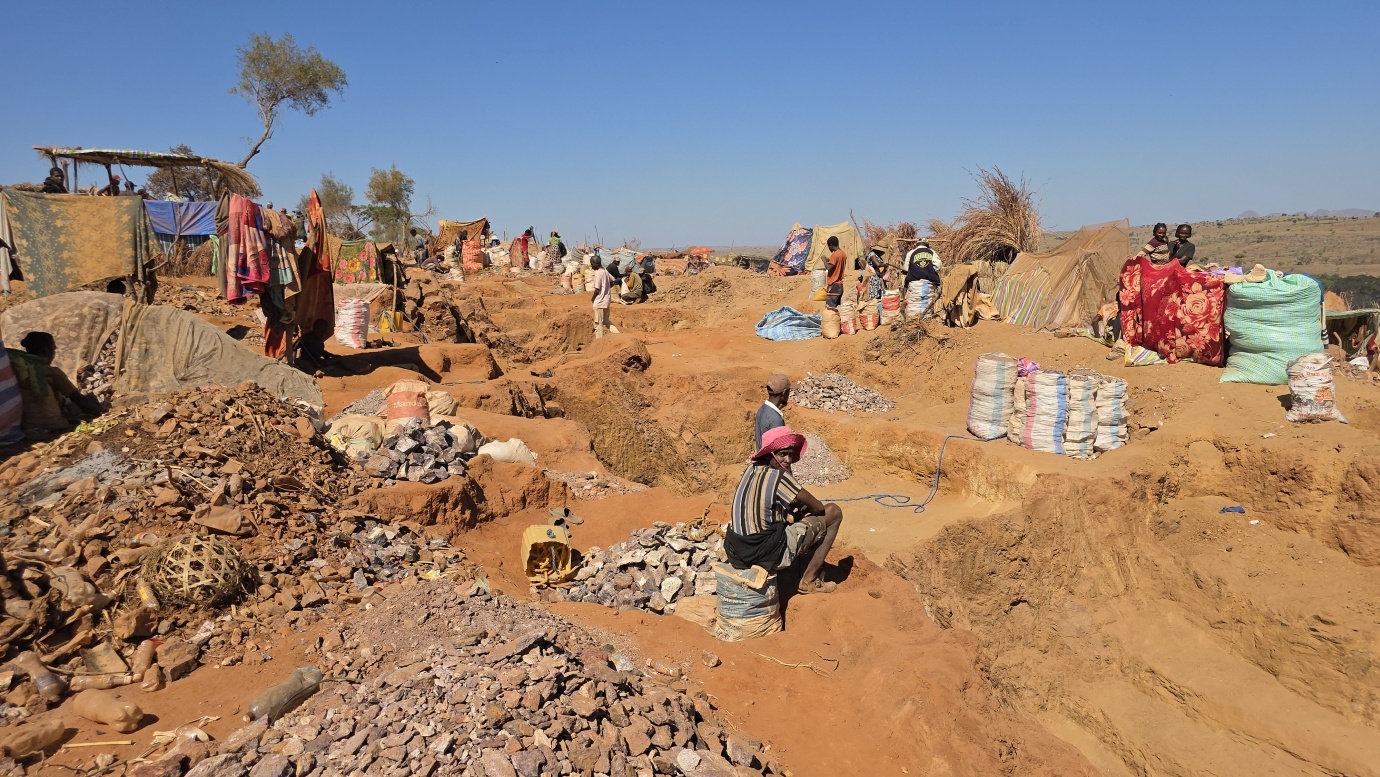
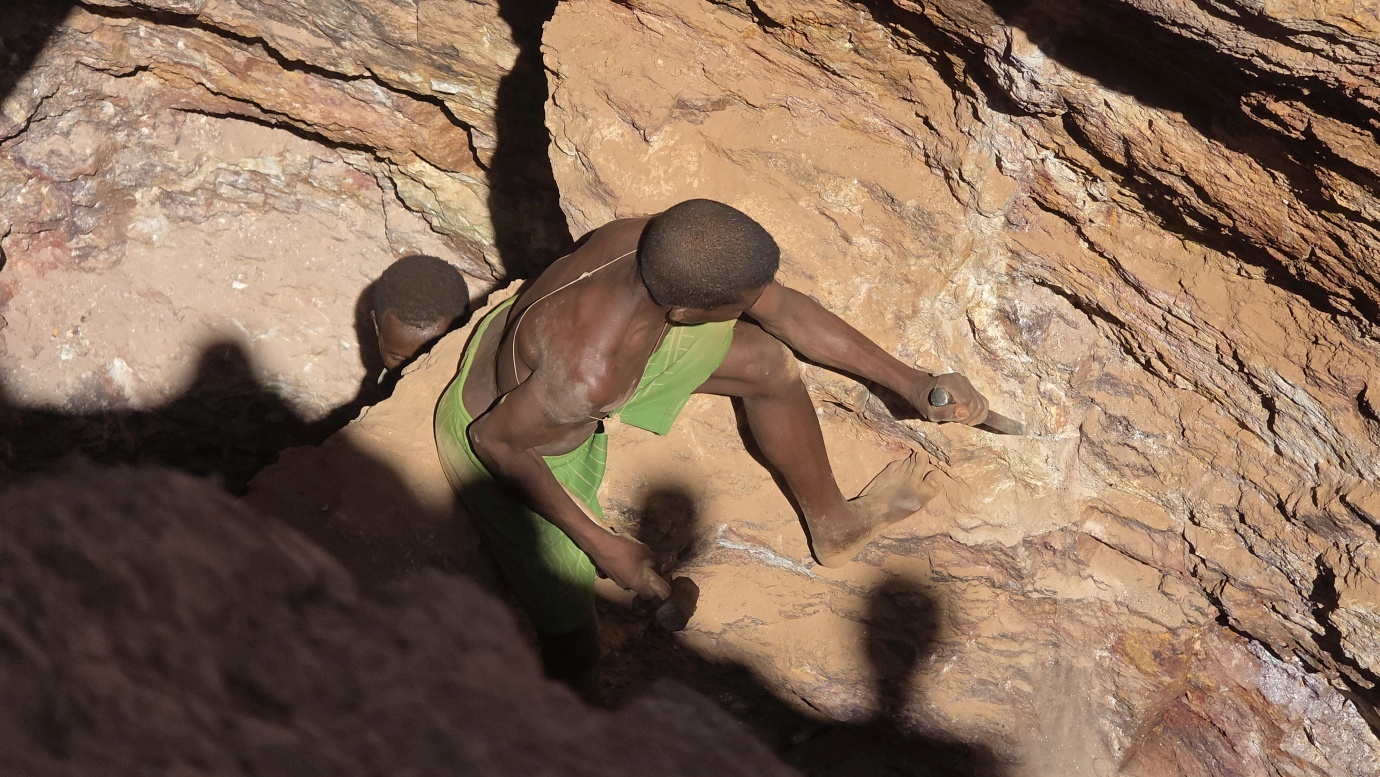
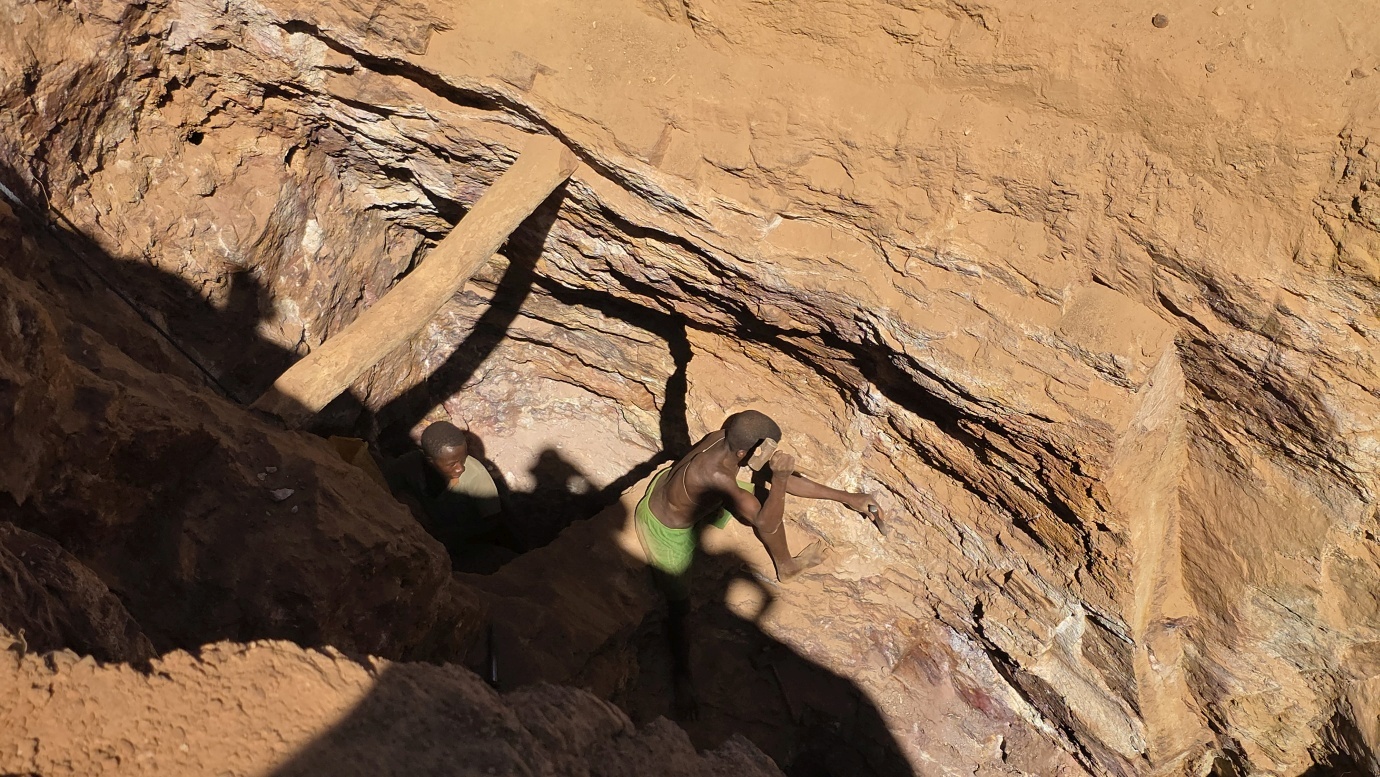
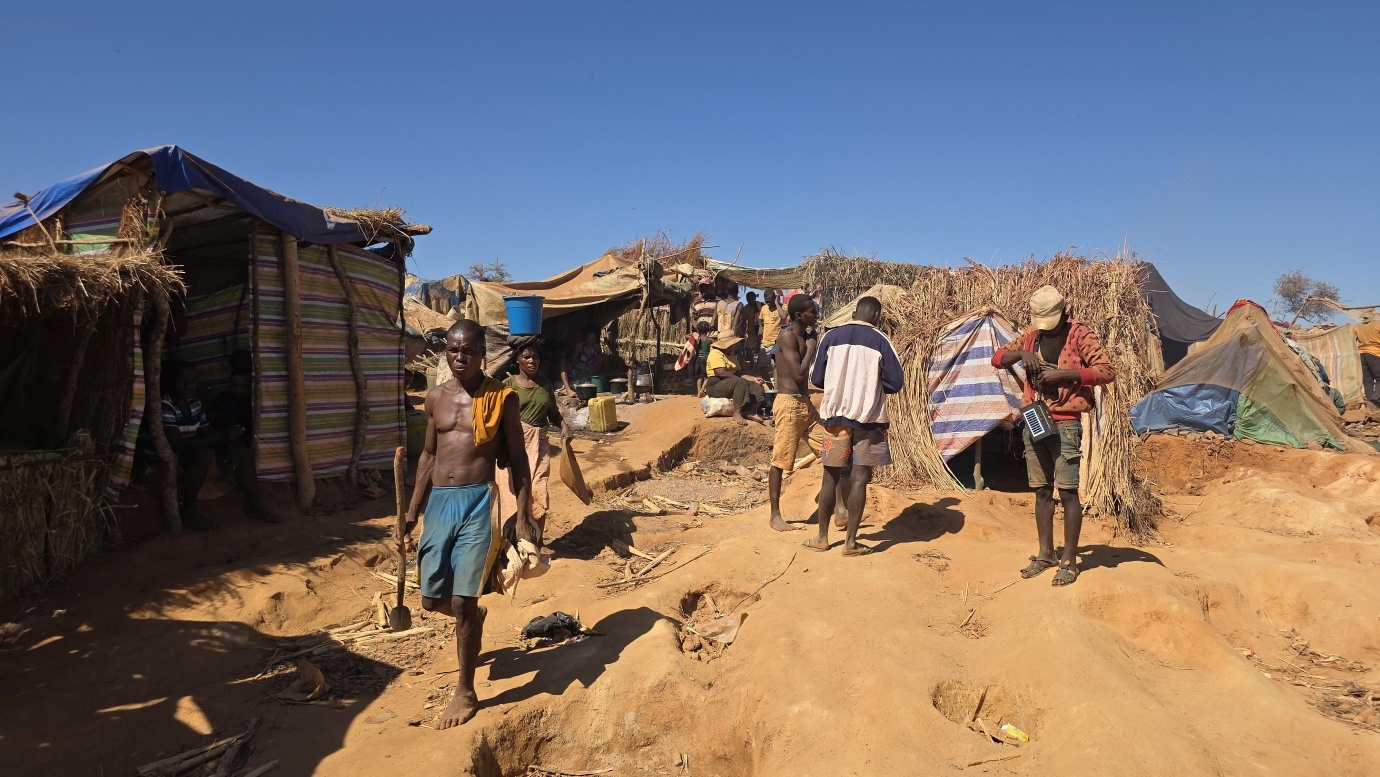
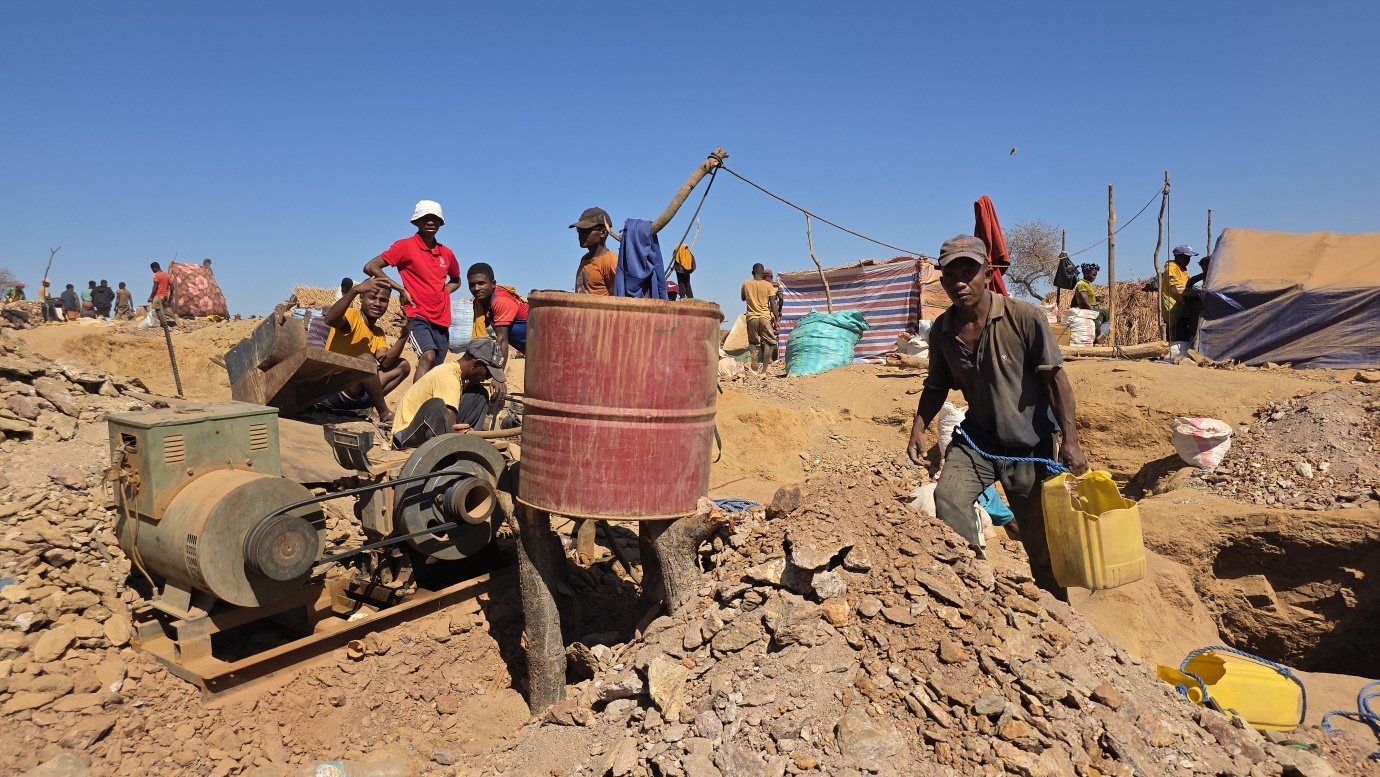
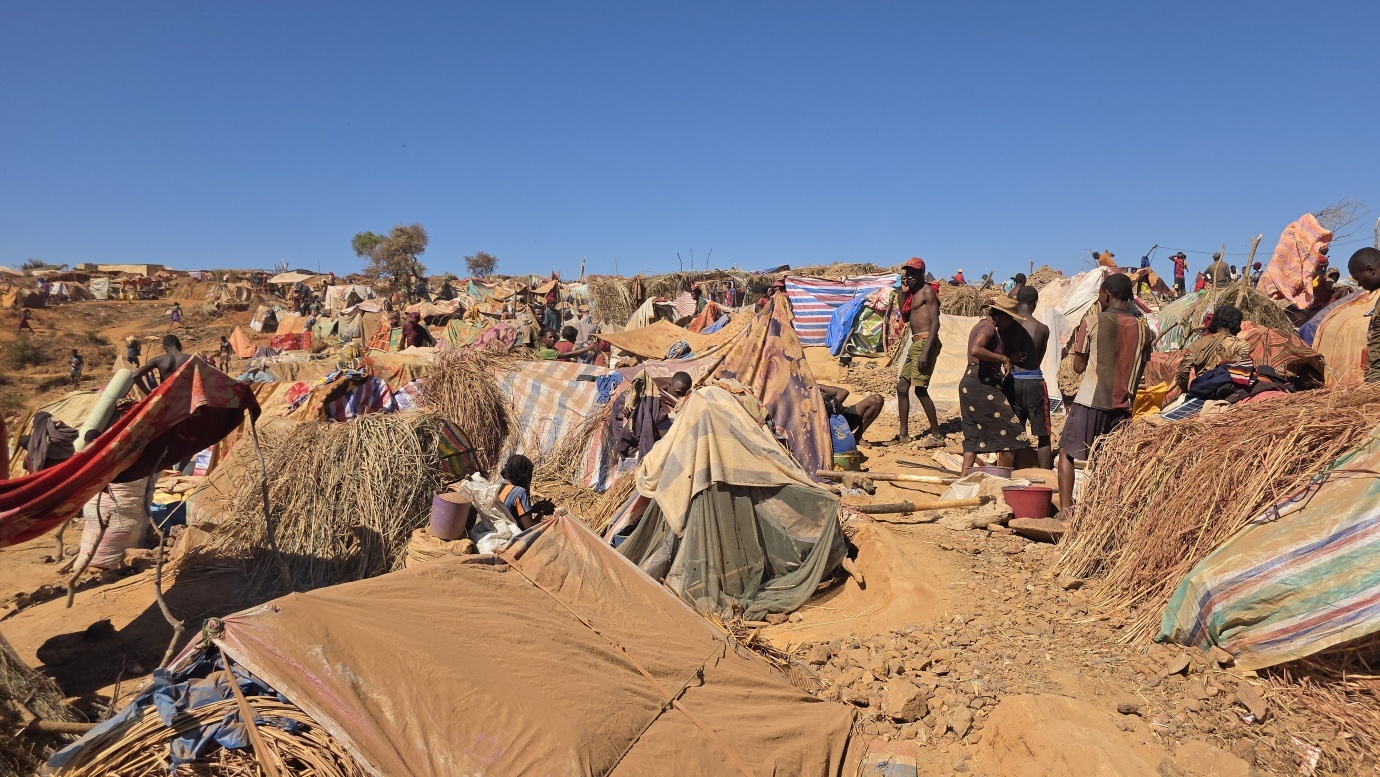
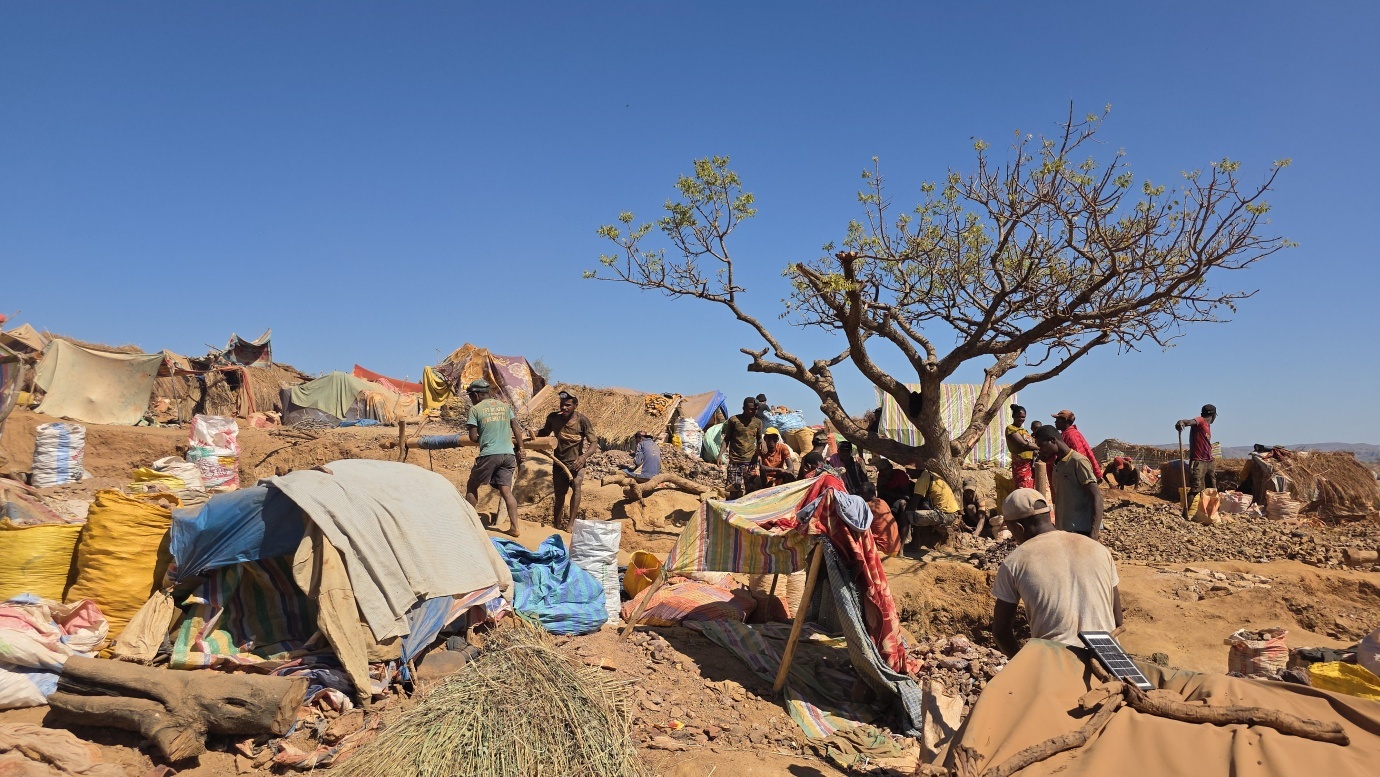
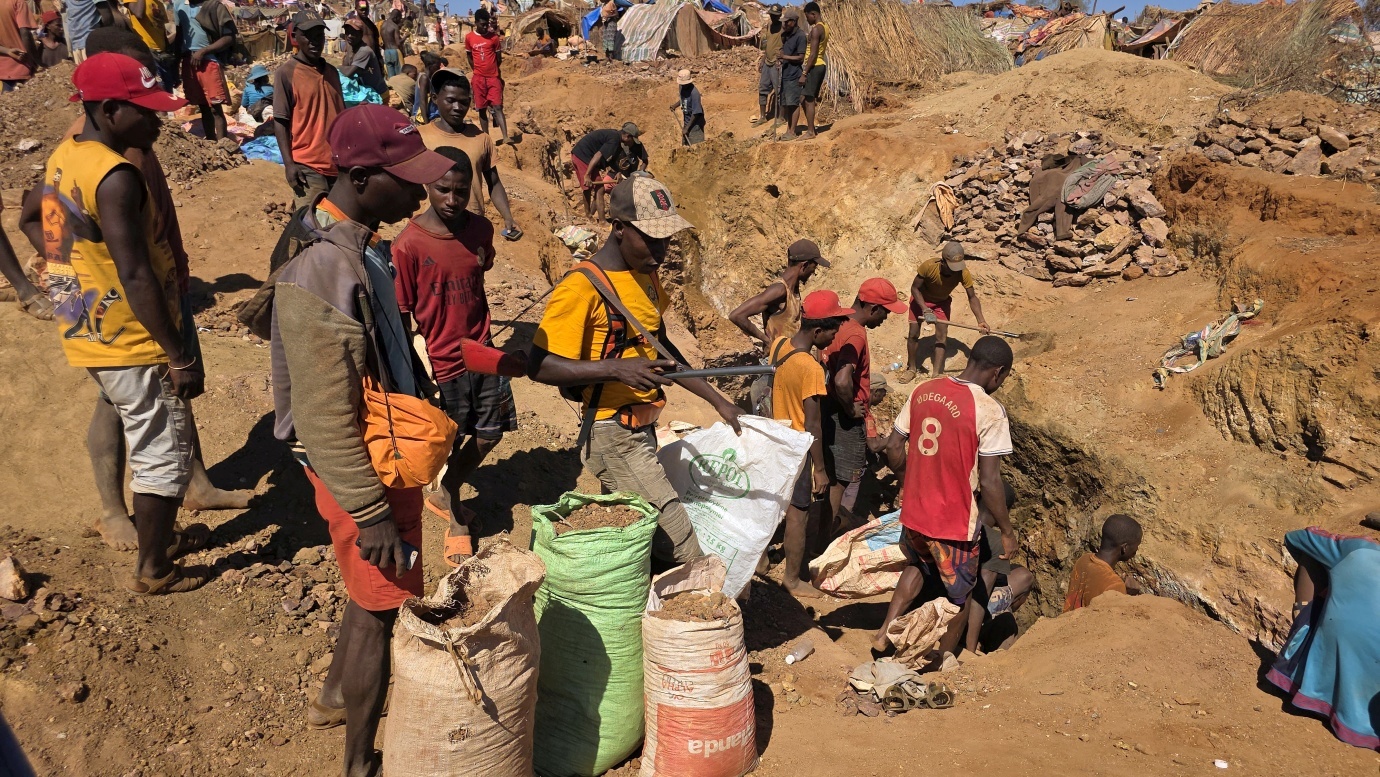
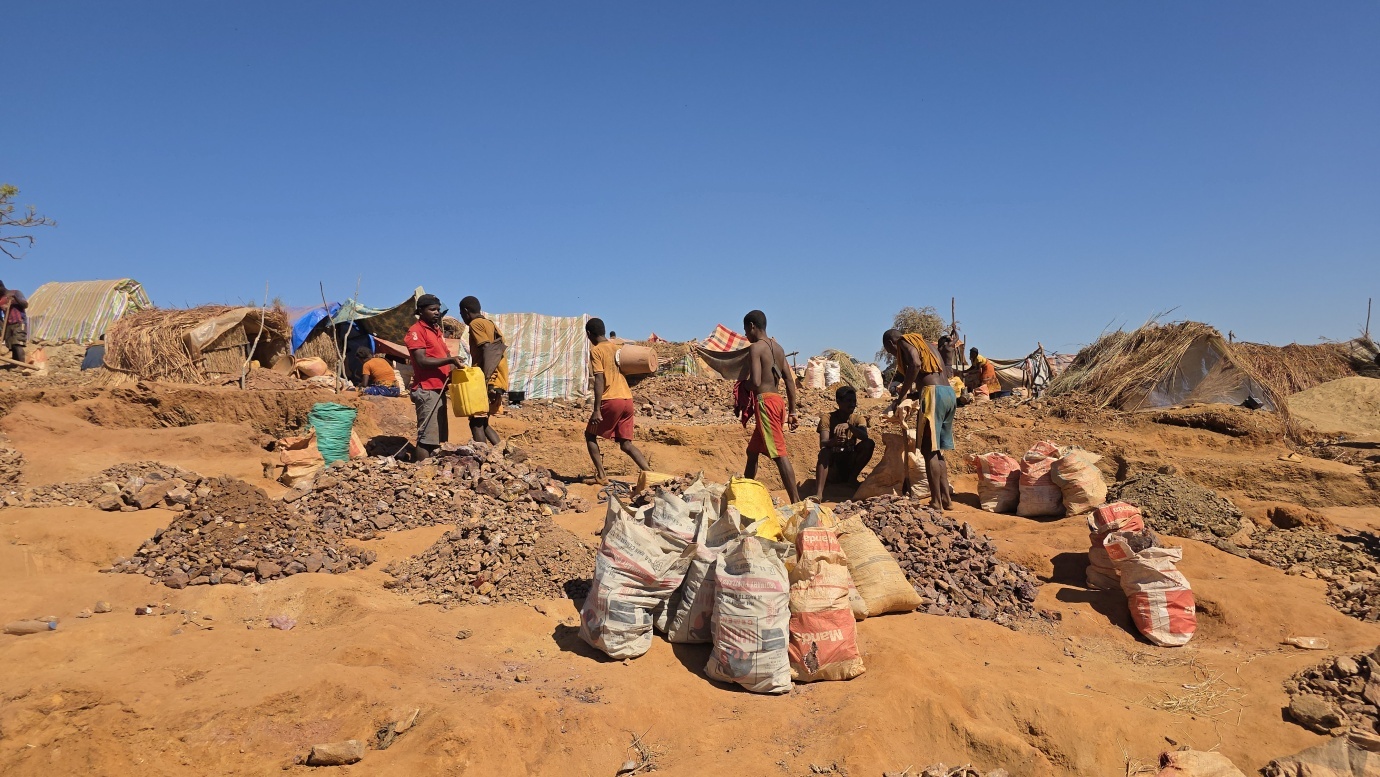
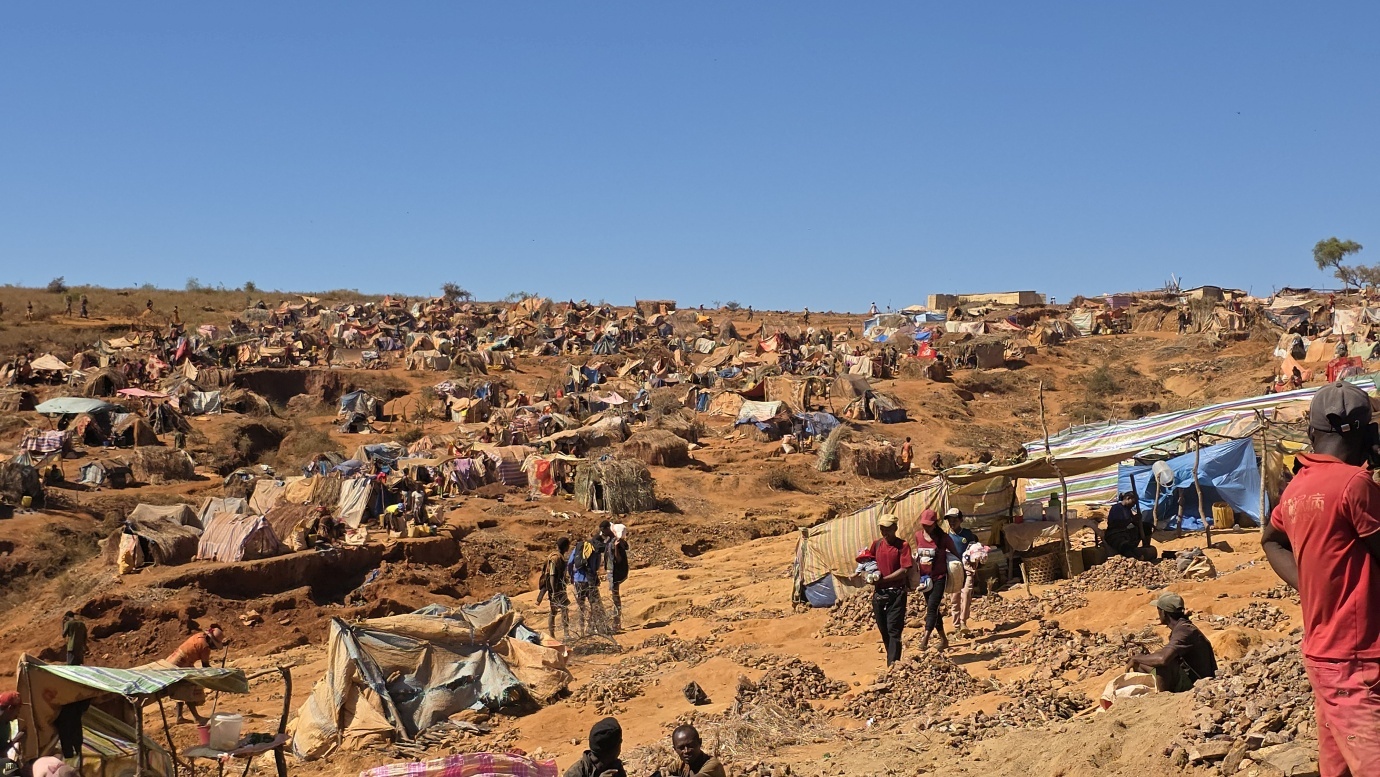
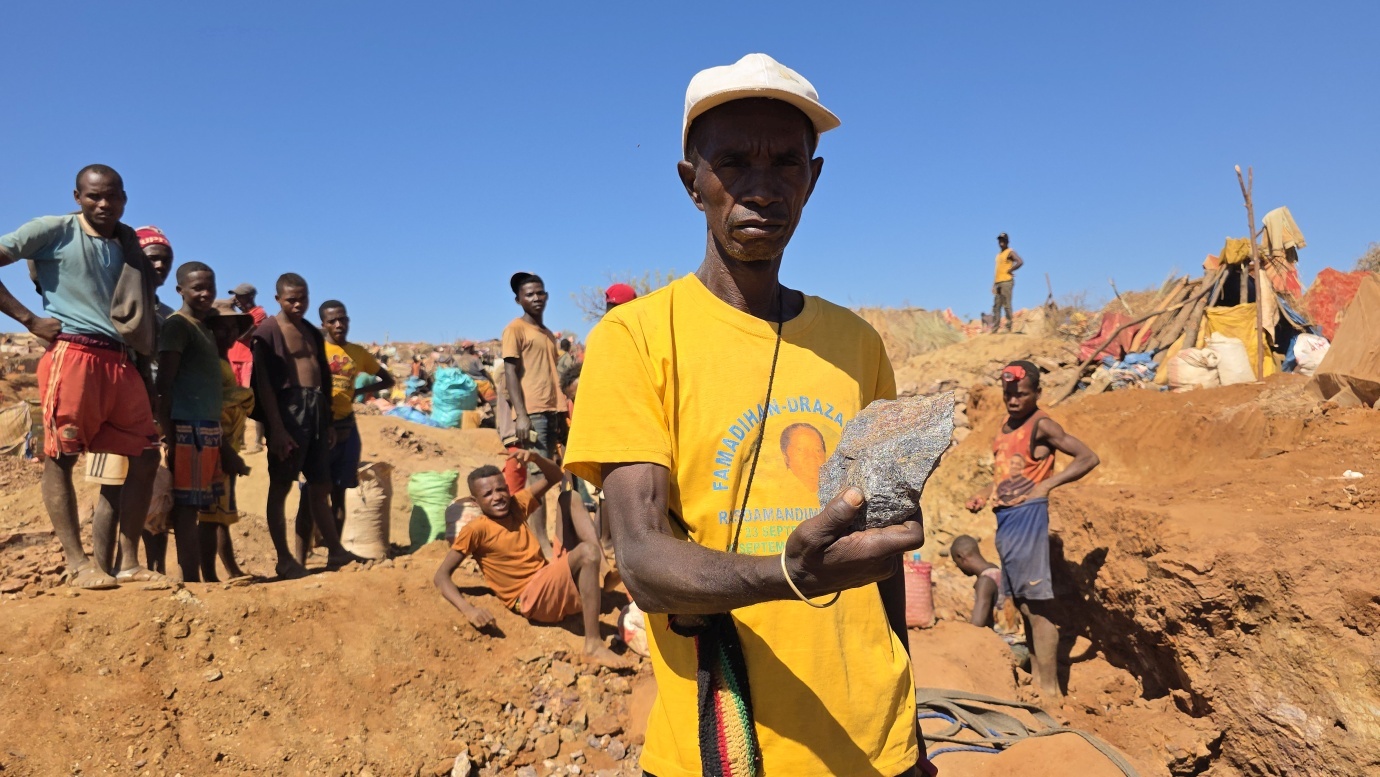
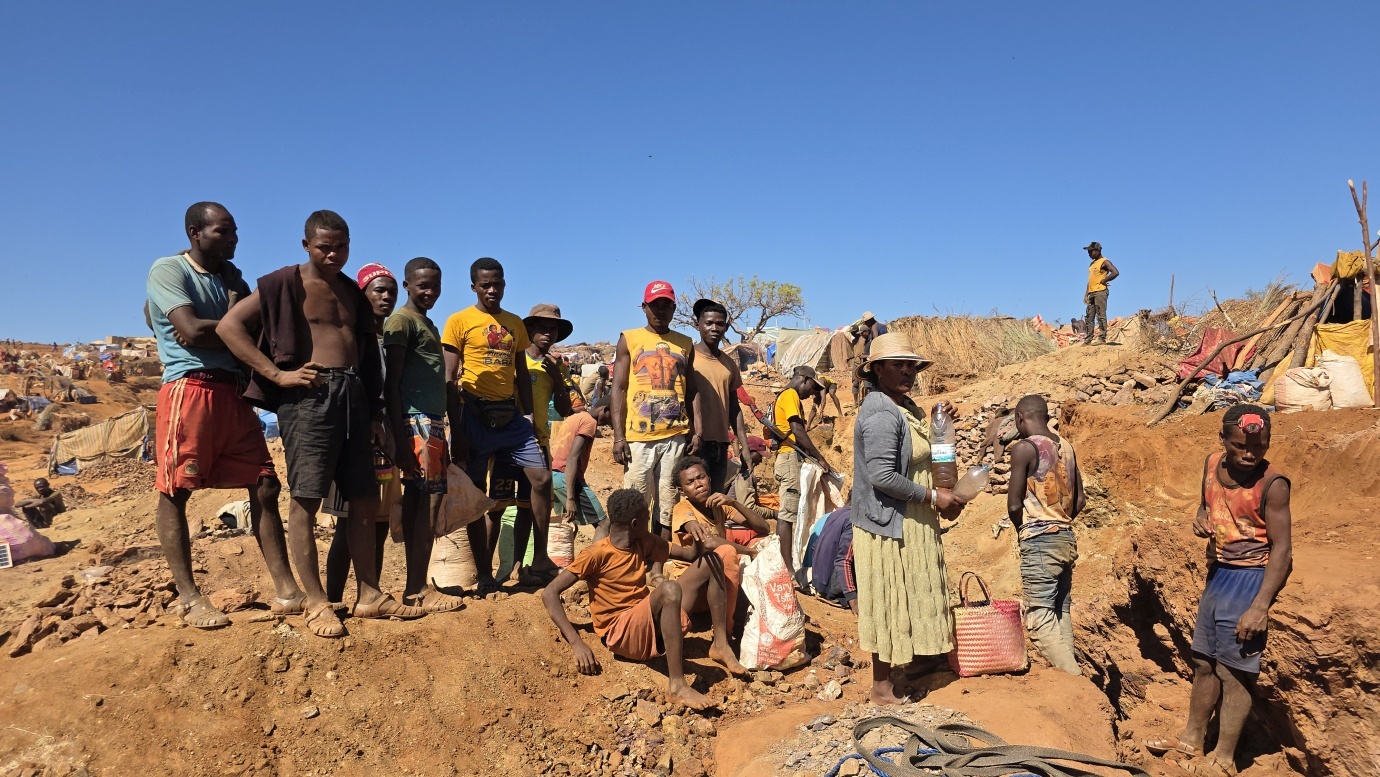
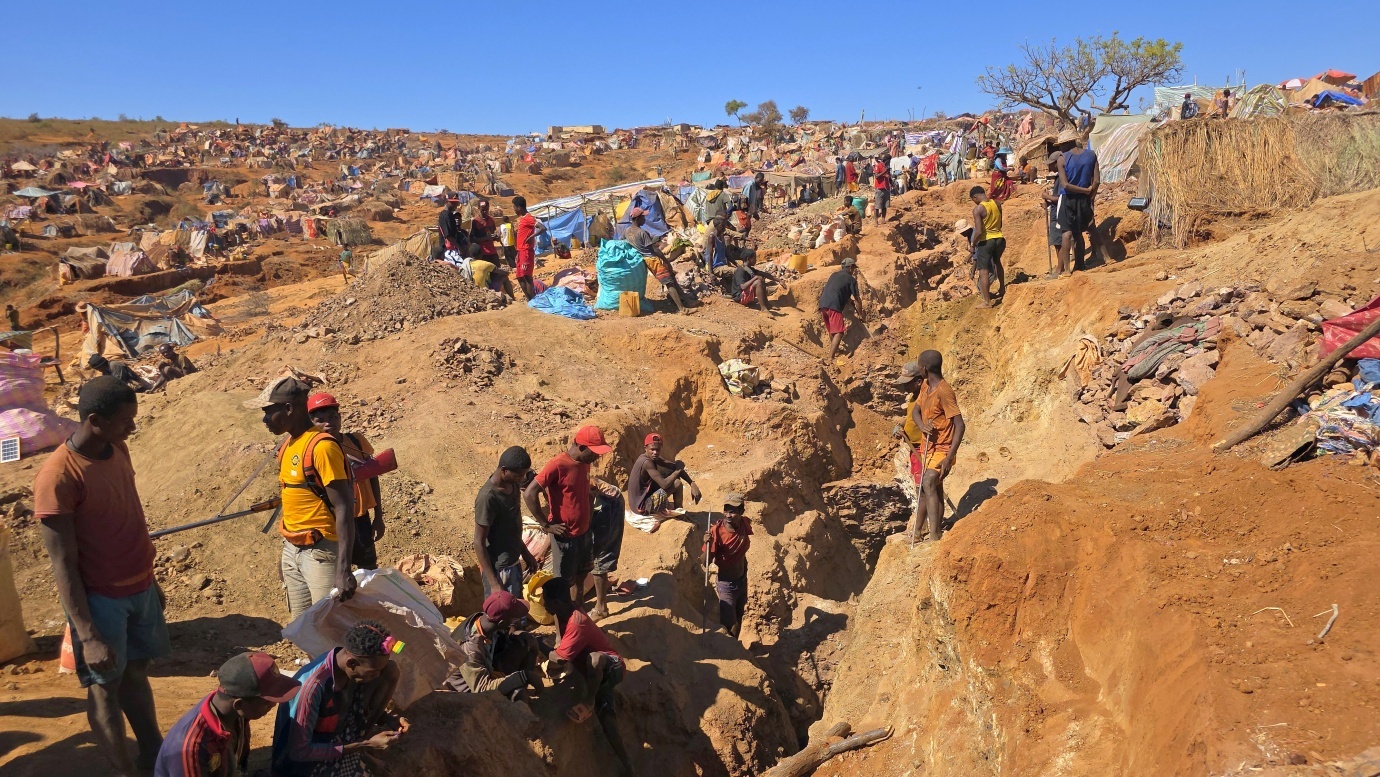
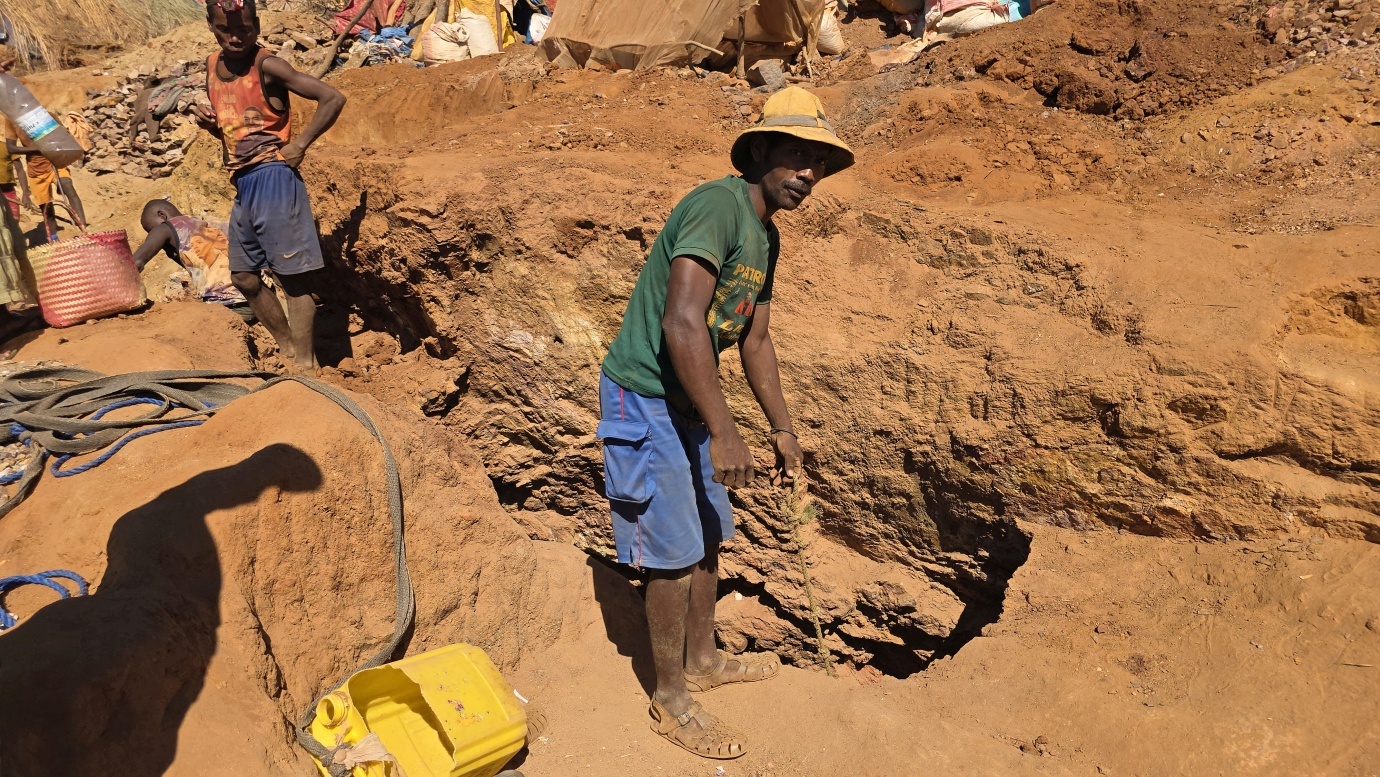
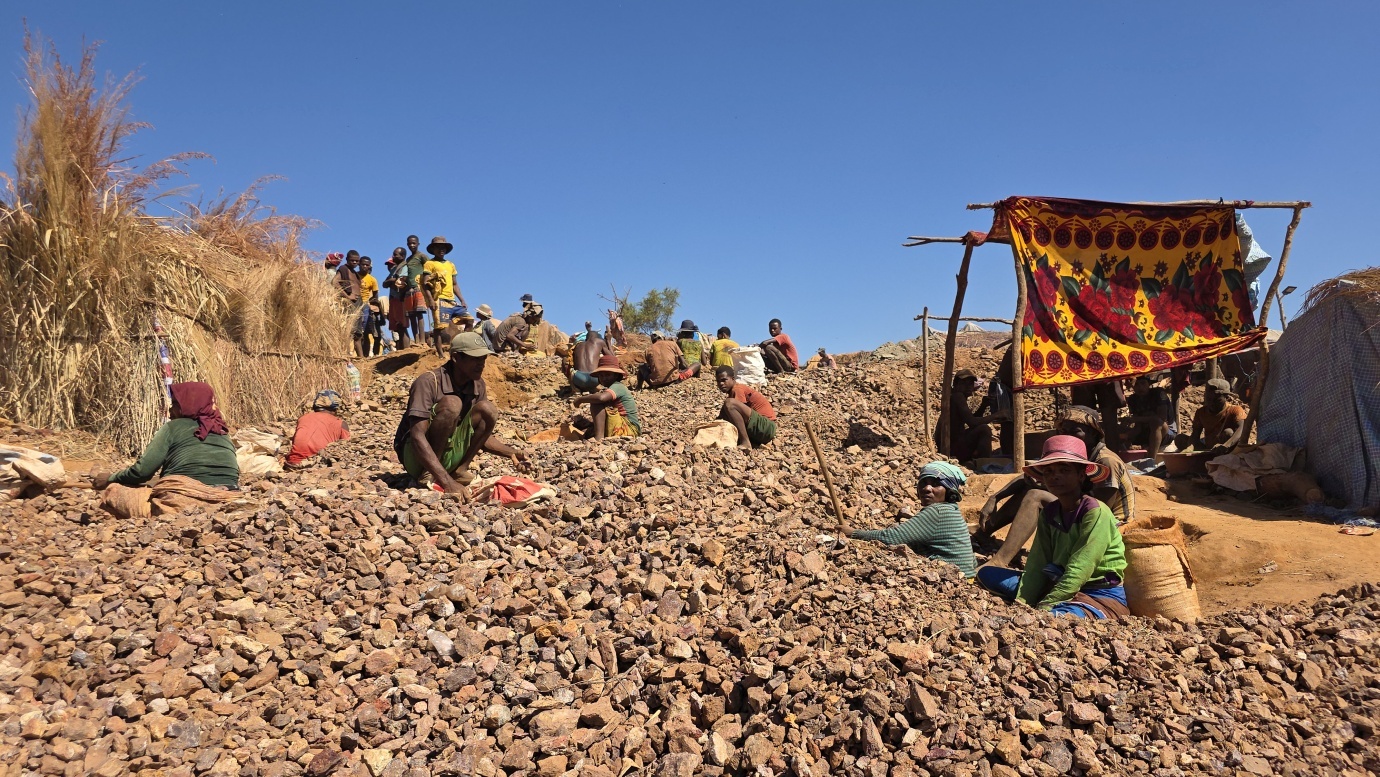
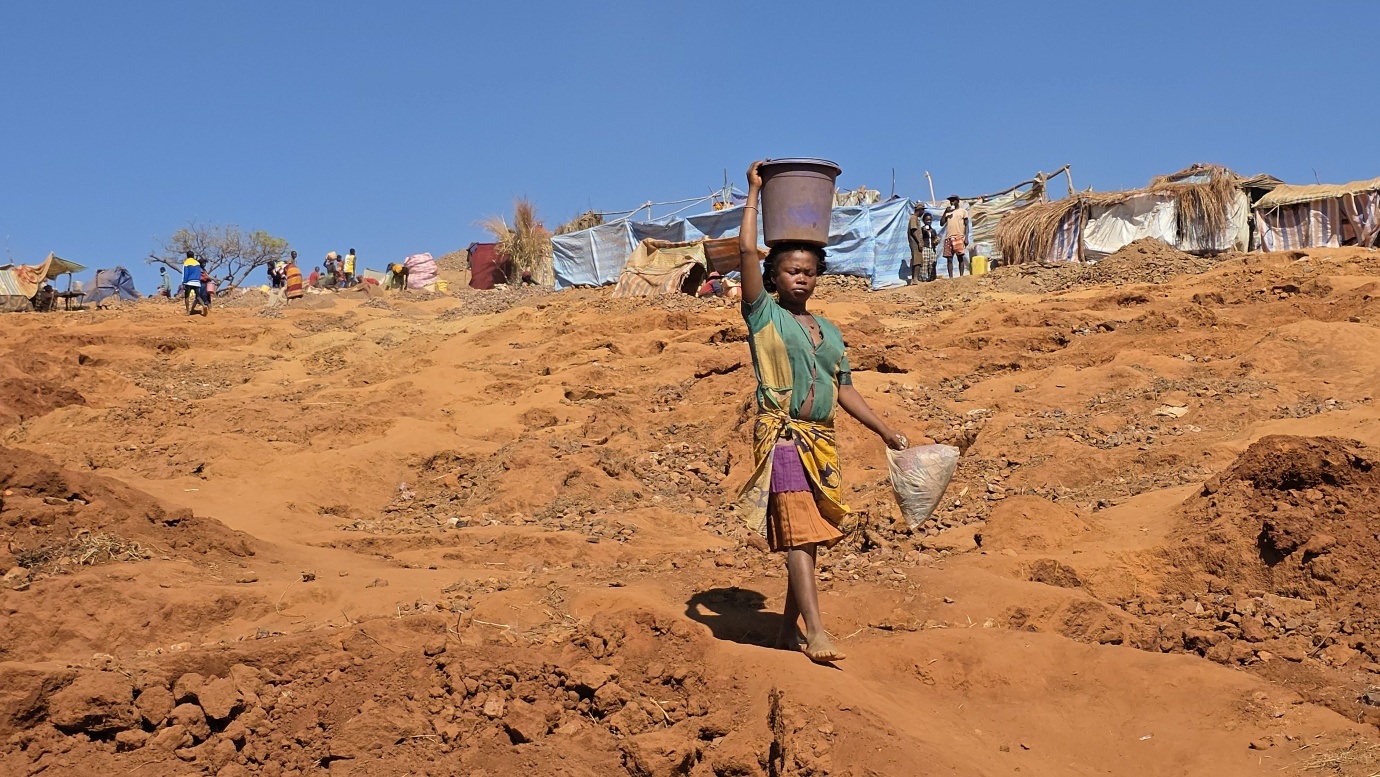
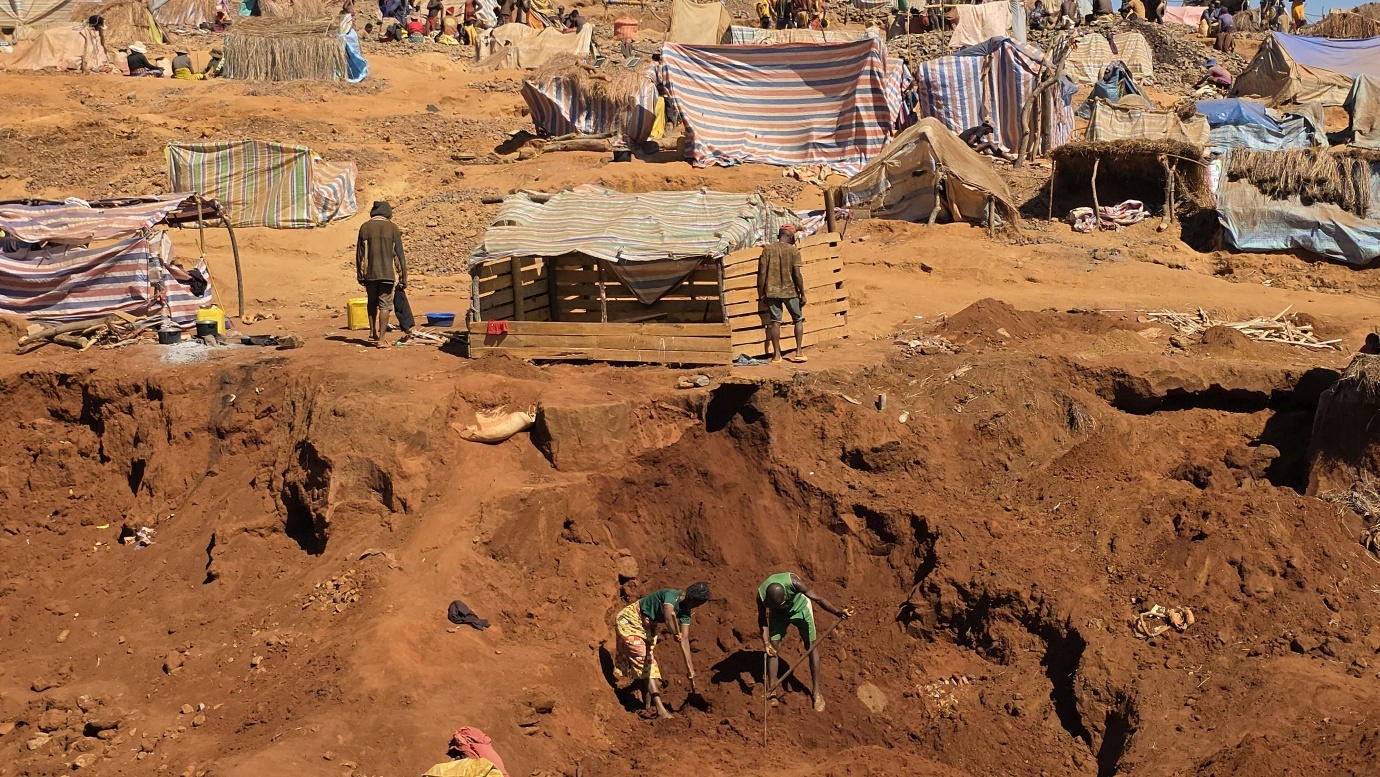
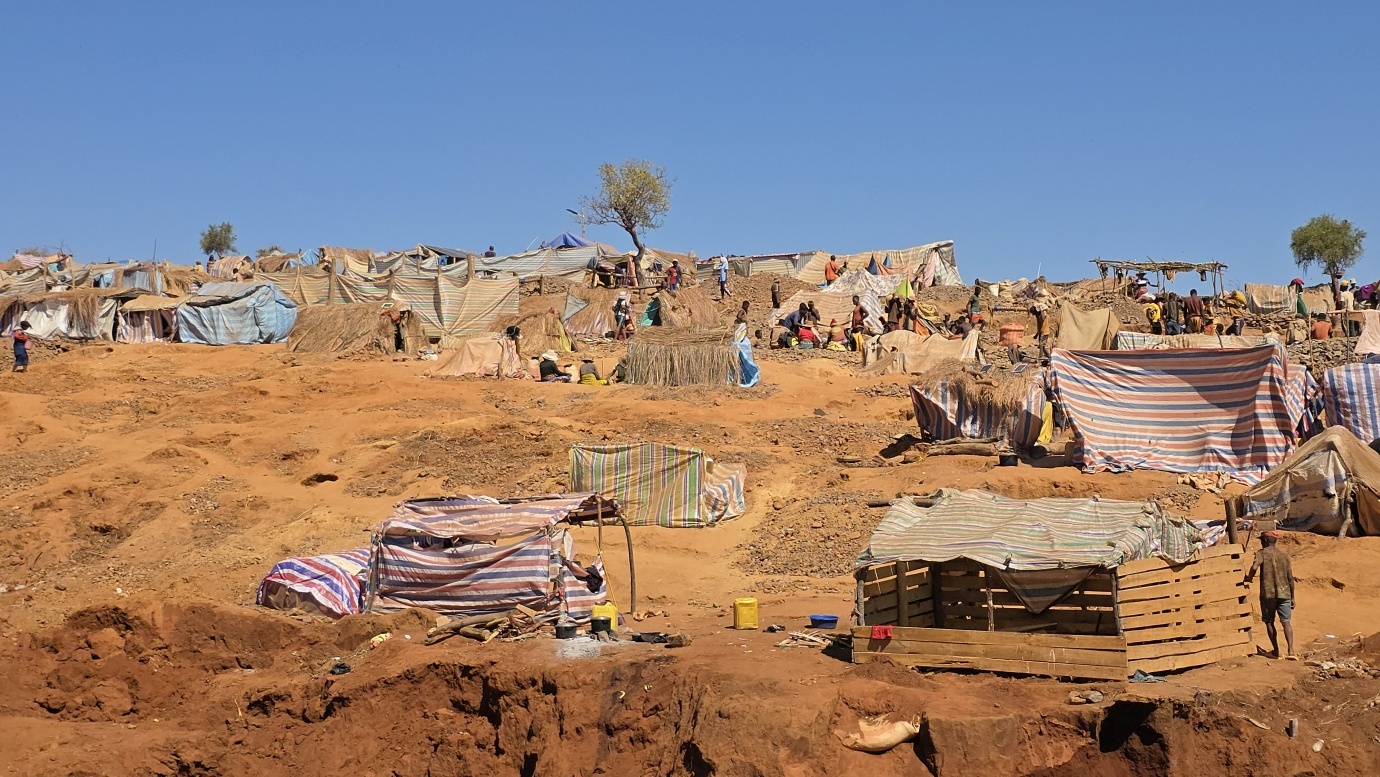
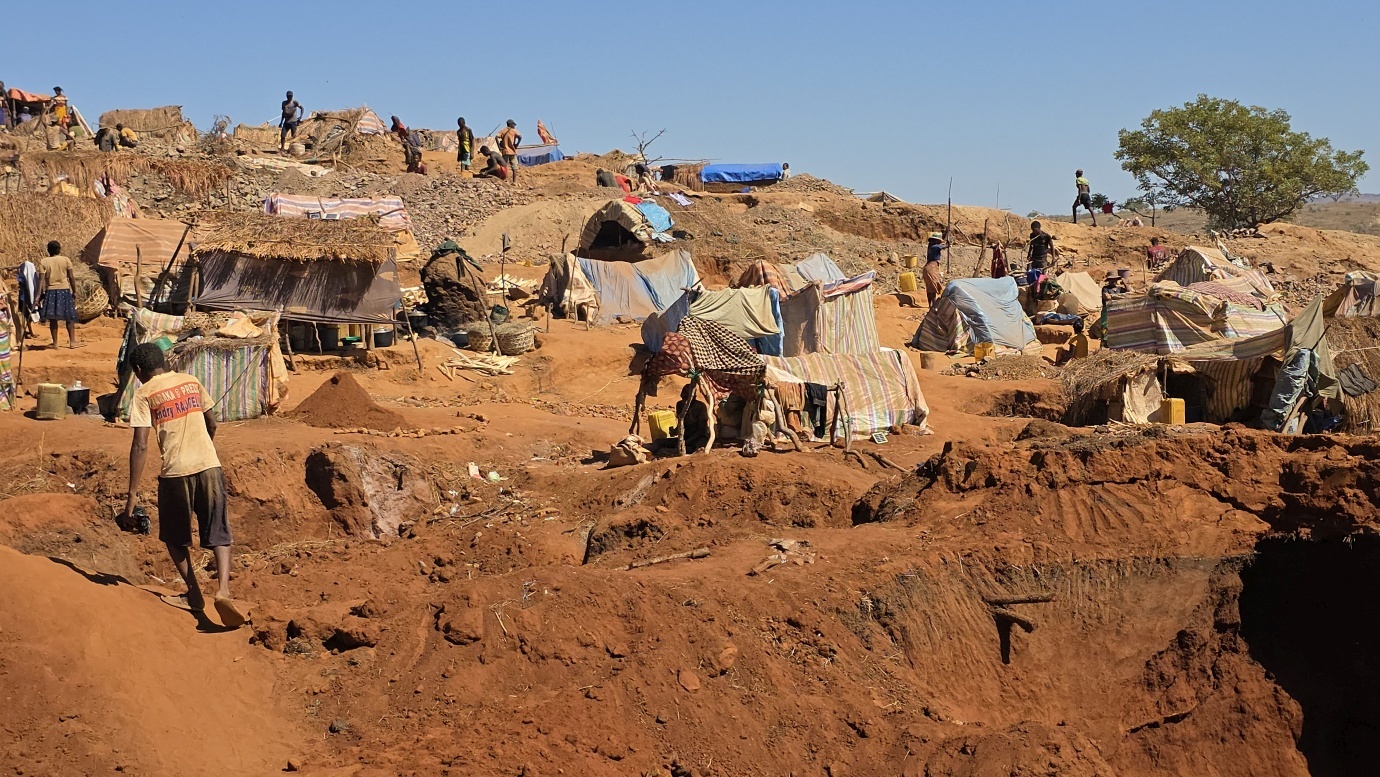
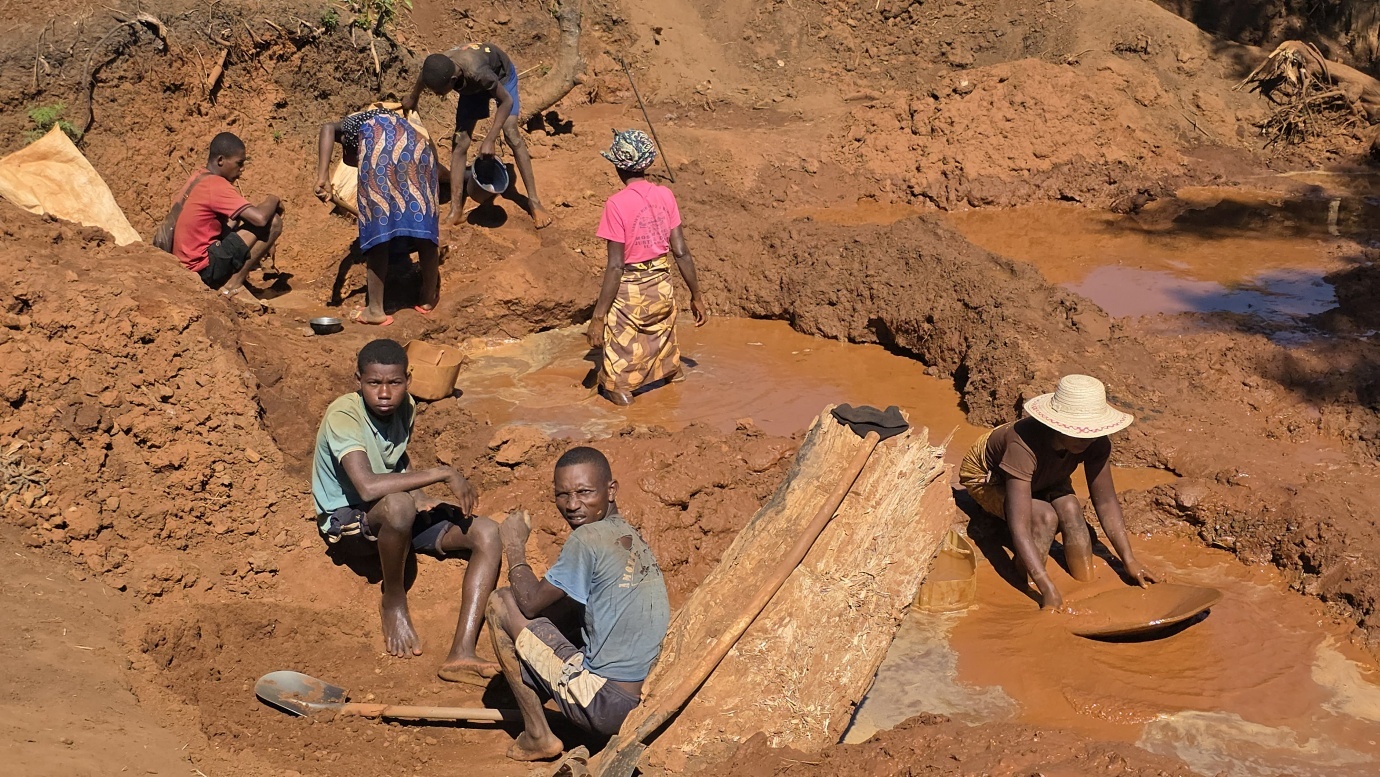
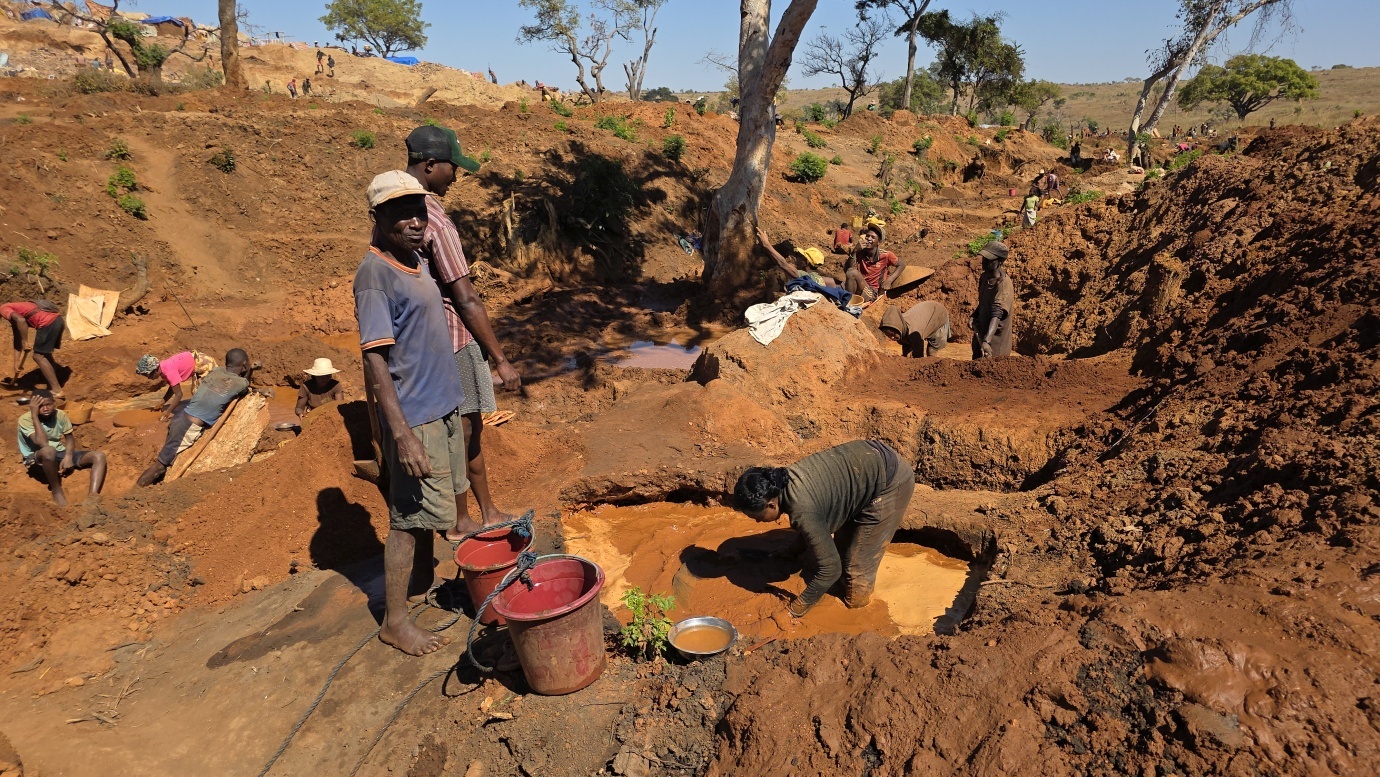
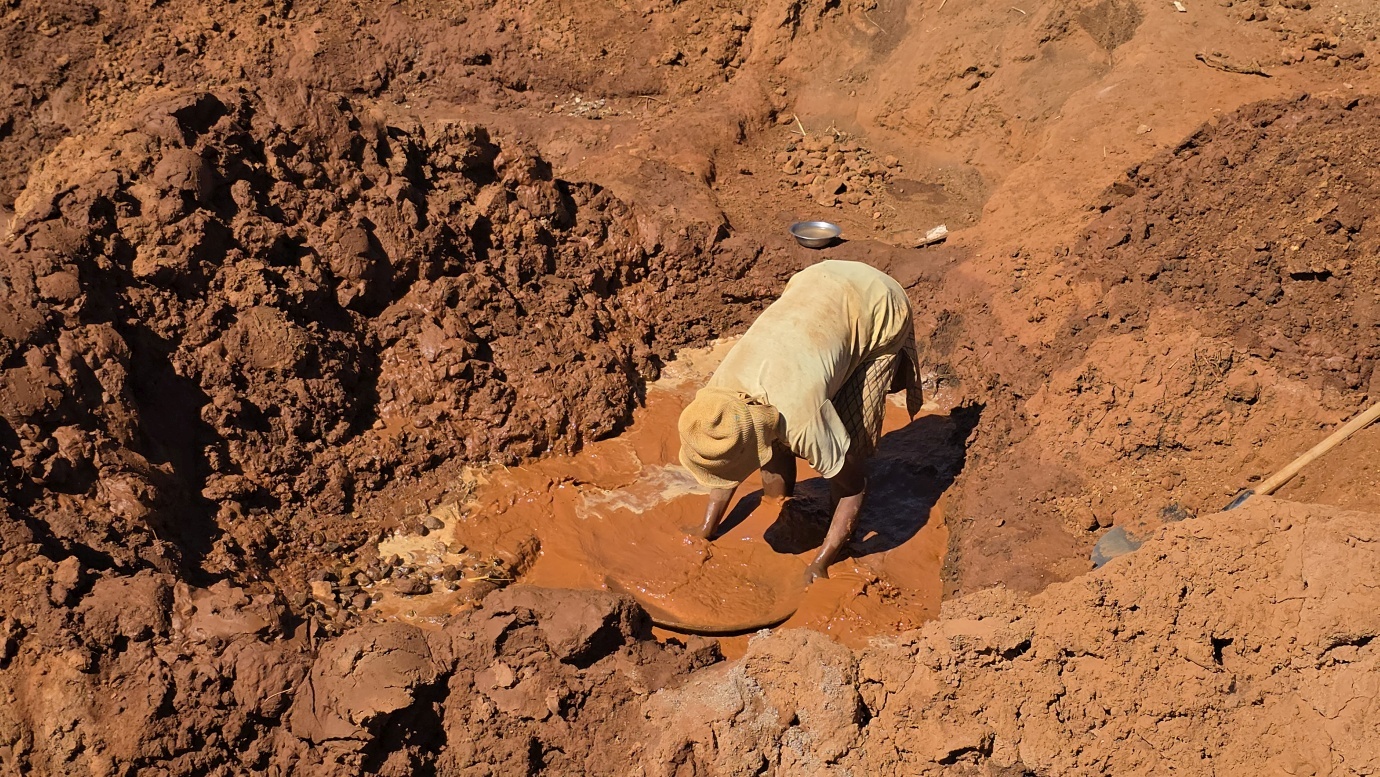
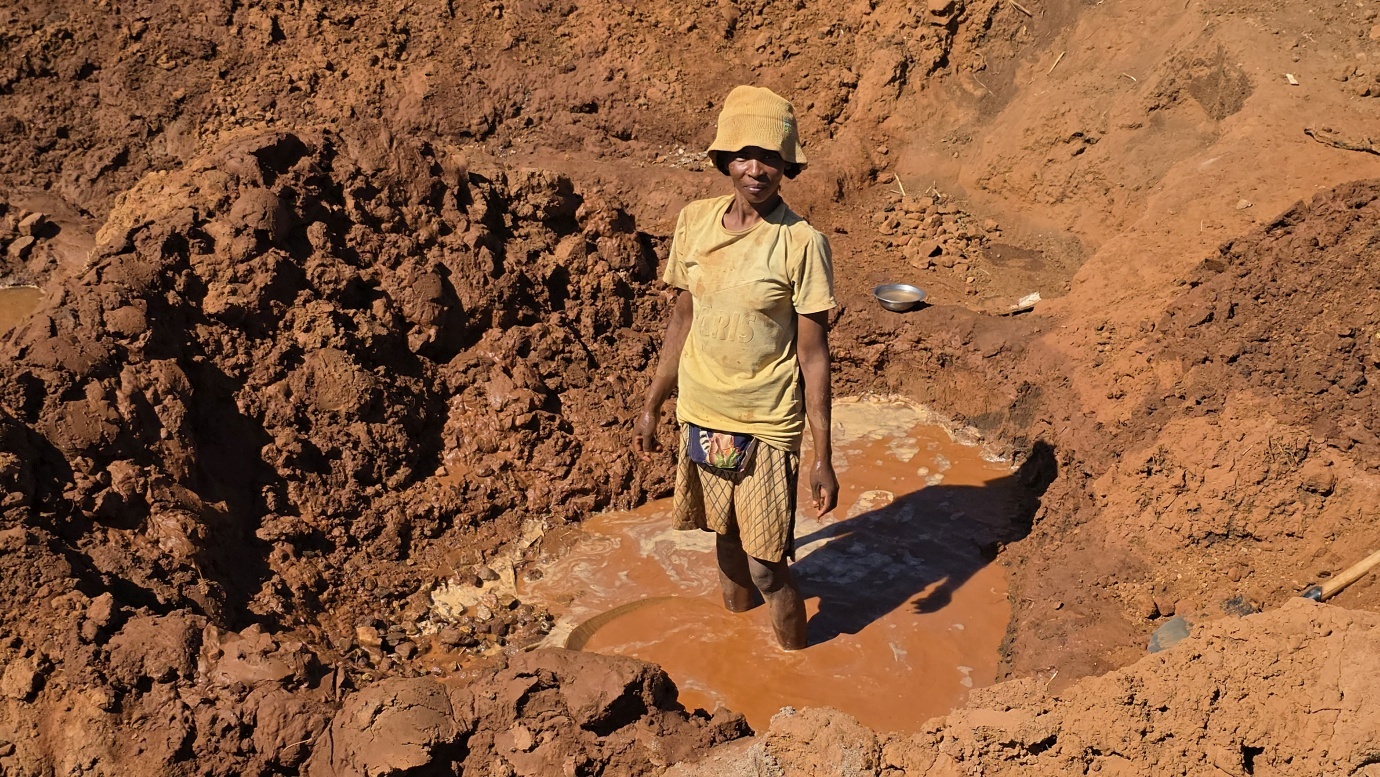
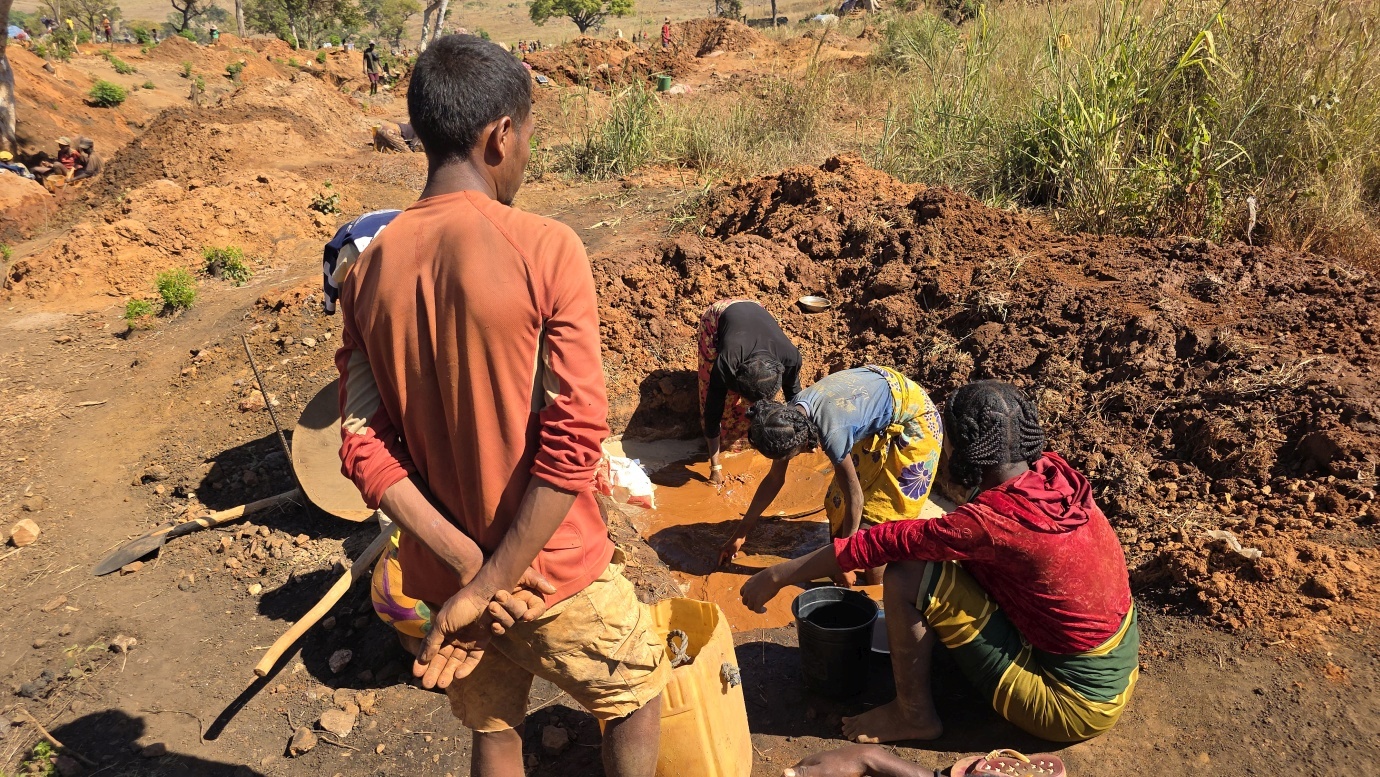
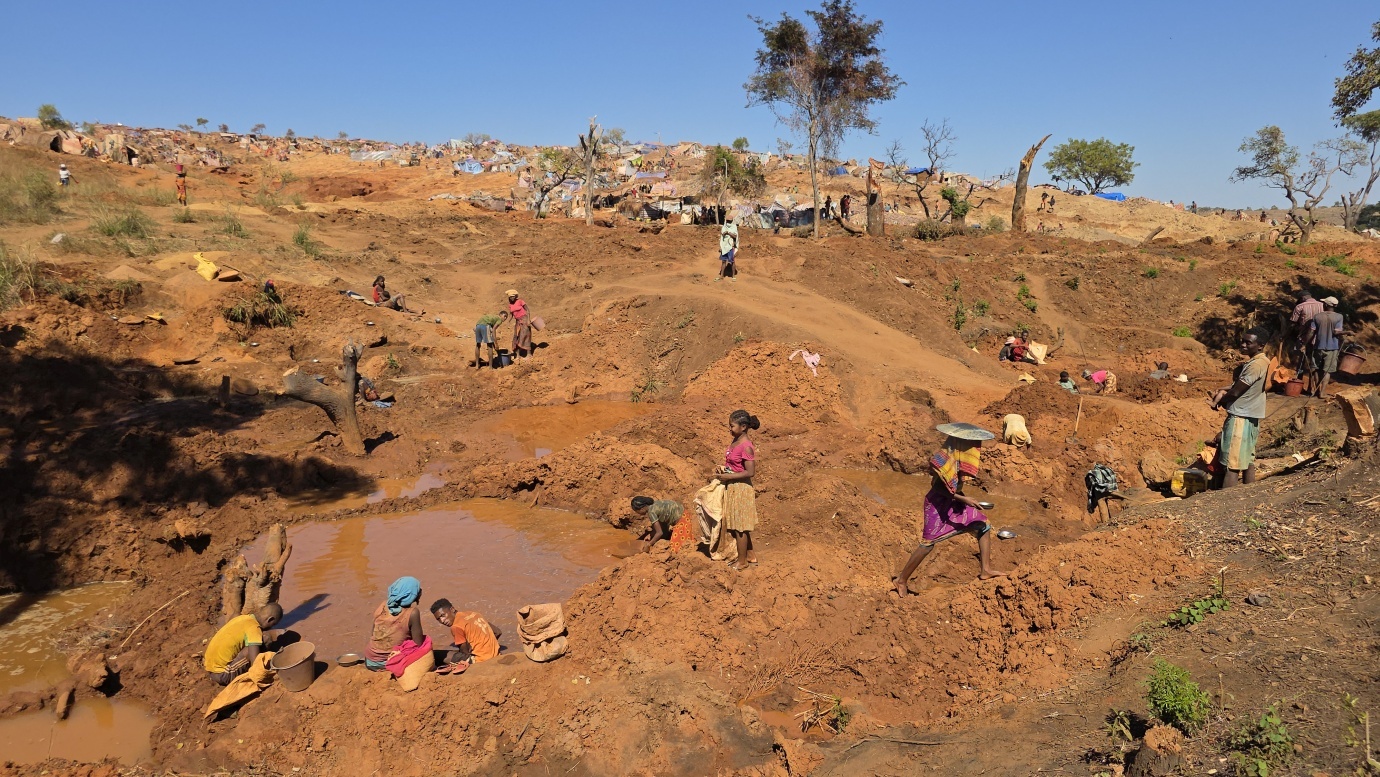
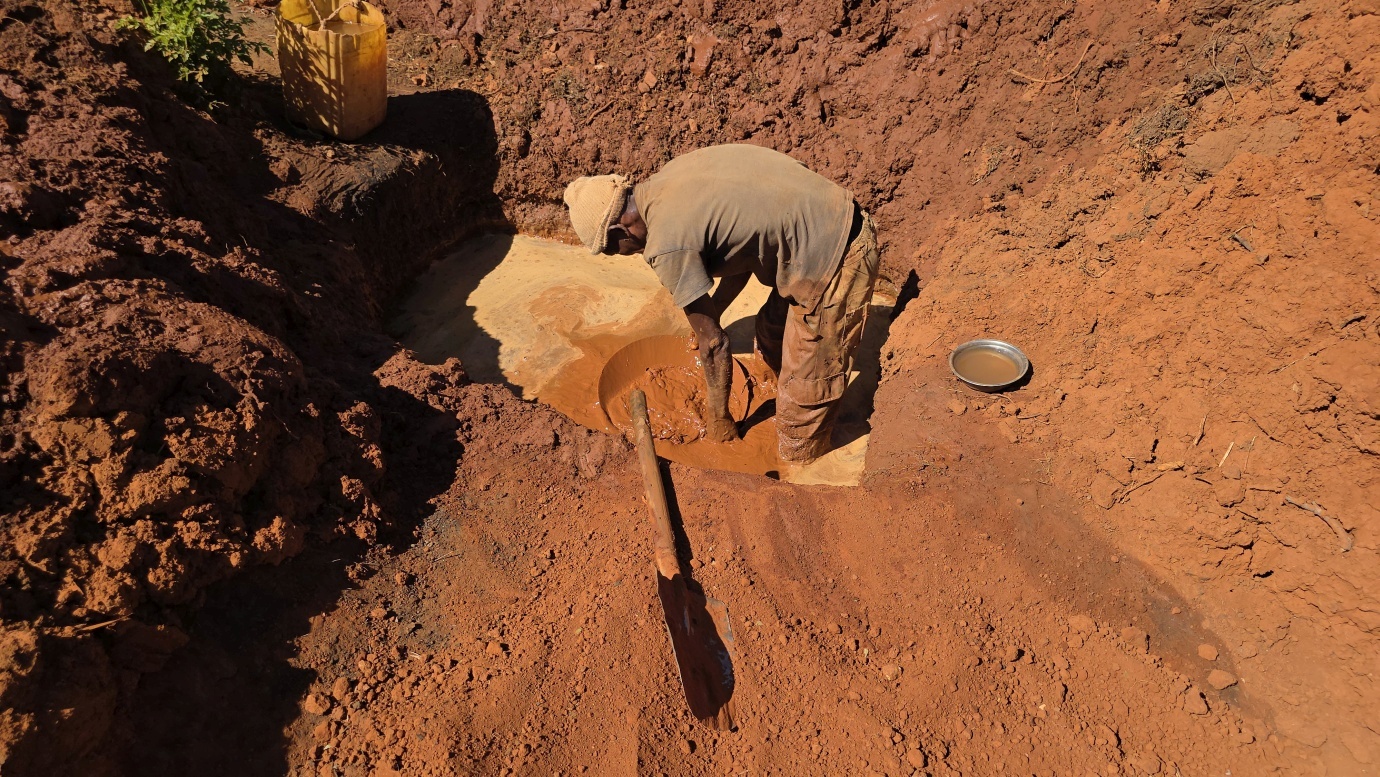
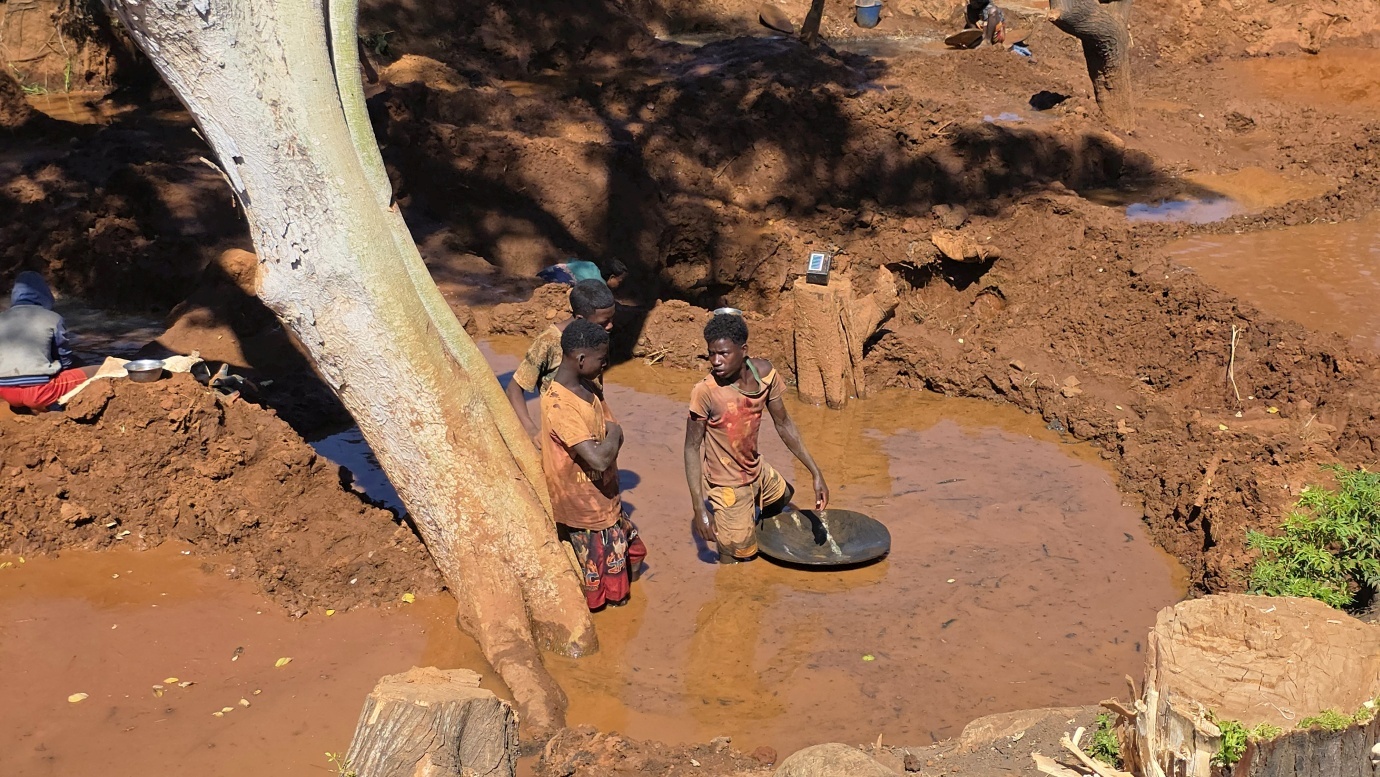
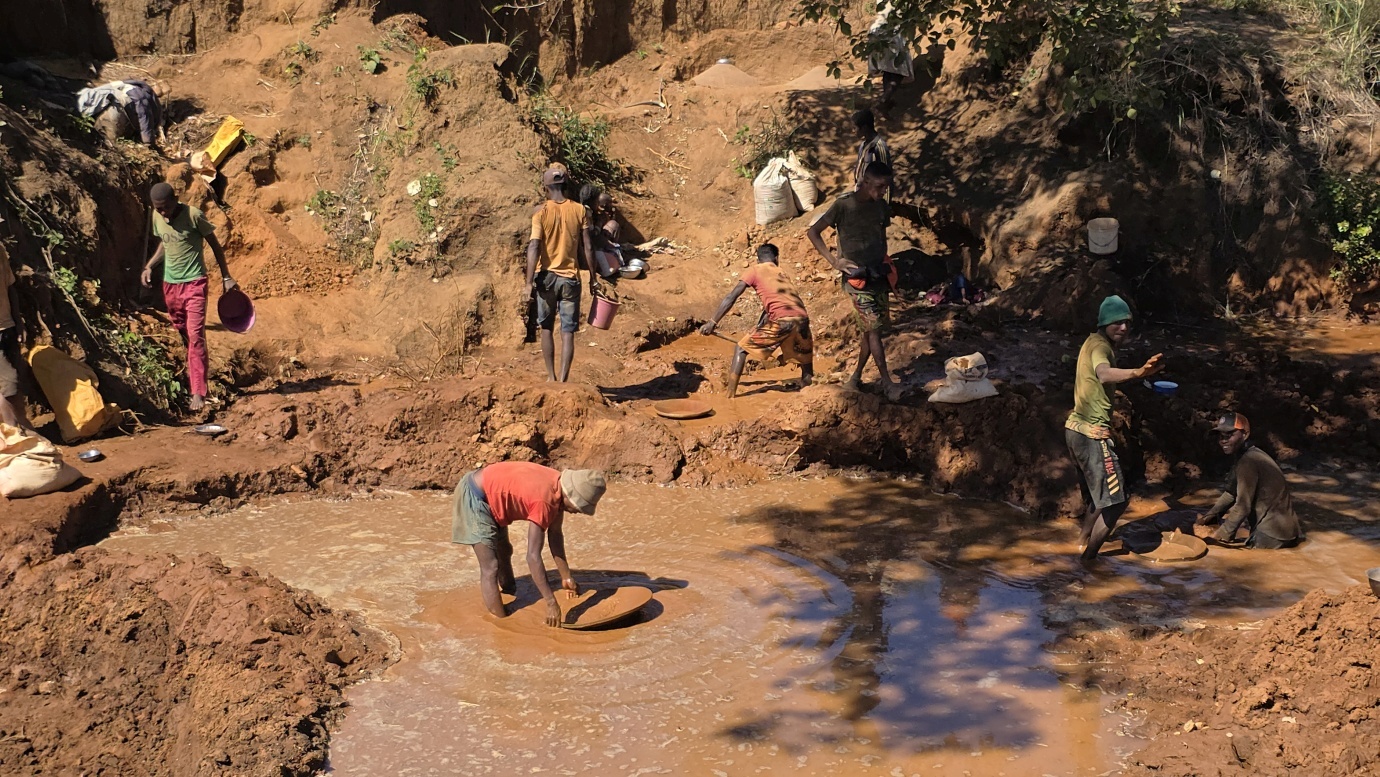
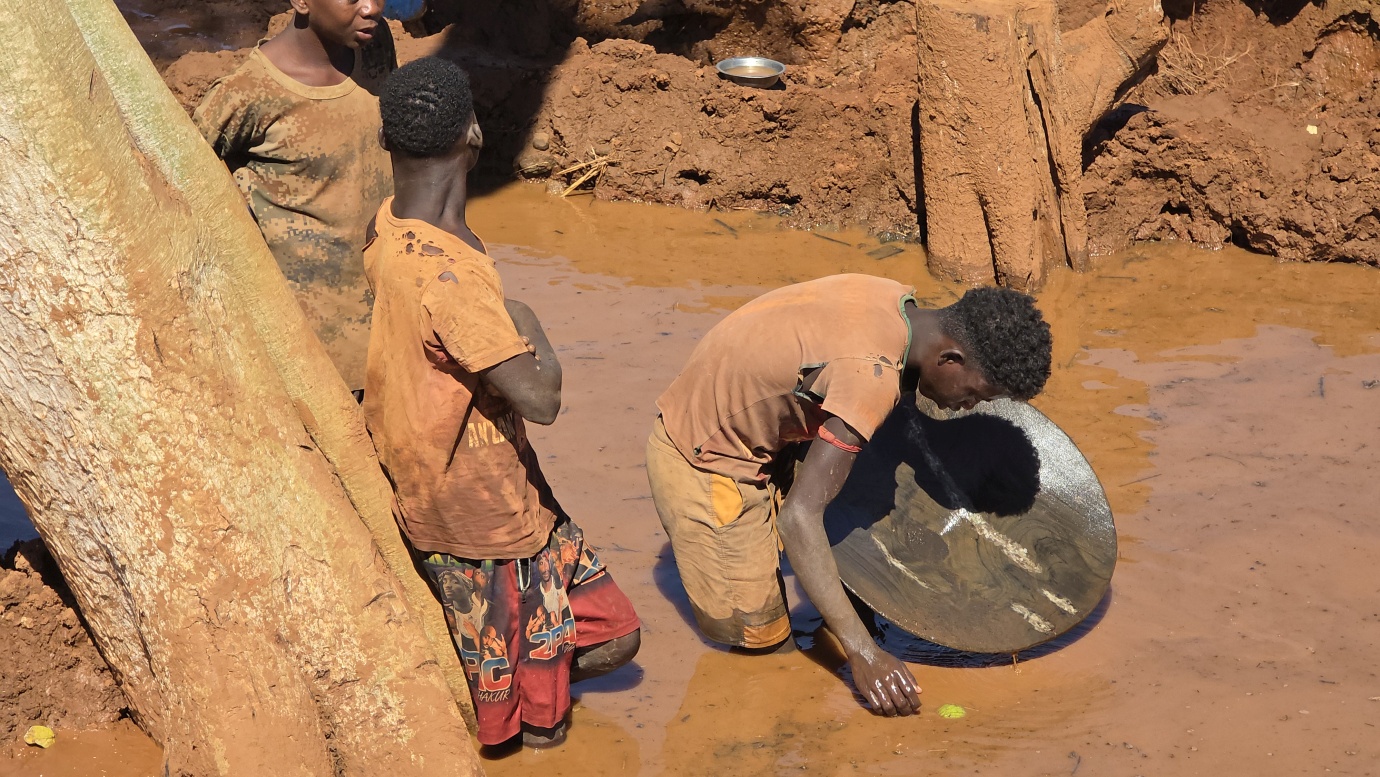
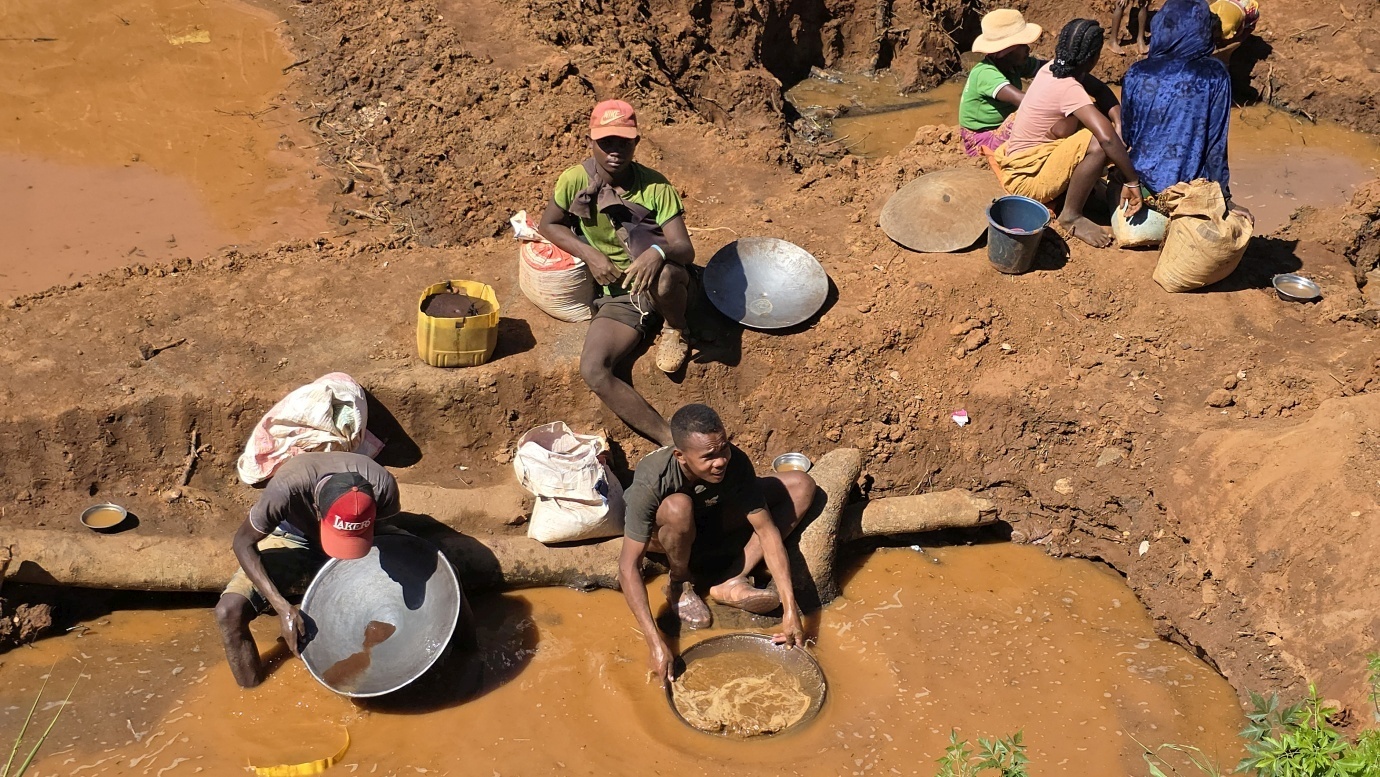
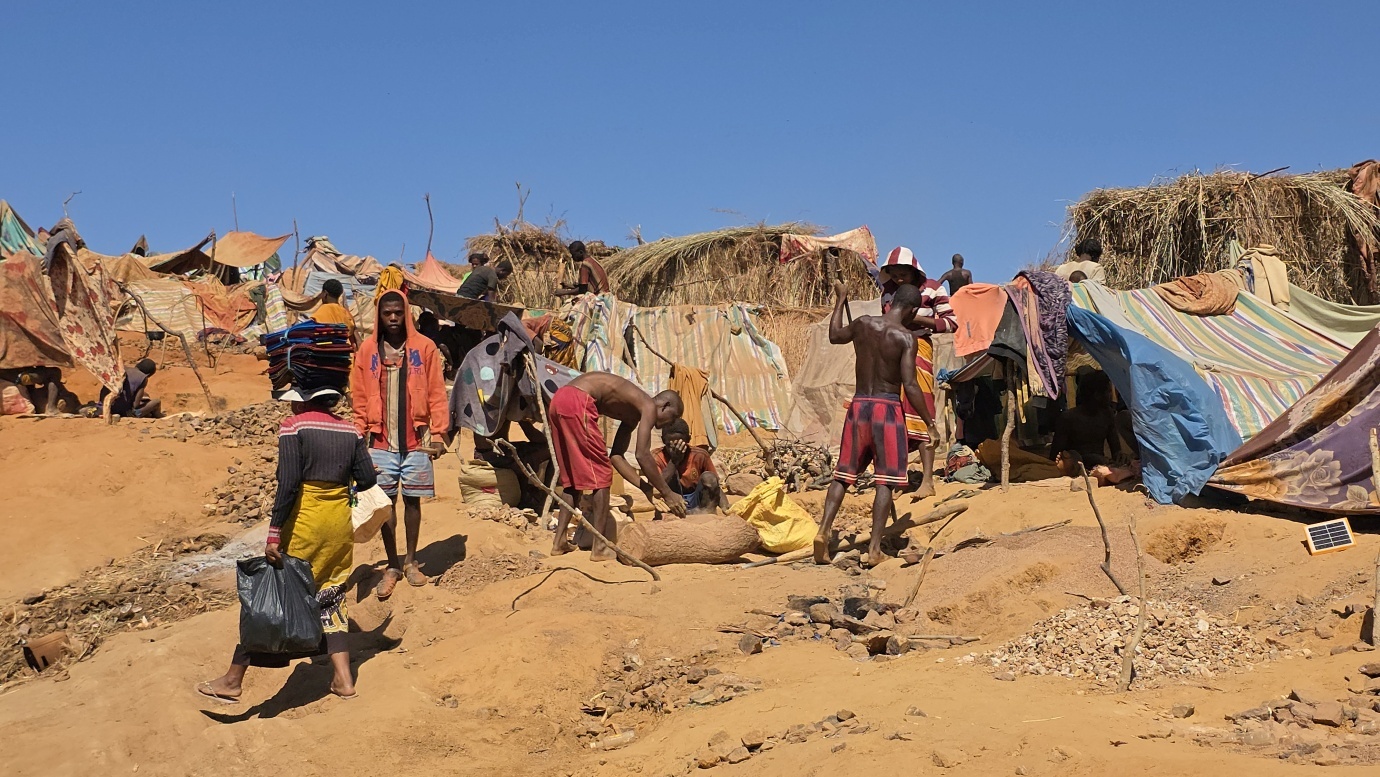
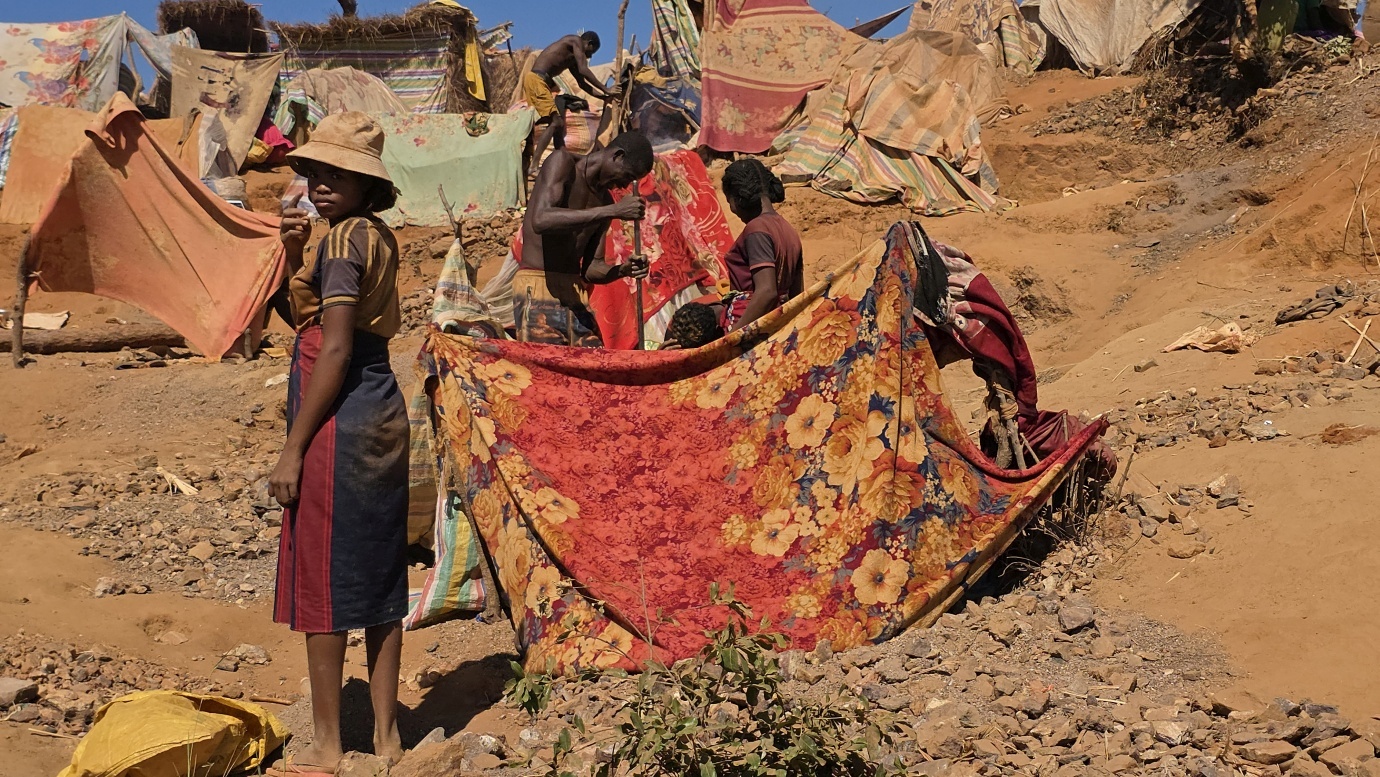
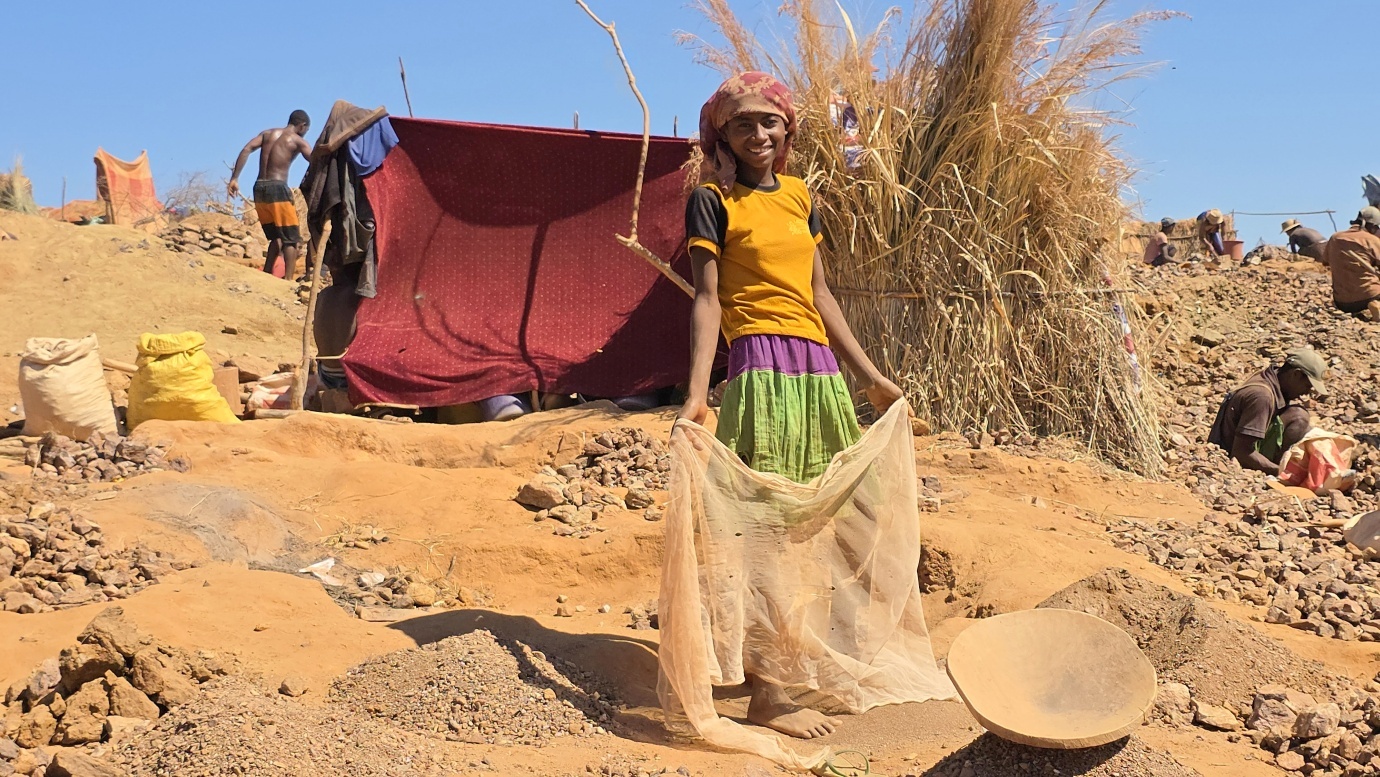
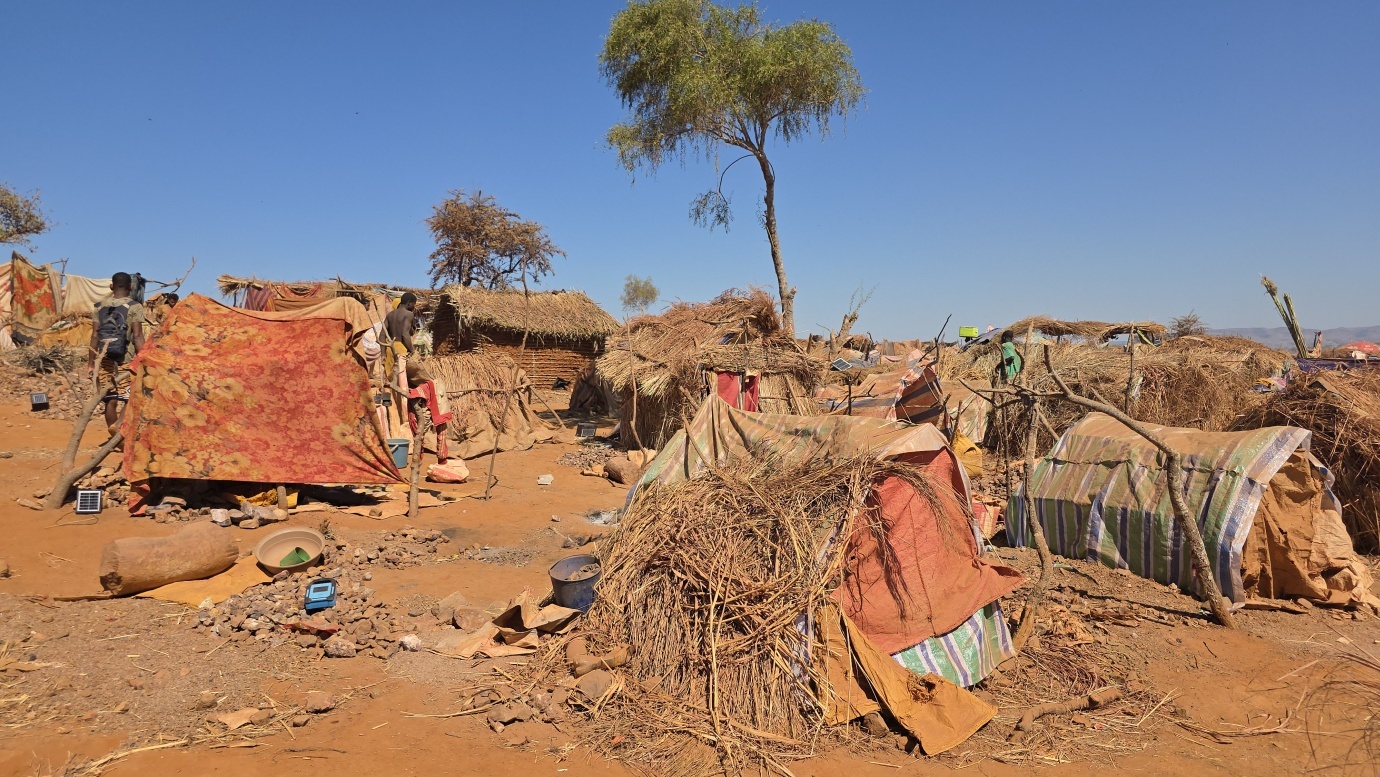
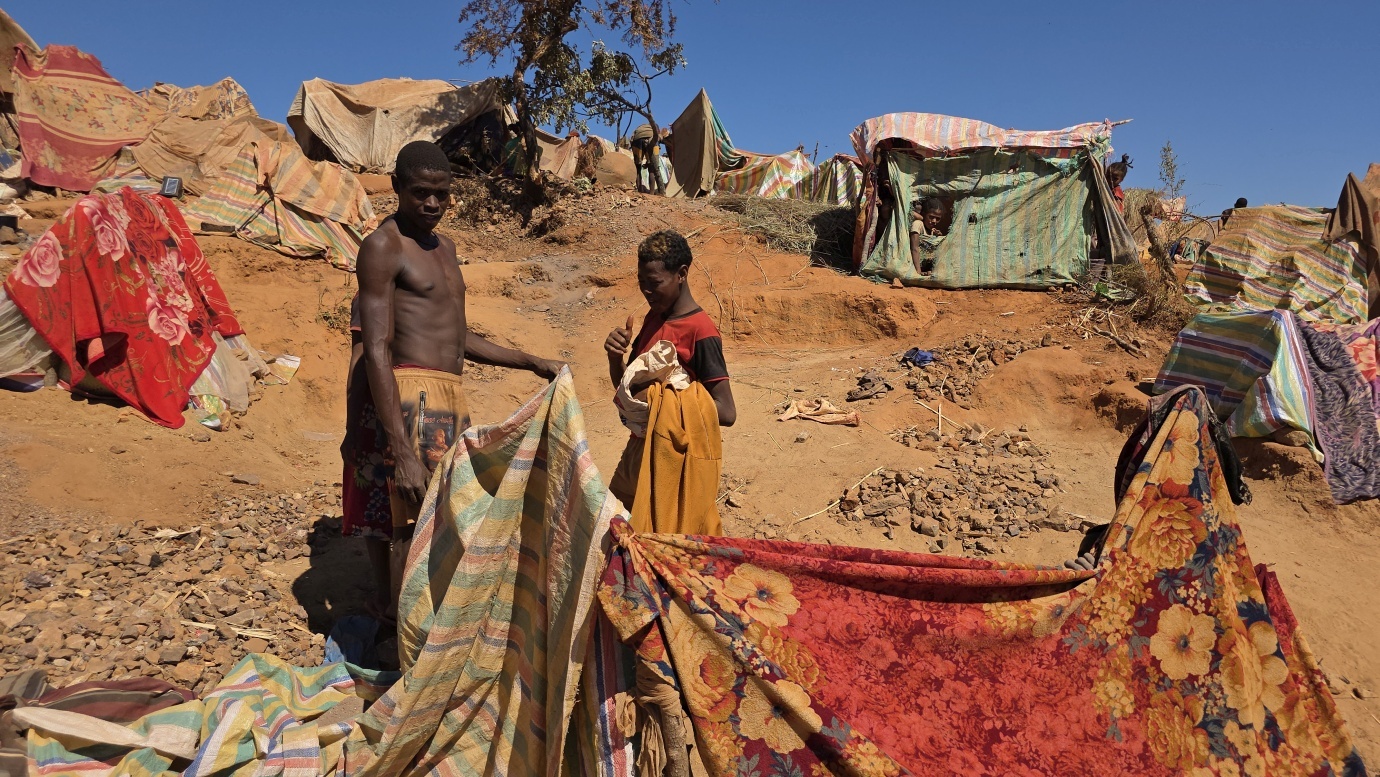
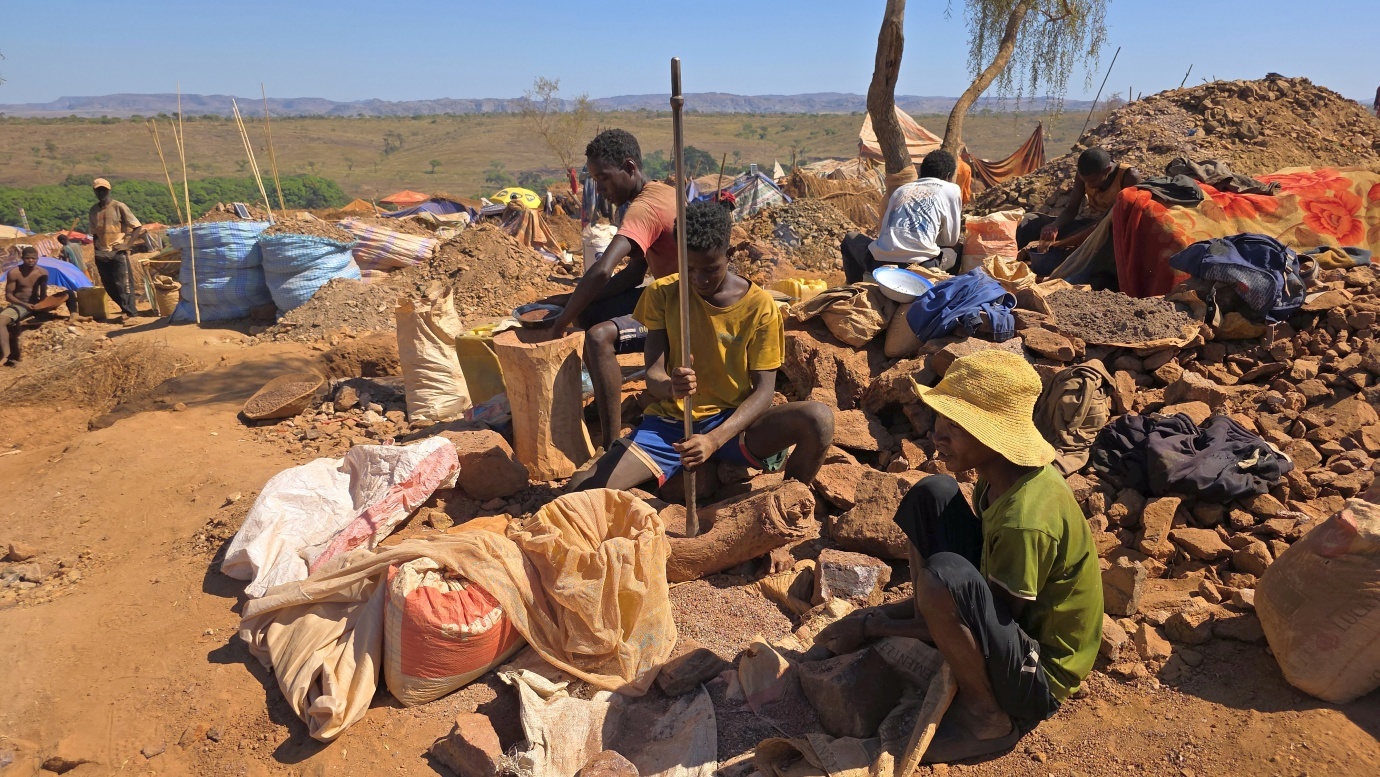
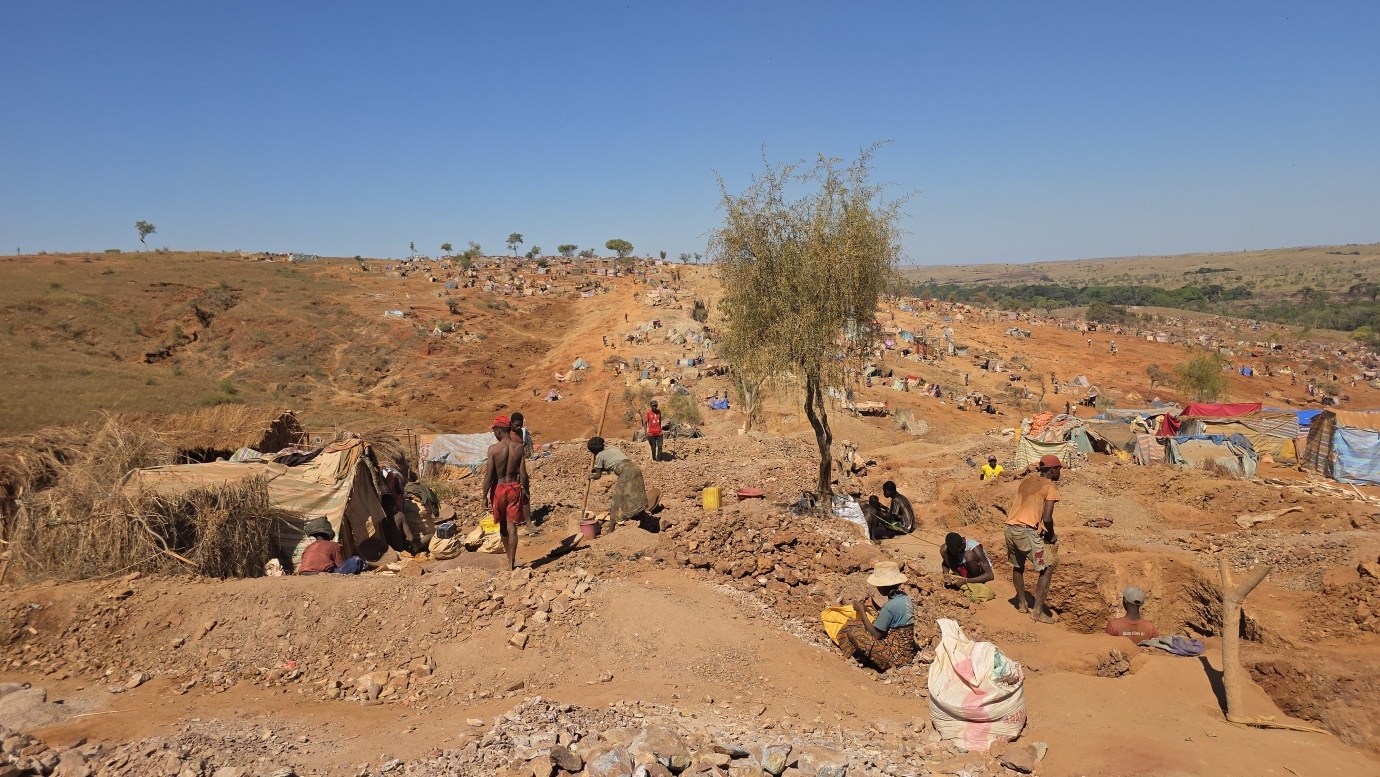
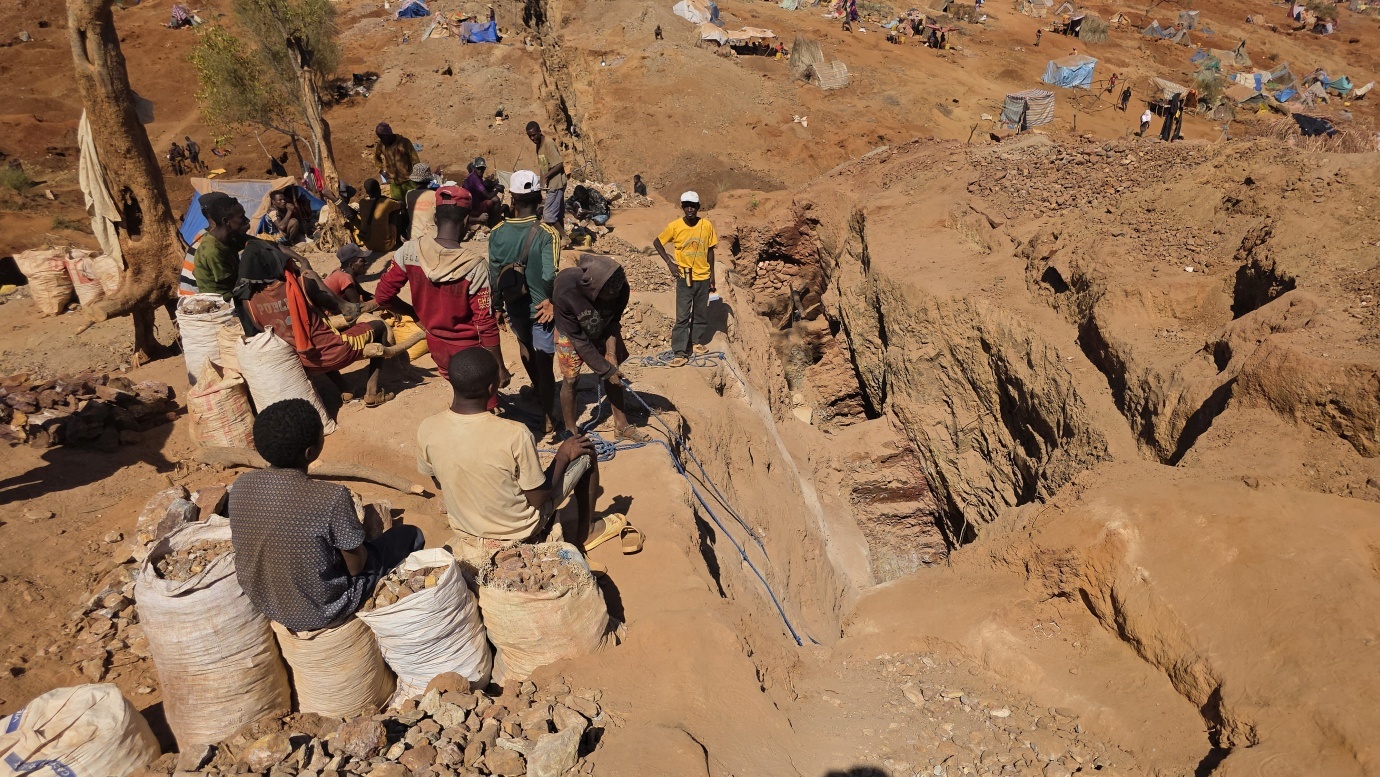
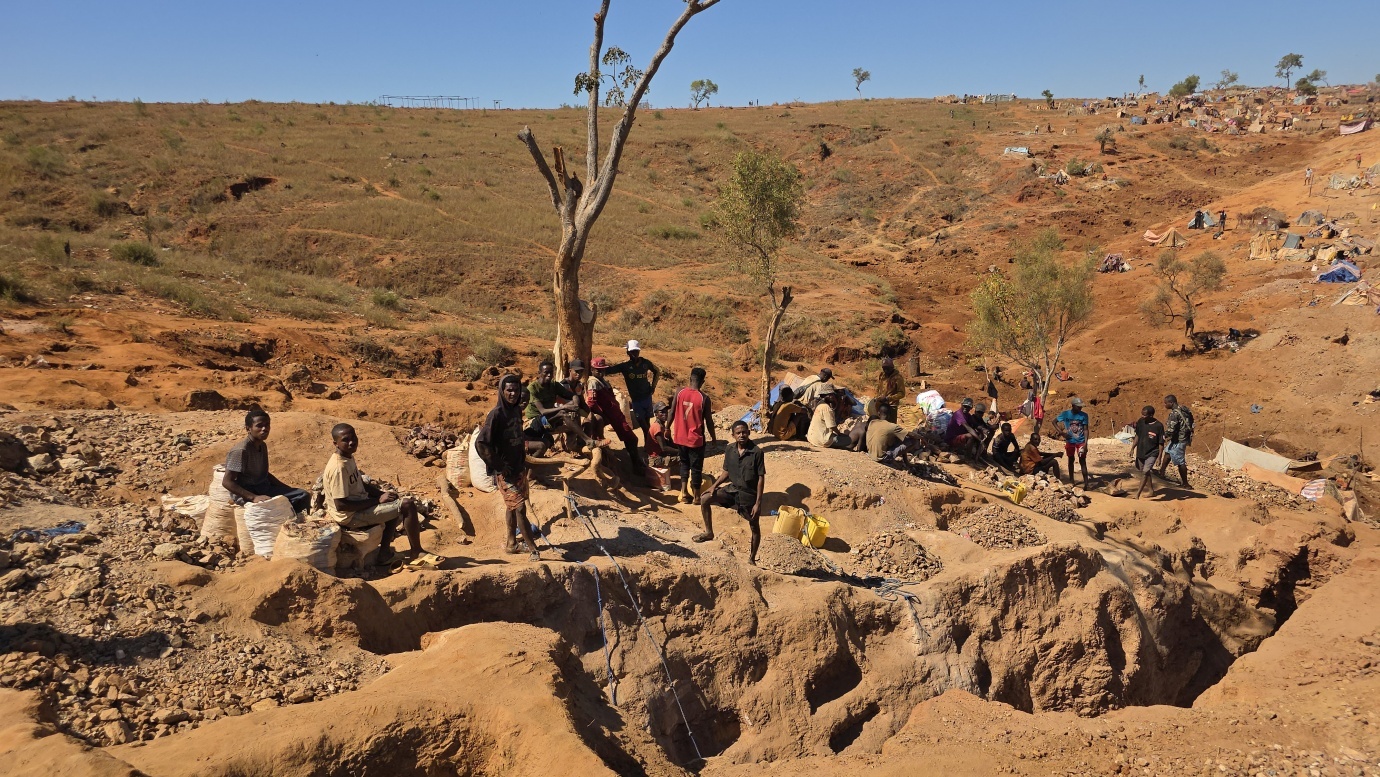
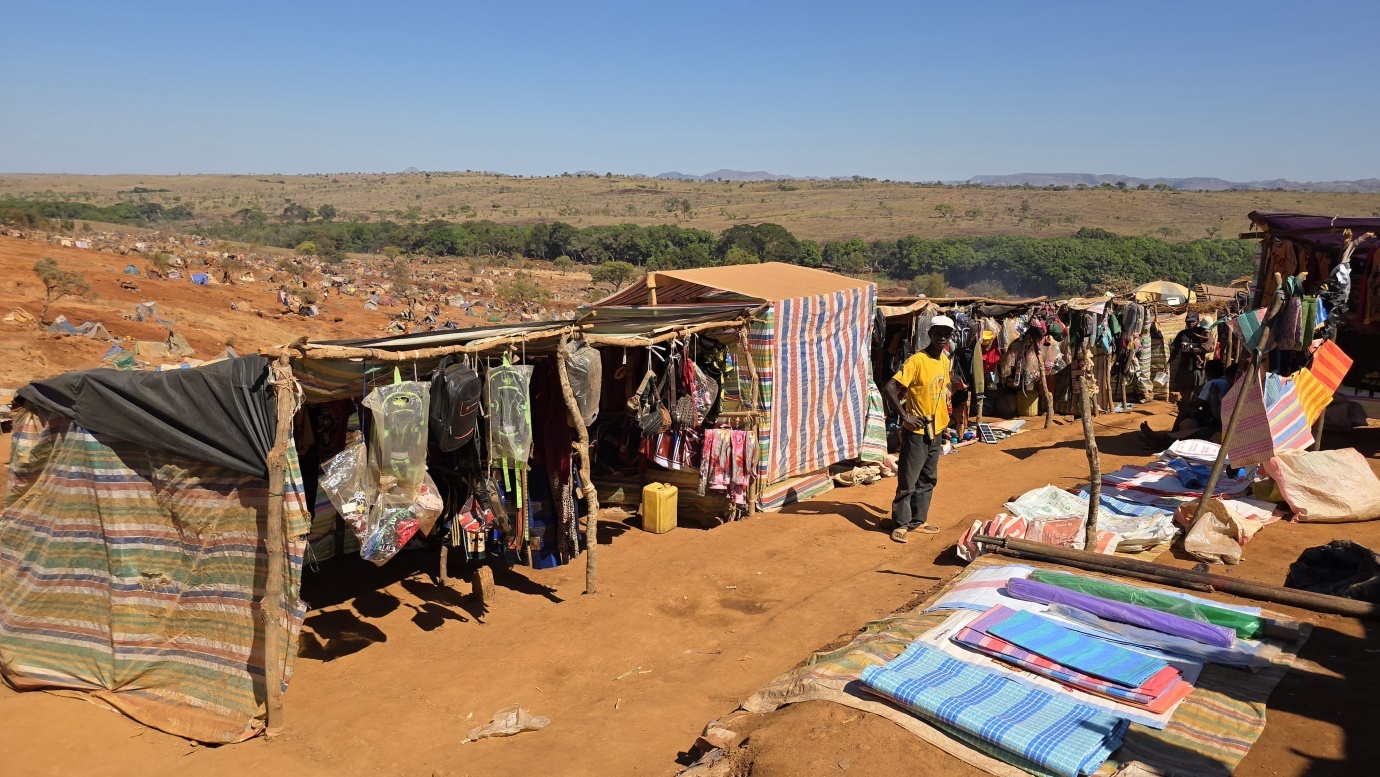
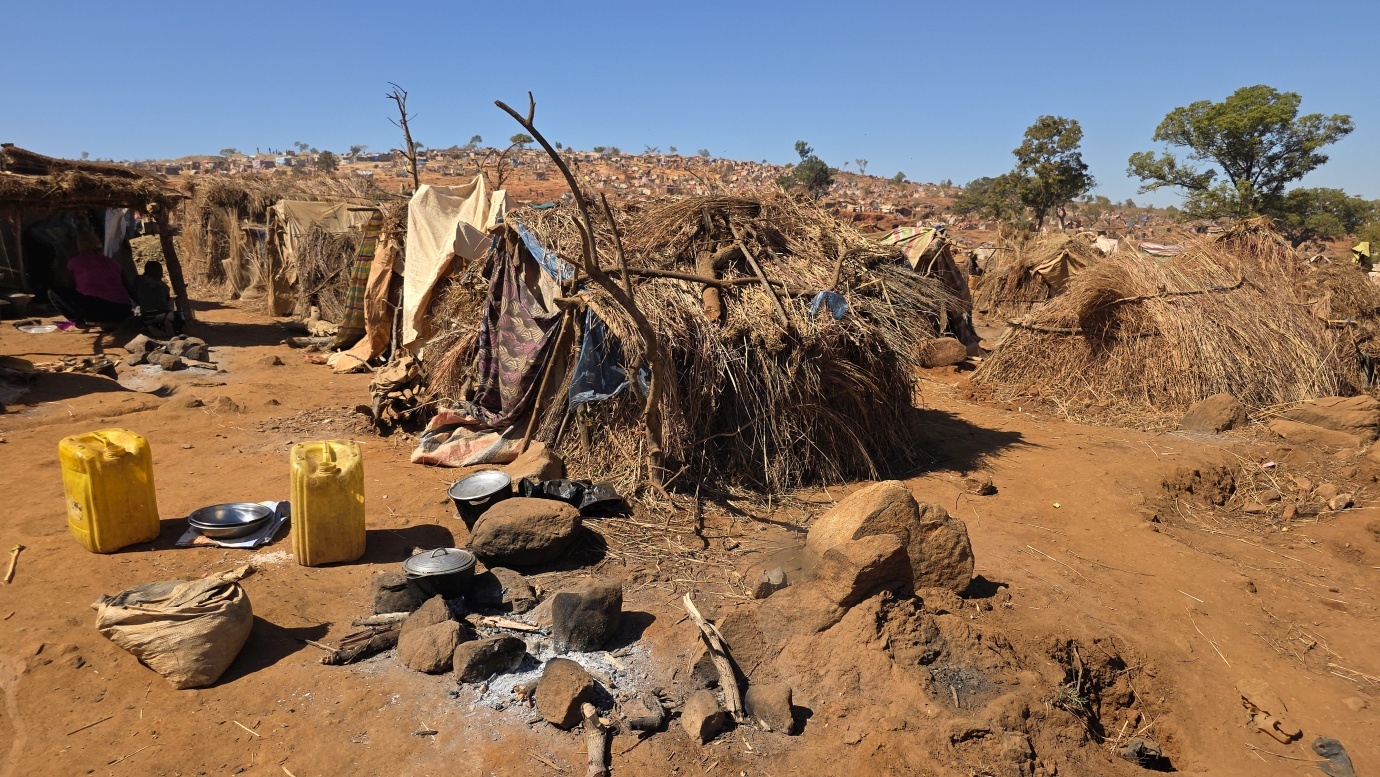
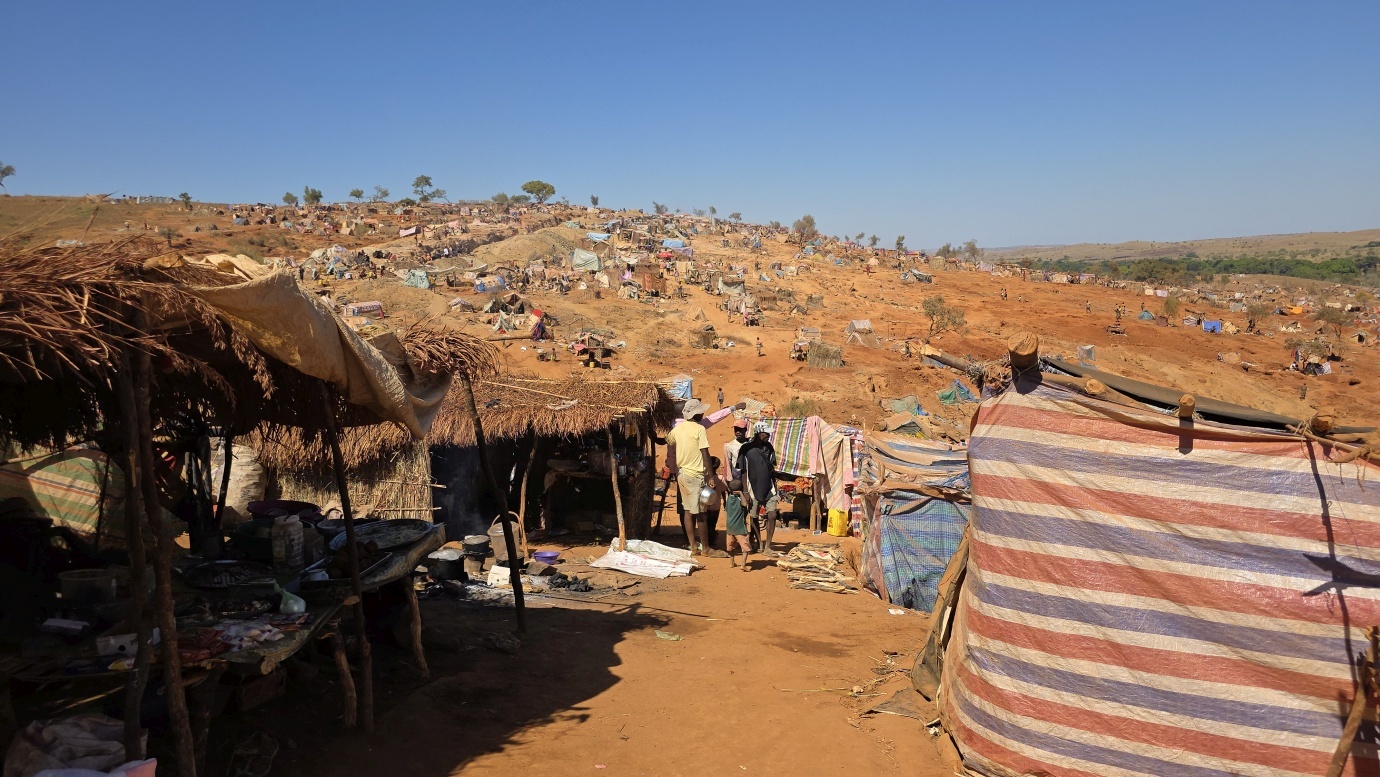
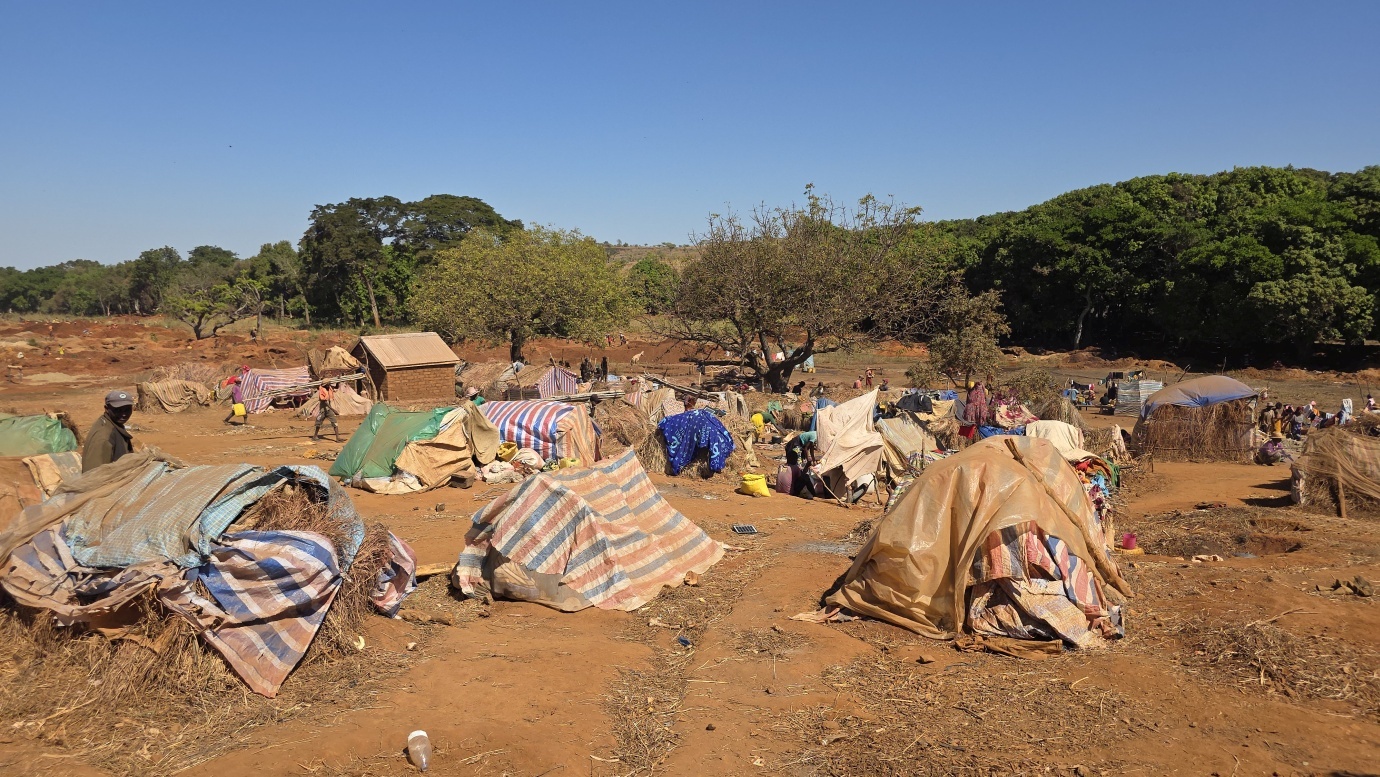
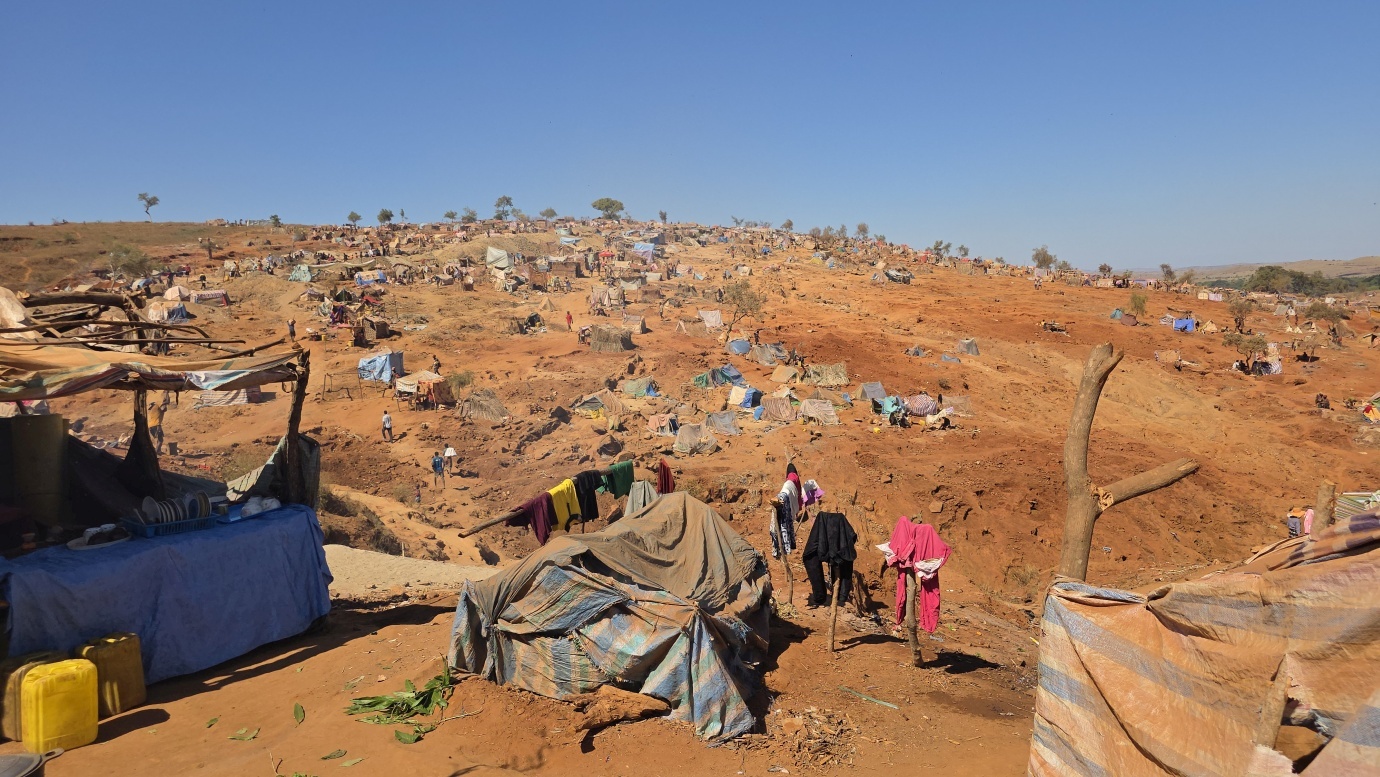
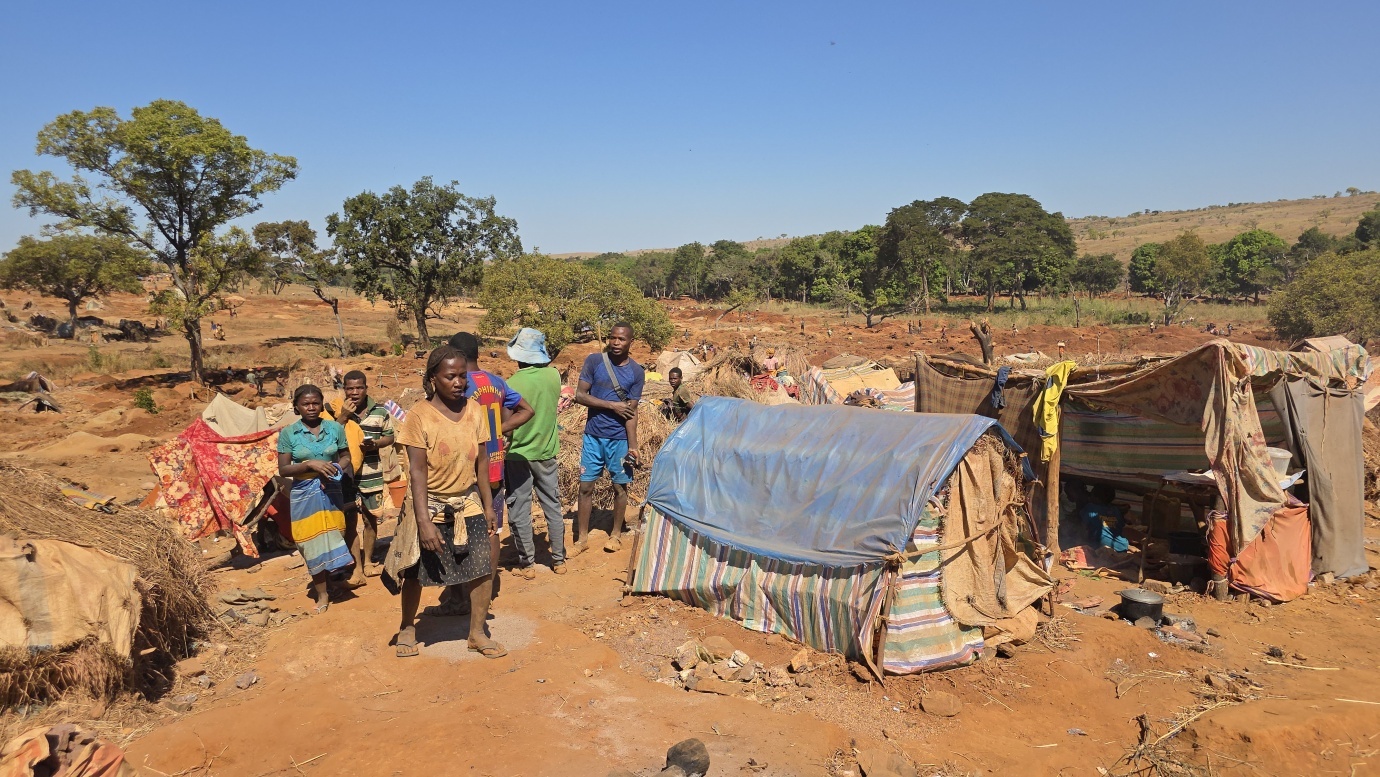
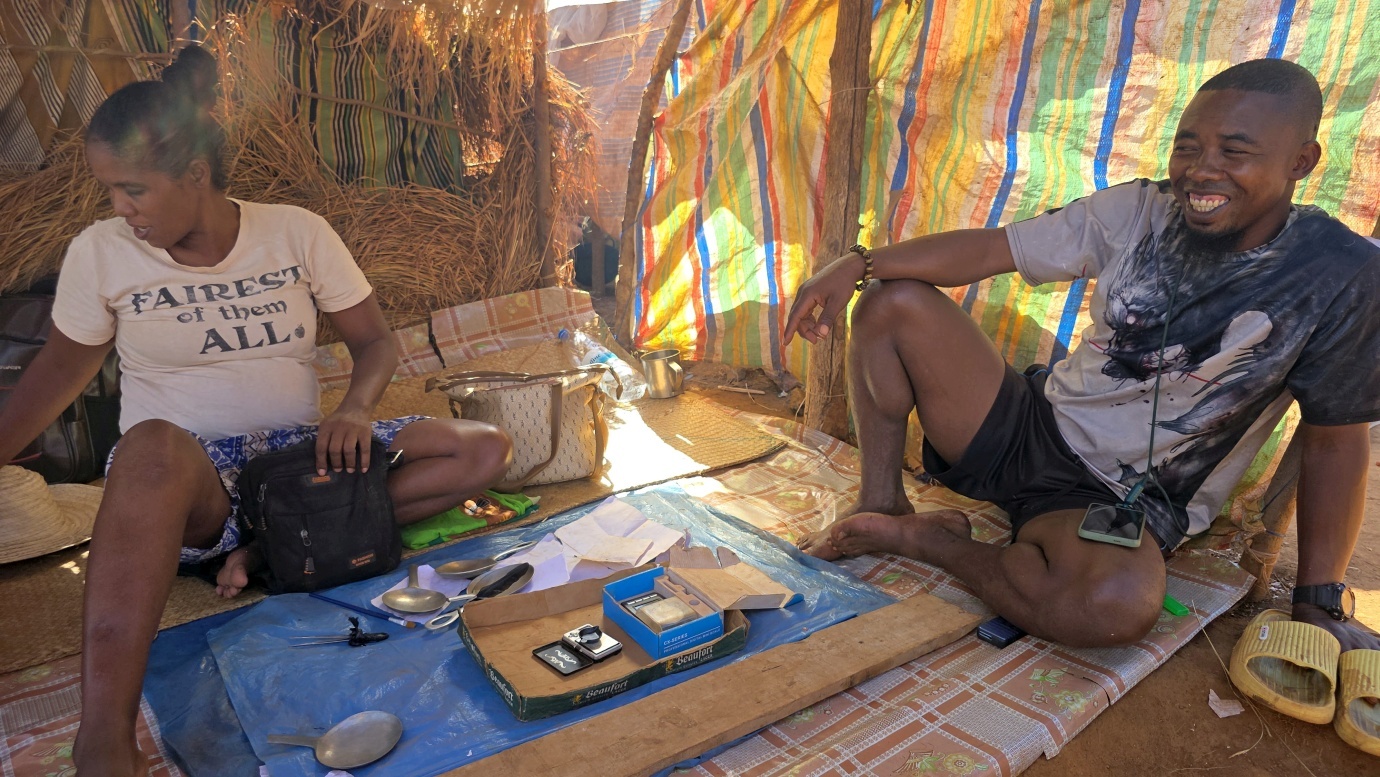
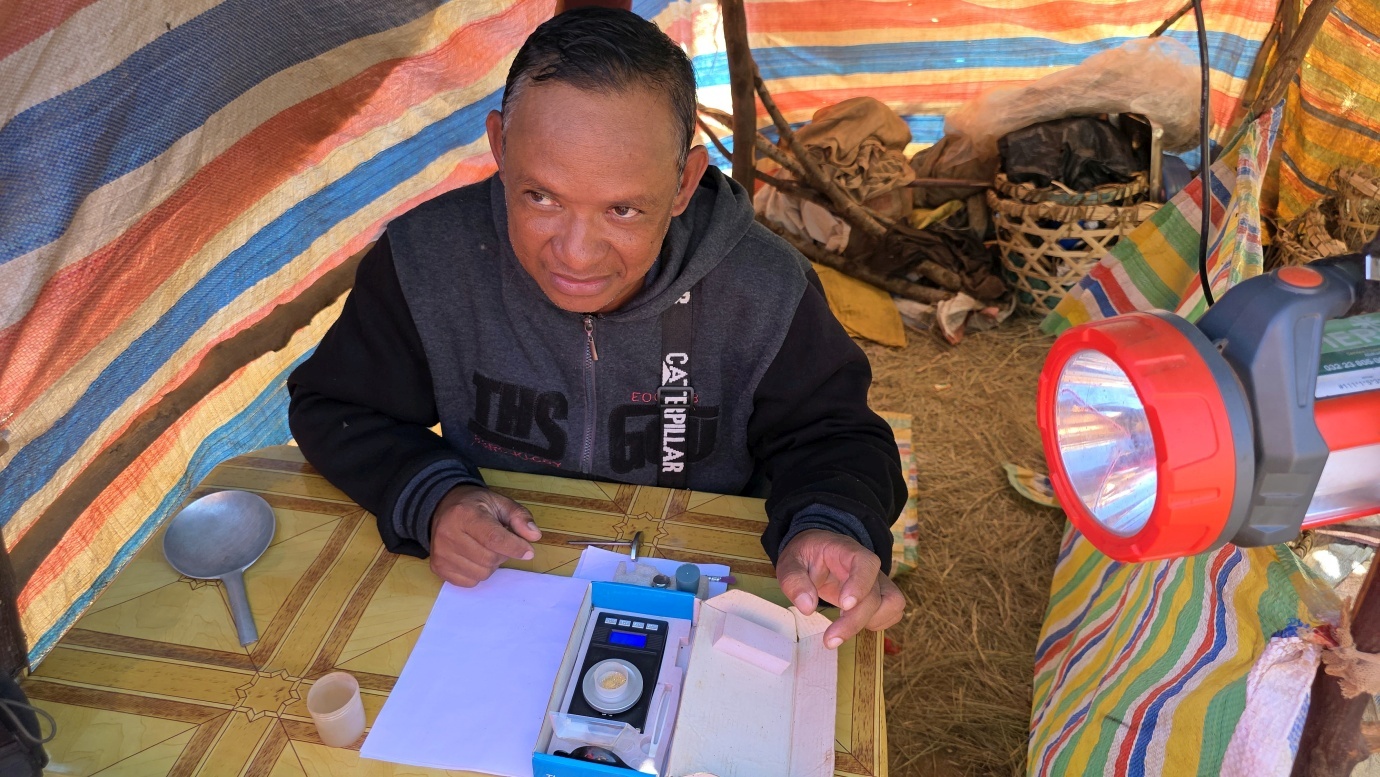
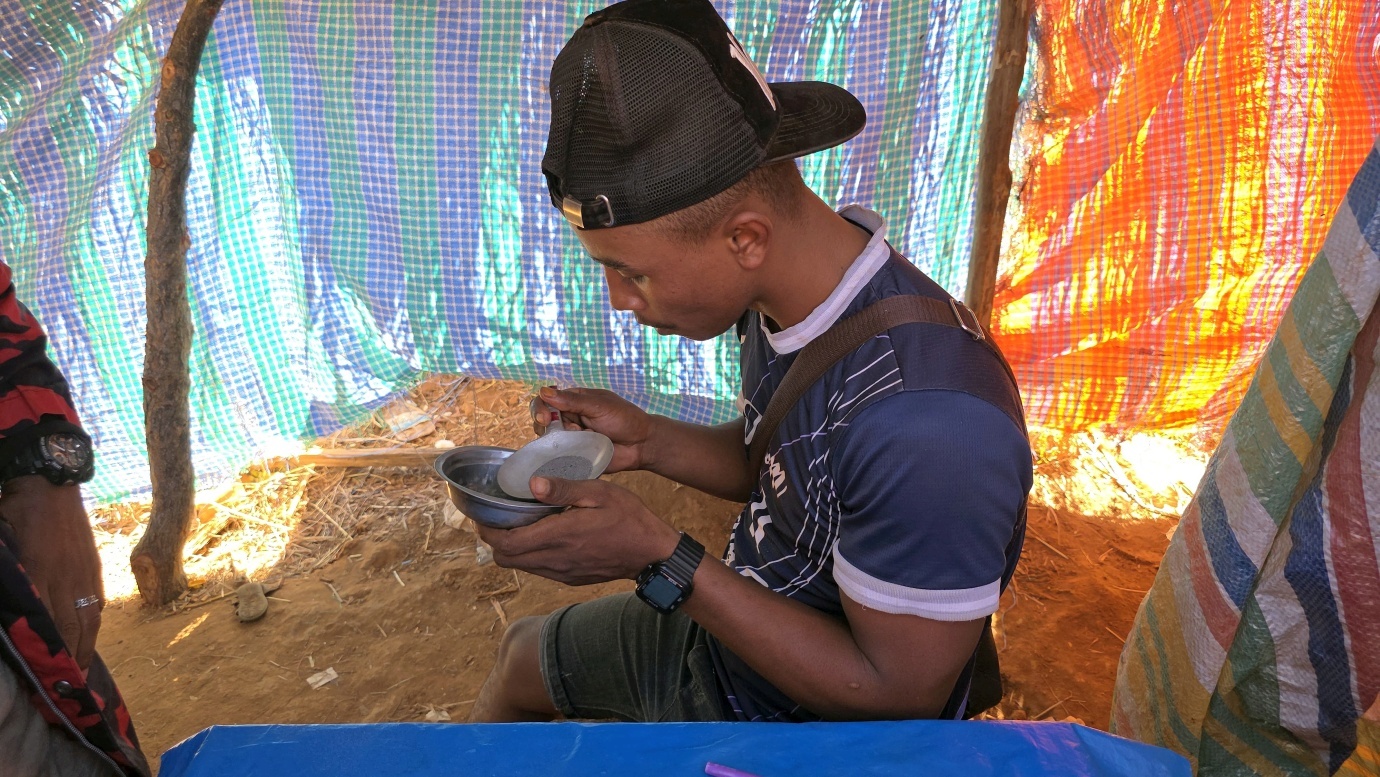
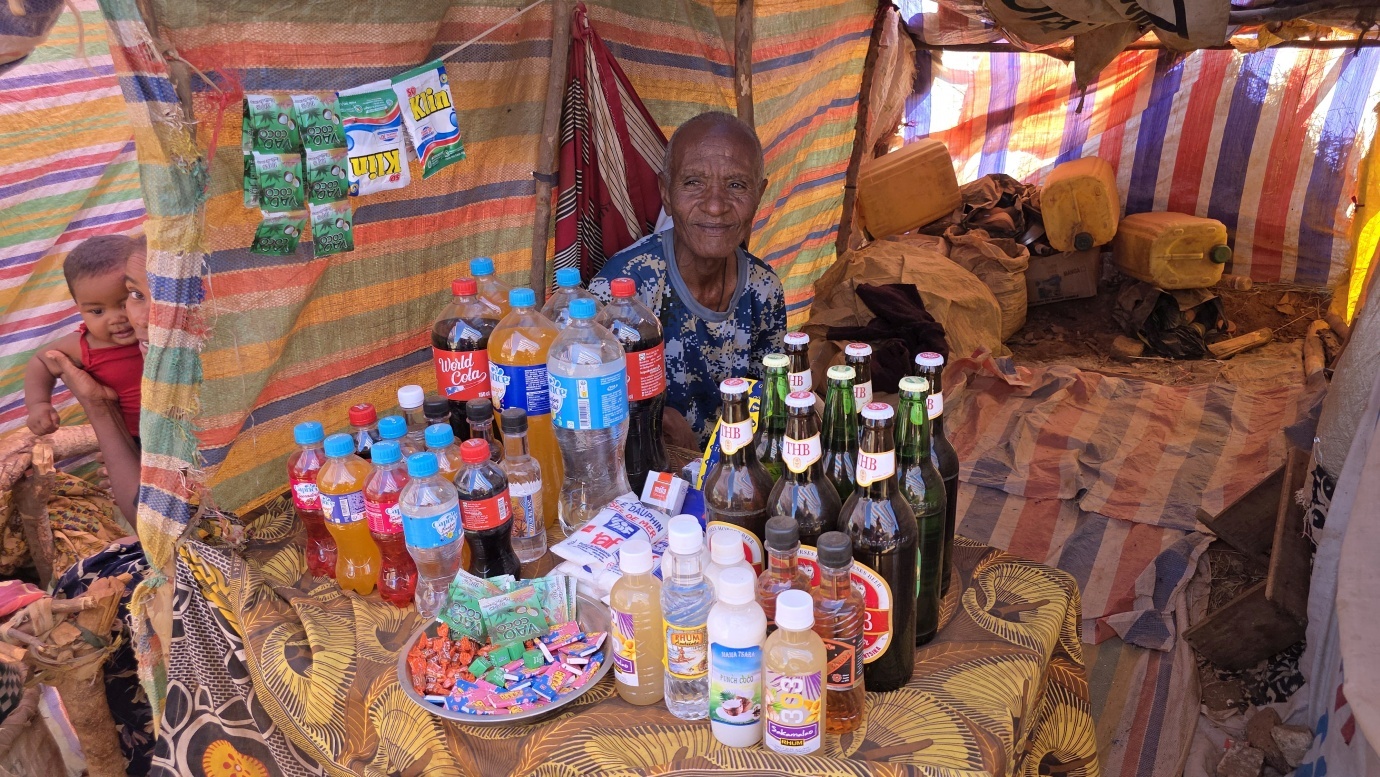
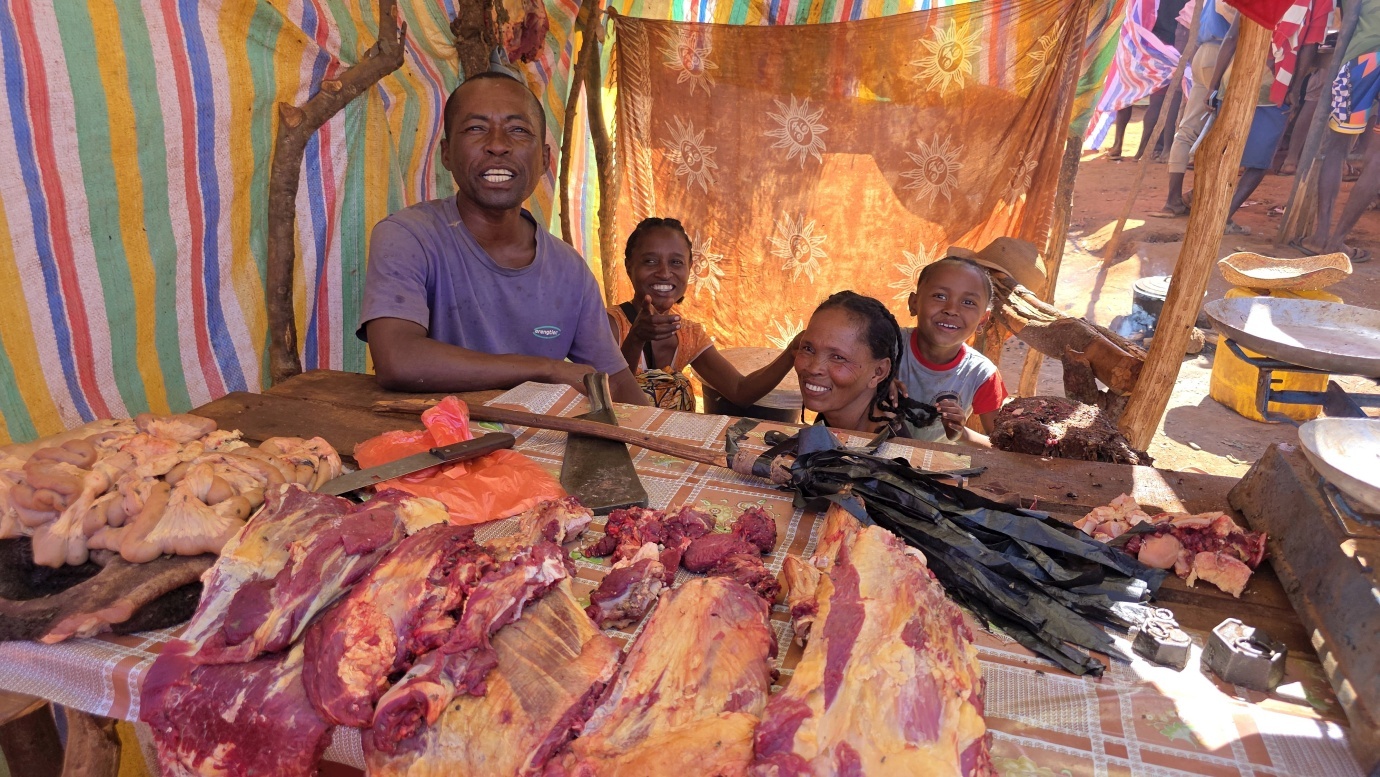
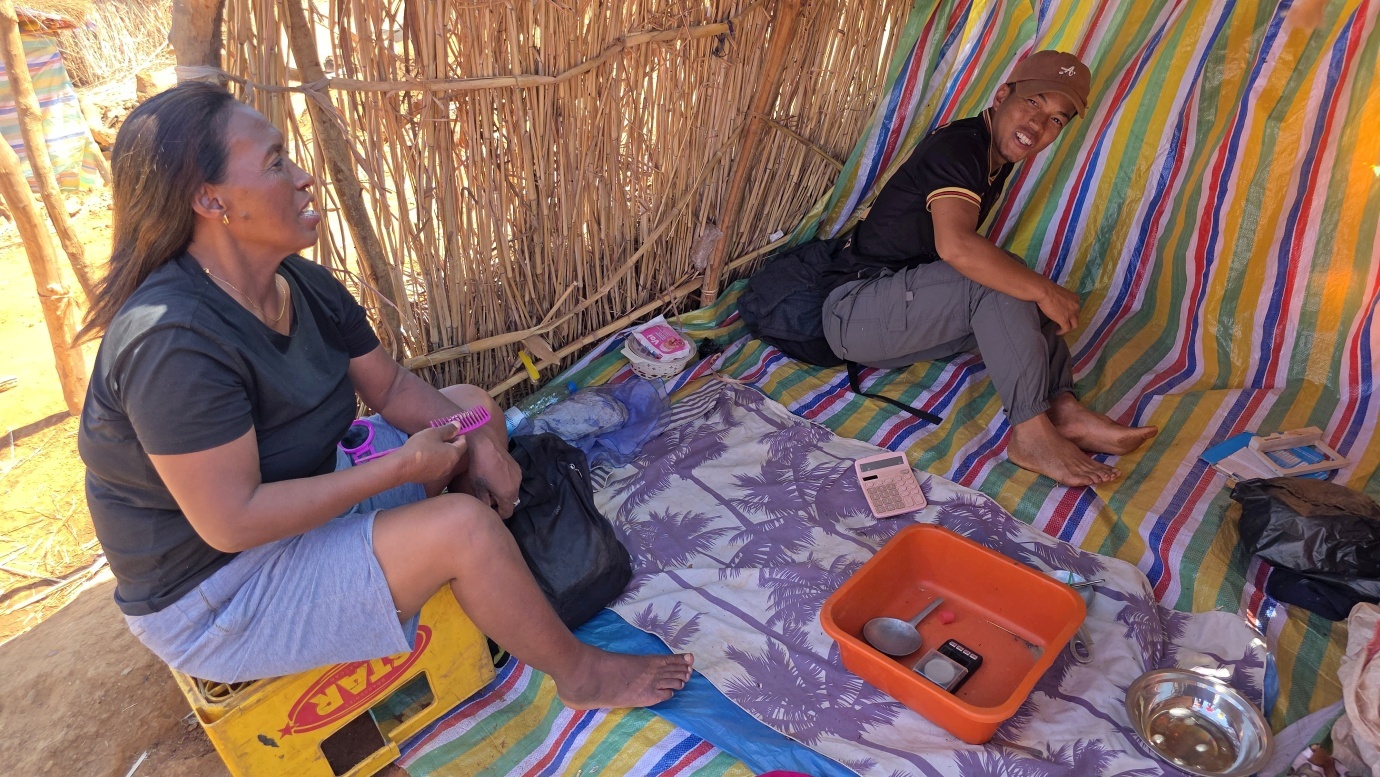
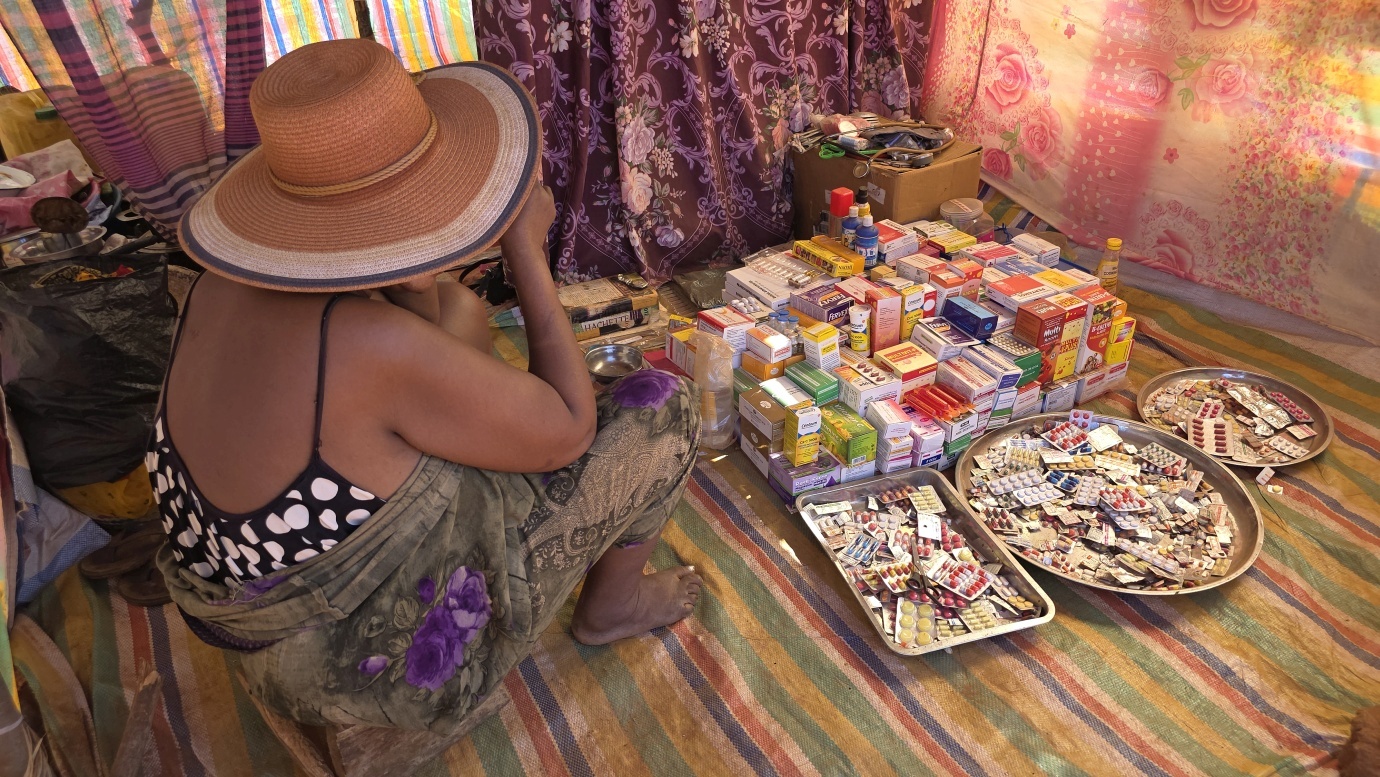
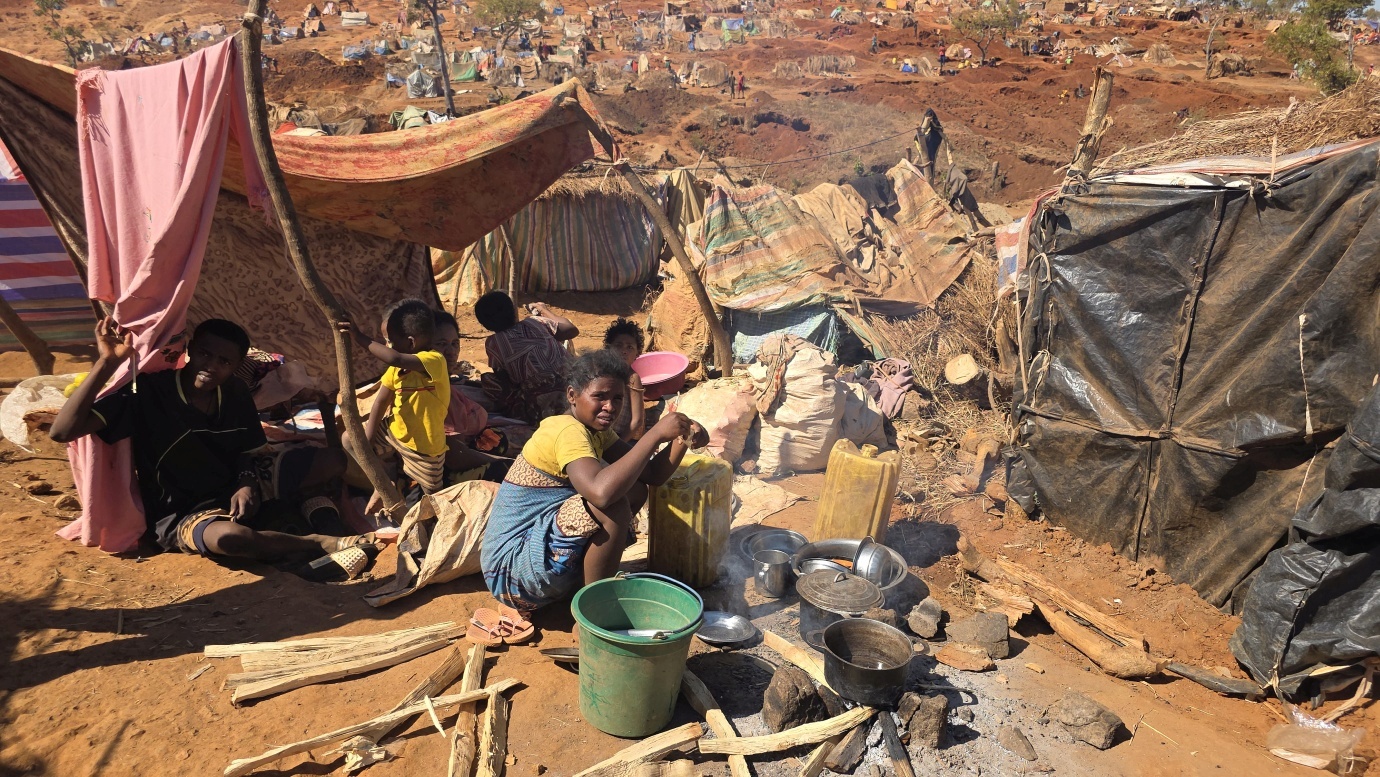
We heard about a wild gold-mining site around 29 kilometres outside Ilakaka, so we decided to check it out. The journey took us along a rough dirt road, crossing rivers and stretches of deep sand, with several checkpoints along the way (Municipal fee: 2,000 MGA).
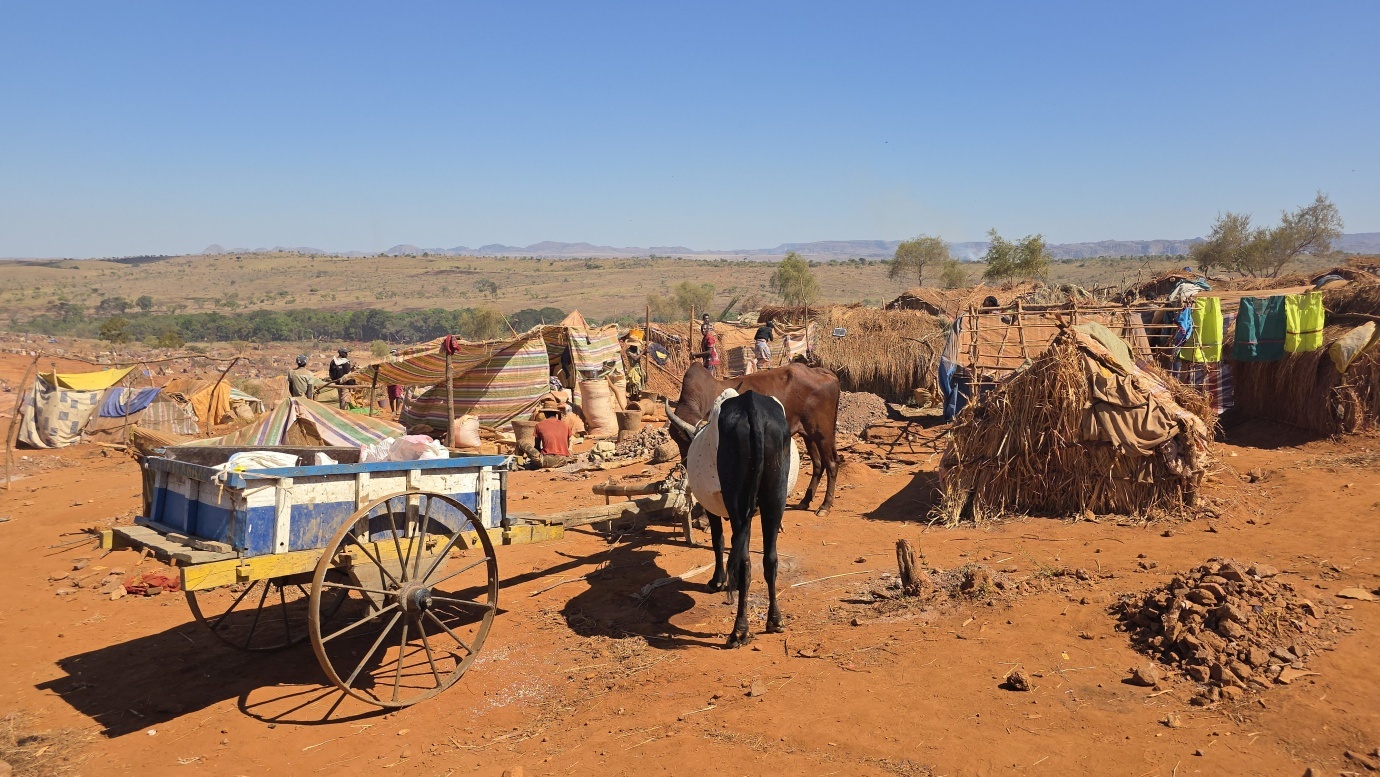
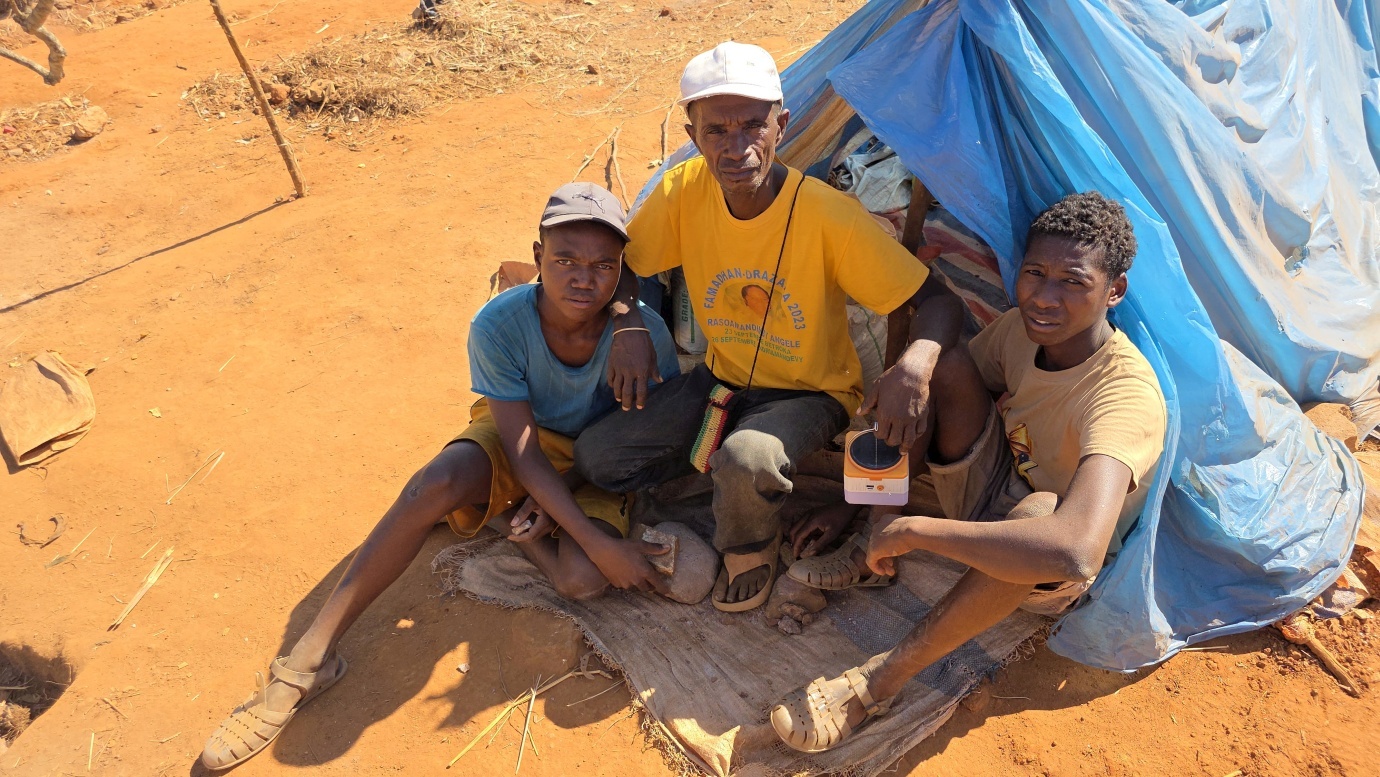
On the way, we picked up an older local man and his family who were heading there as well. By chance, he later became our guide (10,000 MGA), leading us through a gold-mining village that had sprung up only about four months earlier.
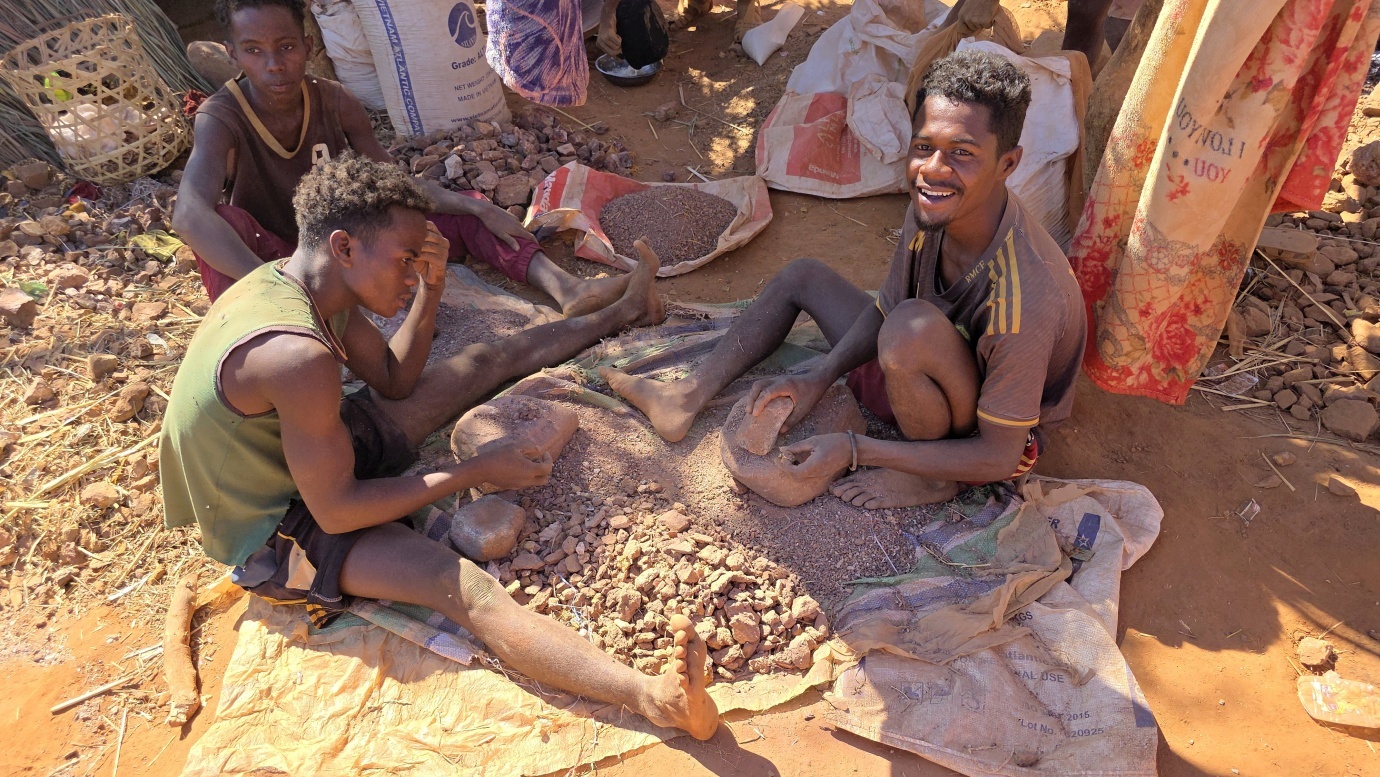
Artisanal and small-scale gold mining is a major economic driver in Madagascar. It provides direct employment to more than 600,000 people—around 37% of them women—and supports an estimated 2.5 million people indirectly. Despite being highly informal, the sector is thought to produce roughly 14 tonnes of gold each year.
At the same time, the industry faces serious challenges. Mercury use is widespread, contributing to environmental degradation and health risks, while smuggling remains common.
As a vital source of rural income, gold mining is the country’s second-largest employer after agriculture. However, artisanal and small-scale gold mining (ASGM) has significant environmental consequences, including deforestation, biodiversity loss, and water contamination—driven in part by the use of an estimated 18 tonnes of mercury annually.
Although the government, through the national gold agency (ANOR), is working to formalise the sector, much of the activity still takes place outside official regulation. This leads to ongoing issues such as illegal exploitation and lost tax revenue.
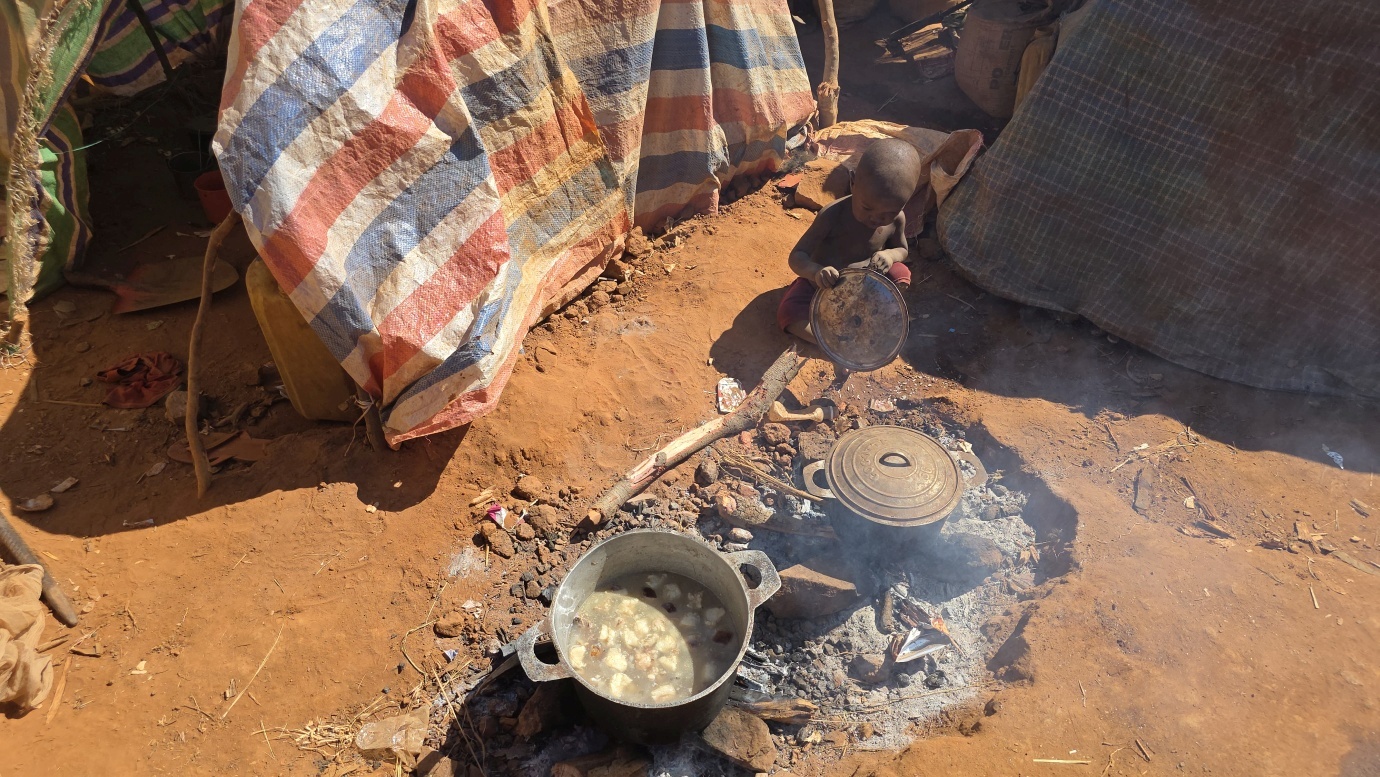
Mining operations are widespread, taking place in 388 of Madagascar’s 1,670 municipalities, often even within protected areas. Working conditions are frequently poor, with limited health and safety measures. The transient nature of mining communities also makes it harder to address challenges such as child labour and worker protection.