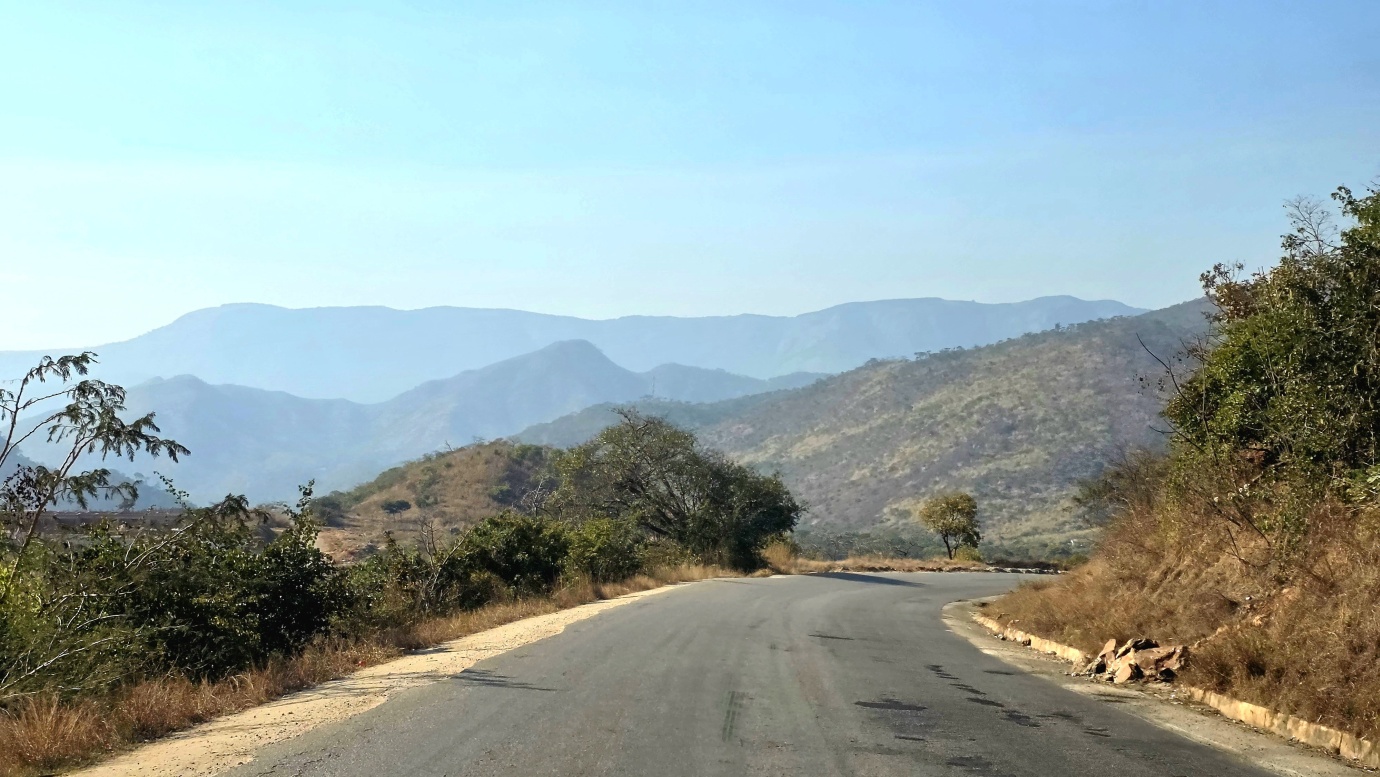
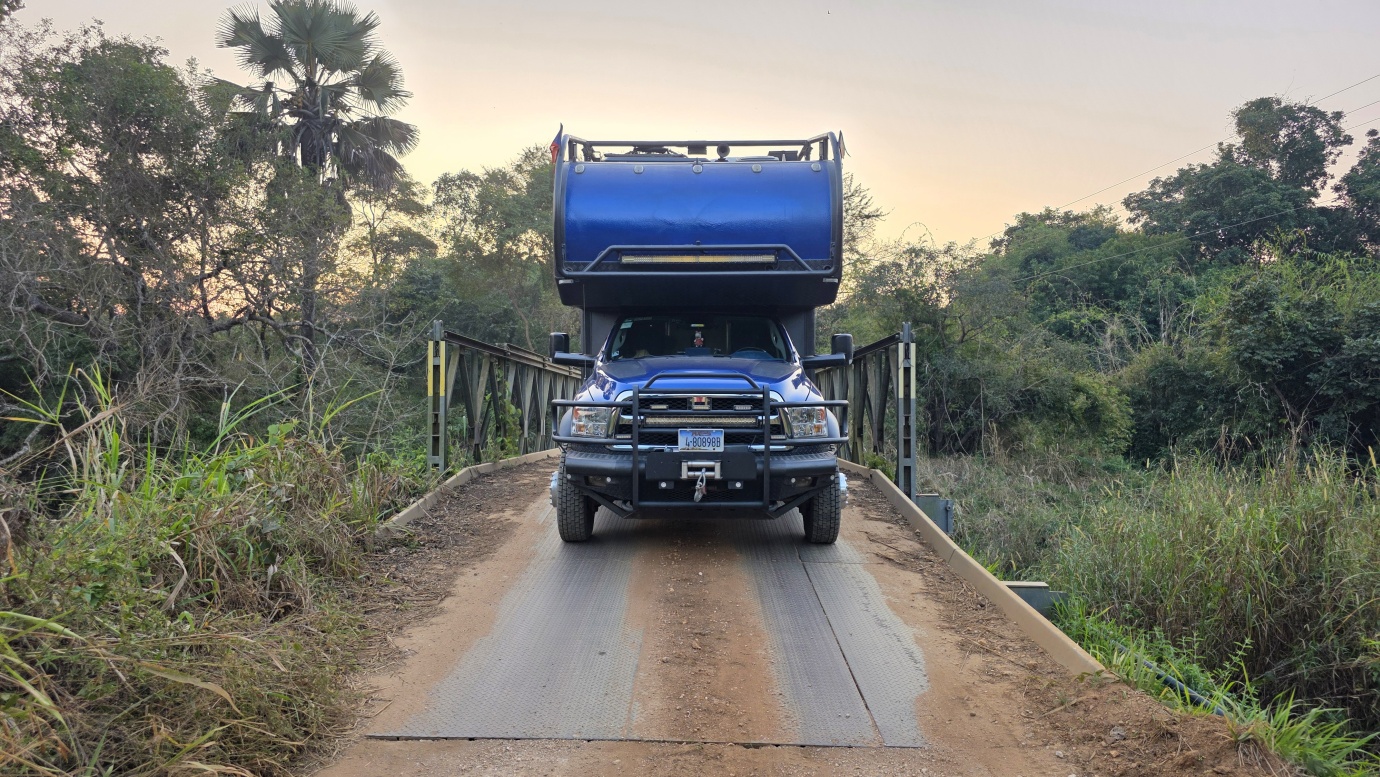
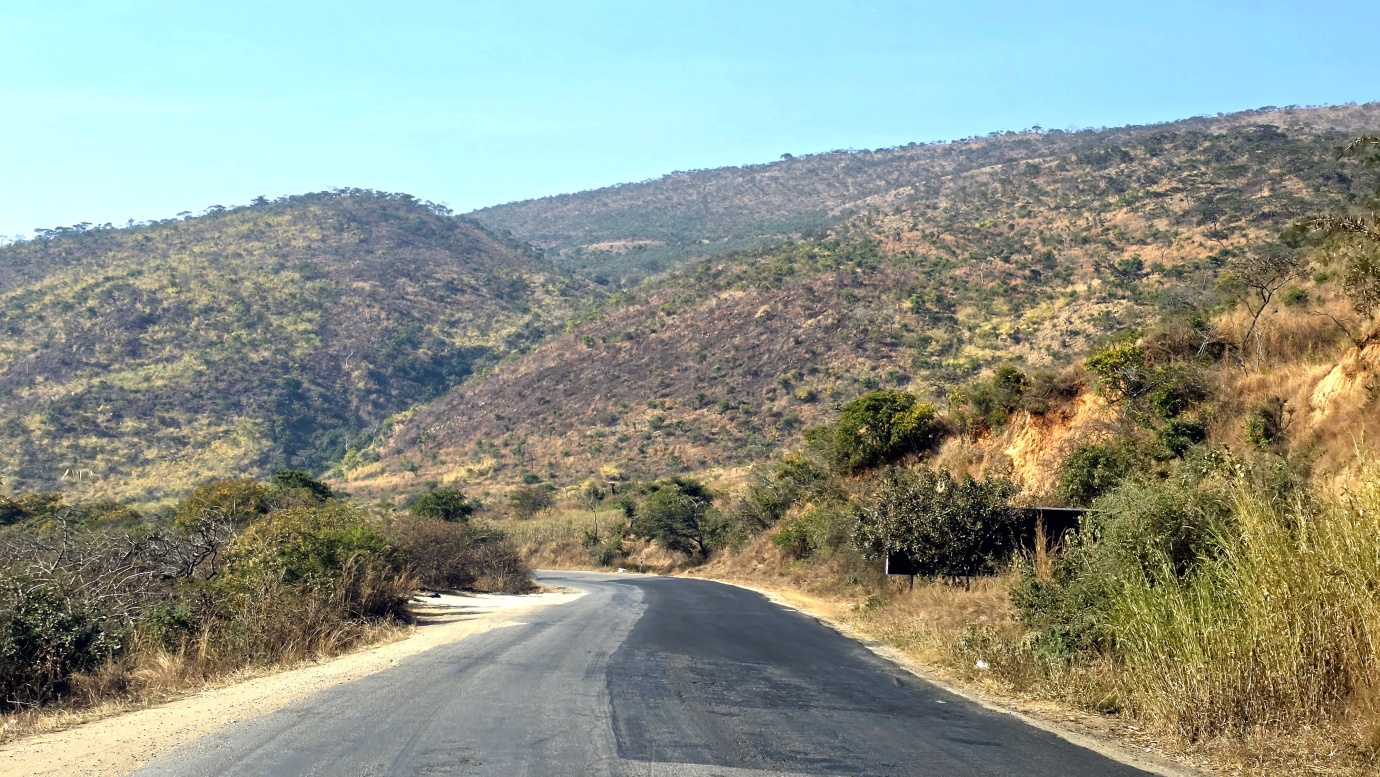
After a long stretch of smooth and hassle-free border crossings, we once again found ourselves facing a rather chaotic one. The Forbes–Machipanda border is the main land crossing connecting Mutare in Zimbabwe with Manica in Mozambique along the Beira Corridor. It was only a few kilometres from Mutare, but the final approach was on badly deteriorated tarmac.
Upon arrival, we bypassed a queue of trucks stretching for several kilometres and parked directly in front of the Zimbabwean border post. The exit formalities were surprisingly straightforward. We had our passports and CPD (Carnet de Passages) stamped, and immigration issued us a border pass. Before leaving, we stopped at the exit gate, where we recorded our truck details in a logbook, and the officer added a final stamp to the pass. A plainclothes Central Intelligence Organisation officer also asked us a few questions about our travels, including what we had been doing in Zimbabwe and why we were leaving before using the full 30 days of our visa. The entire Zimbabwean exit process took just 30 minutes.
We then drove about one kilometre to the Mozambican side, again passing the long line of waiting trucks. Here we encountered the first sophisticated scam. About 100 metres before the immigration building stands a small booth staffed by several people wearing yellow safety vests and a woman dressed in a white coat, posing as a doctor carrying out health checks, something that is indeed common at some African borders. However, this is not an official checkpoint. The people there are scammers. The setup looks convincing, but if you question who they are or ask for official identification, they wave you through. Otherwise, they may try to charge various “health” or “processing” fees. We had already been warned about this scam by other travellers who crossed here the previous week.
In front of the immigration building, we were immediately approached by money changers offering an exchange rate of 70 MZN per US dollar. Fortunately, there is an official forex bureau right next to the building, offering a better rate of 72 MZN per US dollar, so avoid exchanging money with the touts (edit of rates – in Nampula 75 MZN and in Ilha de Moçambique 74 MZN).
We applied for our visas on arrival. The officers initially insisted that we should have applied online, but after some discussion they escorted us to a dedicated visa-on-arrival office. Within a few minutes we received our visa stickers and entry stamps. The total cost was 9,837 MZN. As seems to happen all too often, we never received the small amount of change we were owed.
The next step was importing our truck. Stamping the CPD was easy enough, although the customs officer wasn’t familiar with the procedure, so we filled in most of the document ourselves. He signed it, and the official customs stamp was simply sitting on the counter for us to stamp the carnet ourselves—a rather unusual experience.
Afterwards, we purchased mandatory third-party vehicle insurance at the booth opposite the customs building. For our truck, the cost was 50 USD for 30 days. Just across from that were two service windows; at the first one, we paid the 75 USD road tax. At the second window, the paperwork was completed, stamped and signed.
Before leaving the border, we also bought local Vodacom SIM cards, registered them in our names, and purchased data packages. The prices were 1,000 MZN for 36,631 MB and 500 MZN for 18,316 MB.
With all the paperwork completed, we were finally ready to leave. A police officer asked us if everything was in order (without checking anything) and waved us through. At the exit gate, however, another group of police officers asked if they could inspect the inside of our truck. We politely declined. They then asked for “something for drinks,” which we also refused, and after that we were free to continue our journey. In total, the entire border crossing took around two hours.
To our surprise, the language barrier was significant, as most officials spoke little or no English, while others knew only a few basic words. All payments had to be made in cash—visa fees were payable in Mozambican meticais, while the remaining charges were payable in US dollars.
From the border we drove directly towards Gorongosa National Park. Along the way we passed numerous police and speed-control checkpoints, but the officers were friendly and most simply waved us through. One thing that quickly became apparent was the shortage of diesel fuel at many petrol stations. Only a handful had fuel available, so we decided to refuel at the Meru station in Gôndola (118,86 MZN / litre). We also passed through the toll plaza near Chimoio, where we paid 450 MZN.