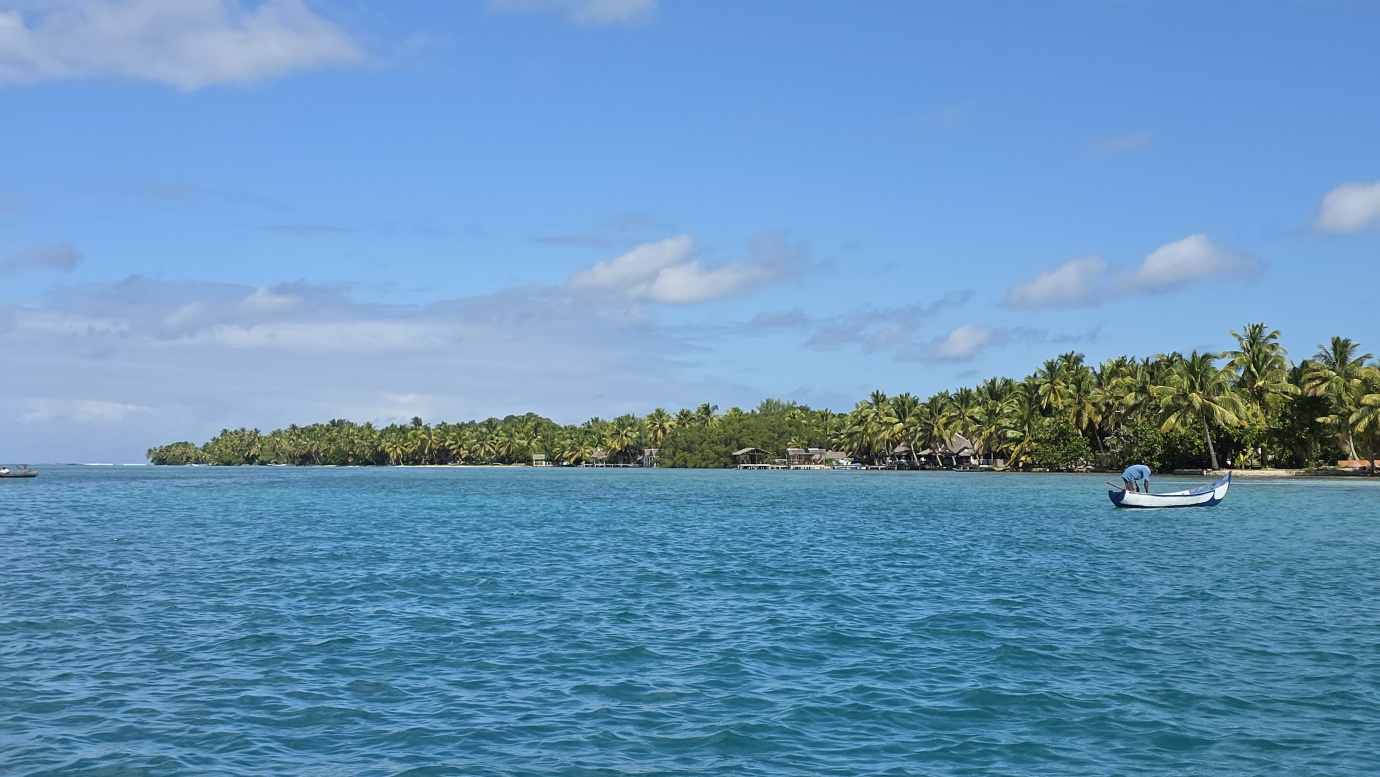
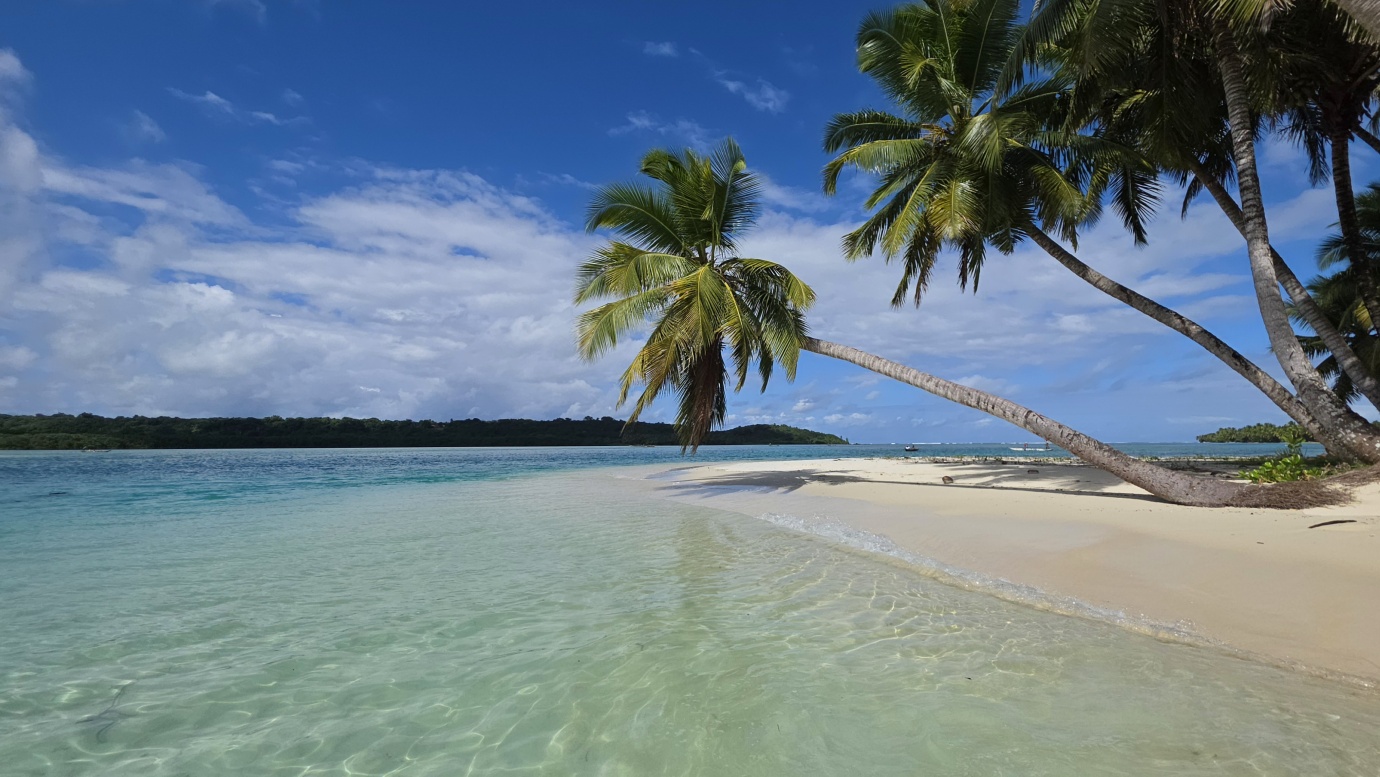
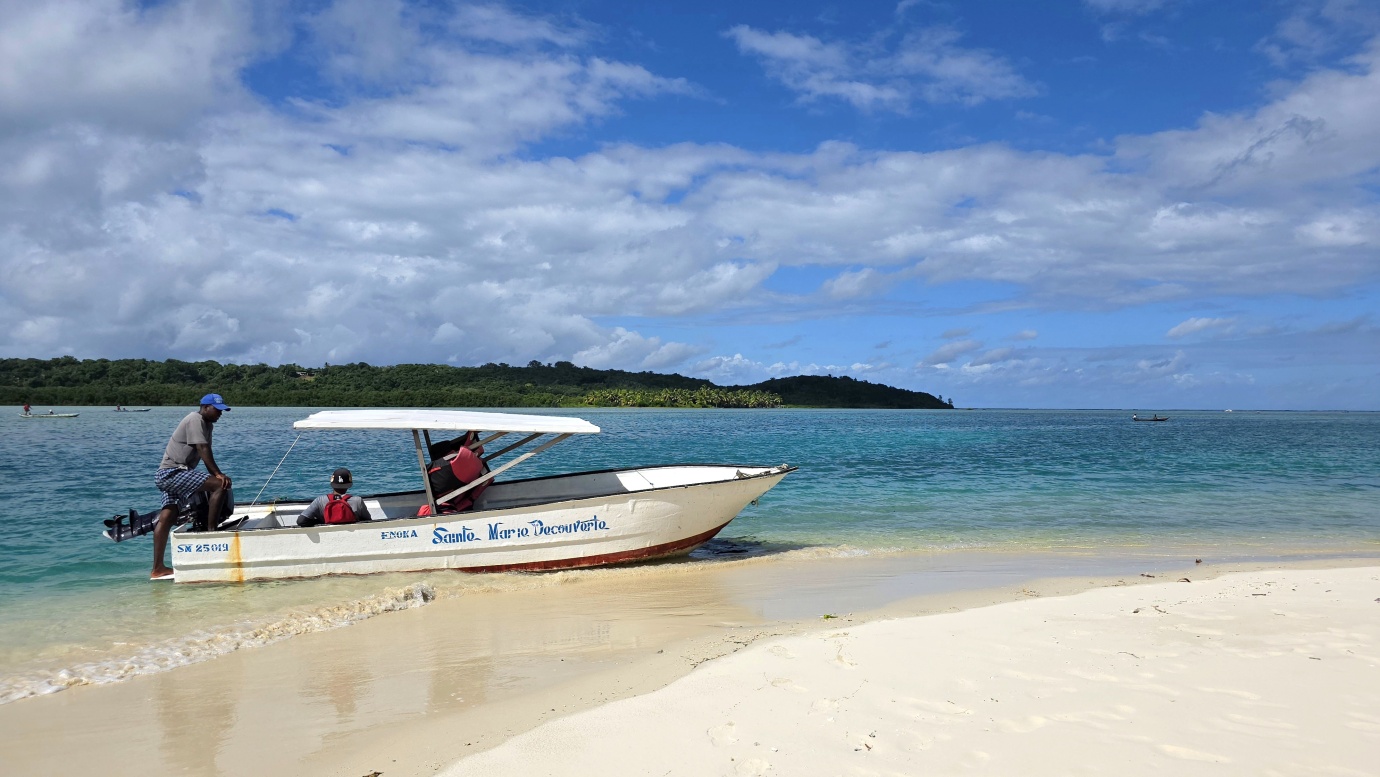
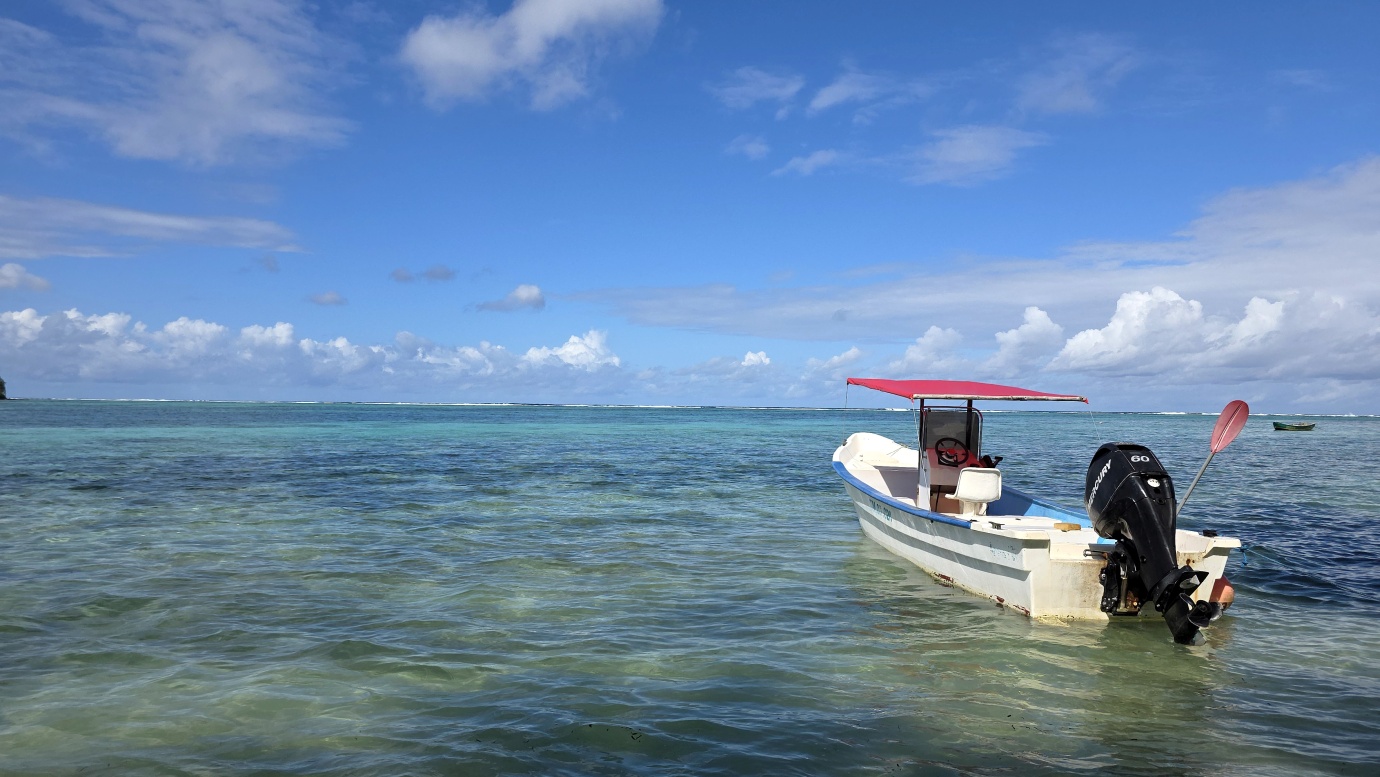
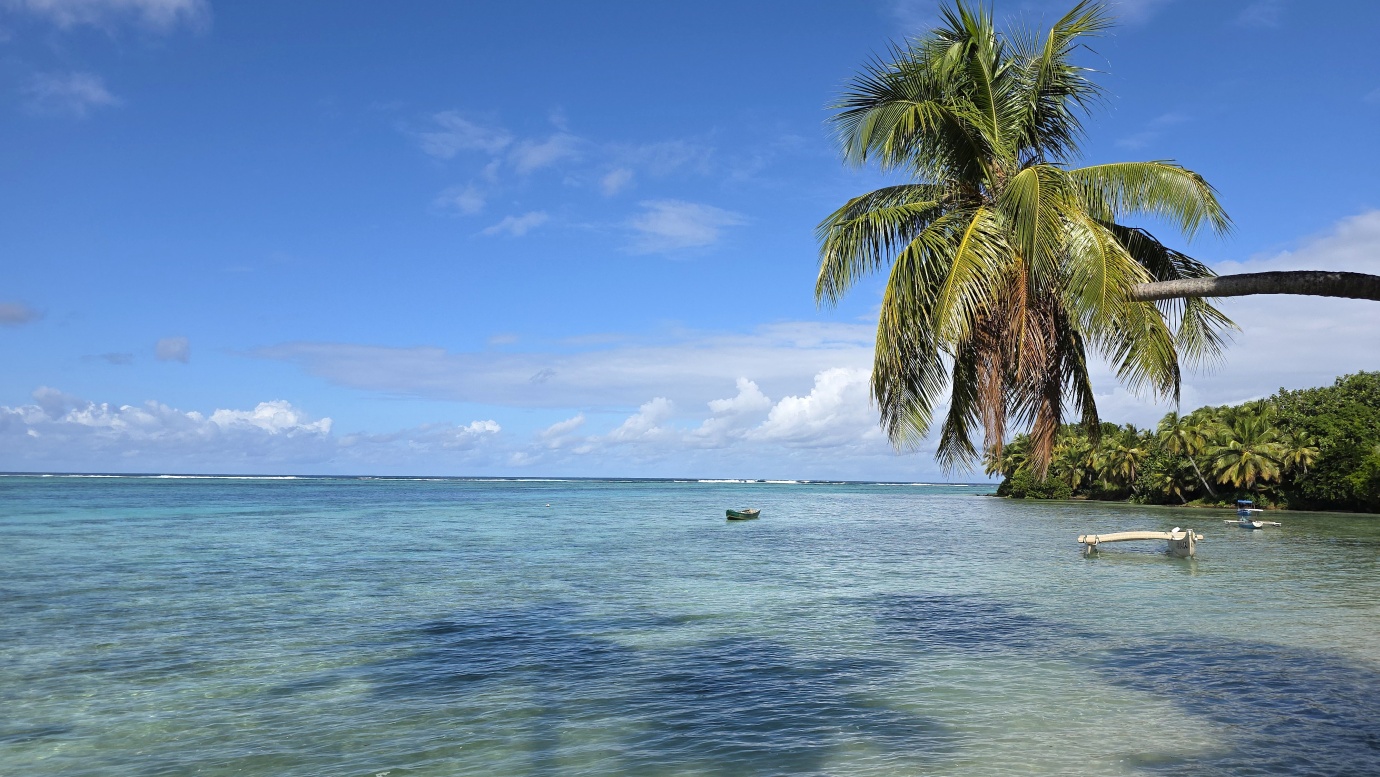
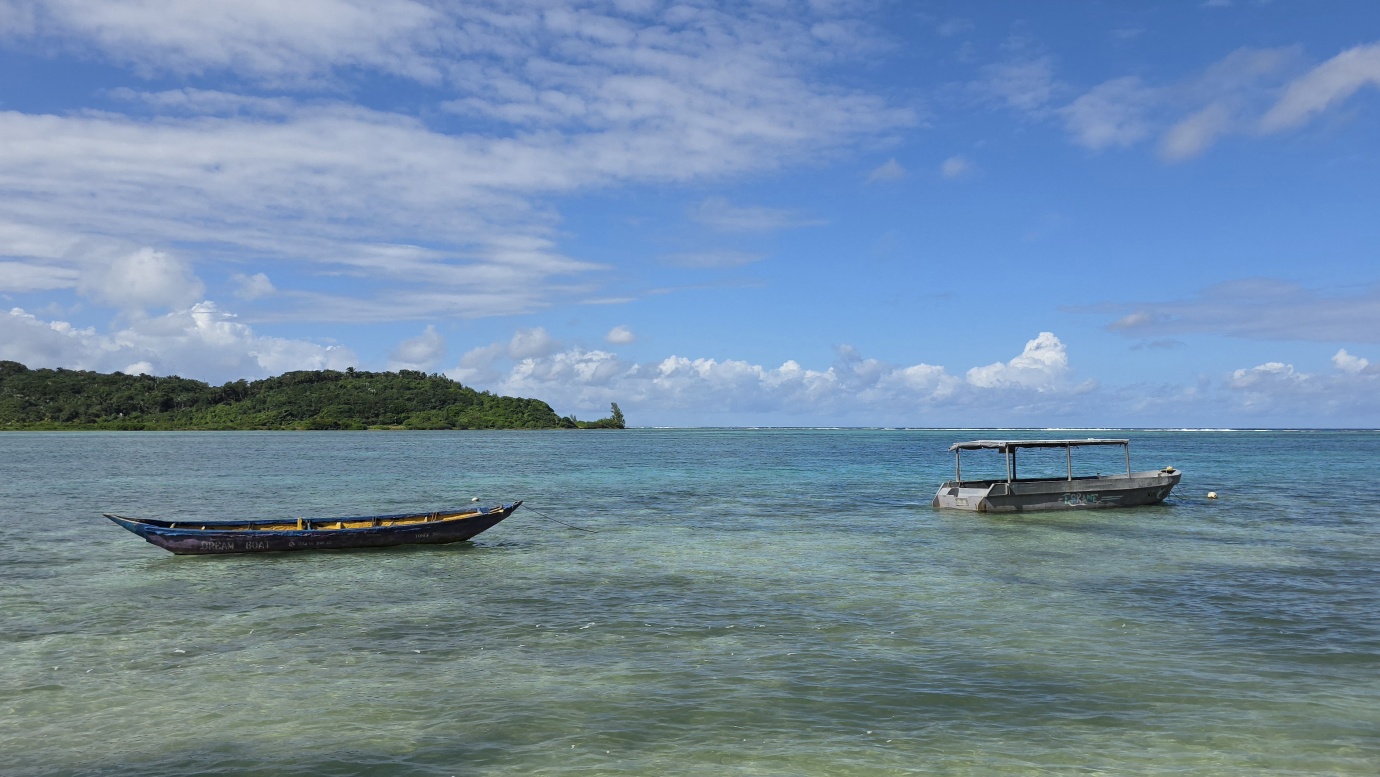
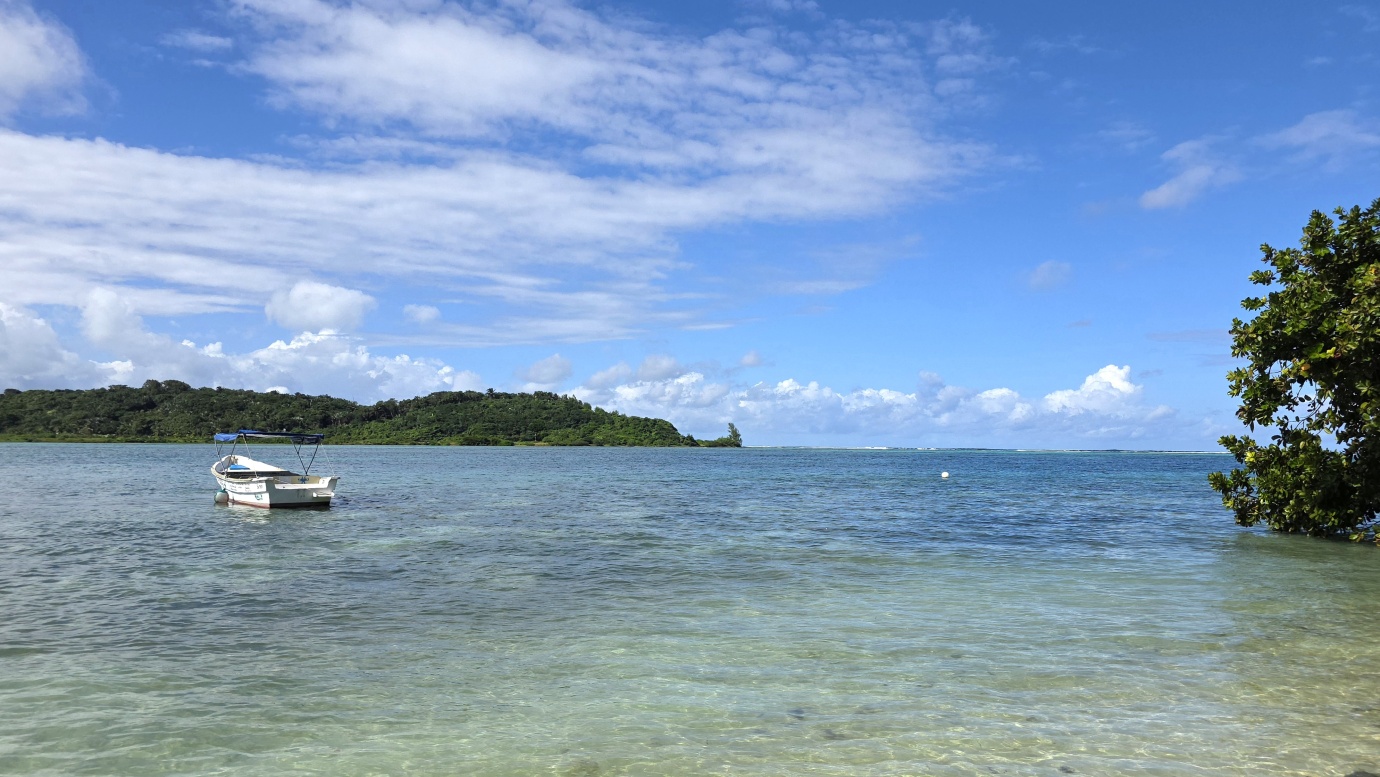
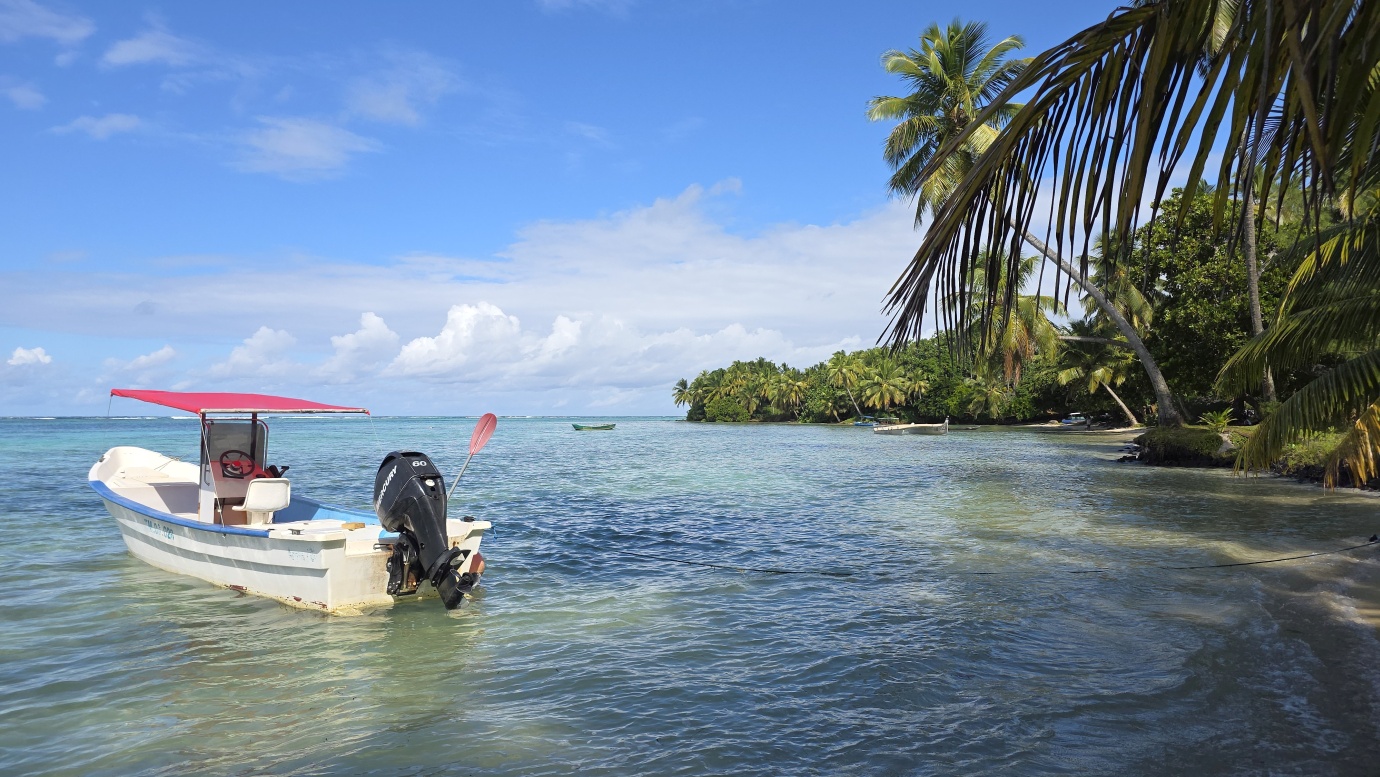
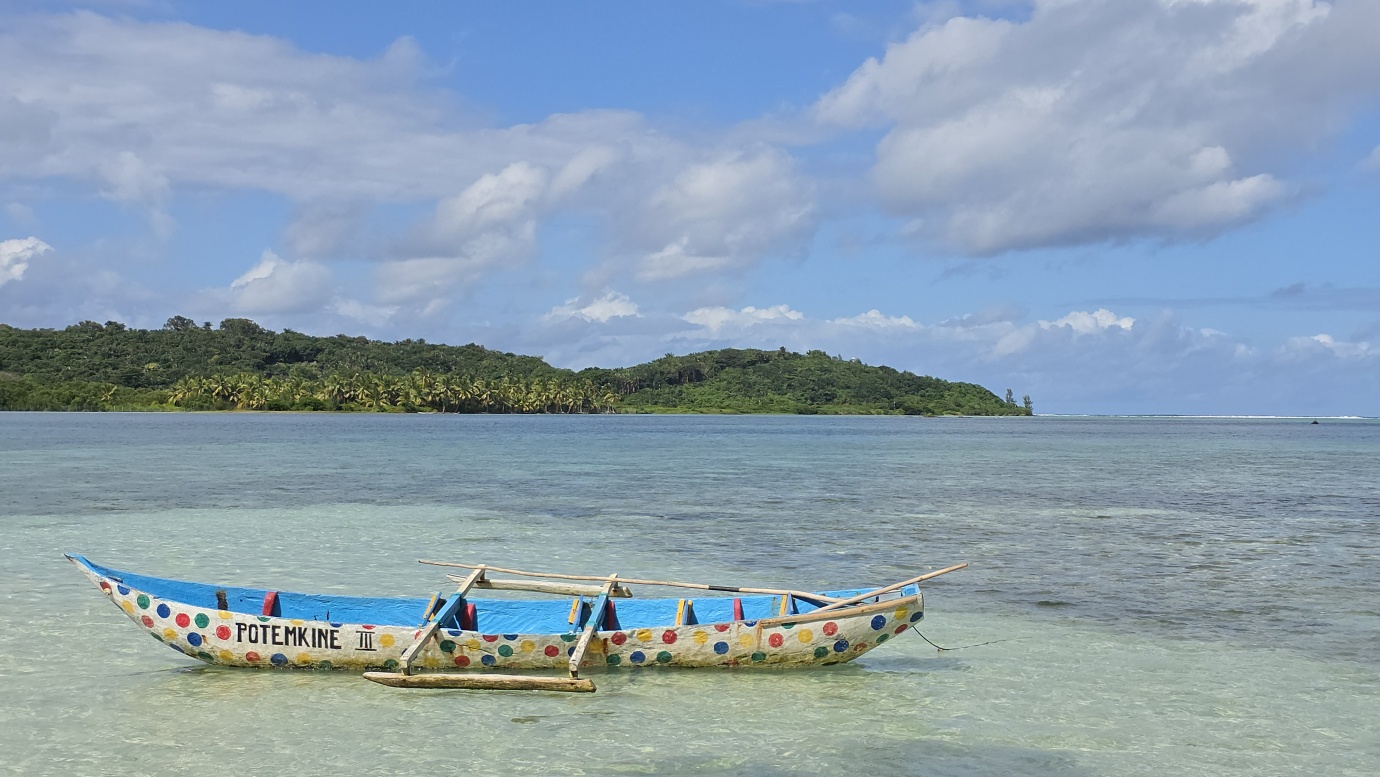
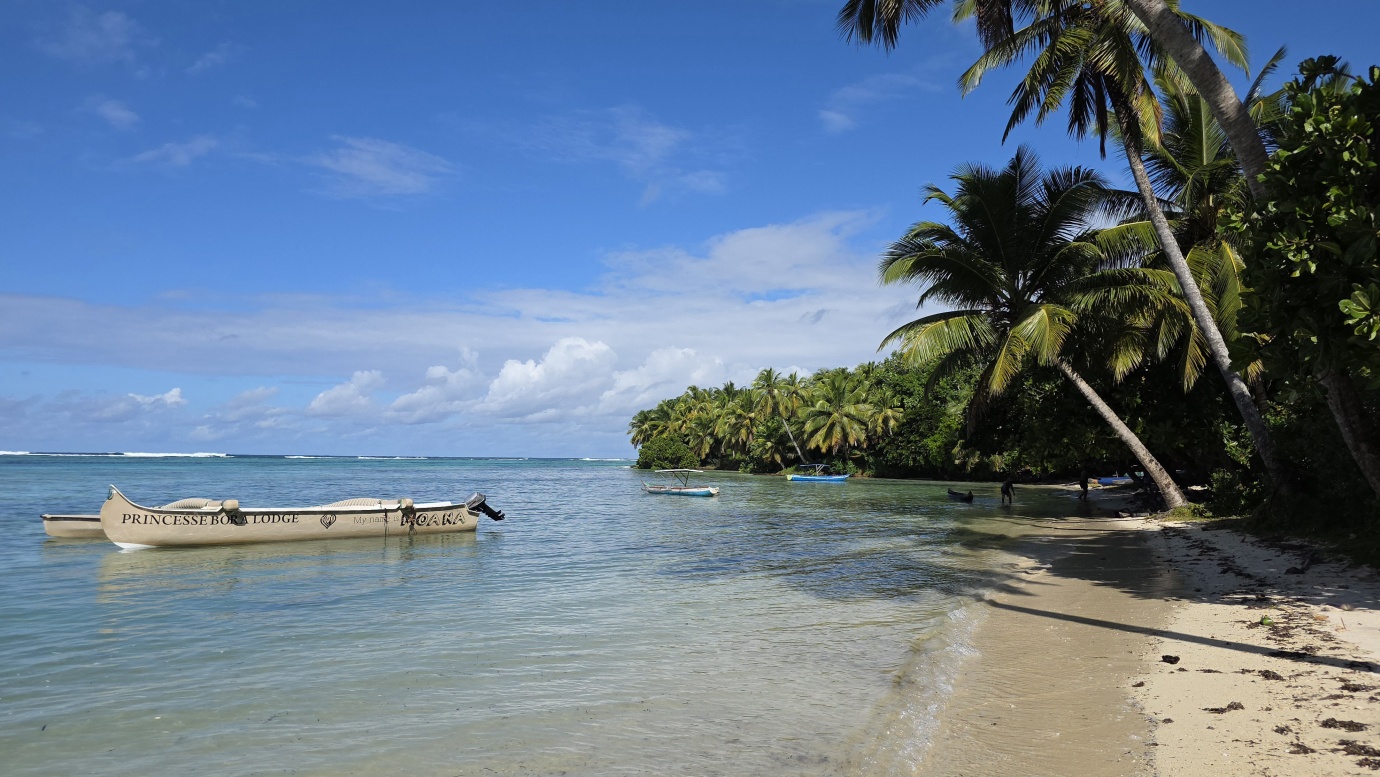
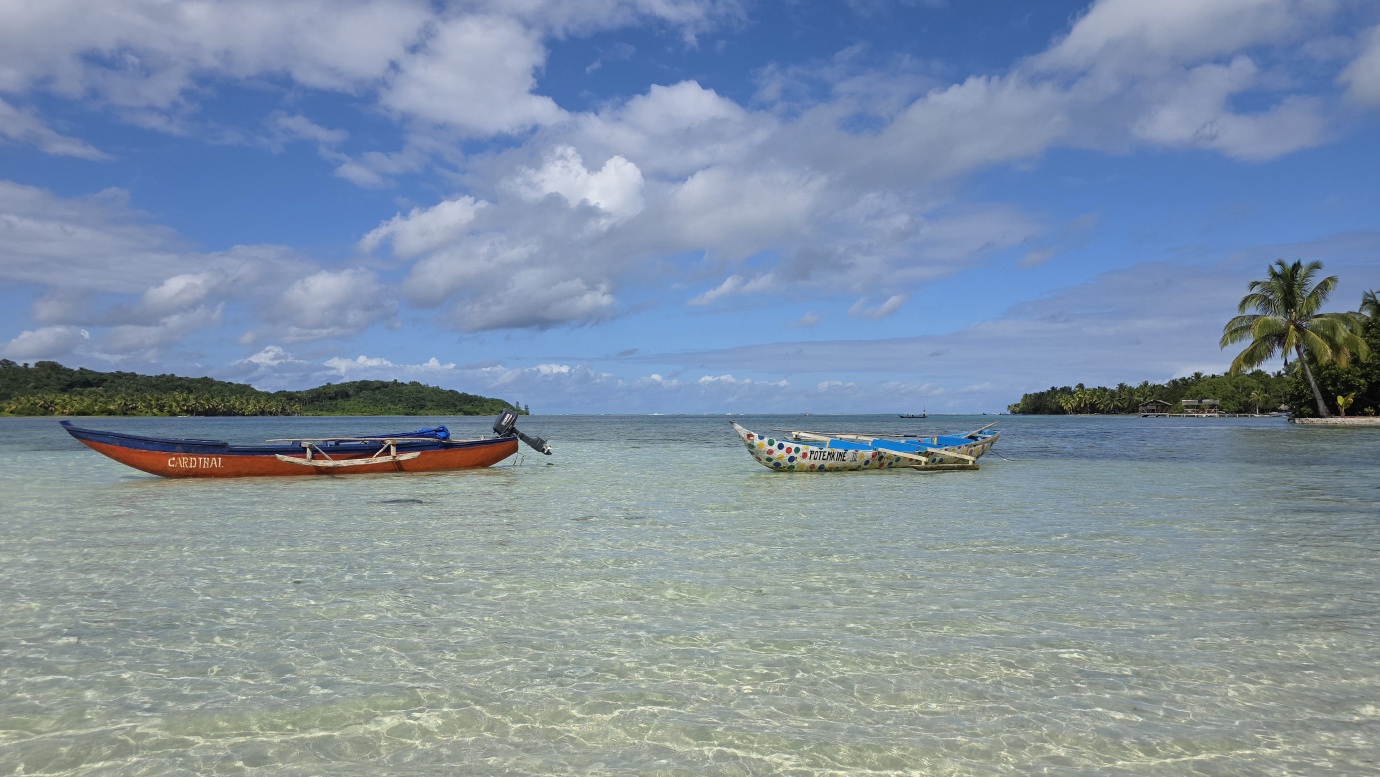
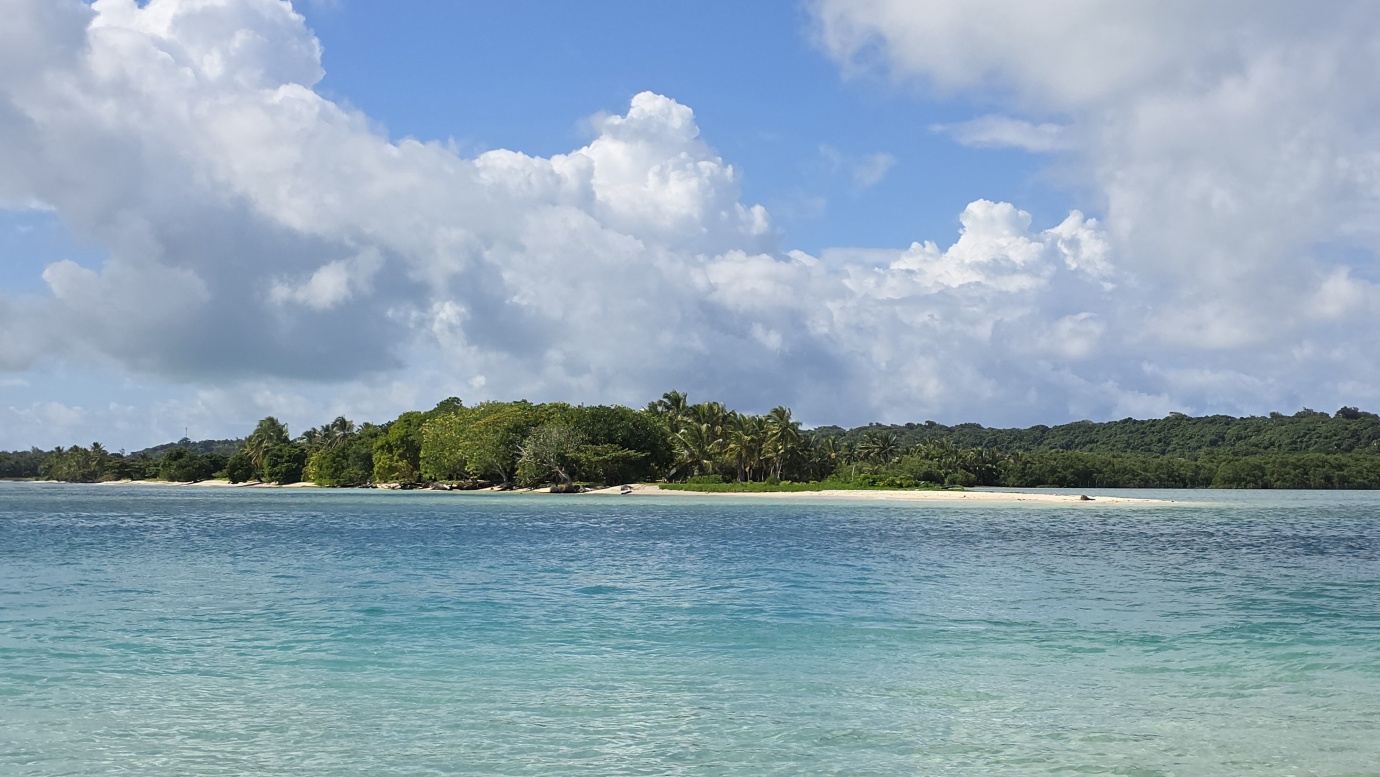
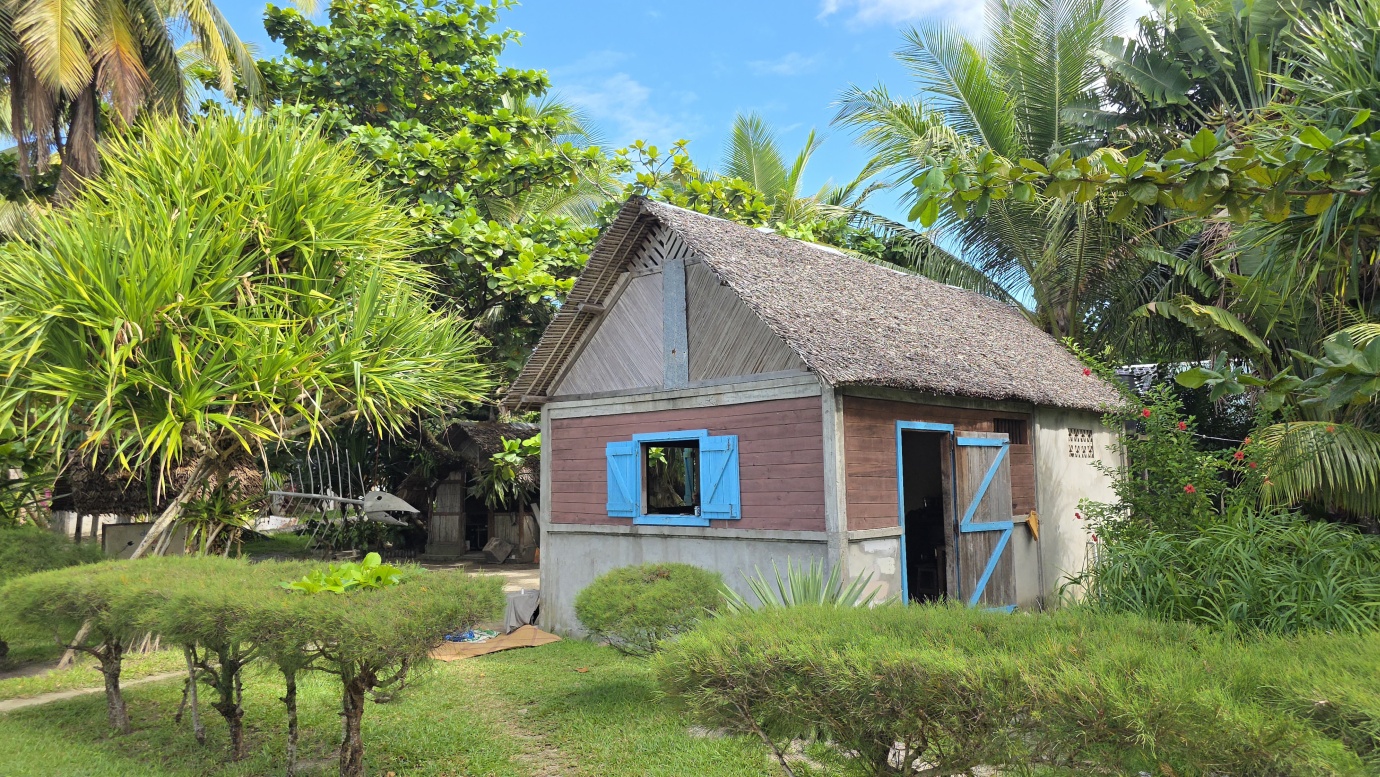
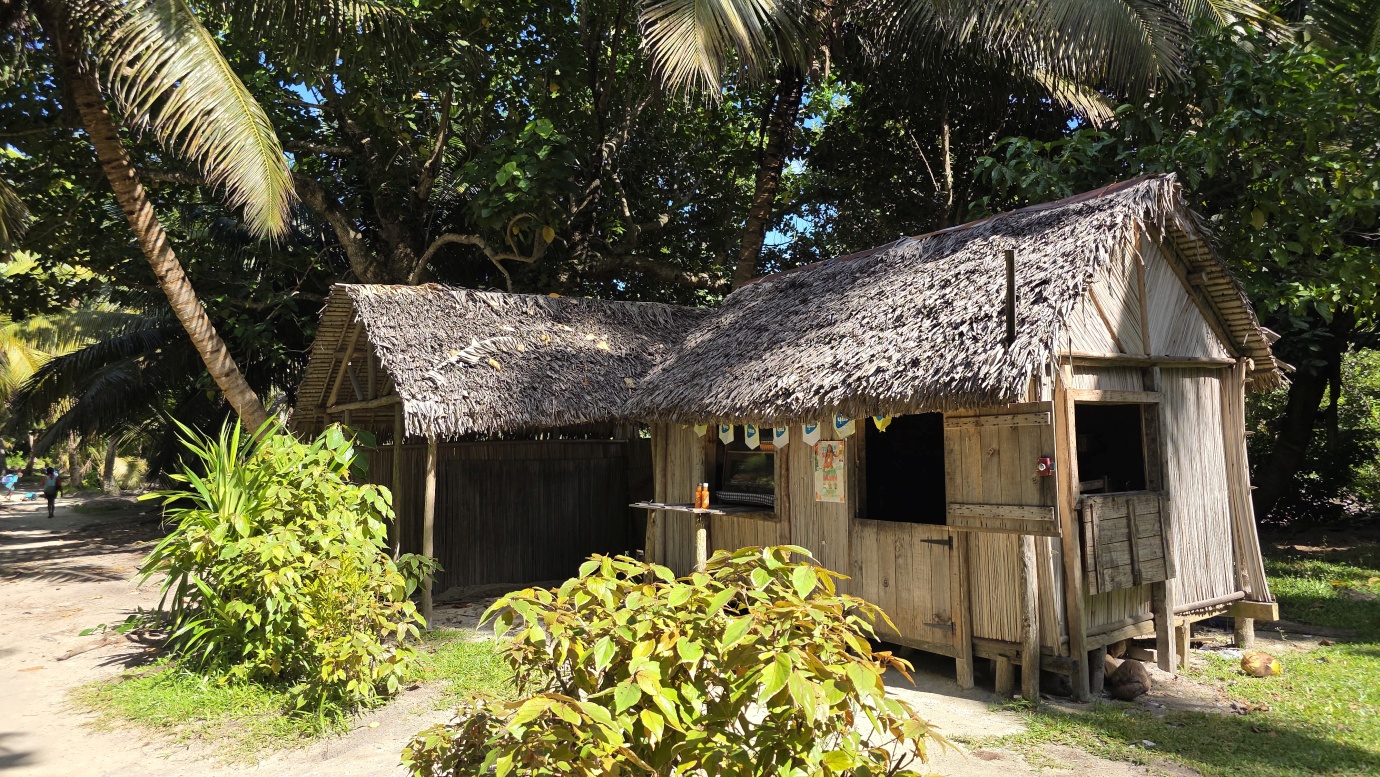
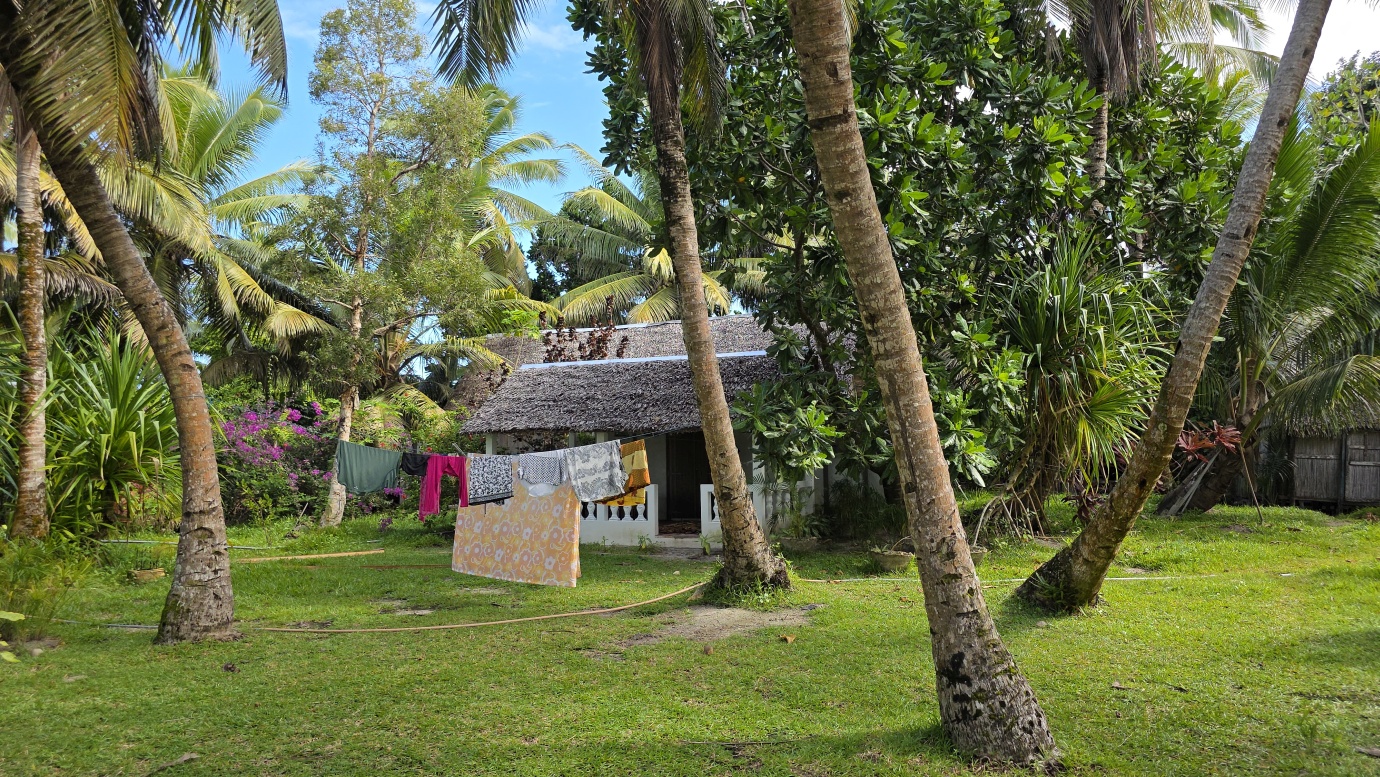
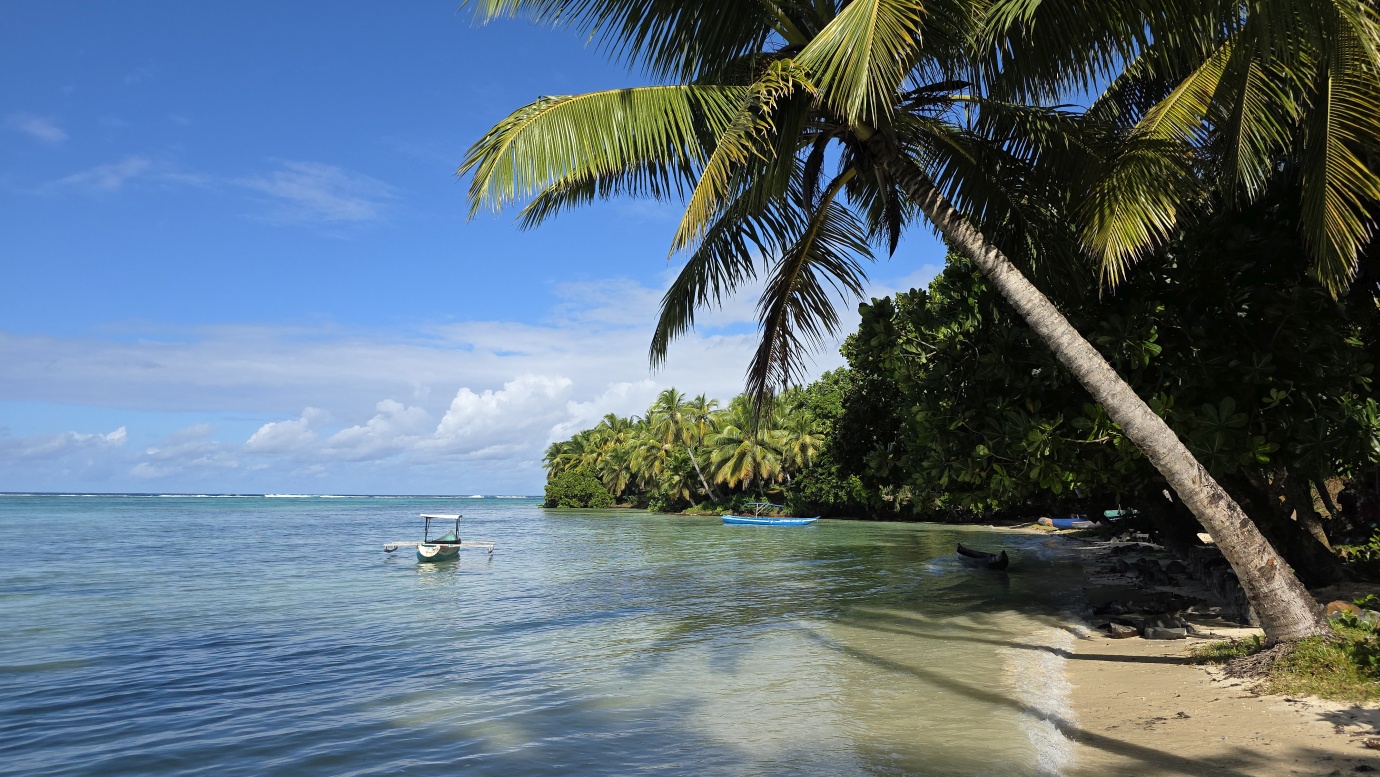
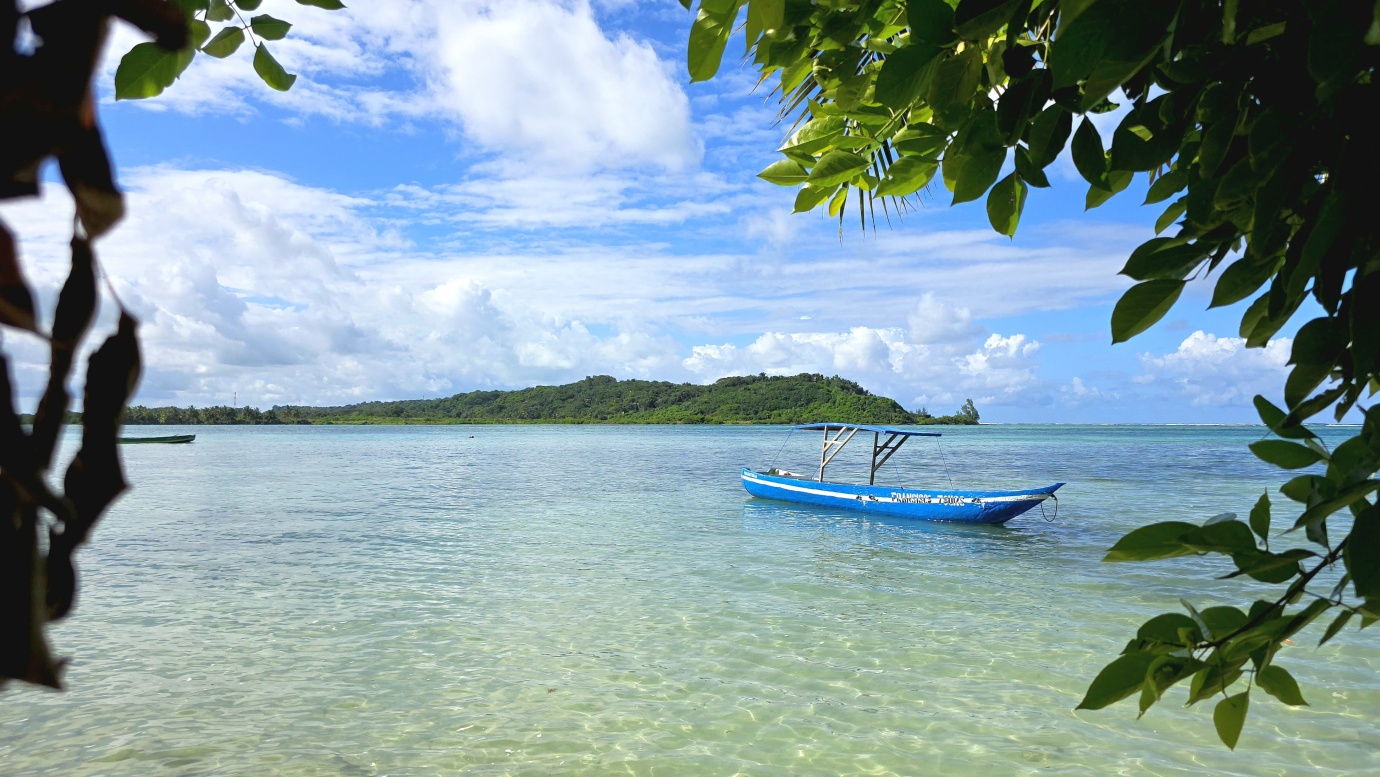
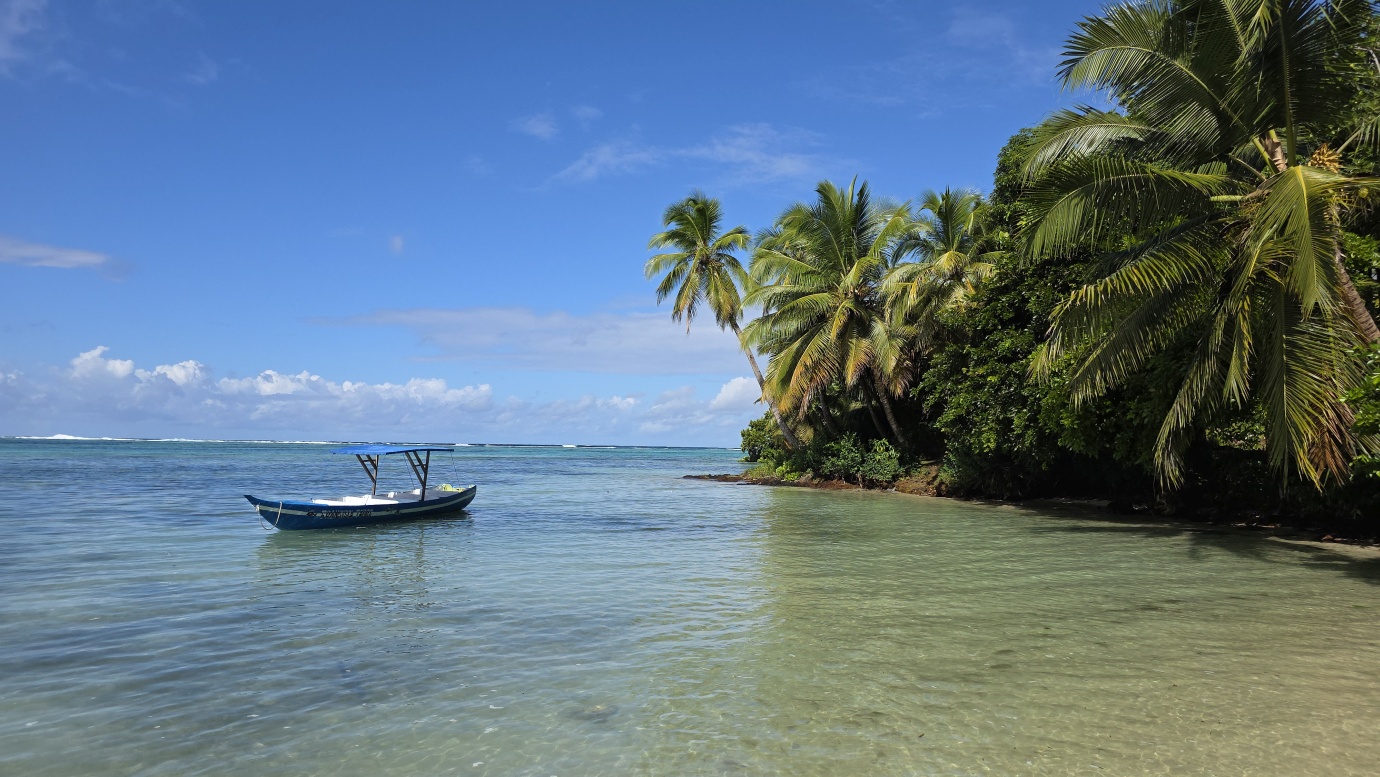
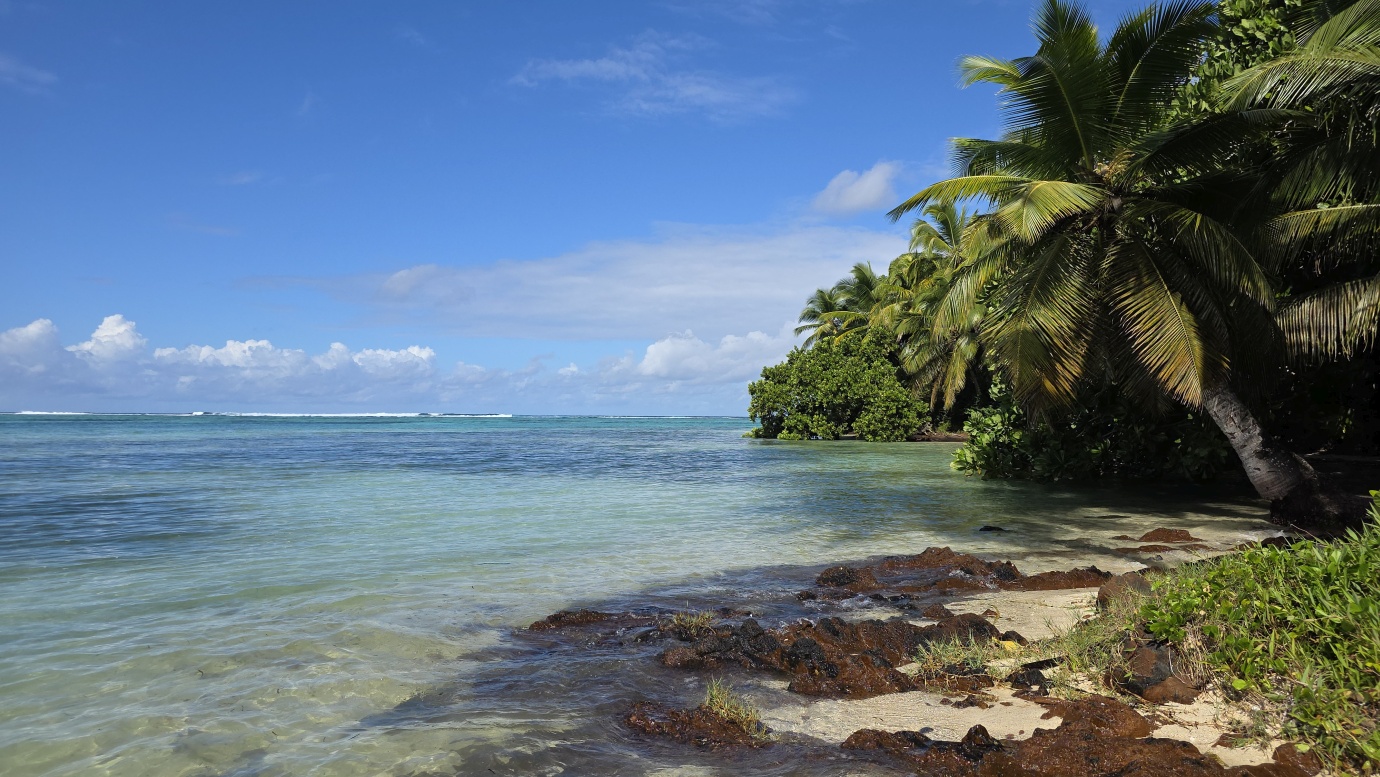
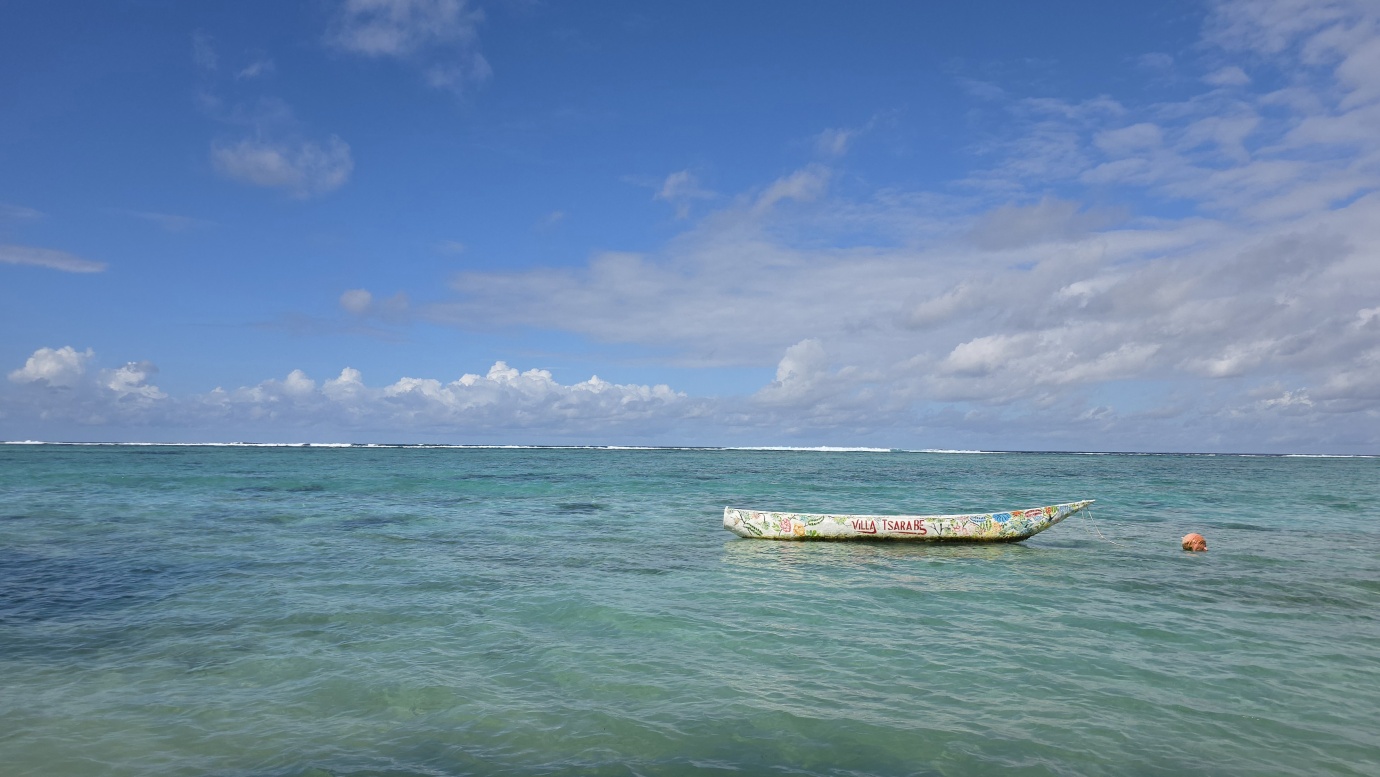
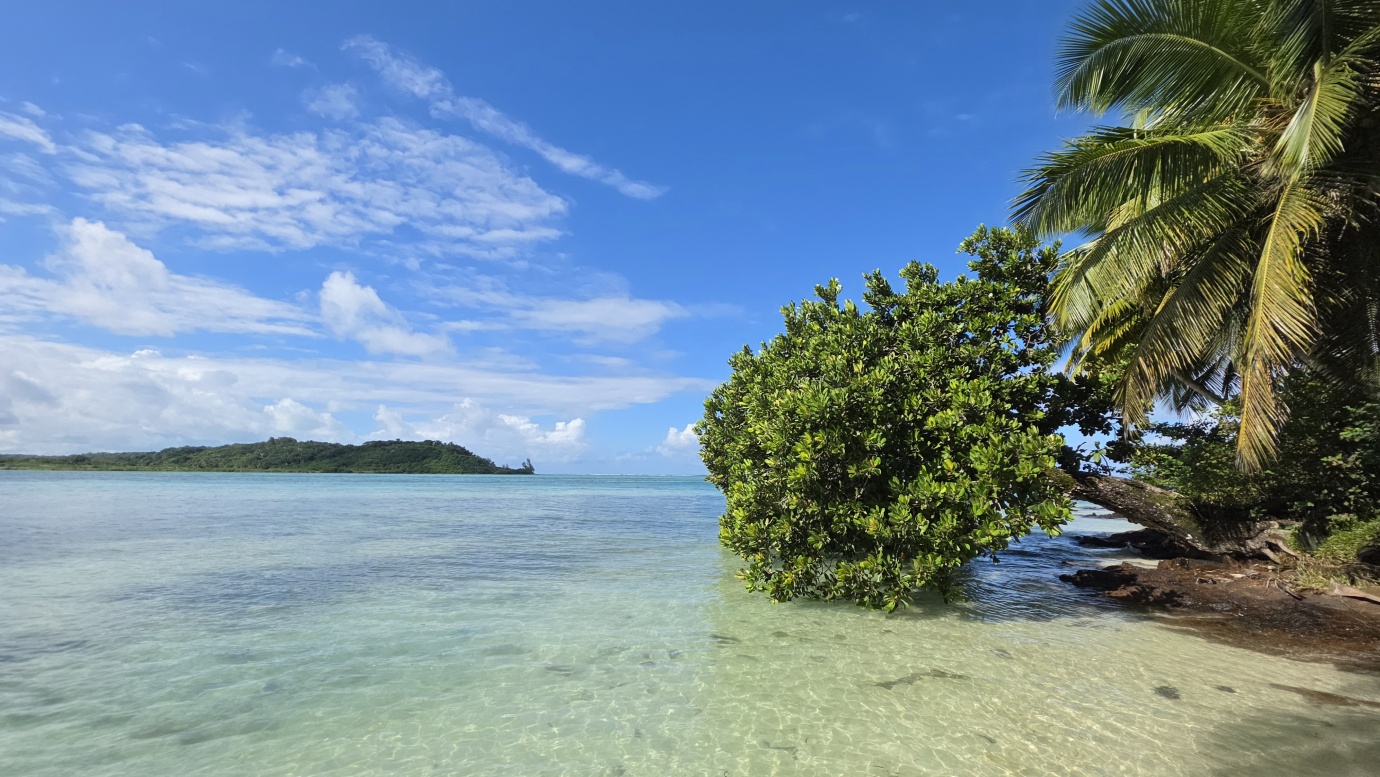
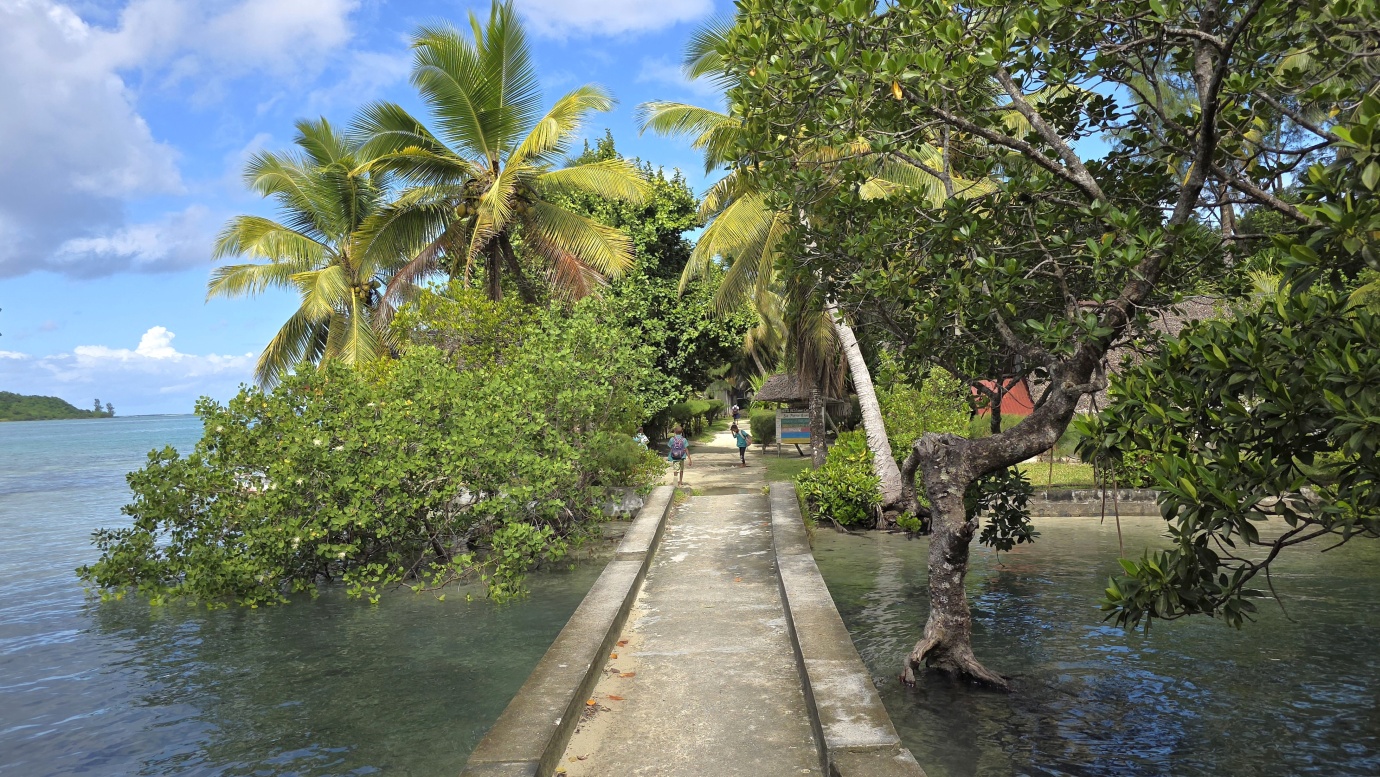
Just a five-minute pirogue ride (5,000 MGA) across the narrow channel from the southwestern tip of Sainte-Marie, near the airport, brought us to one of Madagascar’s true tropical gems, Nosy Nato, better known as Île aux Nattes. Famous for its complete absence of cars and motorbikes, the island offers pure, unhurried tranquillity — a world of white-sand beaches, turquoise lagoons, and swaying coconut palms.
The island’s entire 8-kilometre circumference should be easily explored on foot within a few hours, though traditional pirogues are a better way for scenic rides around the coastline (40,000 to 60,000 MGA). Encircled by a protective coral reef, Nosy Nato forms a vast natural lagoon with calm, crystal-clear waters ideal for safe swimming and spotting colourful marine life.
During the austral winter, particularly between August and September, humpback whales can often be seen breaching in the channel directly from the beach — one of the island’s most unforgettable natural spectacles.
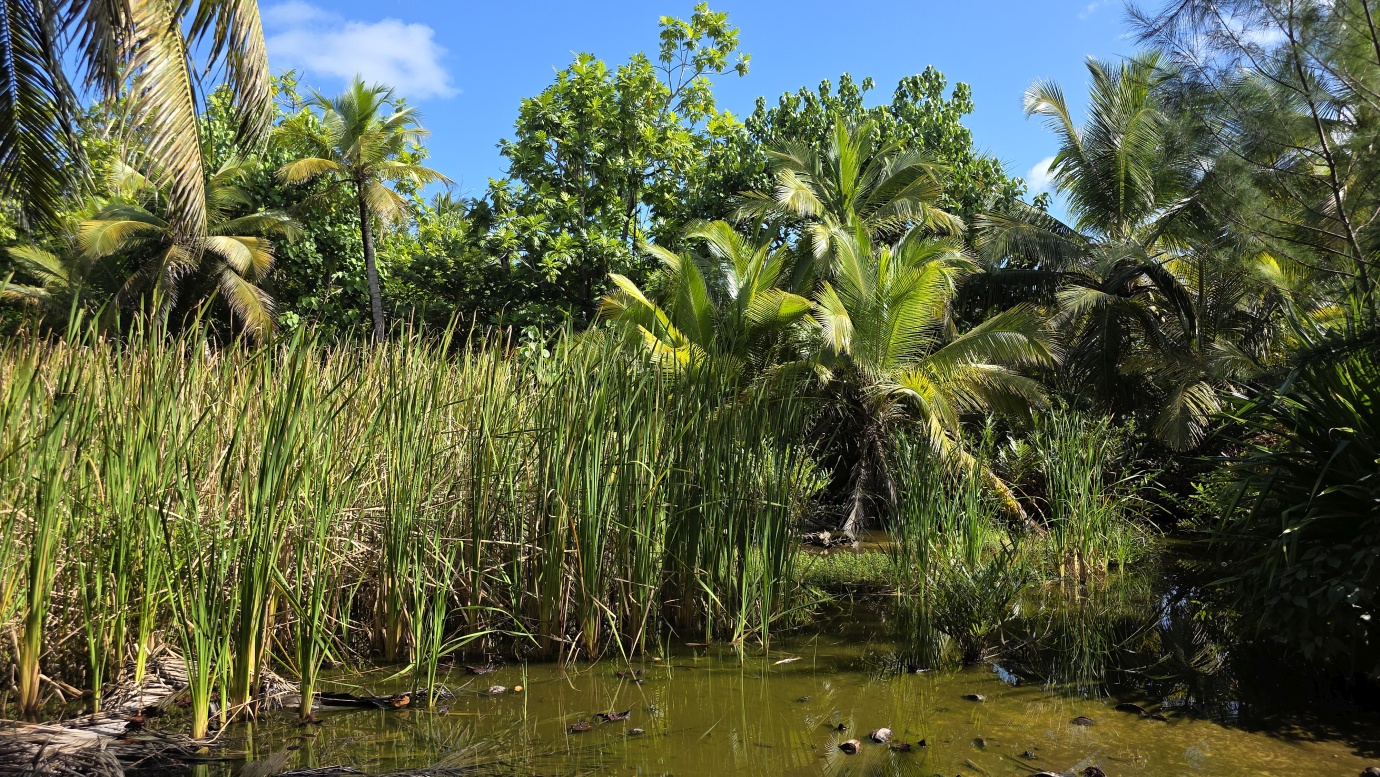
At the southern tip stands the charming Phare Blévec, a century-old lighthouse built in 1914 that visitors can climb for panoramic views over the lagoon and the Indian Ocean beyond. With no paved roads and no central power grid, the island remains wonderfully rustic, relying mainly on solar energy and small generators. Nosy Nato is also home to lemurs and several rare endemic orchids, including the celebrated “Queen of Madagascar.”